Visual interpretation Reading Worksheets for Ages 4-8
7 filtered results
-
From - To
Discover our engaging Visual Interpretation Reading Worksheets designed for children ages 4-8. These worksheets enhance reading comprehension by encouraging young learners to analyze and interpret images alongside text. Our resources foster critical thinking and visual literacy, helping students make connections between what they see and read. Featuring colorful illustrations and age-appropriate activities, these worksheets inspire creativity and imagination while boosting early literacy skills. With easy-to-follow instructions, teachers and parents can seamlessly integrate these exercises into their learning routines. Support your child’s educational journey and watch them grow more confident in their reading abilities with our thoughtfully crafted visual interpretation worksheets!
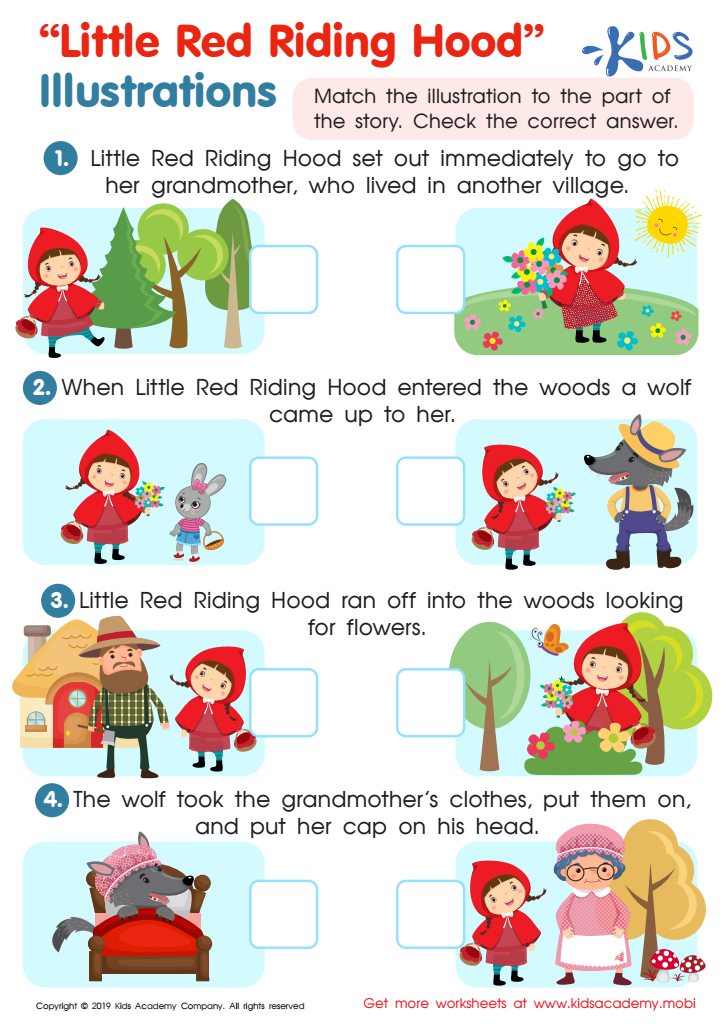
Little Red Riding Hood: Illustrations Worksheet
 Assign to My Students
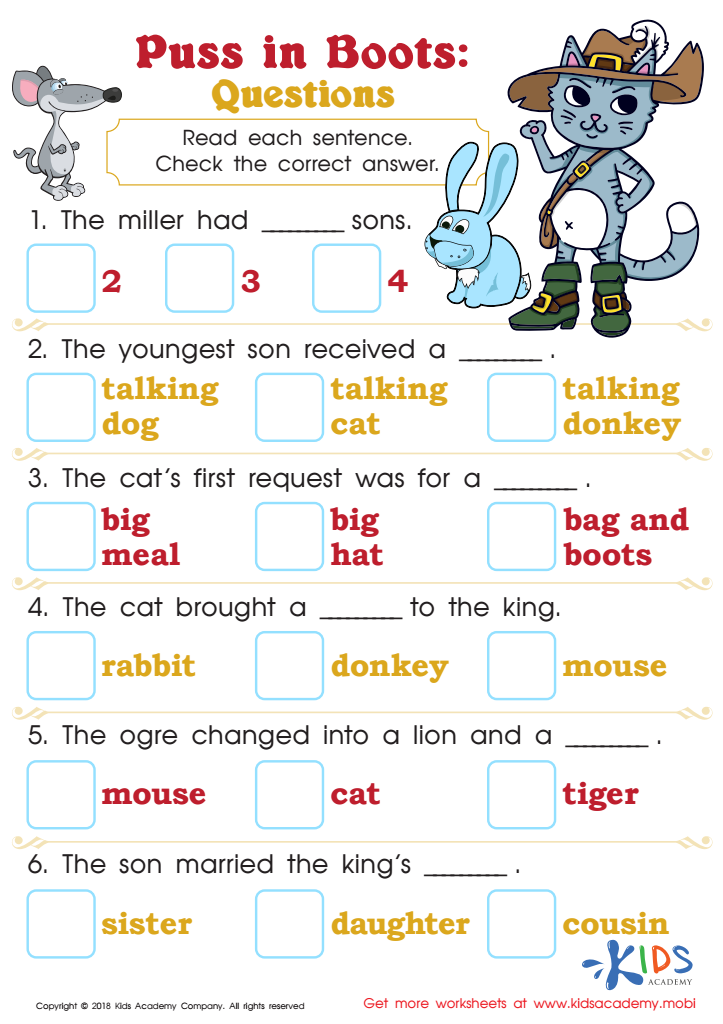
Puss in Boots: Questions Worksheet
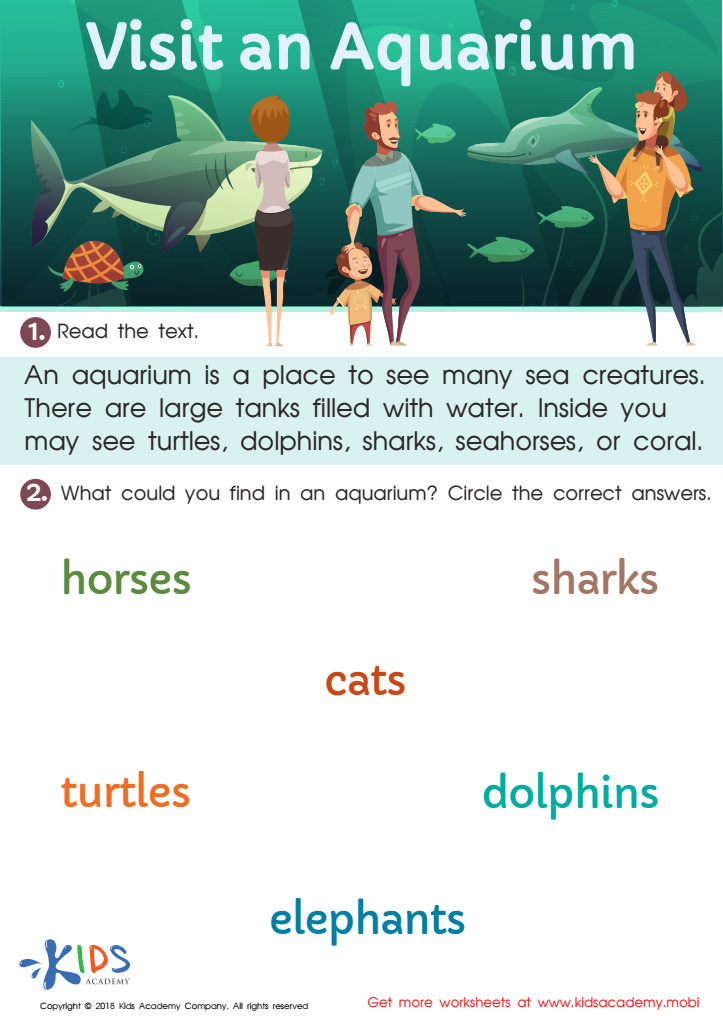
Visit an Aquarium Worksheet
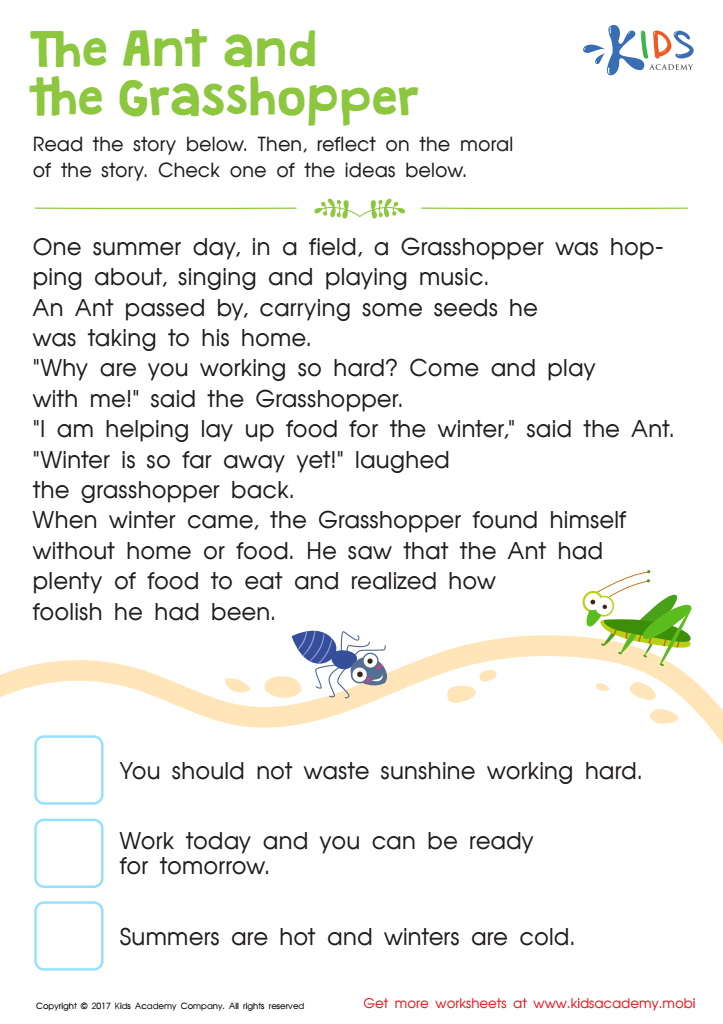
The Ant and The Grasshopper Printable
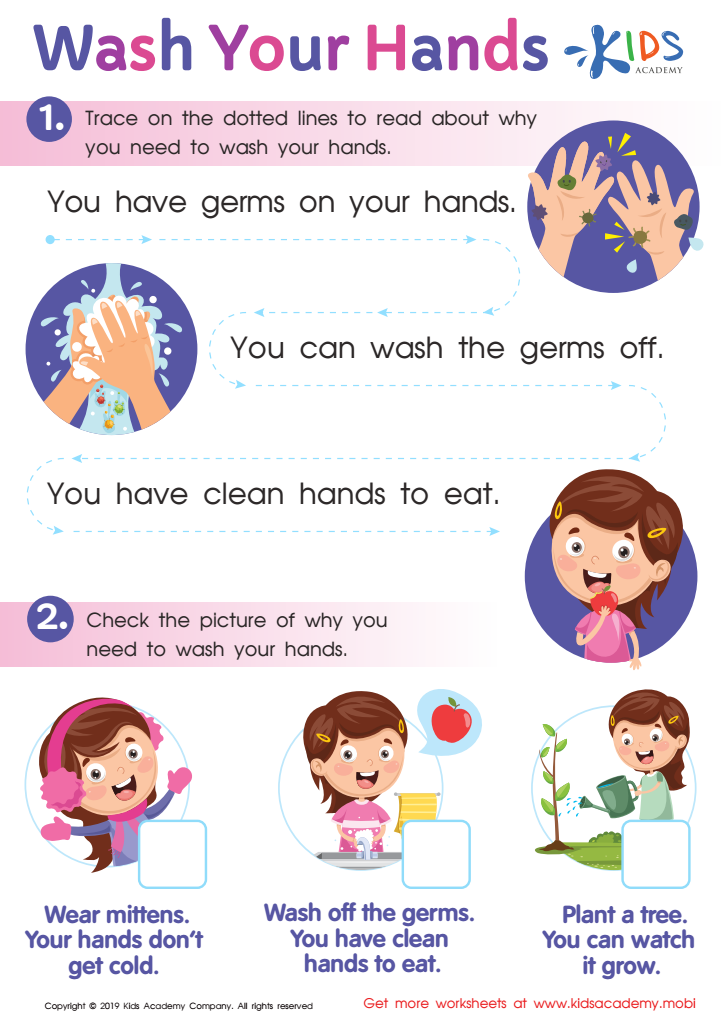
Wash Your Hands Worksheet
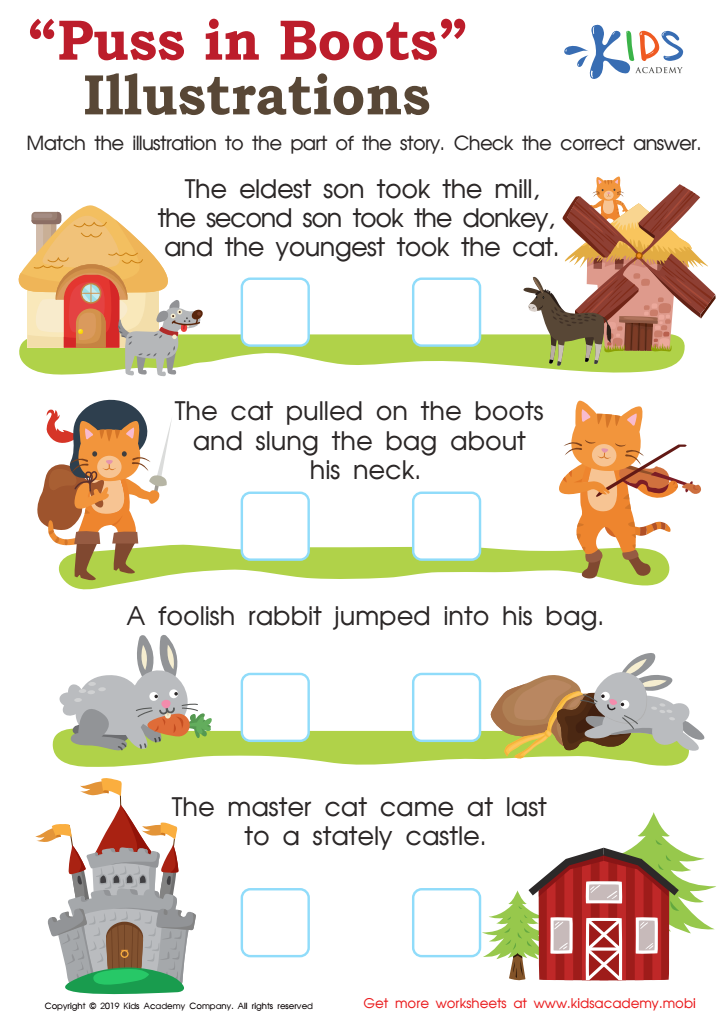
Puss in Boots Illustrations Worksheet
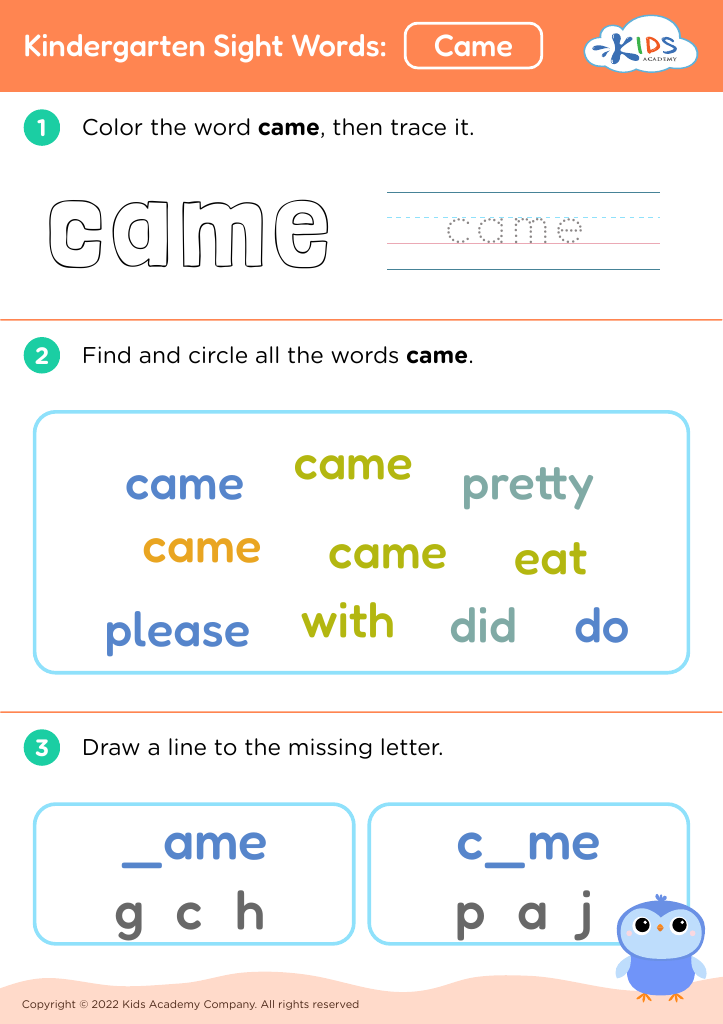








Visual interpretation reading is essential for children aged 4-8 as it significantly enhances their cognitive and language development. At this age, children learn to decode not just words but also the images and symbols that accompany texts. Incorporating visual elements helps young learners make connections between pictures and words, thereby reinforcing comprehension.
Parents and teachers should prioritize visual interpretation because it cultivates critical thinking and creative problem-solving skills. A child's ability to analyze and interpret illustrations allows them to infer meanings, encouraging deeper understanding and engagement with stories. Moreover, visual literacy fosters emotional intelligence as children learn to interpret expressions and context within images, enhancing their empathy and social skills.
Additionally, supporting visual interpretation lays a solid foundation for academic success across various subjects. As children advance in their education, these skills become crucial in understanding complex texts, graphs, and data presentations. By nurturing visual interpretation abilities in young learners, adults can empower them to become confident and competent readers, capable of navigating an increasingly visual world. Ultimately, cultivating these interpretative skills equips children with lifelong tools for learning, communication, and critical analysis.








