Visual Perception Skills Reading Worksheets for Ages 4-8
4 filtered results
-
From - To
Enhance your child's reading readiness with our Visual Perception Skills Reading Worksheets, designed specifically for ages 4-8. These engaging worksheets focus on developing essential skills like shape recognition, figure-ground discrimination, and spatial awareness. By using fun activities that captivate young minds, children will improve their ability to recognize letters, words, and patterns, laying a strong foundation for reading success. Perfect for homeschooling or supplemental learning, our worksheets offer a creative way to boost visual perception, helping children thrive in their literacy journey. Discover exciting, effective resources to foster your child's love for reading while building essential skills!
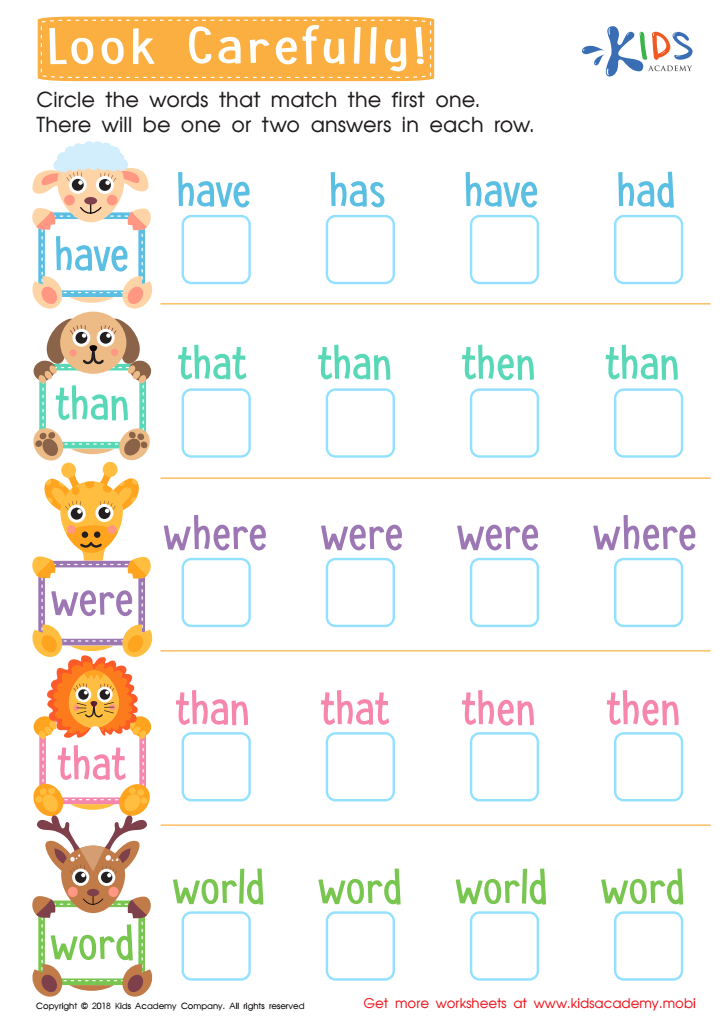
Look Carefully Worksheet
 Assign to My Students
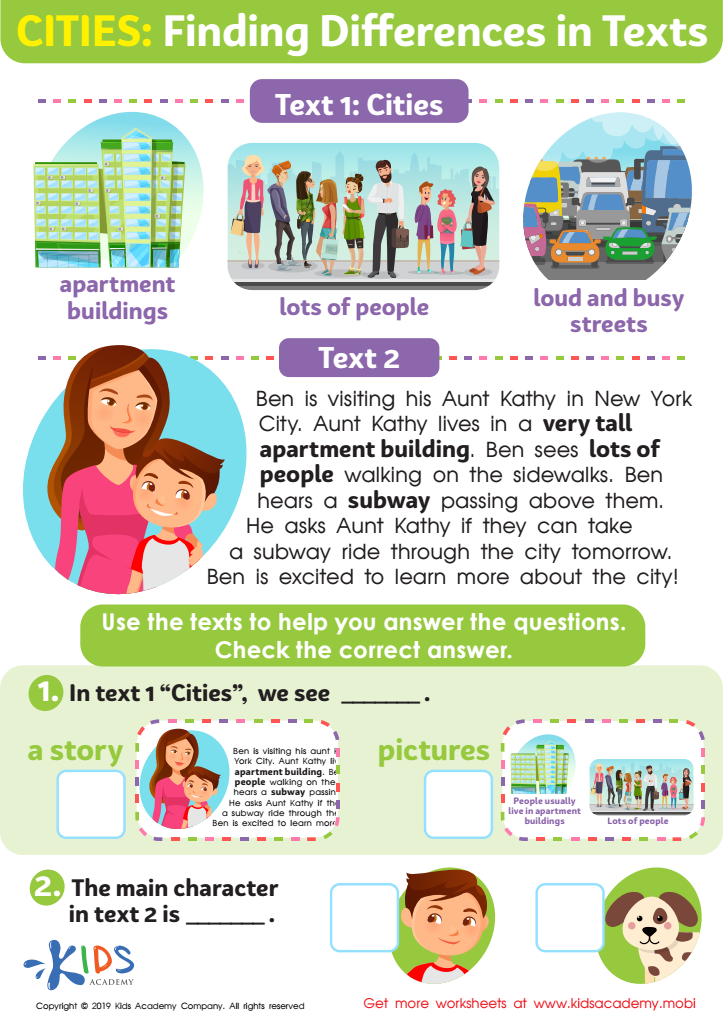
Cities: Finding Differences Worksheet
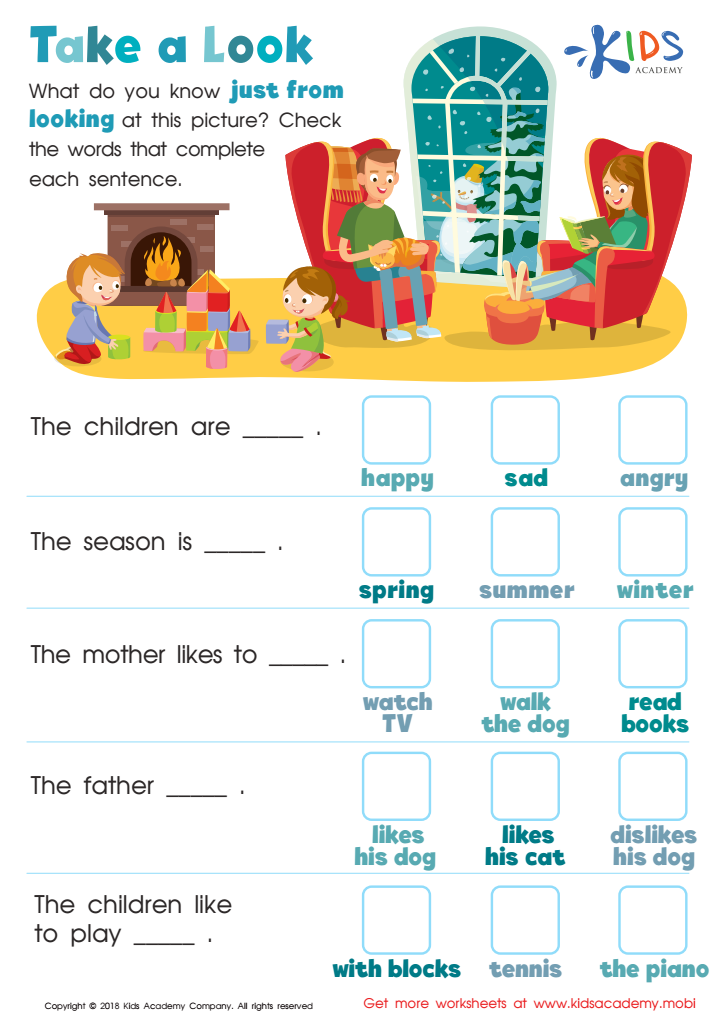
Take a Look - Part 1 Worksheet
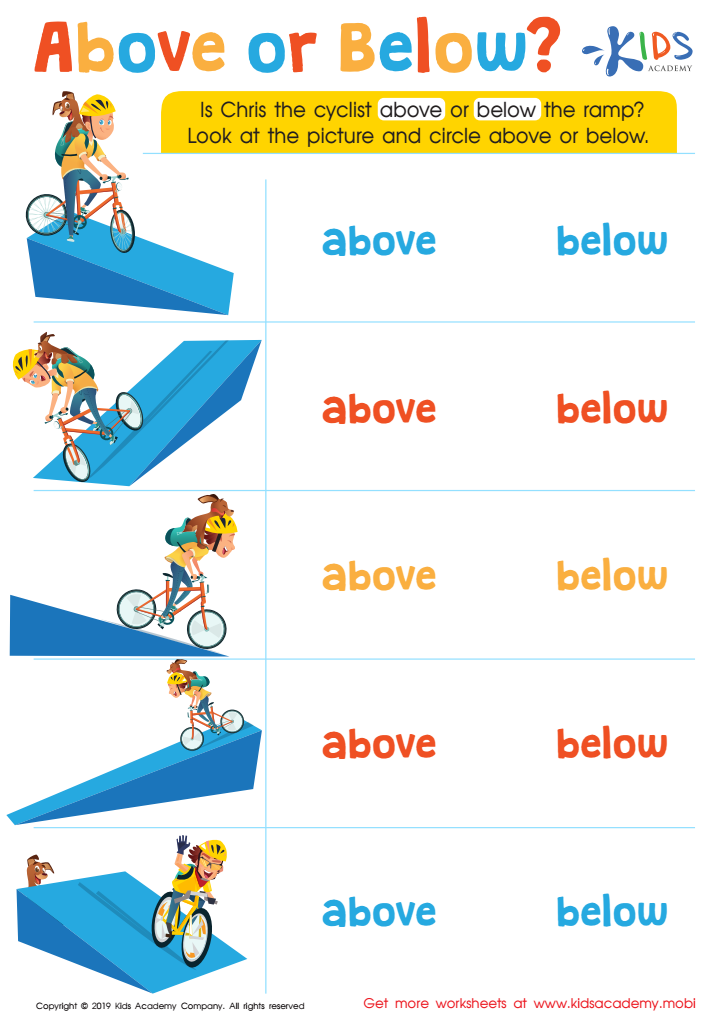
Above or Below? Worksheet








Visual perception skills are essential for young children's reading development, and both parents and teachers should prioritize fostering these skills in children aged 4-8. Visual perception involves the ability to interpret and make sense of visual information, a crucial component for recognizing letters, words, and ultimately, understanding text.
For children in this age group, strong visual perception skills can enhance their ability to differentiate between similar letters, notice punctuation, and track text from left to right. This foundational aspect of reading ensures children can engage more effectively with written material and reduces frustration in the learning process.
Moreover, developing these skills can also boost overall academic performance and confidence in young readers. Children with strong visual perception are better equipped to multitask and concentrate, enabling them to grasp more advanced concepts as they progress in their education.
Parents and teachers can use a variety of engaging activities, such as puzzles, matching games, and visual discrimination exercises, to build these skills. By recognizing the importance of visual perception in early reading, they can create a supportive environment that not only enhances literacy but also fosters a lifelong love of learning.








