Vocabulary development Reading Worksheets for Ages 4-8 - Page 2
26 filtered results
-
From - To
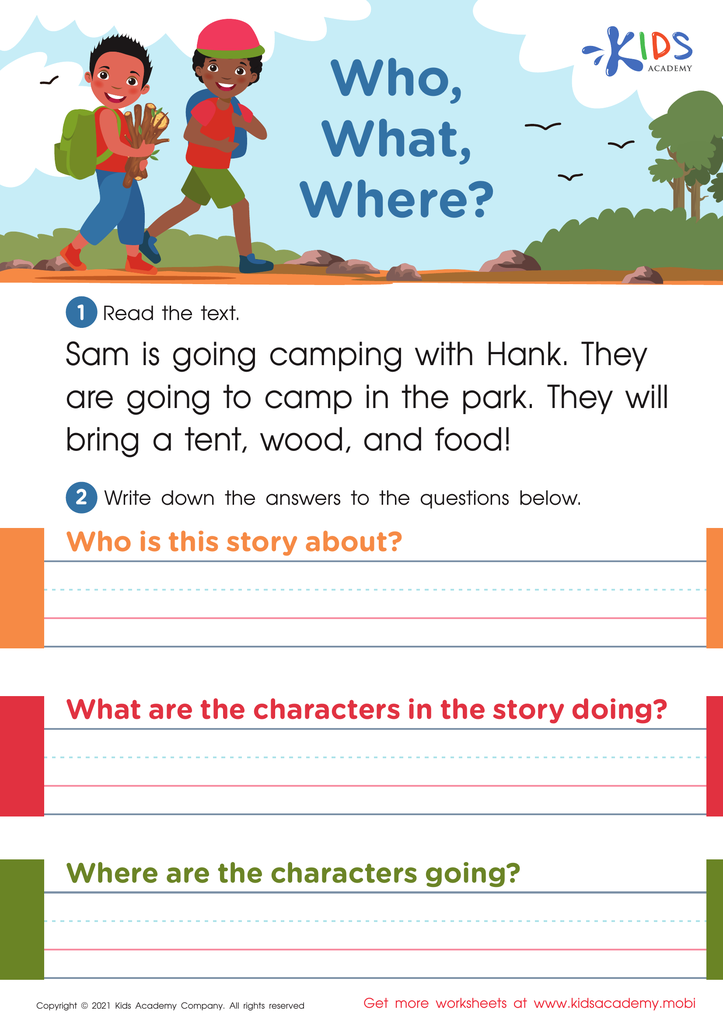
Who, What, Where? Worksheet








Vocabulary development is crucial for children aged 4-8 as it lays the foundation for effective communication, comprehension, and overall academic success. During these formative years, children's brains are rapidly developing, and exposure to rich vocabulary enhances their cognitive skills, enabling them to express themselves clearly and confidently.
Reading is a powerful vehicle for vocabulary development; it introduces young learners to new words in context, making it easier for them to understand and remember. A robust vocabulary directly correlates with reading comprehension, affecting their ability to process information, follow directions, and engage with complex texts in later grades. Children with a rich vocabulary also tend to perform better on standardized tests, which can impact their educational opportunities.
Moreover, strong vocabulary skills can boost children's self-esteem and social skills. When children can express themselves articulately, they build relationships more comfortably and navigate social interactions more effectively.
Parents and teachers play a critical role in supporting vocabulary growth through shared reading, discussions, and encouragement of language-rich environments. By prioritizing vocabulary development, they not only enhance children's literacy skills but also contribute to lifelong learning and success.








