Filters

29 filtered results

Clear all filters
Favorites
With answer key
Interactive

29 filtered results

Difficulty Level

Grade


Check out this FREE Trial Lesson on Reading for age 4-8!

Sight words: You, Like

Favorites
With answer key
Interactive
  • 4-8
  • Word Recognition
  • Reading
Animal Word Search Worksheet

Animal Word Search Worksheet

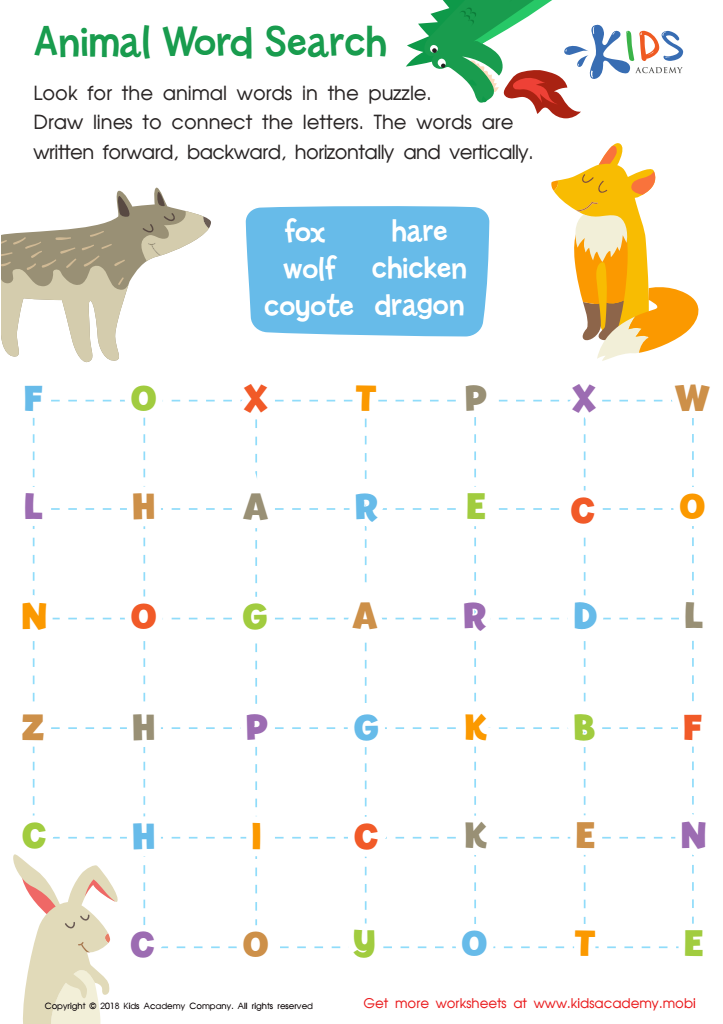
Students can have fun and strengthen spelling and vocabulary skills with this word search worksheet. Search for animal words and circle the letters in the puzzle. Words can be found forwards, backwards, horizontally or vertically, providing a great challenge to foster critical thinking skills. An enriching activity for all ages!
Animal Word Search Worksheet
Worksheet
Find and Read: Like Worksheet

Find and Read: Like Worksheet

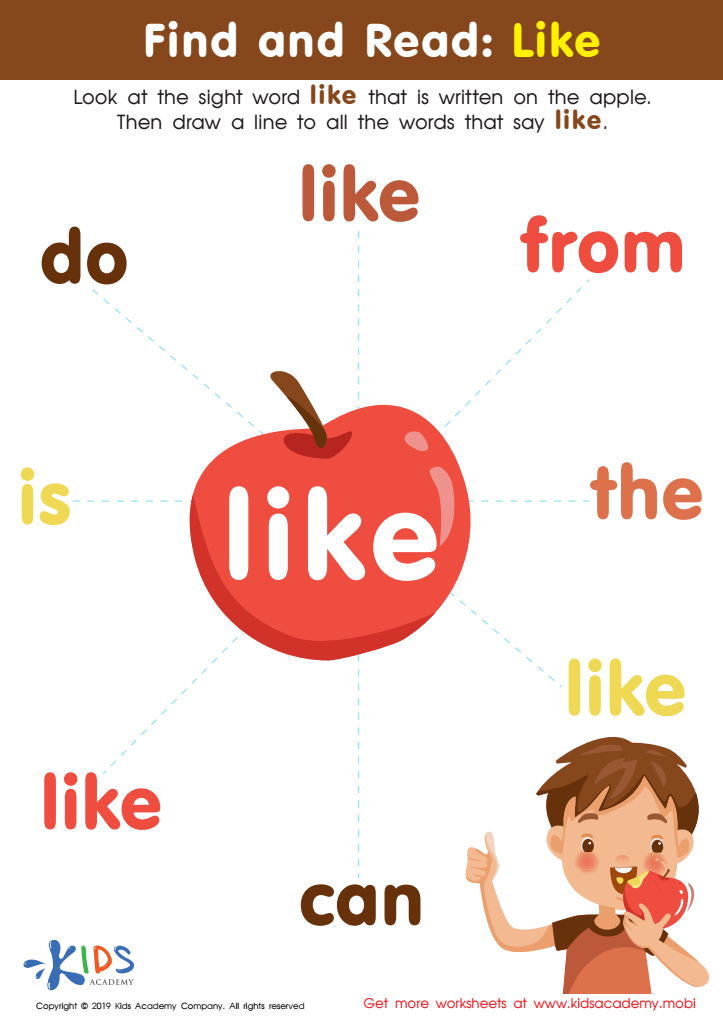
Reading starts with learning sight words. This free PDF worksheet helps kids learn the word "like" in various ways. It encourages their visual discrimination skills with its colorful design and traceable lines. It's a great way to help them recognize and differentiate this common sight word from other words that look similar.
Find and Read: Like Worksheet
Worksheet
Trace Read You Like Worksheet
Trace Read You Like Worksheet

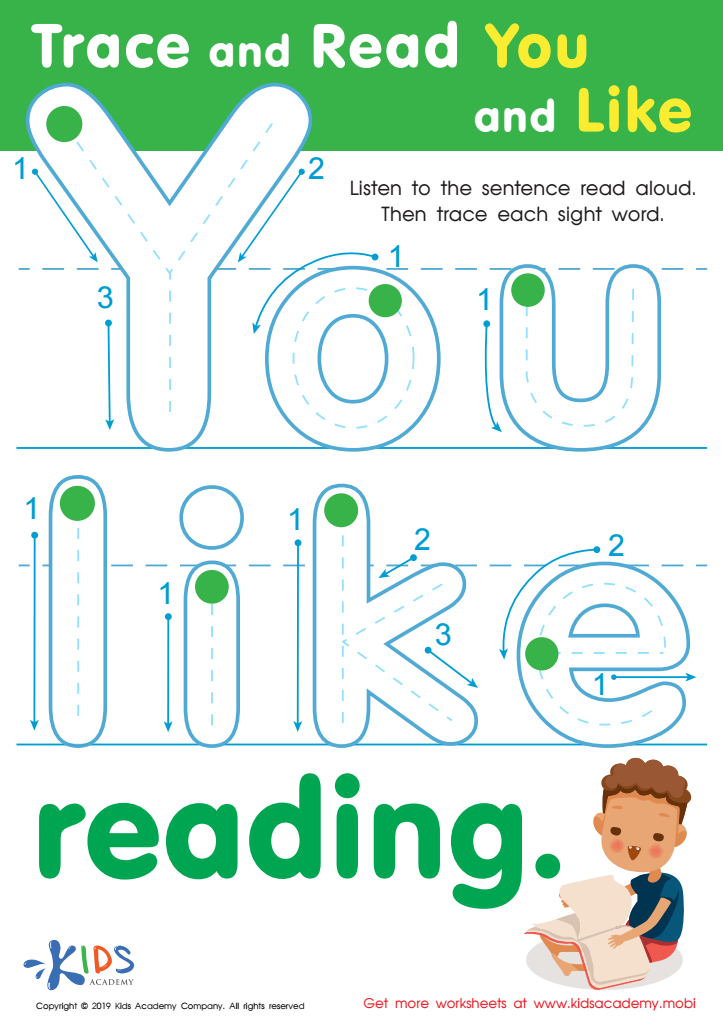
Sight words help children become confident and fluent readers. This free worksheet encourages success with basic 'you' and 'like' words. Writing them with traceable lines and green dots shows motion and builds sight word vocabulary. Help your child master the basics and boost their reading progress!
Trace Read You Like Worksheet

Worksheet
Grade 3 Sight Words: Myself

Grade 3 Sight Words: Myself

Grade 3 Sight Words: Myself
Worksheet
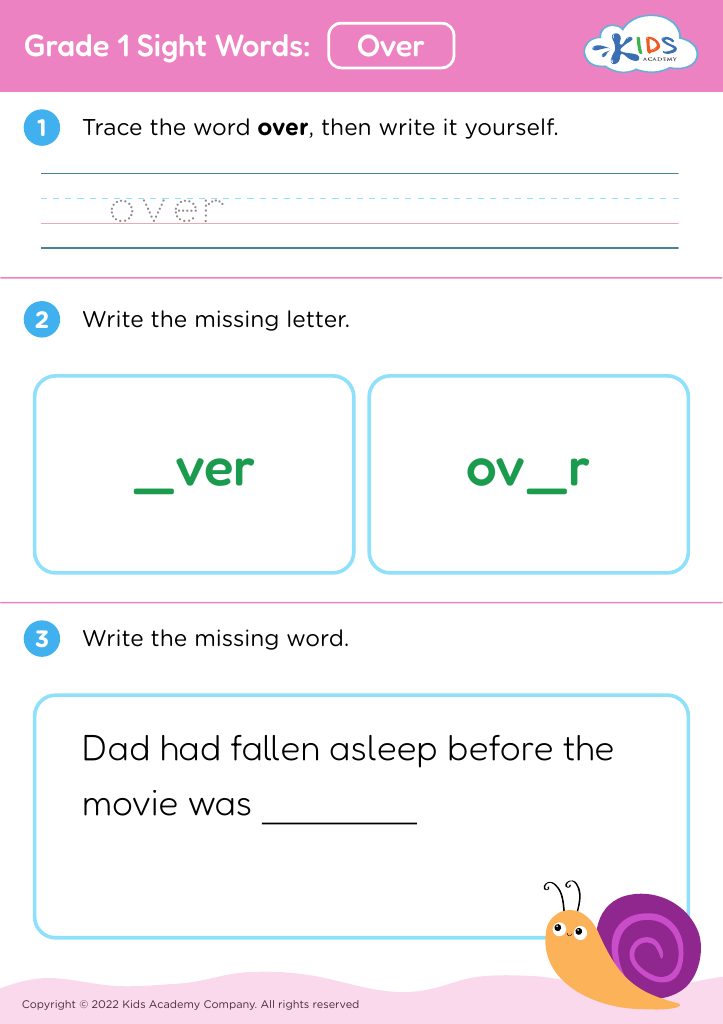
Grade 1 Sight Words: Over

Grade 1 Sight Words: Over

Grade 1 Sight Words: Over
Worksheet


Word recognition reading is crucial for children aged 4-8 as it forms the foundation for their overall literacy development. At this age, children are embarking on their reading journey, and developing strong word recognition skills enables them to decode and comprehend text effectively. When children can quickly recognize words, they spend less cognitive energy on decoding and more on understanding and engaging with the content, which promotes a love for reading.

Parents and teachers should prioritize word recognition because it impacts academic success across subjects. Reading proficiency is strongly linked to vocabulary acquisition and literacy skills, which are key for development in areas such as math, science, and social studies. Moreover, early literacy skills are indicative of later academic achievement; thus, strong word recognition can set the stage for lifelong learning.

Incorporating playful, interactive activities—such as phonics games, word hunts, and shared reading—can enrich children’s experiences and motivate them to practice. In addition, fostering a positive reading environment at home and in the classroom can influence children’s attitudes, making them more likely to engage with texts. Ultimately, supporting word recognition is an investment in a child’s educational path, ensuring they grow into confident and capable readers.