Historical Knowledge Reading Comprehension Worksheets for Ages 4-8
5 filtered results
-
From - To
Explore our engaging Historical Knowledge Reading Comprehension Worksheets, specifically designed for children ages 4-8! These worksheets combine fun narratives with historical themes, fostering early literacy and critical thinking skills. Each activity encourages young learners to delve into exciting stories of the past, while also improving their reading comprehension and vocabulary. Carefully crafted to align with educational standards, these worksheets spark curiosity and promote a love for history. Perfect for classrooms or home learning, our resources make learning enjoyable and interactive. Discover the world’s history together and watch your child thrive in their reading journey while gaining valuable historical insights!
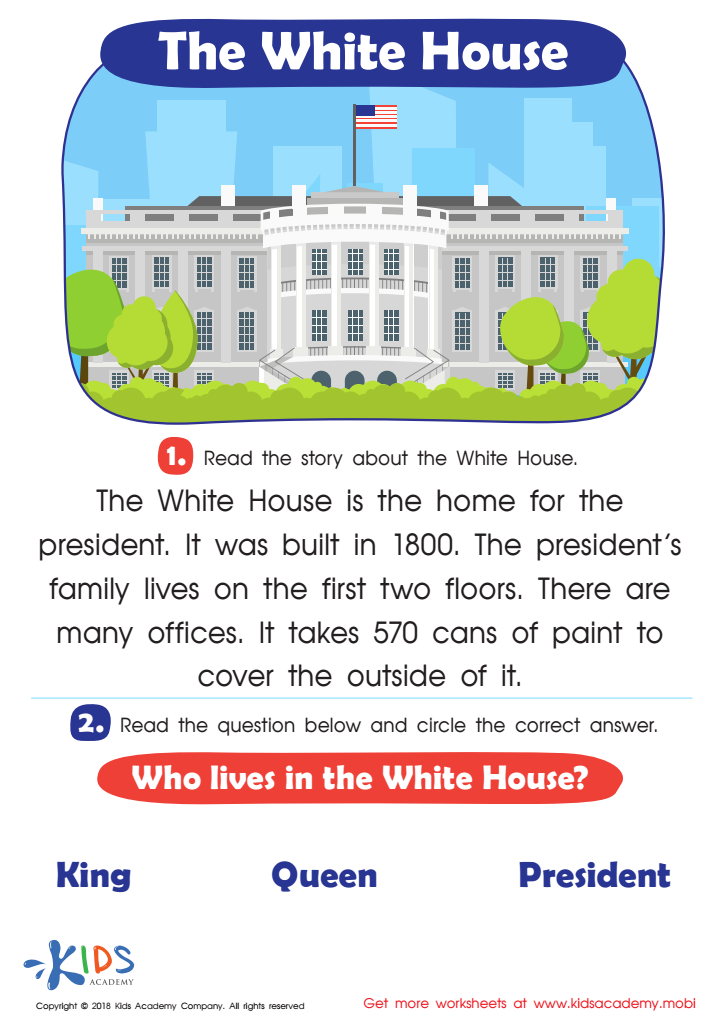
White House Worksheet
 Assign to My Students
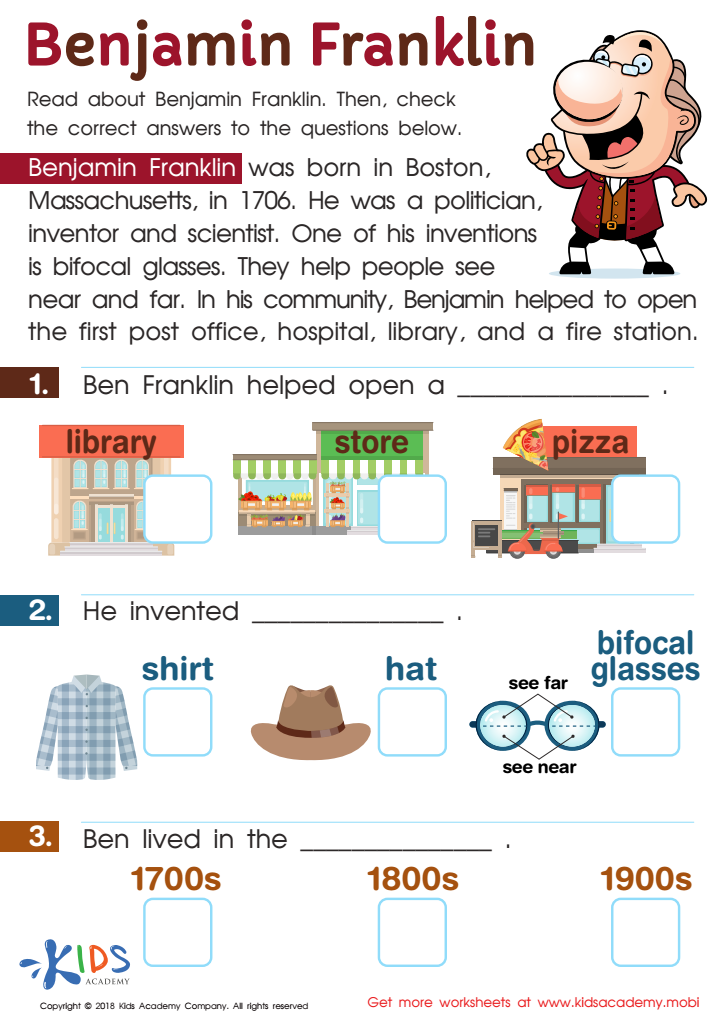
Benjamin Franklin Worksheet
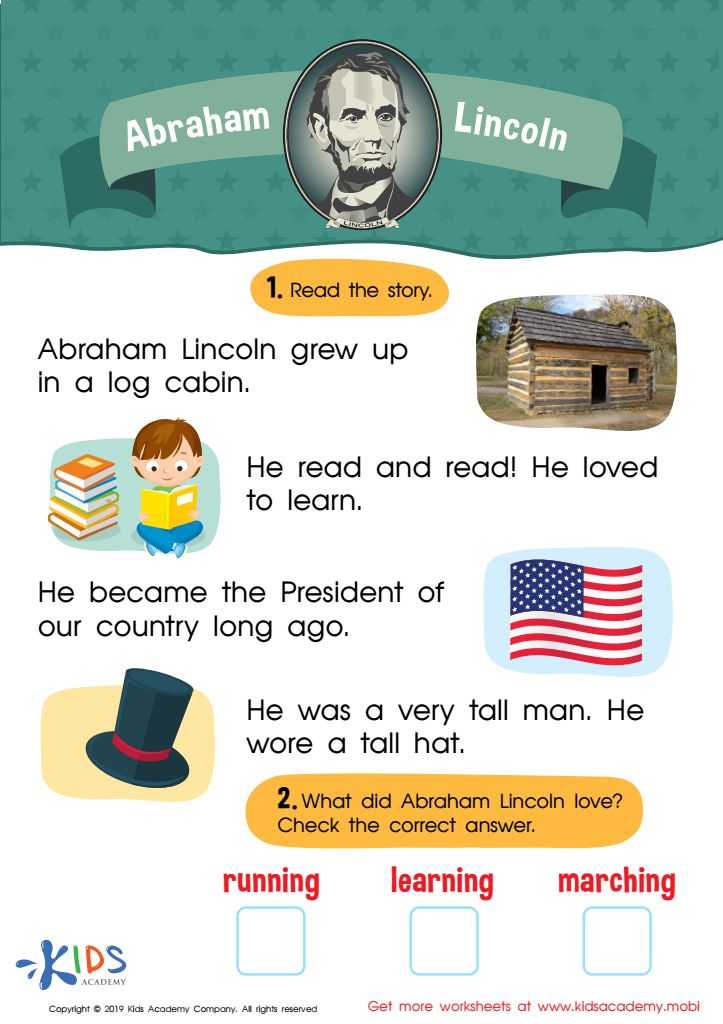
Abraham Lincoln Worksheet
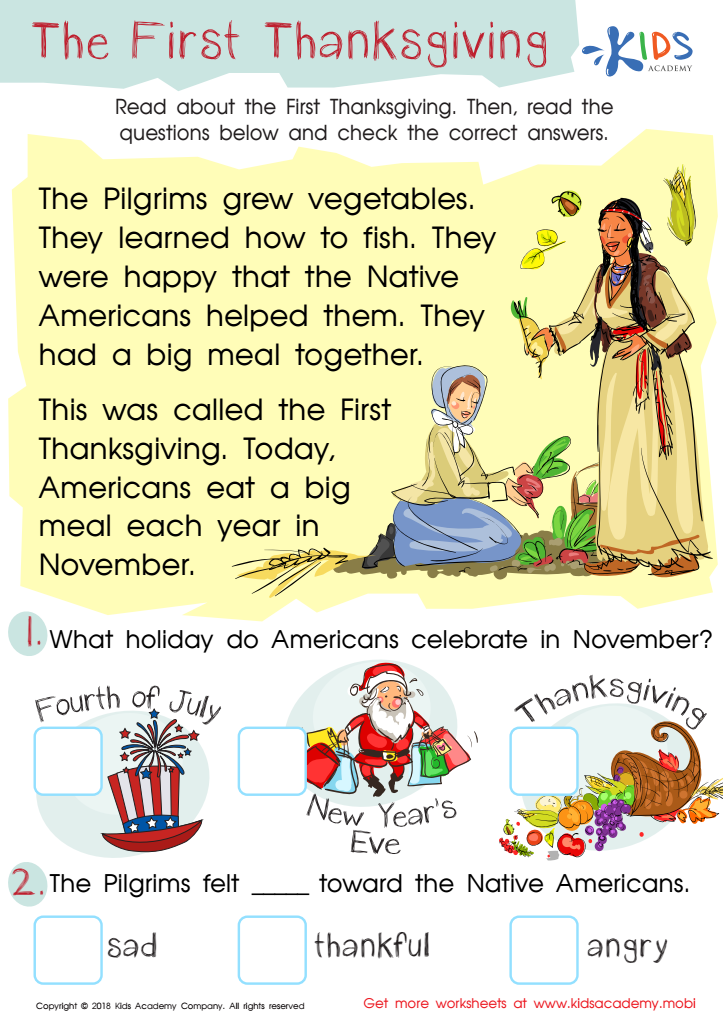
Assessment: First Thanksgiving Worksheet
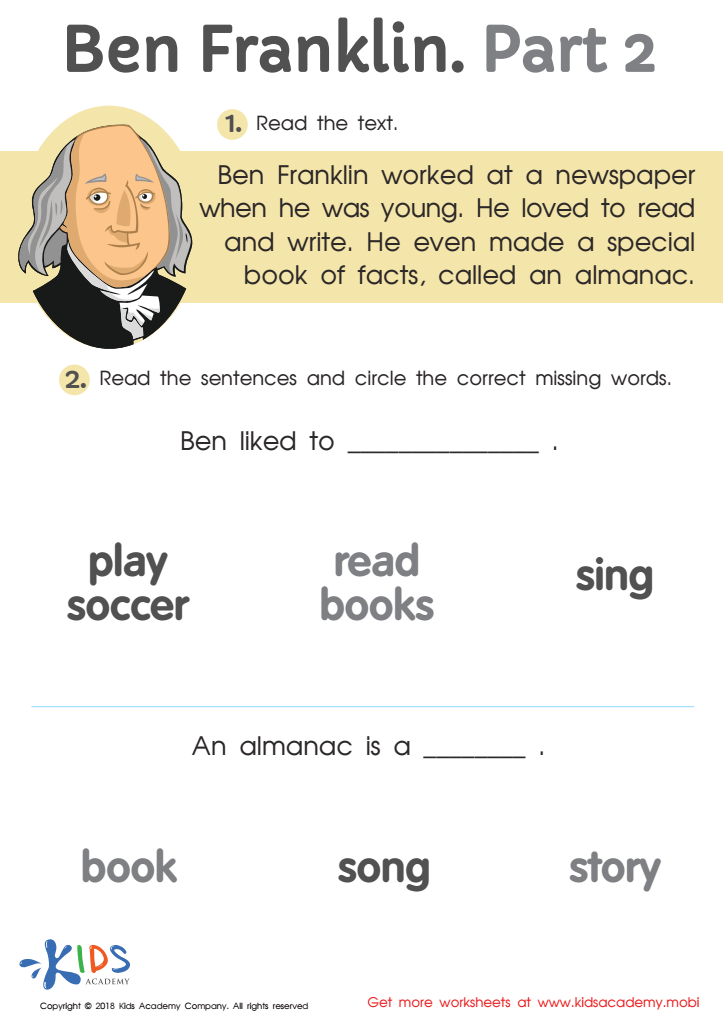
Ben Franklin Part 2 Worksheet







Historical Knowledge Reading Comprehension is crucial for children ages 4-8 as it lays the foundation for their understanding of the world and fosters critical thinking skills early on. During these formative years, children are naturally curious about people, events, and cultures, and exposure to historical narratives helps them create context for their experiences. When parents and teachers engage children with stories about the past, they not only enhance their reading comprehension skills but also cultivate empathy and awareness of diverse perspectives.
Moreover, developing historical literacy enriches vocabulary and language skills, as children encounter new terms and phrases related to different time periods and events. This knowledge enhances comprehension across subjects, making learning more interconnected. It also sparks imagination and curiosity, motivating children to ask questions and seek additional information, which are key components in developing lifelong learning habits.
By nurturing an interest in history, parents and teachers help children form a sense of identity and belonging. It promotes understanding of how past societies shape current realities, preparing them to be informed, thoughtful citizens. Ultimately, supporting historical knowledge comprehension in young learners provides them with the tools needed for academic success and meaningful engagement with the world around them.








