Understanding ecosystems Animals Worksheets for Ages 4-8
3 filtered results
-
From - To
Discover the fascinating world of ecosystems with our "Understanding Ecosystems Animals Worksheets" designed for children aged 4-8. These engaging worksheets are perfect for young learners eager to explore the interconnections between animals and their habitats. With fun activities and vibrant illustrations, kids will delve into topics such as food chains, the roles of different animals, and the balance of nature. Our resources not only encourage curiosity and creativity but also promote critical thinking skills, making learning enjoyable. Ideal for teachers and parents alike, these worksheets are a fantastic way to introduce children to the wonders of biology and the environment!
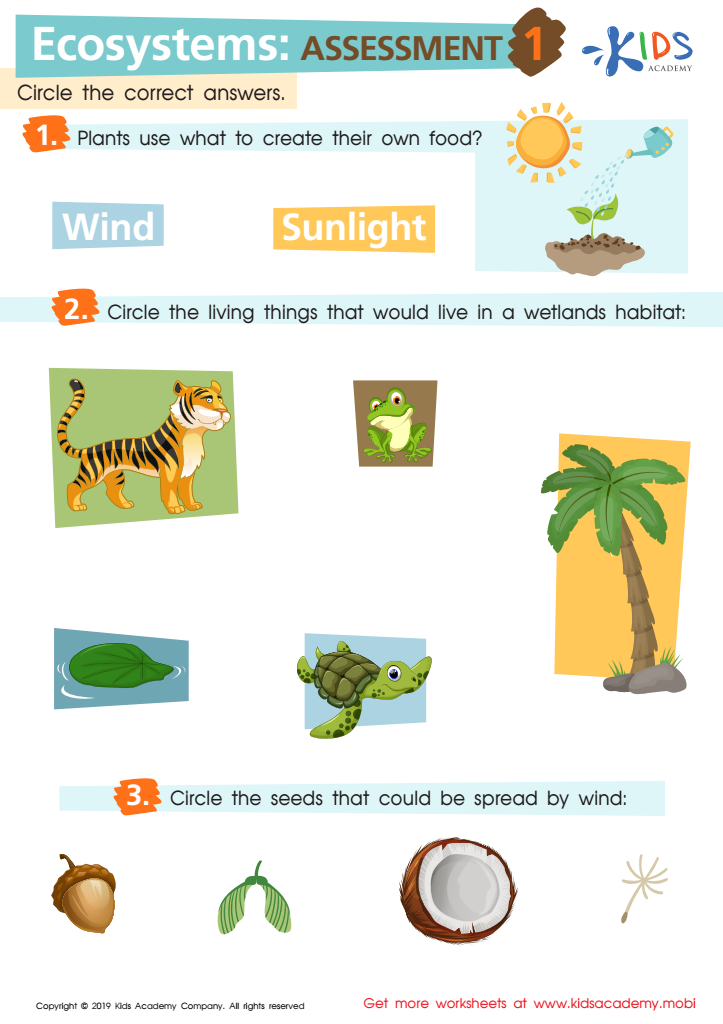
Ecosystems: Assessment 1 Worksheet
 Assign to My Students
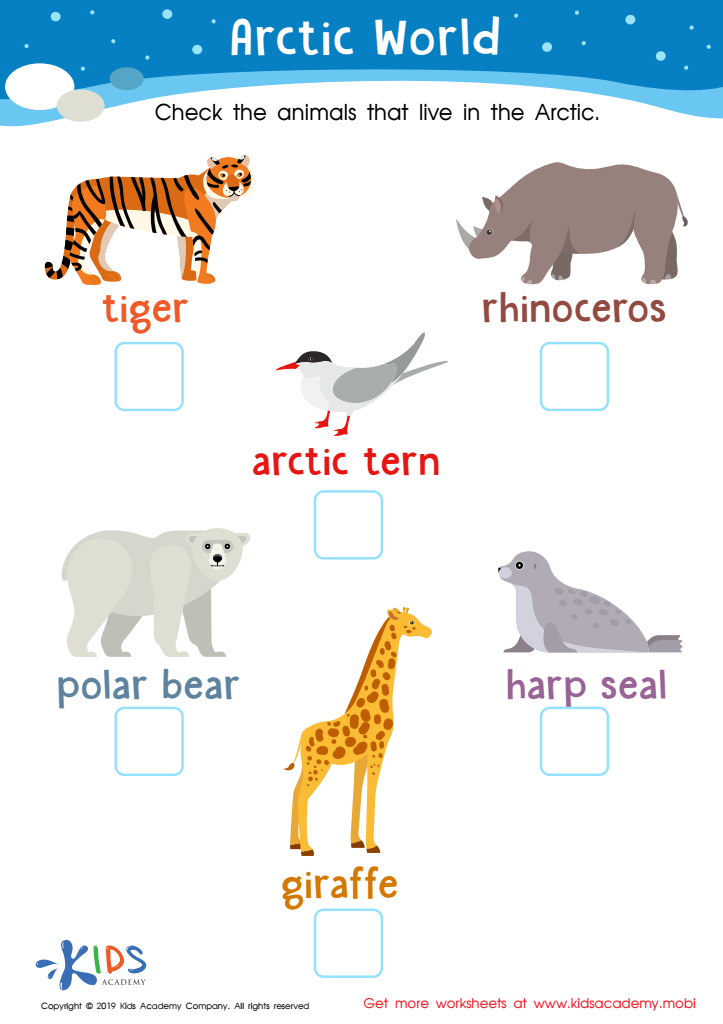
Arctic World Worksheet
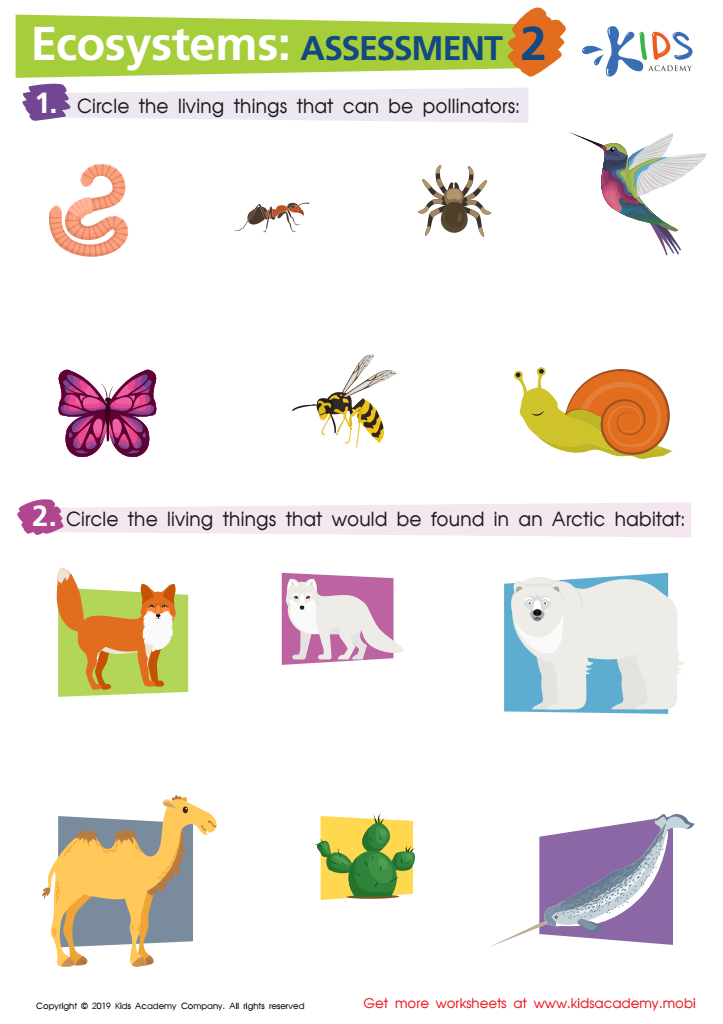
Ecosystems: Assessment 2 Worksheet







Understanding ecosystems and animals is crucial for children aged 4-8 as it fosters a sense of curiosity and appreciation for the natural world. At this formative stage, children are developing their identities and forming relationships with their environment. Teaching them about ecosystems helps build awareness of interdependence—how plants, animals, and humans rely on each other for survival.
Parents and teachers should engage children in discussions about animals and their habitats to instill values of respect and care for living things. This knowledge promotes compassion, encouraging children to be mindful of the environment and the impact their actions have on it.
Moreover, learning about ecosystems aligns with early science education, setting a foundation for critical thinking. Children can explore concepts of biodiversity, food chains, and the balance of nature through hands-on activities and storytelling, making learning relatable and enjoyable.
Incorporating these lessons also supports the development of fine motor skills and language as children narrate stories, create art, or participate in outdoor explorations. By nurturing an early understanding of ecosystems, educators and parents empower children to become informed stewards of the Earth, fostering a generational commitment to sustainability and environmental responsibility.








