Animal recognition Science Worksheets for Ages 4-8
6 filtered results
-
From - To
Introduce young learners to the fascinating world of animals with our "Animal Recognition Science Worksheets" designed for ages 4-8! These interactive worksheets help children identify various animals, learn their characteristics, and understand their habitats through engaging activities and colorful illustrations. Perfect for home or classroom use, our materials make learning fun while enhancing essential skills in observation, classification, and critical thinking. Foster a love for science early on with age-appropriate content that captivates curious minds and builds foundational knowledge in animal science. Explore now and watch your child's appreciation for nature and wildlife grow!
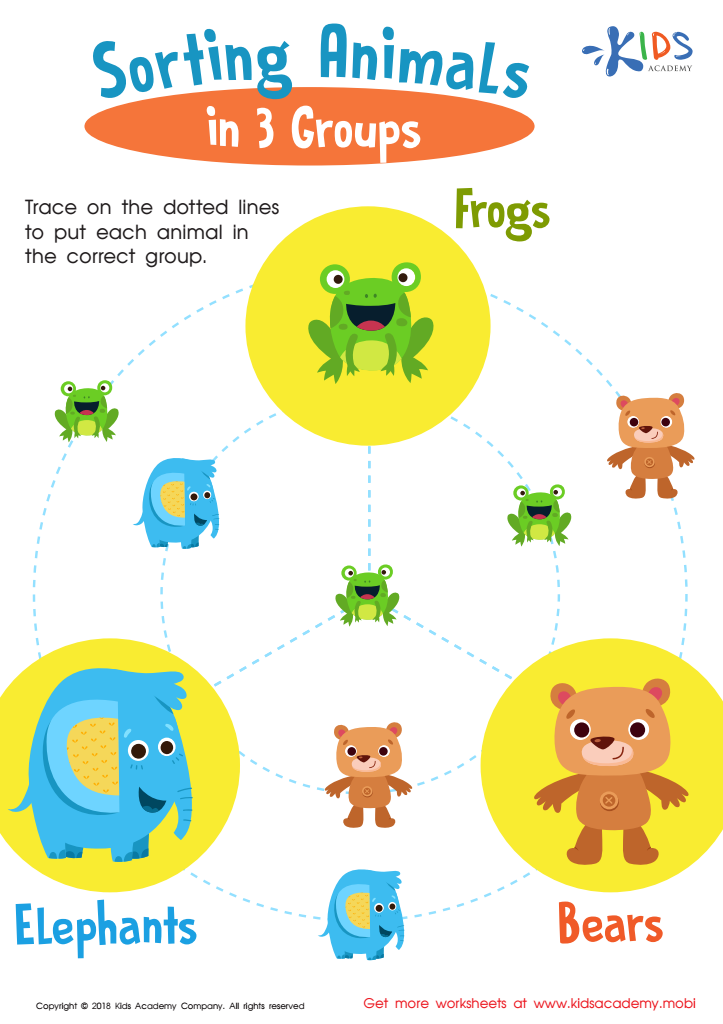
Sorting Animals in 3 Groups Worksheet
 Assign to My Students
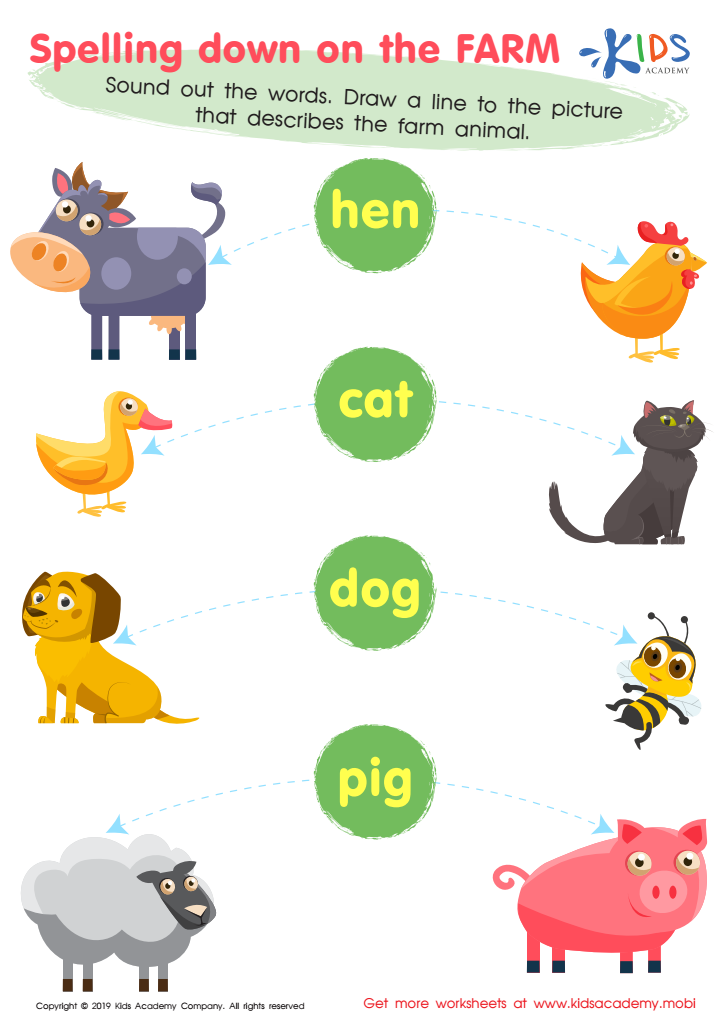
Spelling Down on the Farm Worksheet
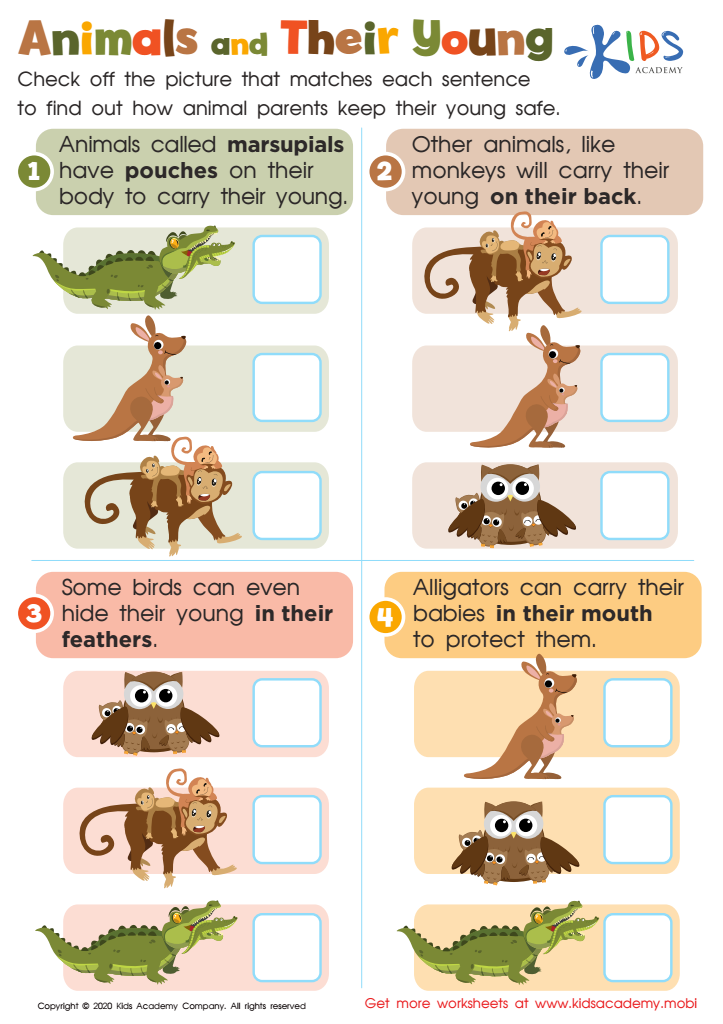
Animals and Their Young Worksheet
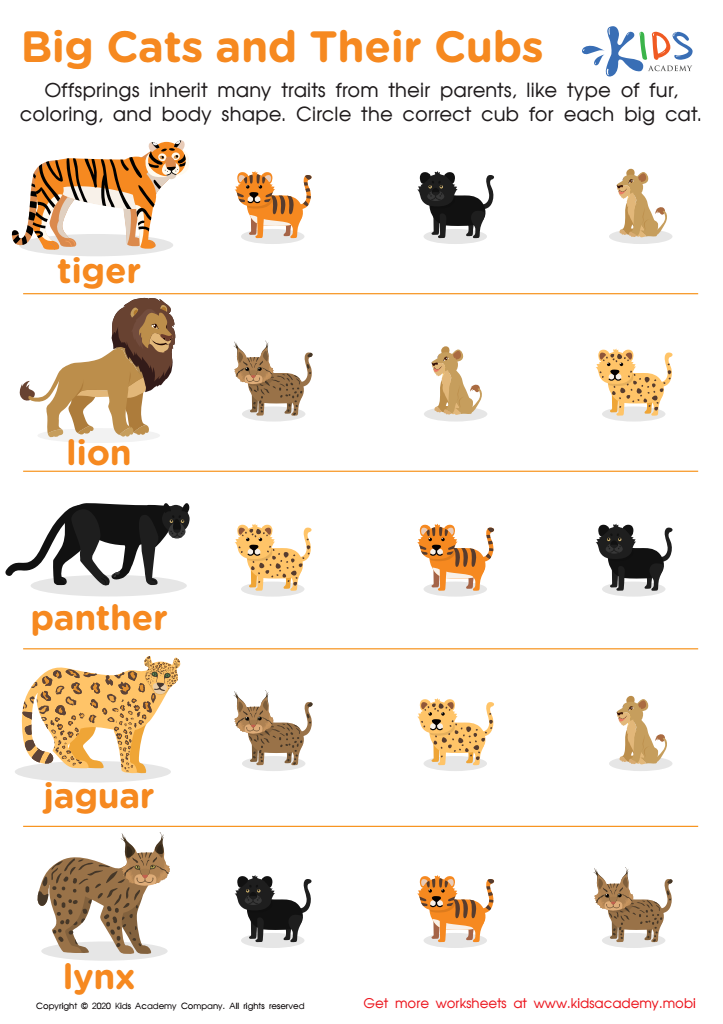
Big Cats and Their Cubs Worksheet
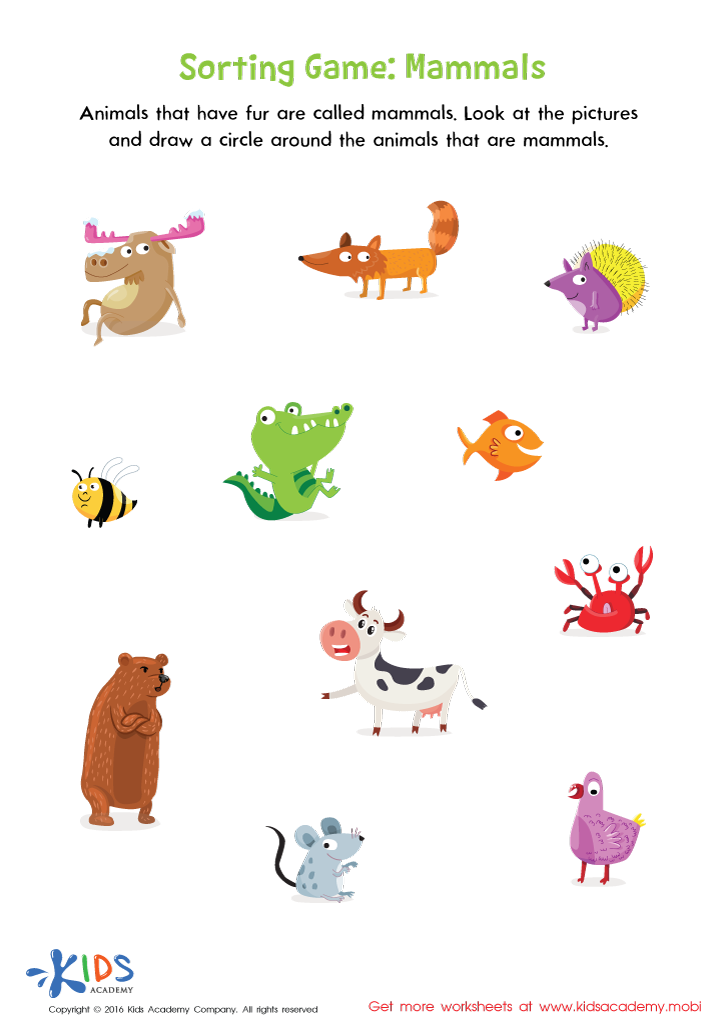
Mammals Sorting Worksheet
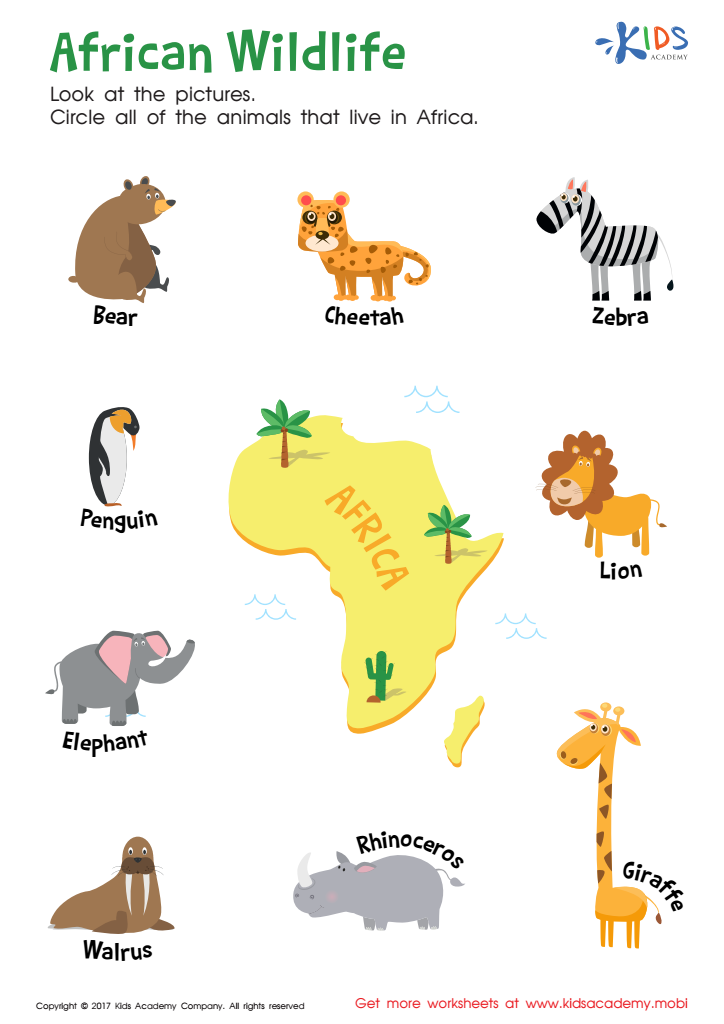








Parents and teachers should pay attention to Animal Recognition Science for ages 4-8 because it fosters crucial developmental skills in young children. During these formative years, kids are naturally curious about the world around them, and recognizing different animals helps harness that curiosity into meaningful learning experiences. Knowing animals and their characteristics not only aids in cognitive development but also enhances observational skills, memory, and language acquisition.
Furthermore, Animal Recognition Science nurtures empathy and respect for living creatures, laying the groundwork for environmental stewardship. When children learn about diverse animal species and their habitats, they develop a sense of responsibility towards nature and an understanding of biodiversity's importance. This awareness can translate into lifelong habits of conservation and respect for the environment.
Additionally, integrating animal science into early education can make learning more engaging and enjoyable. It provides a context for introducing fundamental biological concepts and stimulates interest in science and discovery. Hands-on activities, such as nature walks, visiting zoos, or even interactive apps featuring animals, can reinforce these concepts and make the learning process joyful and impactful.
In summary, Animal Recognition Science is a multifaceted tool that supports intellectual growth, ethical values, and a love for learning, crucial for the holistic development of young children.







