Developing critical thinking Science Worksheets for Ages 4-8
3 filtered results
-
From - To
Explore our engaging critical thinking science worksheets designed specifically for children ages 4-8! These worksheets promote essential skills such as observation, analysis, and problem-solving through fun and interactive activities. Perfect for home or classroom use, our resources encourage young learners to explore scientific concepts while developing their critical thinking abilities. With a variety of topics, including the natural world and basic experiments, each worksheet fosters curiosity and independent thinking. Empower your child’s learning journey with tools that not only reinforce scientific knowledge but also inspire creativity and inquiry. Dive into the world of science and critical thinking today!
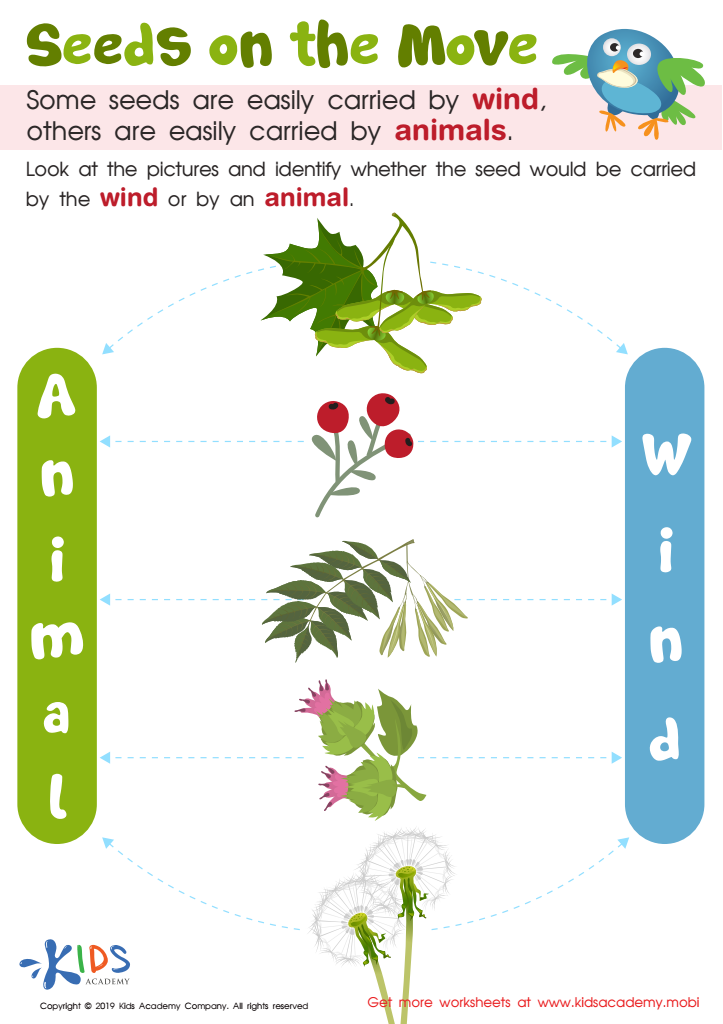
Seeds on the Move Worksheet
 Assign to My Students
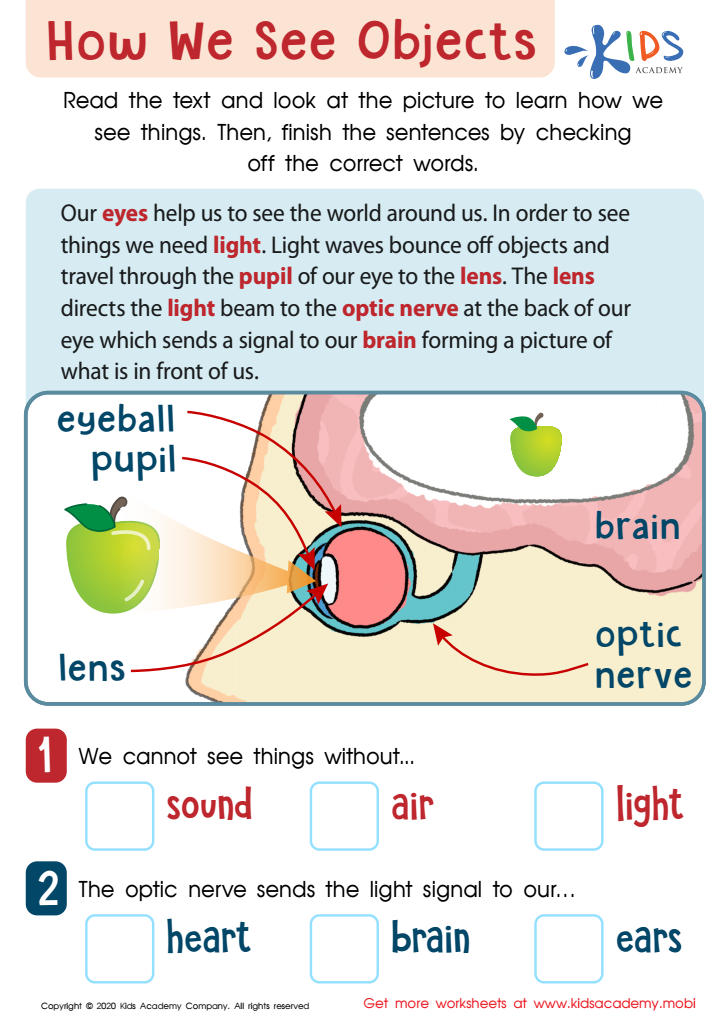
How We See Objects Worksheet
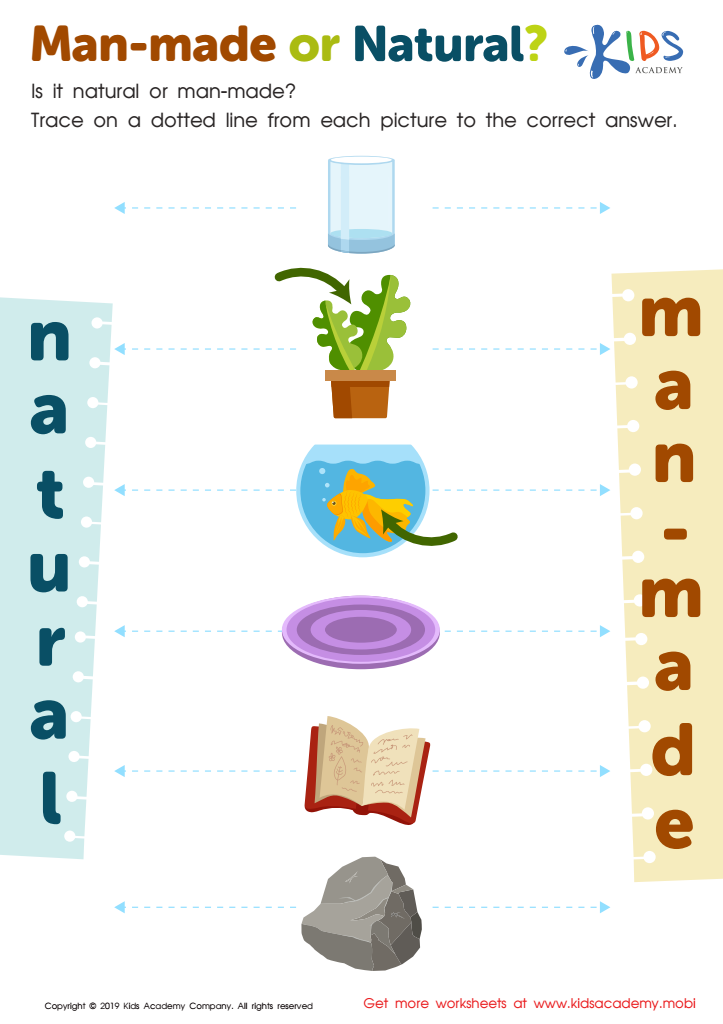
Man-Made or Natural? Worksheet








Developing critical thinking in science for children ages 4-8 is crucial, as it lays the foundation for lifelong learning and problem-solving skills. At this young age, children are naturally curious, constantly asking questions about the world around them. By encouraging critical thinking, parents and teachers can help harness this curiosity, fostering an environment where children learn to inquire, investigate, and analyze.
Engaging young learners in critical thinking activities stimulates cognitive development, enhancing skills such as observation, prediction, and reasoning. These skills enable children to become more effective learners, as they grasp scientific concepts and make connections to their own experiences. Furthermore, promoting critical thinking encourages creativity and innovation; children learn to explore various solutions to problems, think outside the box, and embrace experimentation—key components of scientific discovery.
Moreover, critical thinking in science can be integrated with other subjects, promoting cross-disciplinary learning. Empowering children with these skills not only prepares them for more advanced studies but also equips them to navigate an increasingly complex world. Ultimately, fostering critical thinking in young children supports their holistic development, nurturing inquisitive minds ready to tackle the challenges of tomorrow. In essence, it is a vital investment in their future success and well-being.







