Unlock the potential of young minds with our "Enhancing Observation Skills Science Worksheets" designed for ages 4-8. These engaging, hands-on activities promote critical thinking and curiosity in budding scientists. Perfect for home or classroom use, our worksheets cover a range of topics, from exploring nature to understanding weather patterns. Children will practice identifying objects, noting differences, and making detailed observations while having fun. These science worksheets are an excellent tool for fostering early science skills and a lifelong love for discovery. Download now and kickstart your child's observational skills journey today!

Check out this FREE Trial Lesson on Science for age 4-8!

Draw Sharing Word Problems

Favorites
With answer key
Interactive
  • 4-8
  • Enhancing observation skills
  • Science
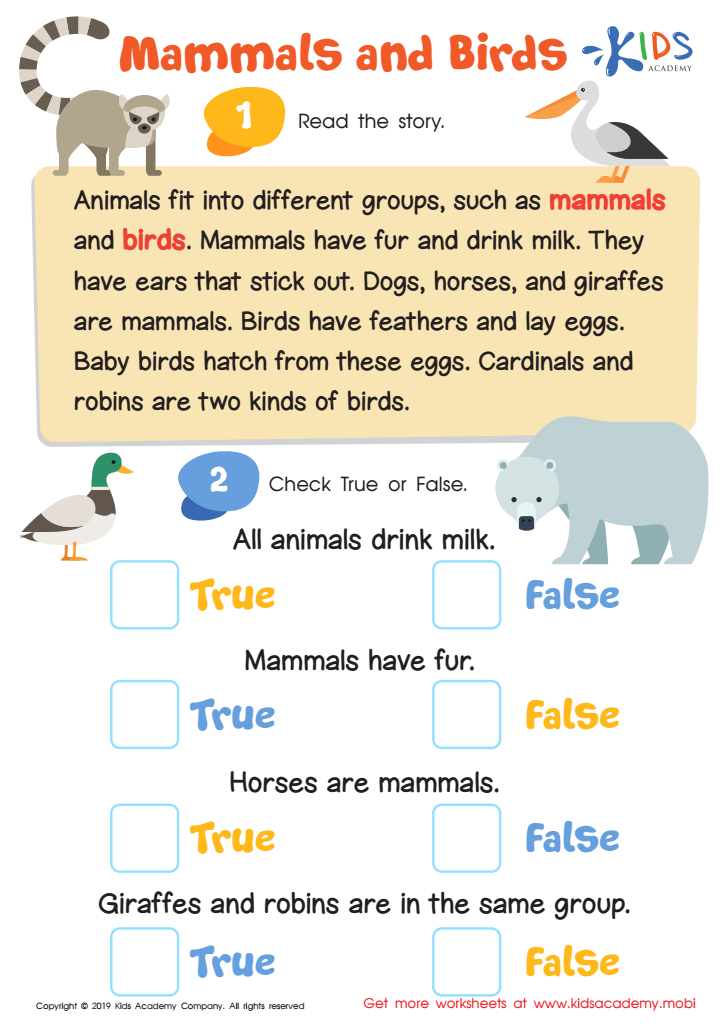
Mammals and Birds Worksheet

Mammals and Birds Worksheet

This worksheet challenges kids to read an informational text and review science facts about mammals and birds. Have them read the passage then mark statements true or false. Remind them to go back to the text if they get stuck! Get started now and help your child enhance multiple skills in one go!
Mammals and Birds Worksheet
Worksheet
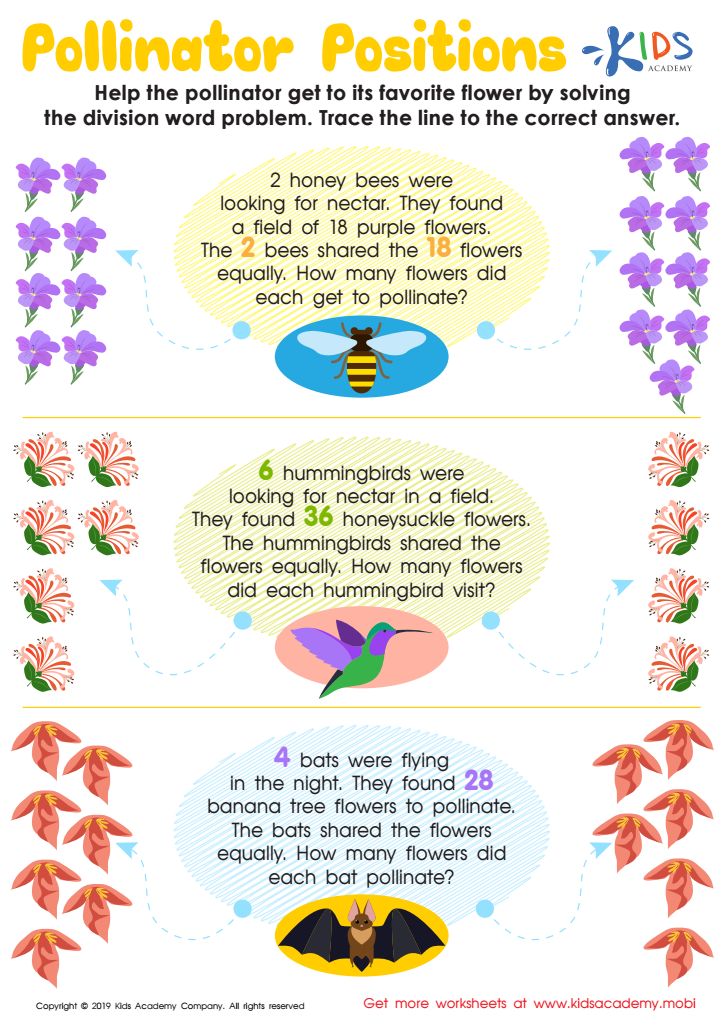
Pollinator Positions Worksheet

Pollinator Positions Worksheet

Kids will love learning about pollinators and how vital they are. Help their favorite friends get to the right flowers with this fun PDF. Children can solve the problems without even knowing they're doing division; just read the word problems and use the highlighted numbers. Finish by tracing the lines to the correct quotient!
Pollinator Positions Worksheet
Worksheet
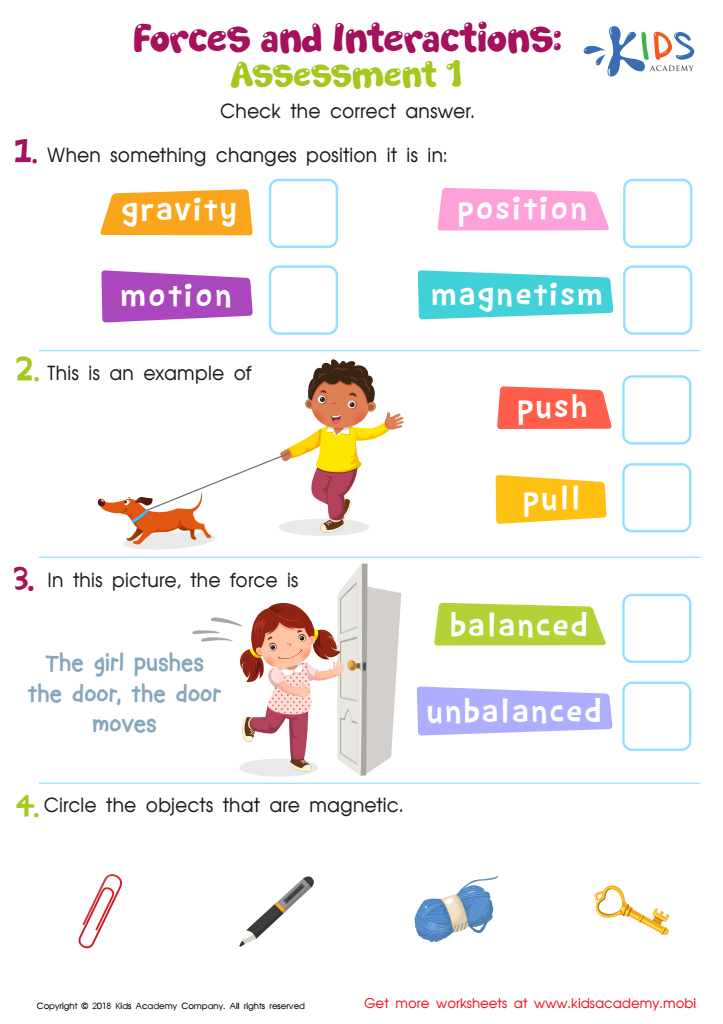
Forces and interactions printable worksheet

Forces and Interactions Printable
Test your child's physics know-how with this vibrant forces and interactions printable worksheet! Kids can assess their understanding of the different types of forces while they complete it. Read each example and check the boxes to show what they know!
Forces and Interactions Printable
Worksheet
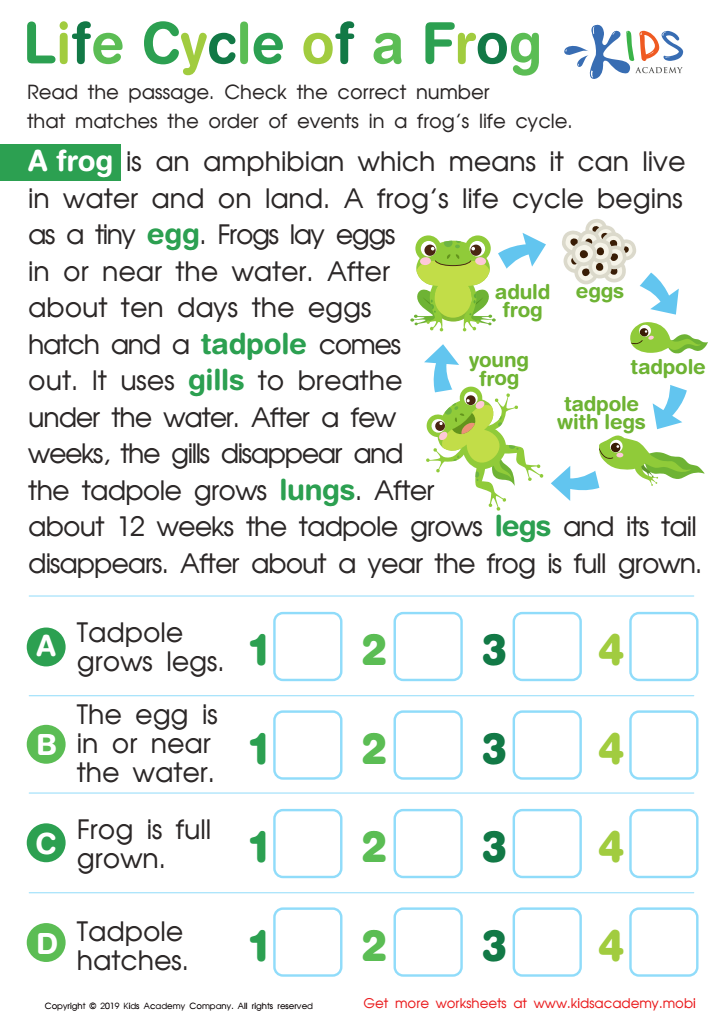
Life Cycle of a Frog Worksheet

Life Cycle of a Frog Worksheet

Teach your kids to read and open their eyes to new knowledge. Frogs have fascinating life cycles. Show them the worksheet with pictures and guide them as they read the passage about it. Encourage them to check the number that matches the frog's life cycle order.
Life Cycle of a Frog Worksheet
Worksheet
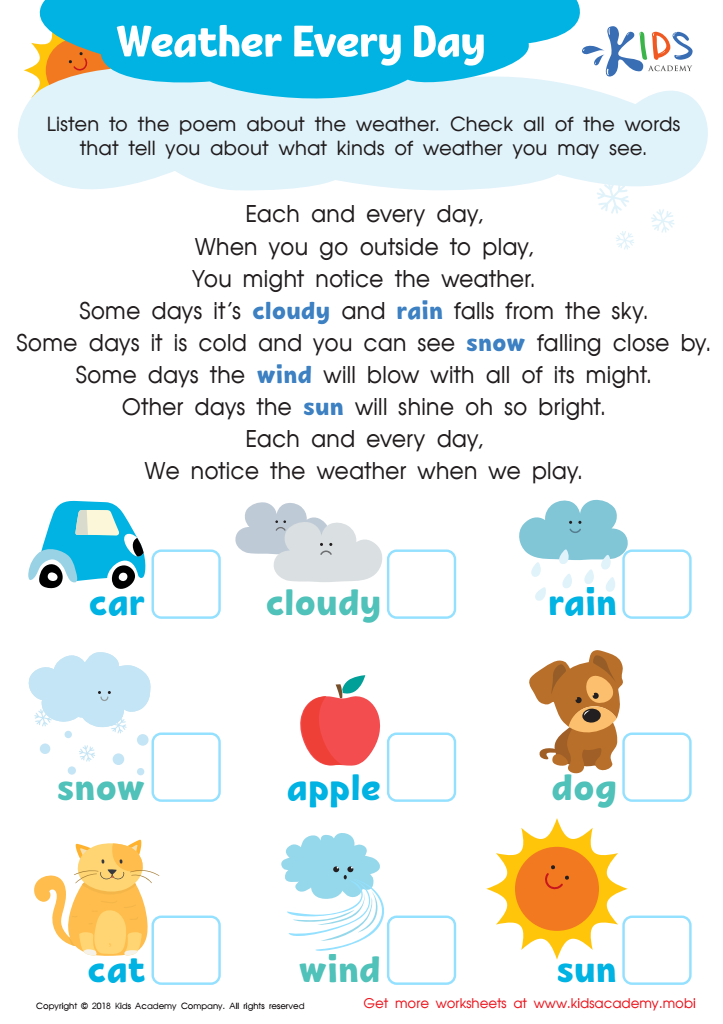
Weather Every Day Worksheet

Weather Every Day Worksheet

Ask your child to look out the window and tell you what the weather's like. Is it raining, stormy, cloudy, snowing or sunny? Help them observe all the different types of weather and then check the words at the bottom of the worksheet. What's their favorite type of weather? Read them this poem about the weather and see what they think!
Weather Every Day Worksheet
Worksheet
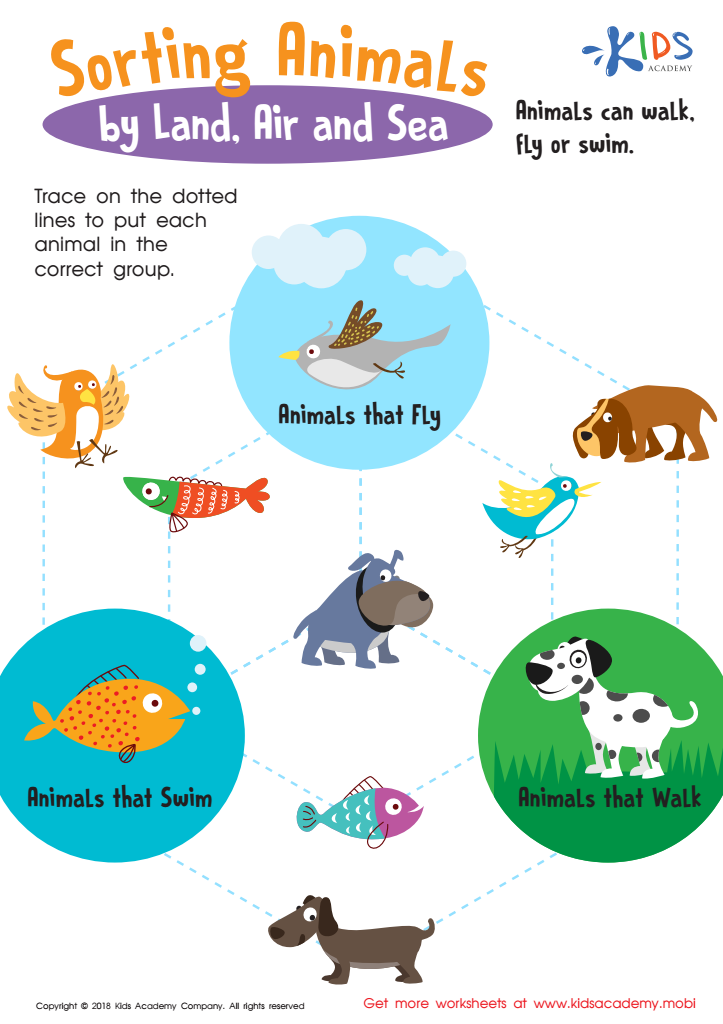
Sorting Animals by Land, Air and Sea Worksheet

Sorting Animals by Land, Air and Sea Worksheet

Kids will use critical thinking and fine motor skills with this worksheet! They'll analyze animal traits and draw lines to sort them into groups of those that fly, swim, or walk. It's a fun way to hone skills and have a great time!
Sorting Animals by Land, Air and Sea Worksheet
Worksheet
Animal camouflage worksheet

Animal Camouflage Worksheet

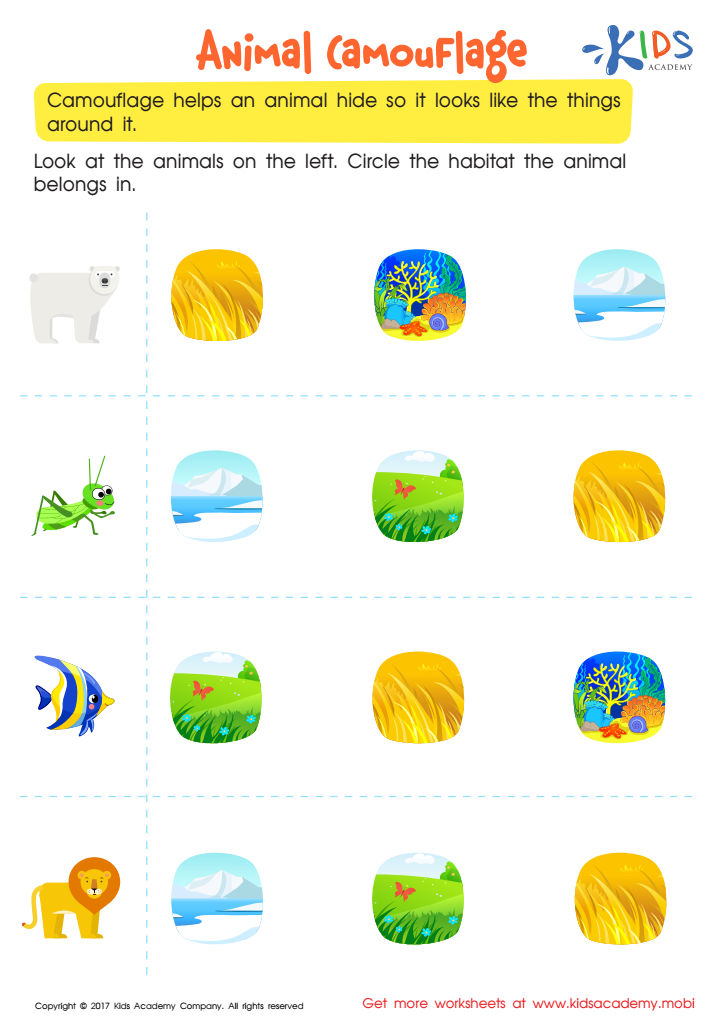
Camo isn't just for the military! Animals use camouflage, blending into their environment with coat patterns. Introduce your kid to this fascinating natural phenomenon with this cute animal camouflage worksheet.
Animal Camouflage Worksheet
Worksheet
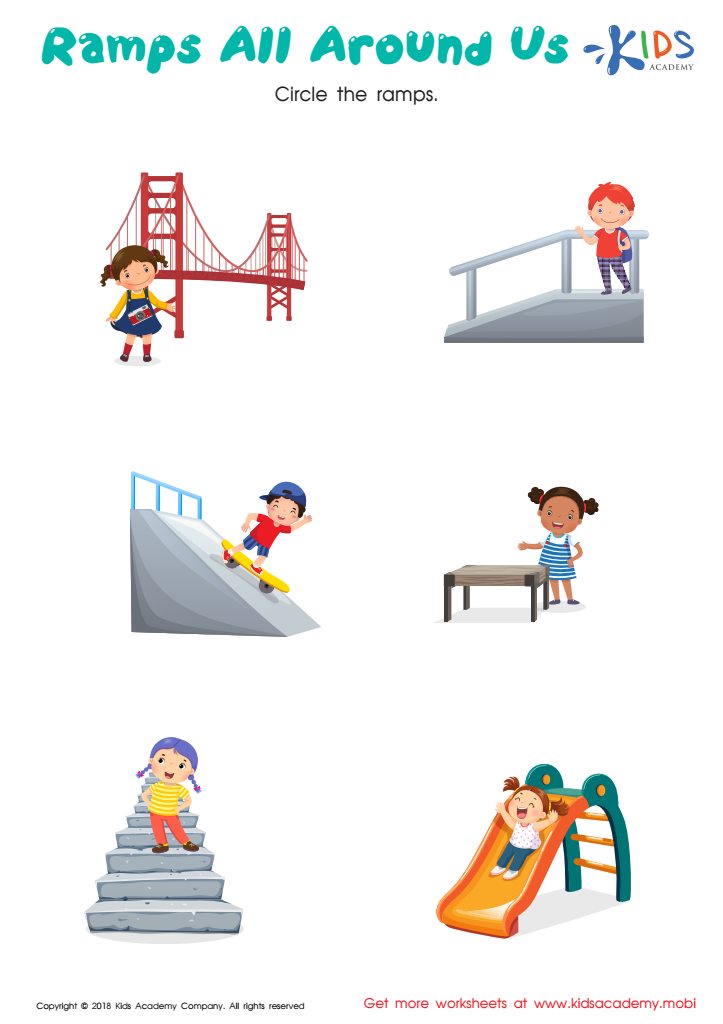
Ramps All Around us Worksheet

Ramps All Around us Worksheet

Ask your kids if they know what ramps are, then have them give you examples of places they've seen them. This worksheet has pictures of ramps - have your child identify and circle them.
Ramps All Around us Worksheet
Worksheet
Worksheet: Push or Pull

Pull or Push Worksheet

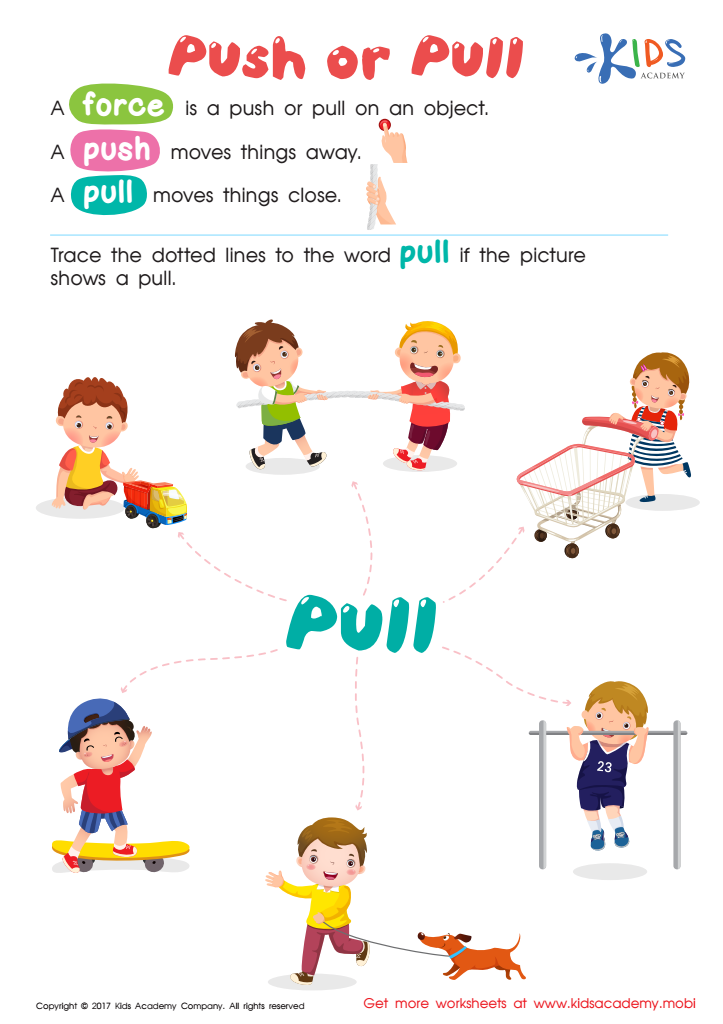
With this fun worksheet, they'll explore physics by sorting objects into categories according to their mode of motion. It's a great way to get them interested in science.
Pull or Push Worksheet
Worksheet
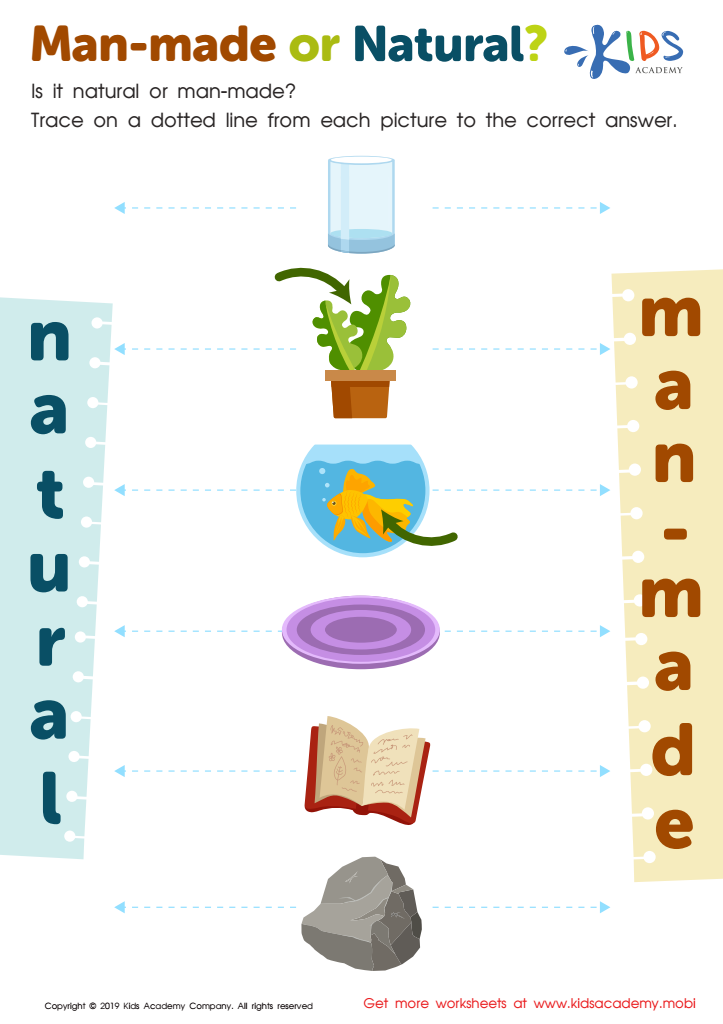
Man-Made or Natural? Worksheet

Man-Made or Natural? Worksheet

Ask your students to name natural and man-made objects. Check the worksheet to help them identify the objects, then trace the dotted line to determine if it's natural or man-made.
Man-Made or Natural? Worksheet
Worksheet
Water World Worksheet


Water World Worksheet

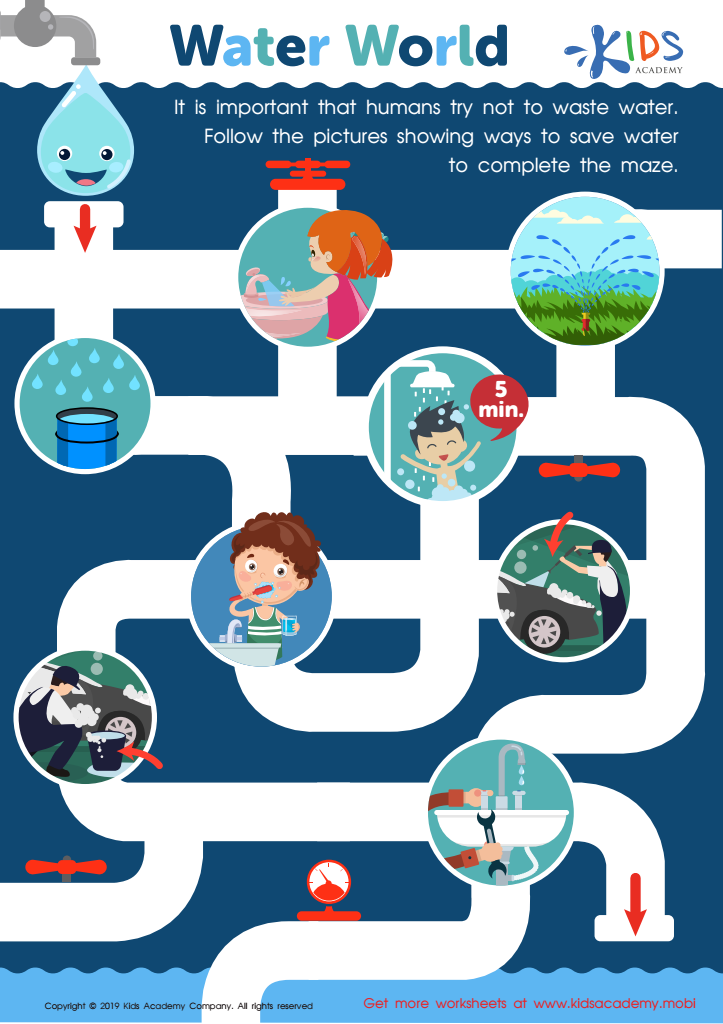
Water is a vital necessity for living. Our bodies depend on it to stay healthy and survive. When we don't drink enough water, we become thirsty and run the risk of getting sick. Luckily, our planet is full of water and natural sources to stay hydrated. To prevent water waste, use this worksheet to teach your students how to conserve it and complete the maze.
Water World Worksheet
Worksheet


Enhancing observation skills in science for children aged 4-8 is essential as it forms the foundation for critical thinking and lifelong learning. At this impressionable age, kids are naturally curious and eager to explore their surroundings. By nurturing their observation abilities, parents and teachers empower children to be more attentive and perceptive, laying the groundwork for academic success and informed decision-making later in life.

Observation skills are key in science education because they enable young learners to identify patterns, make predictions, and draw conclusions based on real-world evidence. Through simple activities like nature walks, examining leaves, or mixing colors, children learn to ask questions and develop hypotheses. These experiences not only enhance their cognitive abilities but also spark a deep interest in the natural world.

Furthermore, fine-tuning observation skills encourages mindfulness and concentration. In an era dominated by digital distractions, these practices can help children focus and appreciate the details in their environment. These skills are transferrable across various subjects, aiding in reading comprehension, mathematical reasoning, and social interactions.

Ultimately, by prioritizing the enhancement of observation skills in young children, parents and teachers can cultivate an enriched learning environment that values curiosity, inquiry, and a holistic understanding of the world.