Identifying Animals Science Worksheets for Ages 4-8
3 filtered results
-
From - To
Enhance your child's learning journey with our "Identifying Animals Science Worksheets for Ages 4-8." Perfectly tailored for young explorers, these engaging worksheets help kids recognize and differentiate a variety of animals through fun and educational activities. With visually appealing images and interactive tasks, children will develop crucial science skills while enjoying the process. Ideal for parents and teachers, these worksheets promote observation, critical thinking, and vocabulary building. Give your aspiring scientist a head start and make animal recognition an exciting adventure with our expertly designed resources. Download today and spark a lifelong love for learning in your child!
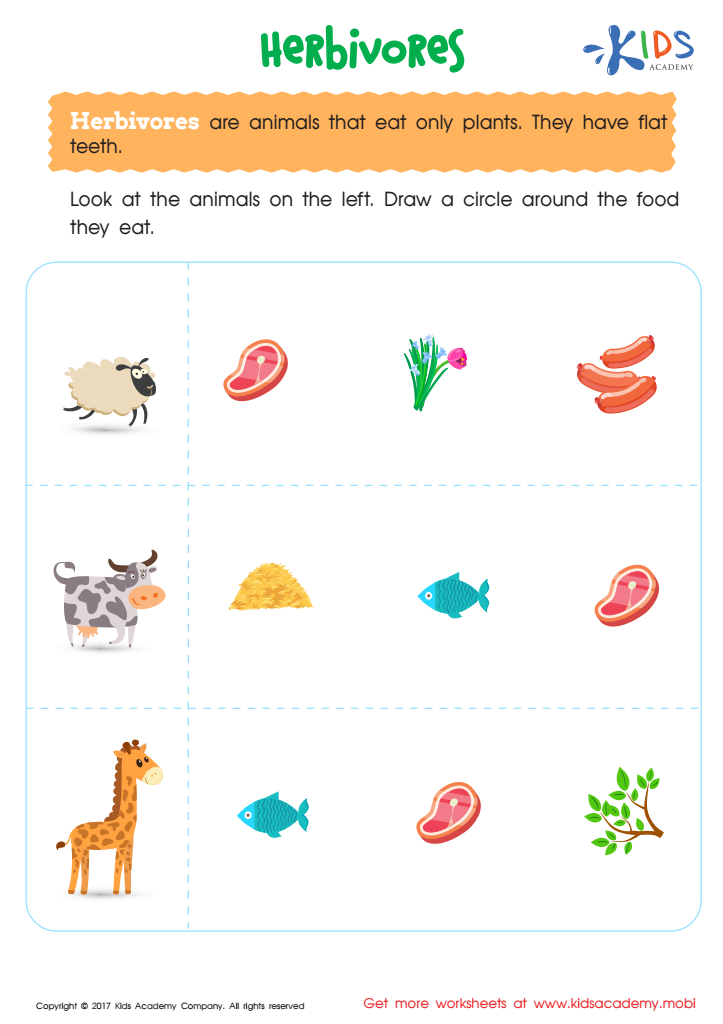
Herbivores Printable
 Assign to My Students
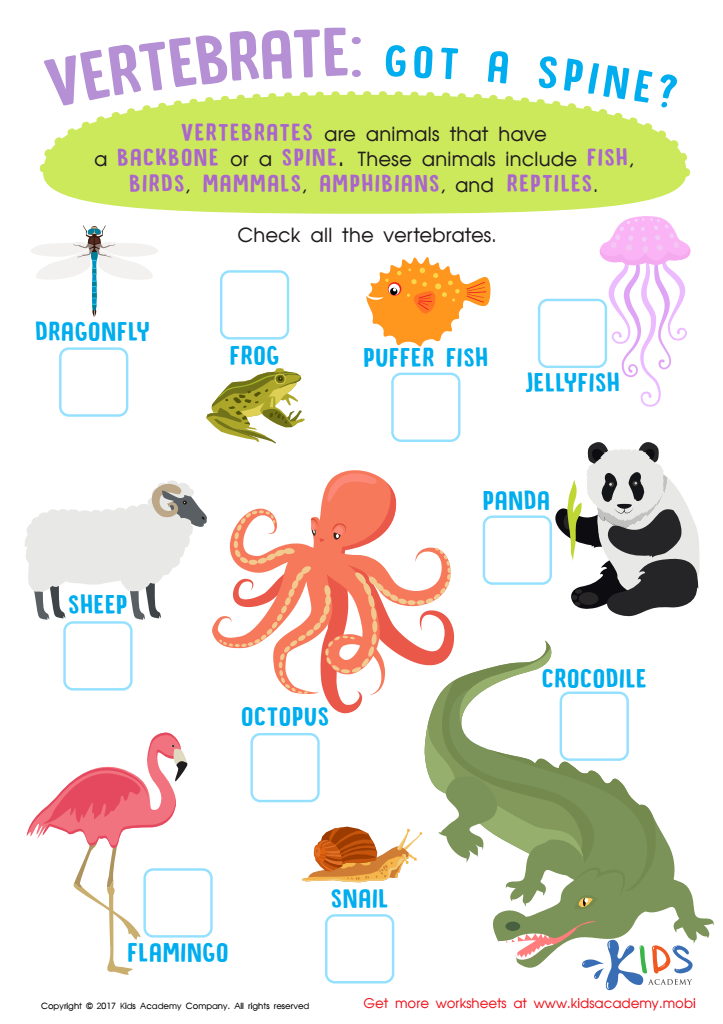
Vertebrates Animals Worksheet for 3rd Grade
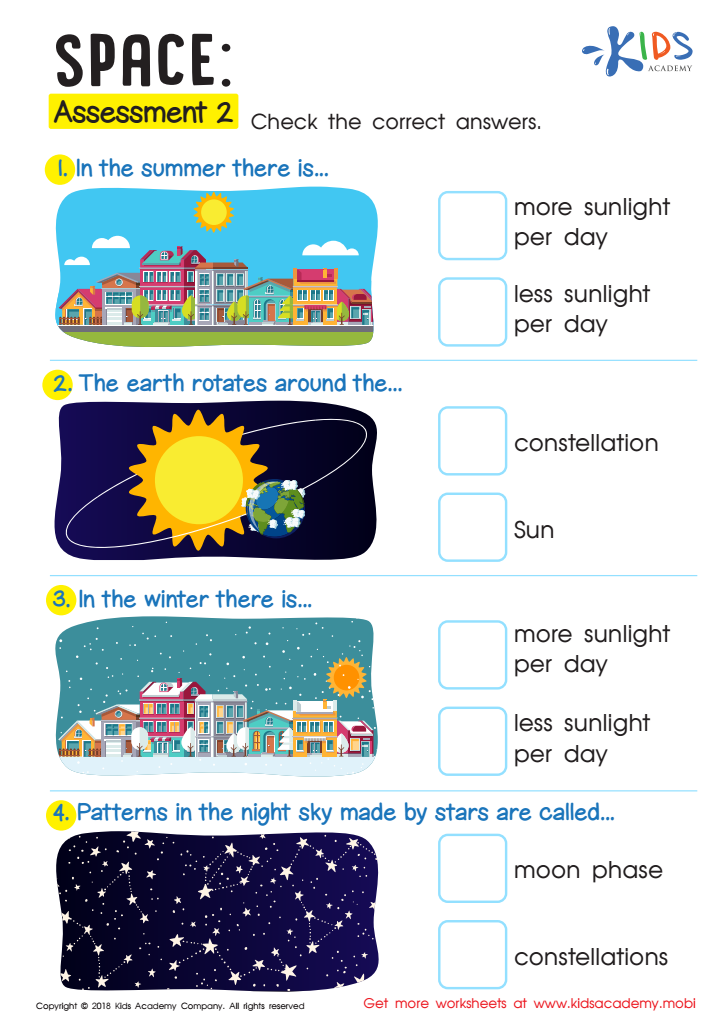
Space: Assessment 2 Worksheet








Identifying animals science for children aged 4-8 lays a critical foundation for their understanding of the natural world. This early exposure helps stimulate a child's curiosity and fosters a sense of wonder about nature. It aids in developing key cognitive skills such as observation, classification, and critical thinking, as they learn to distinguish different species and their characteristics.
Additionally, teaching kids to identify animals promotes empathy and environmental stewardship. They become more aware of the biodiversity around them and the importance of each species, fostering a sense of responsibility to protect wildlife and habitats. The sooner children appreciate these concepts, the more likelier they are to grow into environmentally conscious adults.
Moreover, learning about animals can enrich children's vocabulary and language skills. Terms like "mammal," "reptile," and "amphibian" and their associated characteristics expand their lexicon while enhancing their ability to communicate and comprehend informational text.
Finally, animal science often involves interactive and hands-on activities like outdoor exploration or using educational apps, making learning fun and engaging. This excitement for learning carries over into other subjects, helping to create lifelong learners. In essence, early engagement with animal science sets children on a path toward academic success and responsible citizenship.







