Science vocabulary enhancement Science Worksheets for Ages 4-8
3 filtered results
-
From - To
Discover our engaging Science Vocabulary Enhancement Worksheets designed specifically for children aged 4-8! These interactive resources are perfect for young learners eager to explore the wonders of science while building their vocabulary. Each worksheet encourages creativity and critical thinking through fun activities, colorful illustrations, and relatable scenarios. From basic terminology to fascinating concepts, our worksheets cover a wide range of scientific topics. These tools not only boost language skills but also foster a lifelong love for science. Empower your child’s learning journey and watch them shine in their understanding of the world around them with our thoughtfully crafted science worksheets!
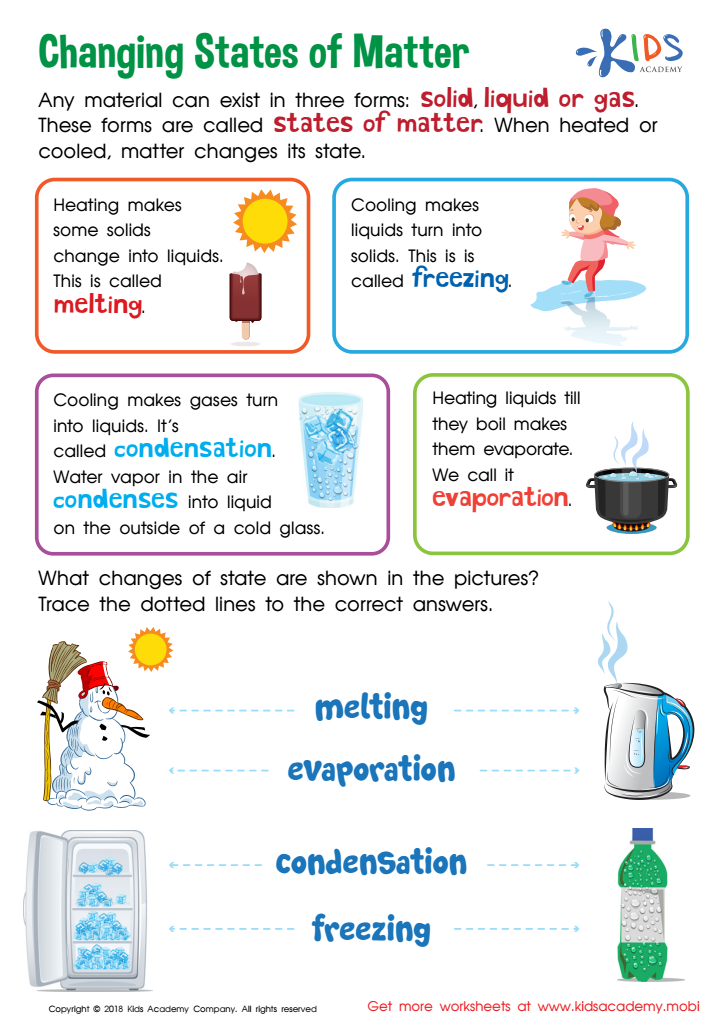
States of Matter Worksheet
 Assign to My Students
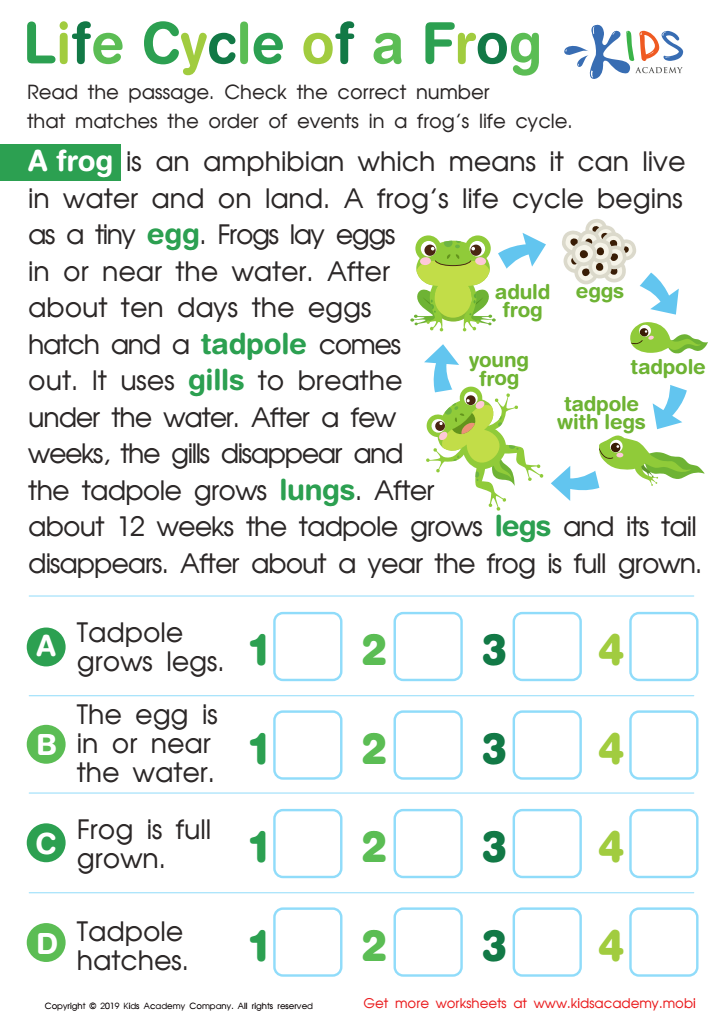
Life Cycle of a Frog Worksheet
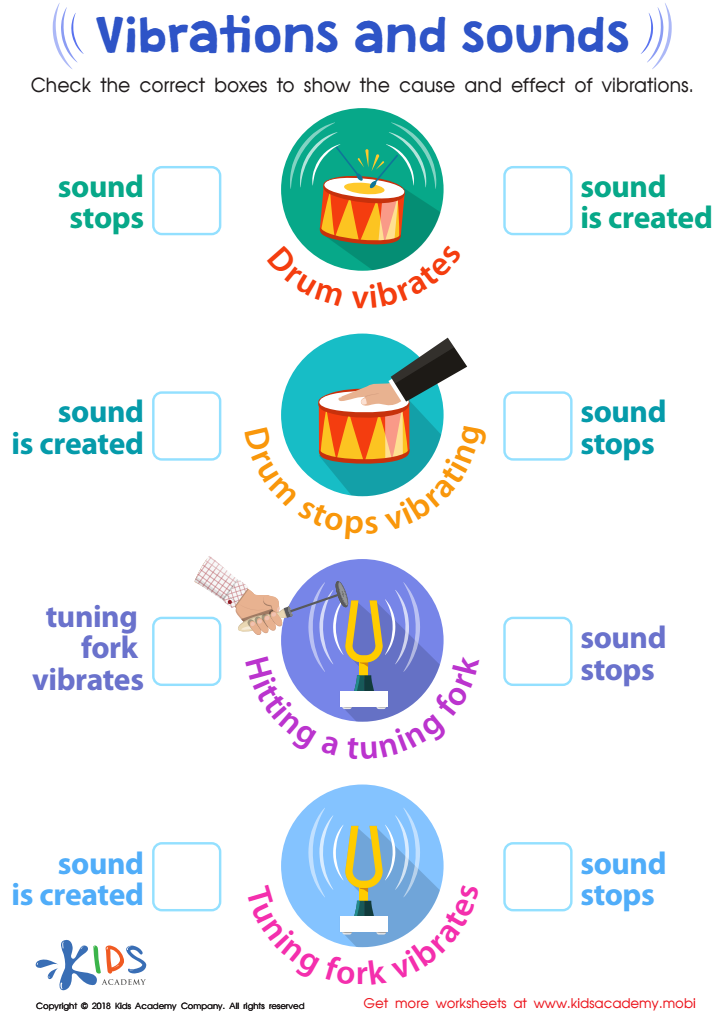
Vibrations and Sounds Worksheet







Enhancing science vocabulary for children aged 4-8 is crucial for their cognitive development and academic success. At this age, children are naturally curious and eager to explore the world around them. Introducing scientific terms helps them articulate their observations and engage in meaningfully deeper conversations about their experiences. By expanding their vocabulary, children develop critical thinking skills, enabling them to comprehend and discuss scientific concepts more effectively.
Furthermore, a solid science vocabulary lays the foundation for future learning in STEM (Science, Technology, Engineering, and Mathematics) areas. As students progress academically, the complexity of scientific concepts increases, requiring them to have a robust vocabulary to grasp and communicate these ideas. Parents and teachers play a vital role in this enhancement by incorporating science-related words in everyday conversations, songs, stories, and hands-on activities.
Additionally, understanding scientific terminology fosters curiosity and a love for learning. Children who can label phenomena and ask informed questions are more likely to pursue knowledge and explore new interests. By prioritizing science vocabulary in early education, adults can empower children to become confident, inquisitive learners, setting them on a path toward successful, informed participation in an increasingly scientific and technological world.







