Sequencing skills improvement Science Worksheets for Ages 4-8
3 filtered results
-
From - To
Enhance your child's learning experience with our engaging Sequencing Skills Improvement Science Worksheets, designed specifically for ages 4-8. These worksheets help young learners develop crucial sequencing skills through exciting activities that blend science concepts with visual engagement. Children will practice arranging events, recognizing patterns, and improving cognitive abilities essential for reading comprehension and logical thinking. Our thoughtfully crafted worksheets foster creativity and critical thinking, making learning both fun and effective. Perfect for home or classroom use, these resources empower kids to explore scientific ideas while mastering essential sequencing skills they will use throughout their education. Download now to nurture your child's growth!
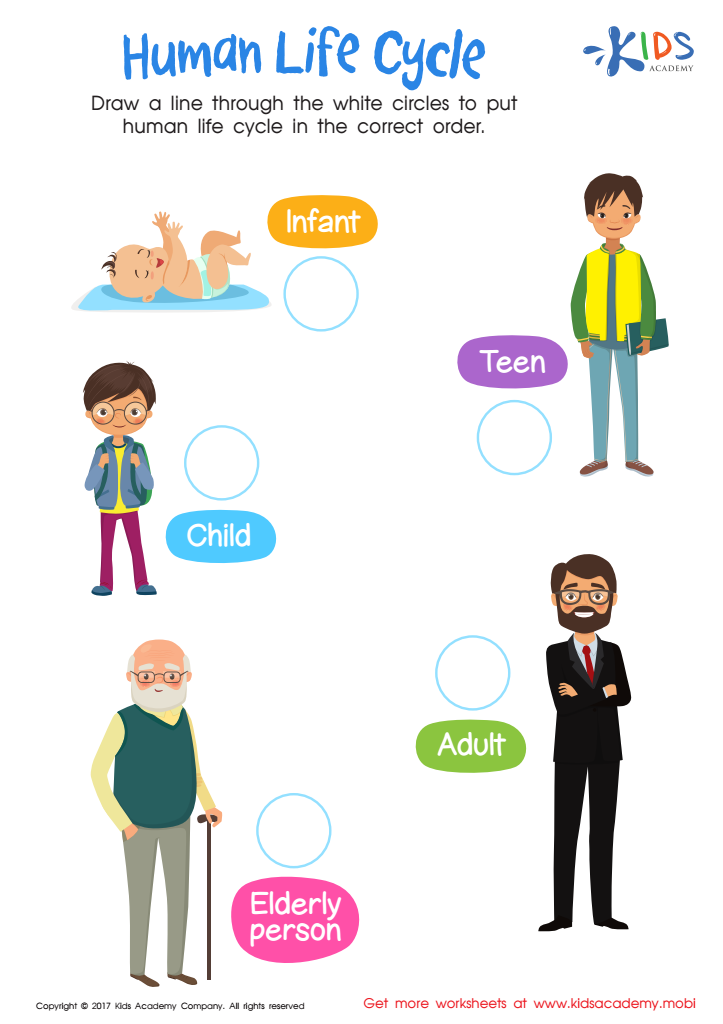
Human Life Cycle Worksheet
 Assign to My Students
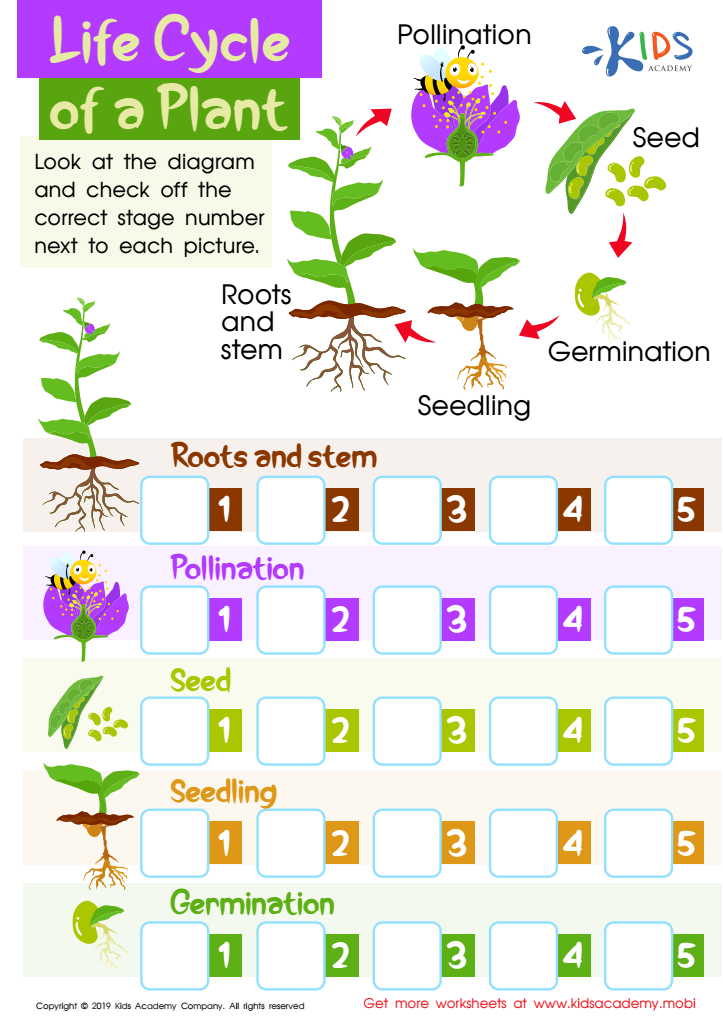
Life Cycle of a Plant Worksheet
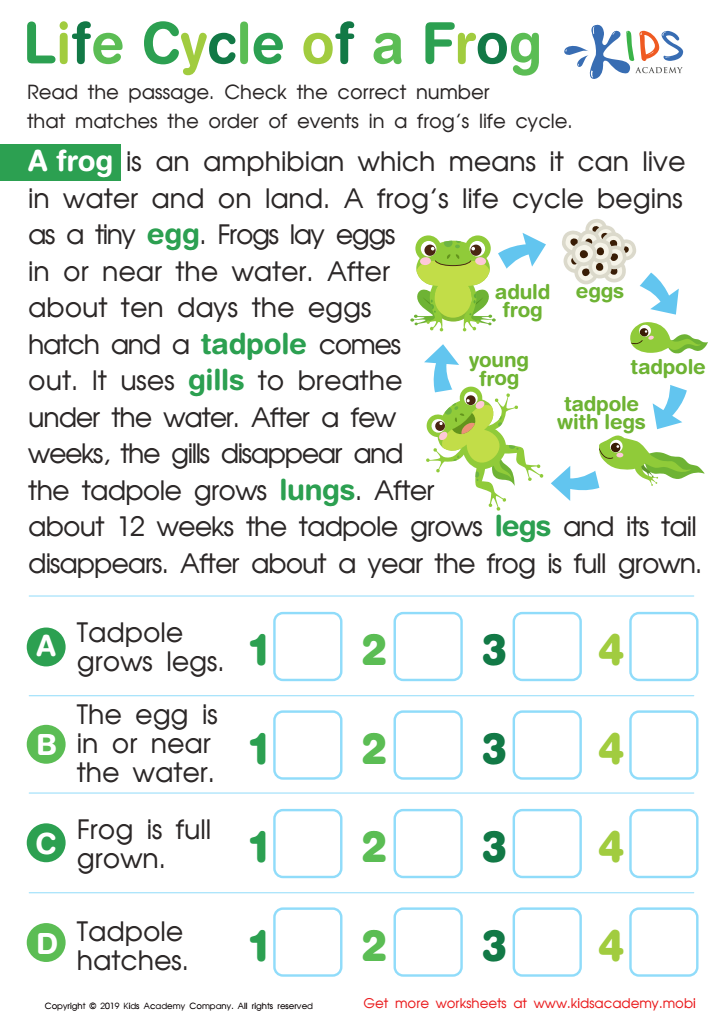
Life Cycle of a Frog Worksheet








Sequencing skills are fundamental to a child's early cognitive development and have significant implications for their educational journey, particularly in science. For children aged 4-8, developing these skills enhances their ability to understand and organize information, which serves as a foundation for effective learning. When students learn to recognize sequences—such as stages in a scientific process or the order of events in a story—they gain critical thinking abilities that aid in problem-solving and comprehension.
In science, sequencing helps young learners grasp the concepts of cause and effect, understand processes like the water cycle or the life cycle of a butterfly, and effectively follow experimental procedures. Improved sequencing skills not only enhance scientific literacy but also foster a sense of curiosity and engagement with the subject matter.
Parents and teachers play a crucial role in nurturing these skills. Engaging children in activities like storytelling, sorting, and hands-on experiments encourages them to think about the steps involved. As they progress through these experiences, they develop the ability to articulate and reflect on their learning, leading to increased confidence and motivation. Supporting sequencing skills ultimately lays the groundwork for future academic achievement and lifelong learning.







