Understanding directions Science Worksheets for Ages 4-8
4 filtered results
-
From - To
Explore our engaging Understanding Directions Science Worksheets, designed specifically for children ages 4-8! These educational resources help young learners develop essential skills in following directions, boosting their comprehension and critical thinking abilities. The fun, interactive activities encourage curiosity about the world around them while enhancing listening and reading skills. Each worksheet is tailored to meet the developmental needs of early learners, featuring age-appropriate tasks that inspire problem-solving and scientific inquiry. Perfect for both classroom and home use, our worksheets make learning enjoyable and effective. Start your child's journey in understanding directions and science concepts today!
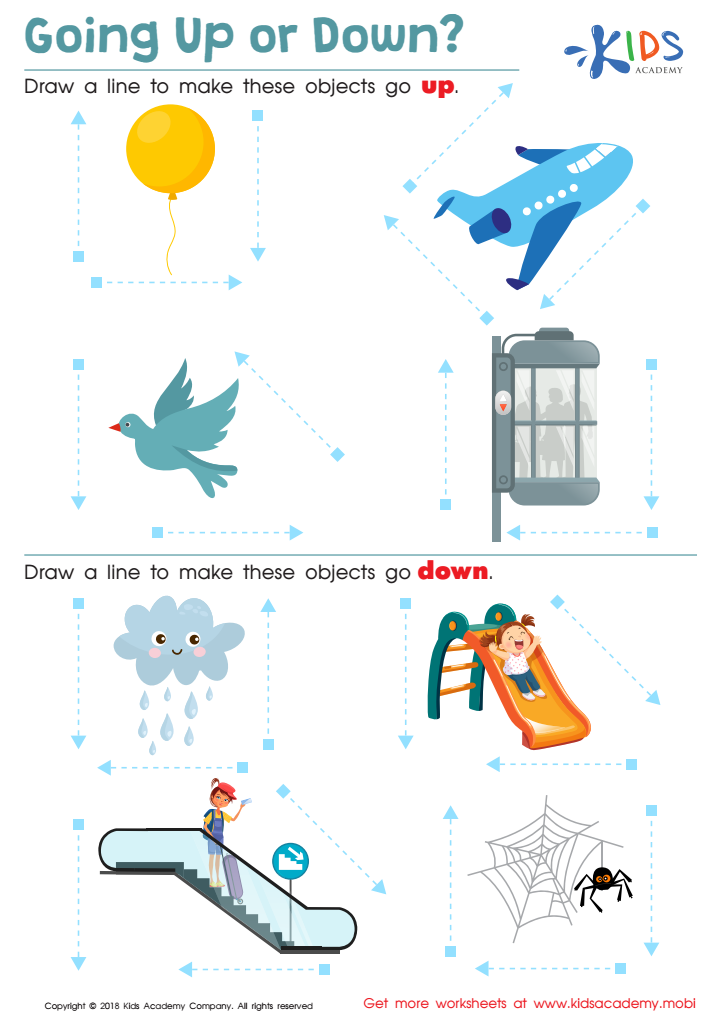
Going up or Down? Worksheet
 Assign to My Students
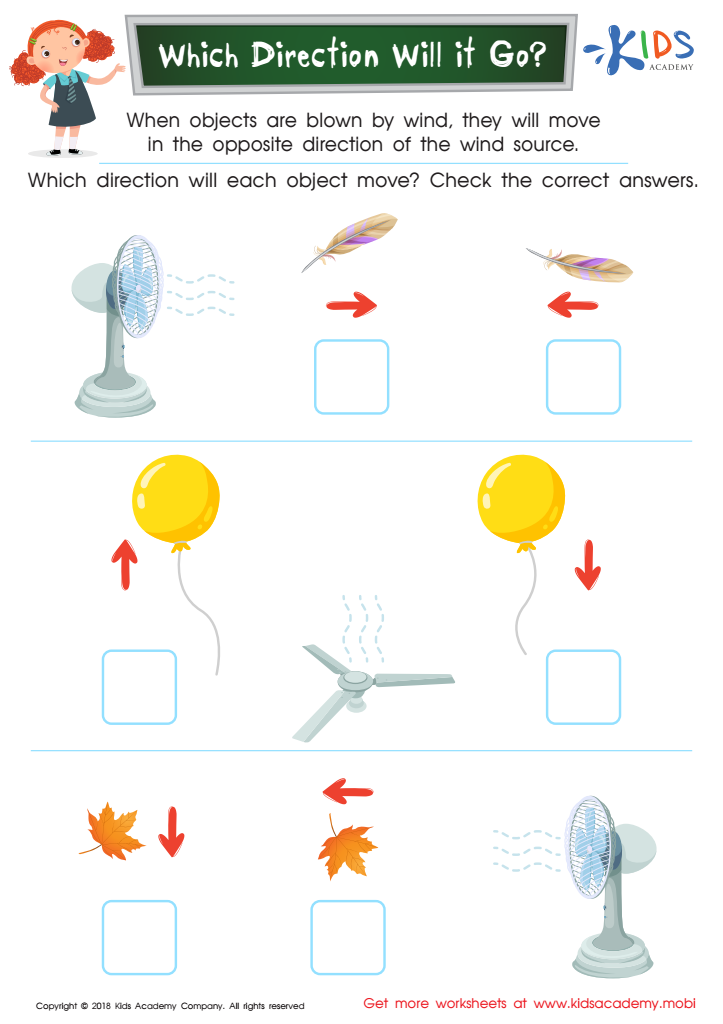
Which Direction Will it Go? Worksheet
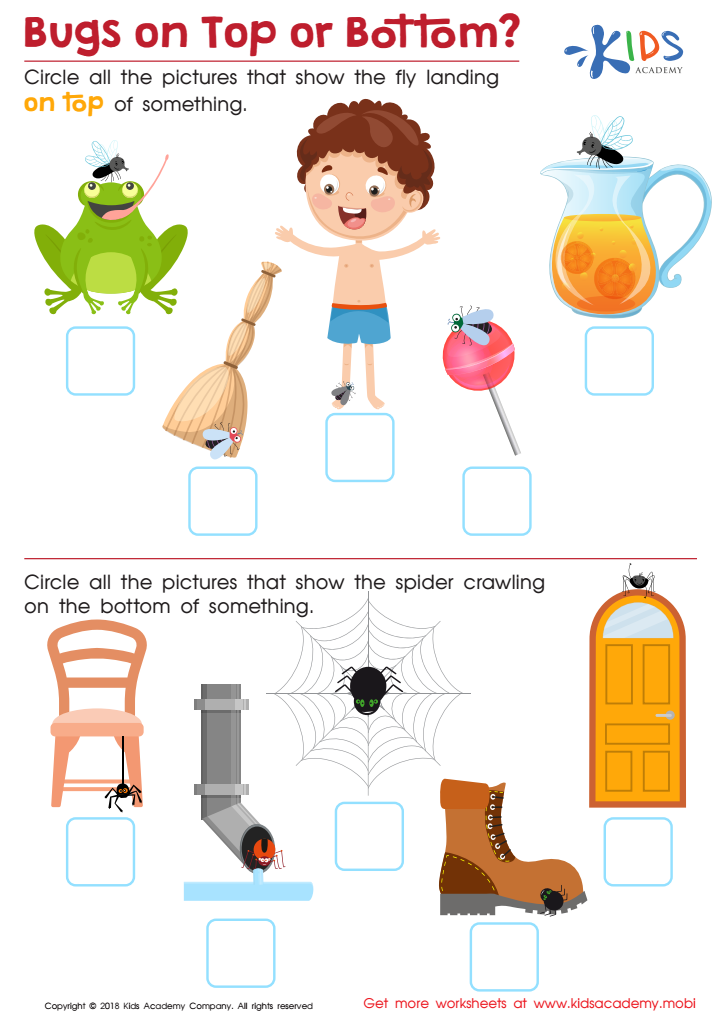
Bugs on Top or Bottom? Worksheet
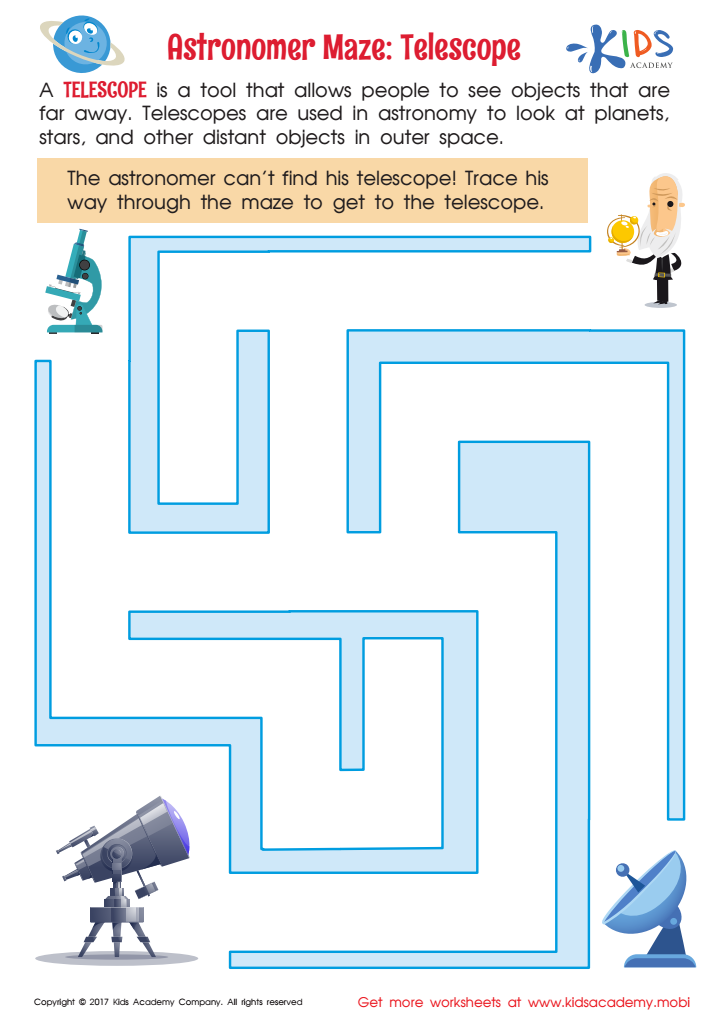
Astronomer Maze: Telescope Worksheet





Understanding science concepts and directions is crucial for children aged 4-8, as it supports their cognitive and social development. At this early age, children are naturally curious and eager to learn about the world around them. Parents and teachers play a pivotal role in nurturing this curiosity by providing age-appropriate scientific exploration opportunities that foster critical thinking and problem-solving skills.
Learning to follow and understand directions in scientific activities can enhance a child’s ability to process information and encourages active participation. When children engage in hands-on experiments or simple science projects, they gain confidence in their ability to conduct inquiries and communicate their findings, building essential skills in collaboration and persistence.
Moreover, understanding scientific directions helps cultivate literacy and numeracy skills. Reading and interpreting instructions form a foundation for later academic success. By prioritizing science education, parents and teachers can help create a solidly equipped future generation, one that is prepared to address complex challenges and make informed choices about their health, the environment, and technology. Ultimately, engaging children in science empowers them to explore, inquire, and foster a lifelong love for learning, all while building foundational skills that extend beyond the classroom.







