
Understanding moon phases Science Worksheets for Ages 4-8
3 filtered results
Difficulty Level
Grade
Age
-
From - To
Subject
Activity
Standards
Unlock the mysteries of the moon with our engaging "Understanding Moon Phases" science worksheets for ages 4-8. Perfectly tailored for young astronomers, these worksheets introduce children to the waxing, waning, and various phases of the moon in a fun and interactive way. Designed to boost curiosity and enhance foundational science skills, each activity is rich in visuals and easy-to-follow instructions. Watch as children enter a world of wonder, all while developing key understanding and observation skills. Ideal for classroom or home learning, these worksheets make learning about the moon’s phases an exciting hands-on adventure.
Favorites
With answer key
Interactive
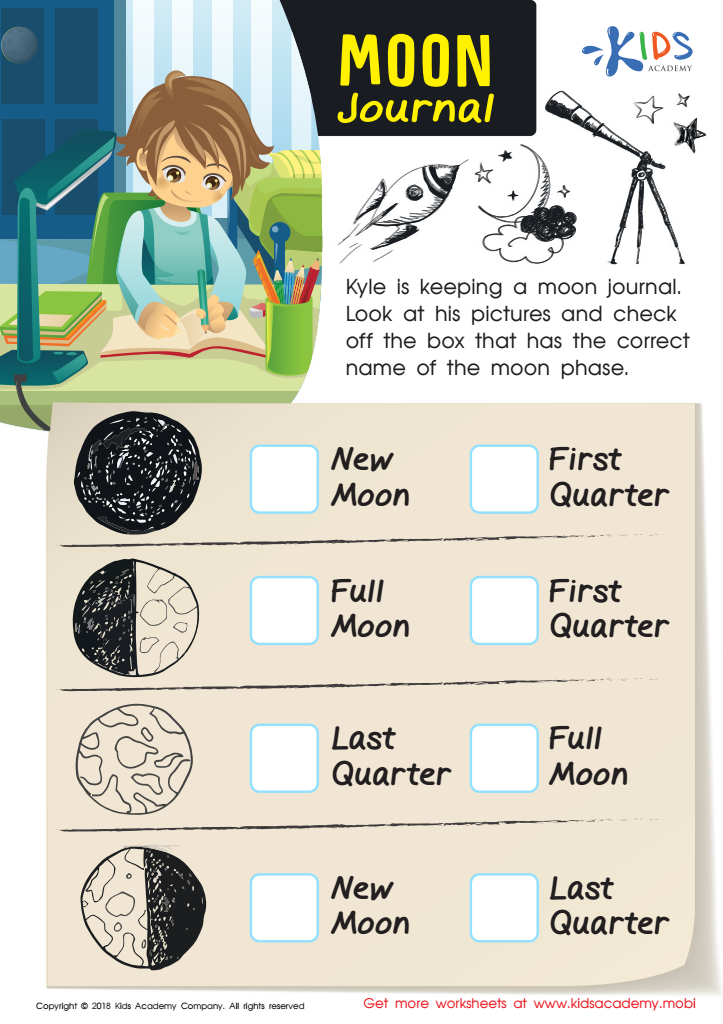
Moon Journal Worksheet
Observe the moon and its 8 phases with your child by downloading this free PDF worksheet from Kids Academy! Review the moon phases with them then help them label Kyle's moon journal. Select the right moon phase for each picture to complete the page!
 Assign to My Students
Moon Journal Worksheet
Worksheet
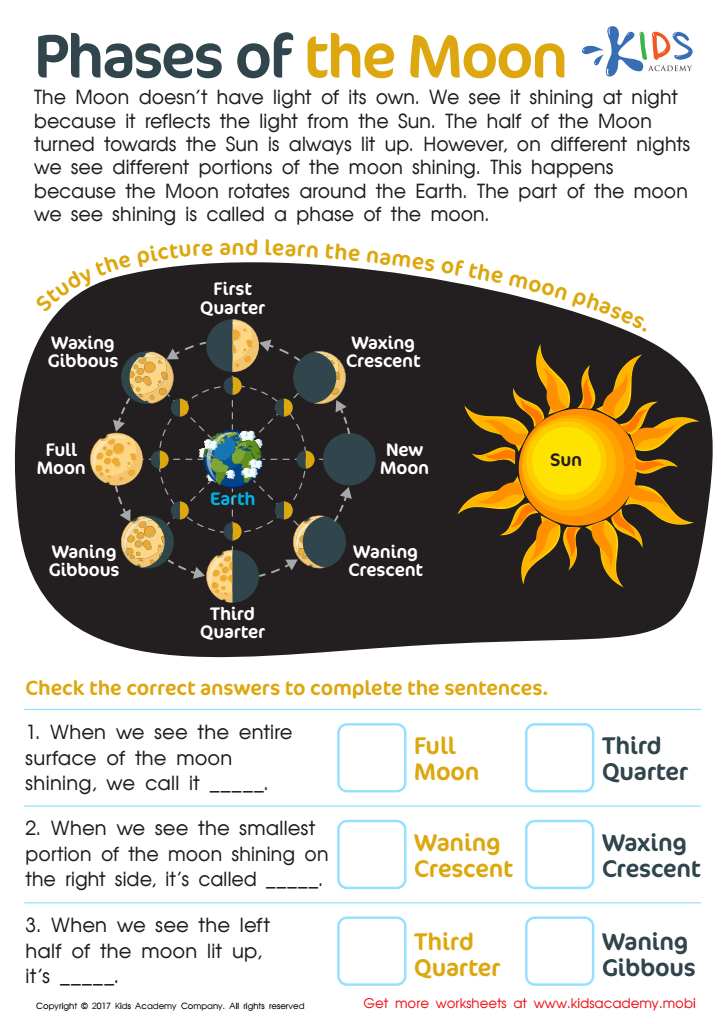
Phases of The Moon Worksheet
It'll show kids the fascinating phases and journey the moon takes around Earth. They'll be amazed to learn it's not always shining!
Phases of The Moon Worksheet
Worksheet
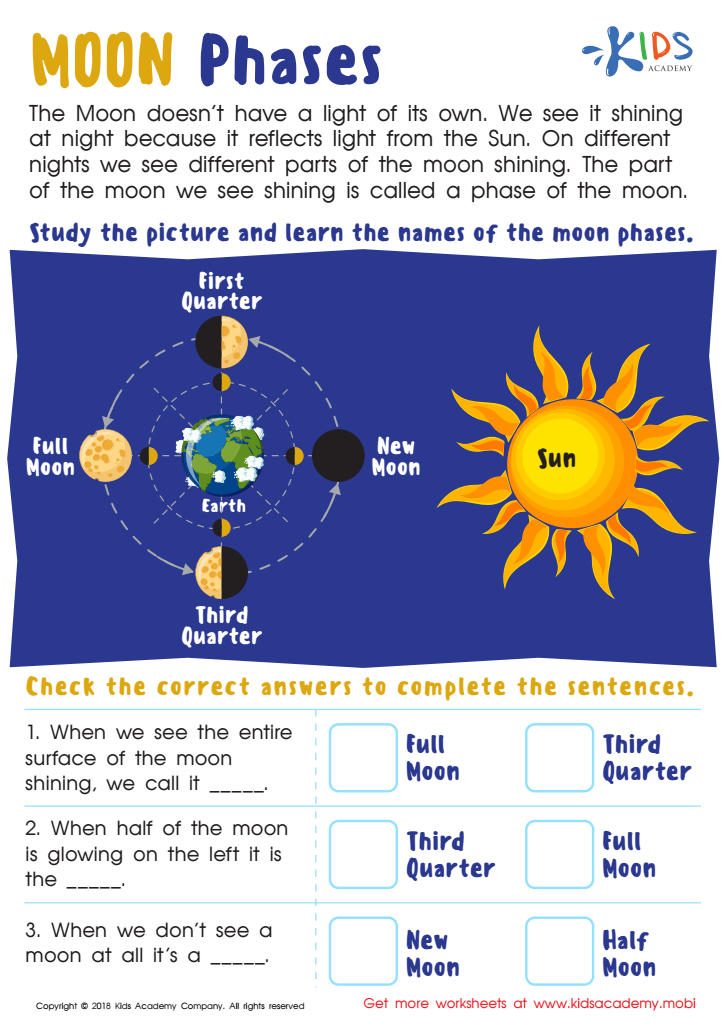
Moon Phases Worksheet
Gaze up at the night sky and the moon's appearance may change from night to night. Encourage your child to learn more about the sun, the moon, and space with this science worksheet. Have them read the text then study the picture. Finally, read the sentences and check the answers to identify the moon's phases.
Moon Phases Worksheet
Worksheet
Join Kids Academy for Free
Who is primarily going to use this learning content?




.jpg)

Understanding moon phases holds educational and developmental significance for young children aged 4-8. For parents and teachers, introducing moon phases serves several crucial purposes. Firstly, it sparks curiosity and a sense of wonder about the natural world, laying an early foundation for scientific thinking and inquiry. Young children are naturally fascinated by the moon, and learning about its phases caters to their curiosity while fostering observational skills and a deeper appreciation for nature.
Educationally, understanding moon phases enhances cognitive development. It encourages young minds to recognize patterns, sequences, and cyclic changes, which are fundamental concepts in both science and mathematics. By watching and documenting the shape of the moon over time, children practice skills such as following a sequence and noticing gradual changes, boosting their attention to detail and critical thinking.
Moreover, learning about moon phases supports literature and cultural education. Many stories, myths, and traditions revolve around the moon, which can enrich a child's reading and cultural knowledge, linking scientific facts with human history and folklore. It provides a holistic educational approach, combining STEM and the humanities.
Lastly, involving young children in discussions about moon phases promotes quality bonding time, enhancing social and emotional development. Engaging in hands-on activities, such as creating moon phase charts or observing the moon together, fosters communication, improves fine motor skills, and instills a sense of achievement and confidence in learning new concepts.







