Observational skills Physical Science Worksheets for Ages 4-8
4 filtered results
-
From - To
Explore our engaging "Observational Skills Physical Science Worksheets" designed specifically for children aged 4-8! These fun, interactive worksheets cultivate critical observation abilities as young learners explore the basics of physical science. Our resources encourage curiosity through hands-on activities that include identifying colors, shapes, and patterns in everyday materials. Each worksheet sparks creativity while reinforcing scientific concepts, making learning both enjoyable and effective. Ideal for homeschooling or classroom activities, these worksheets help children develop strong observation skills that form the foundation for future learning. Start your child's scientific journey today and unlock their potential with our thoughtfully crafted worksheets!
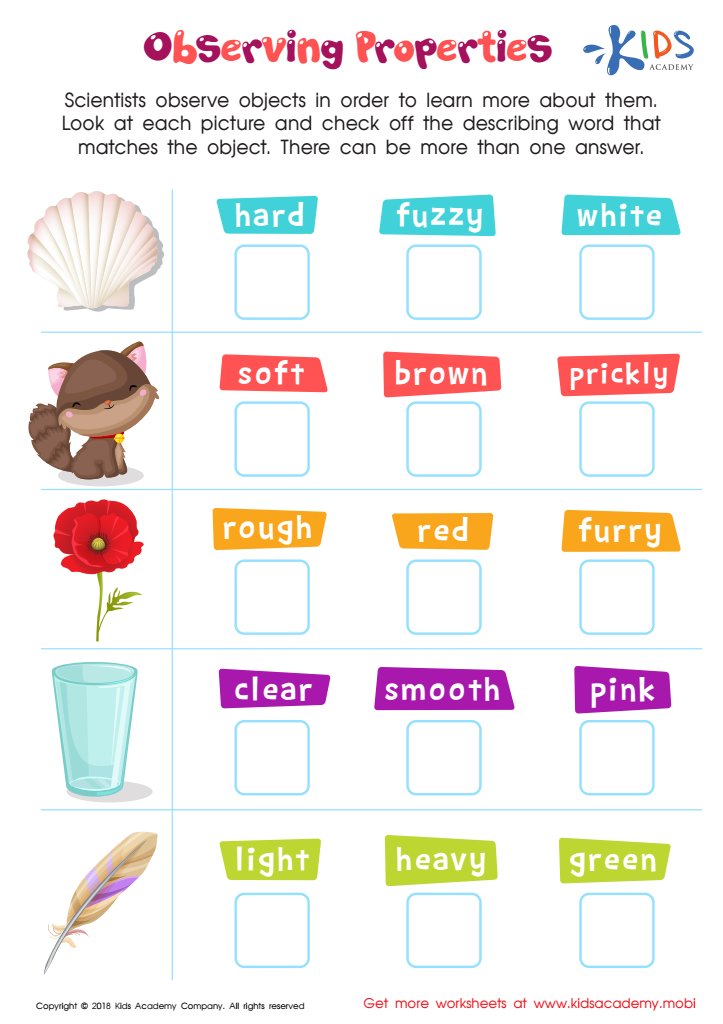
Observing Properties Worksheet
 Assign to My Students
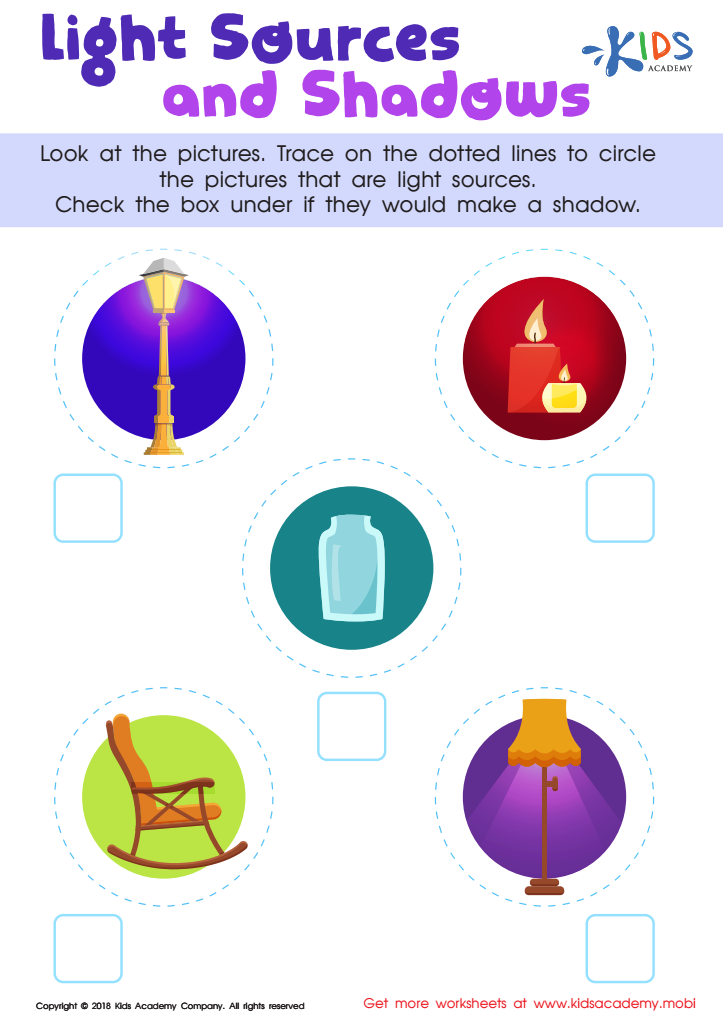
Light Sources and Shadows Worksheet
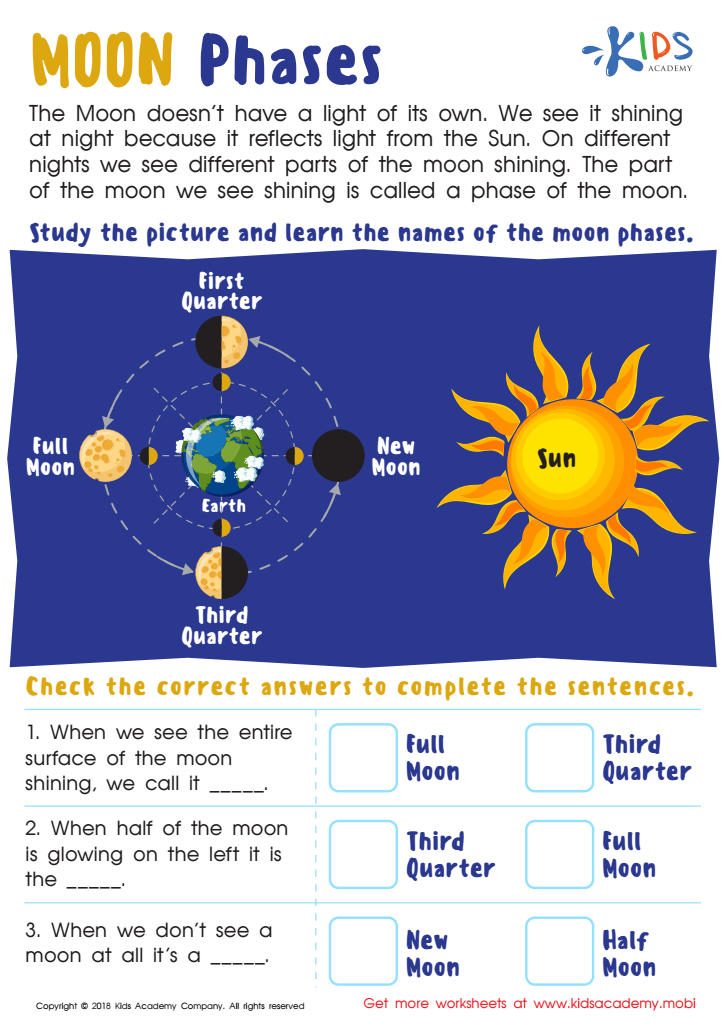
Moon Phases Worksheet
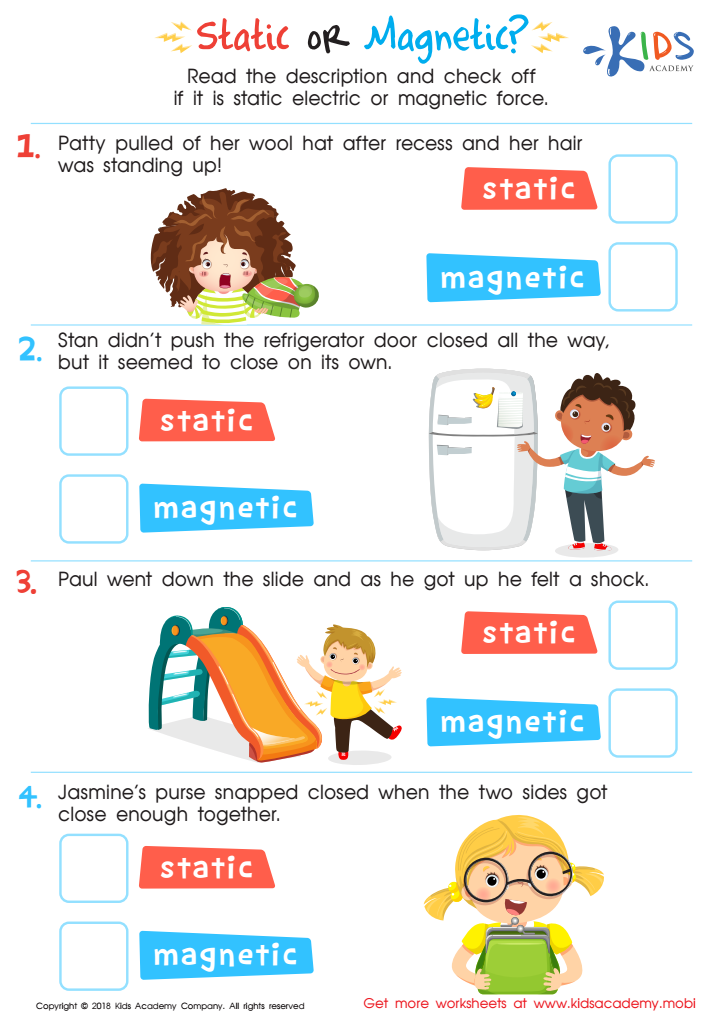
Static or Magnetic Printable Worksheet








Observational skills are crucial for young learners, especially within the realm of Physical Science. For children aged 4-8, developing these skills lays a strong foundation for scientific thinking and inquiry. When parents and teachers prioritize observational skills, they encourage children to keenly observe their surroundings, enhancing their curiosity about the world around them.
At this age, children naturally explore and ask questions. By fostering observational skills, adults can guide them in making sense of their observations through hands-on experiences and inquiry-based learning. For instance, observing the properties of different materials or the effects of forces like push and pull can spark vital discussions, promoting critical thinking and reasoning.
Furthermore, strong observational skills contribute to language development as children articulate what they see, fostering their vocabularies with science-related terms. This practice nurtures a love for learning and prepares children for future scientific endeavors.
Finally, when parents and teachers emphasize the importance of observation in Physical Science, they promote engagement and interaction. Observational skills encourage creativity, inspire problem-solving mindsets, and cultivate an evidence-based approach to understanding the environment, all vital components as children progress in education.







