Spatial awareness Physical Science Worksheets for Ages 4-8
4 filtered results
-
From - To
Explore our engaging Spatial Awareness Physical Science Worksheets for ages 4-8, designed to introduce young learners to essential spatial concepts in a fun and interactive way. These thoughtfully crafted worksheets encourage children to develop critical observational skills, learning about their environments through activities that enhance their understanding of space, dimensions, and relationships between objects. Kids will enjoy colorful illustrations and hands-on tasks that promote active participation and creativity. Perfect for classroom or home use, these worksheets align with early learning standards to ensure that your child builds a solid foundation in physical science while boosting their spatial awareness skills. Start learning today!
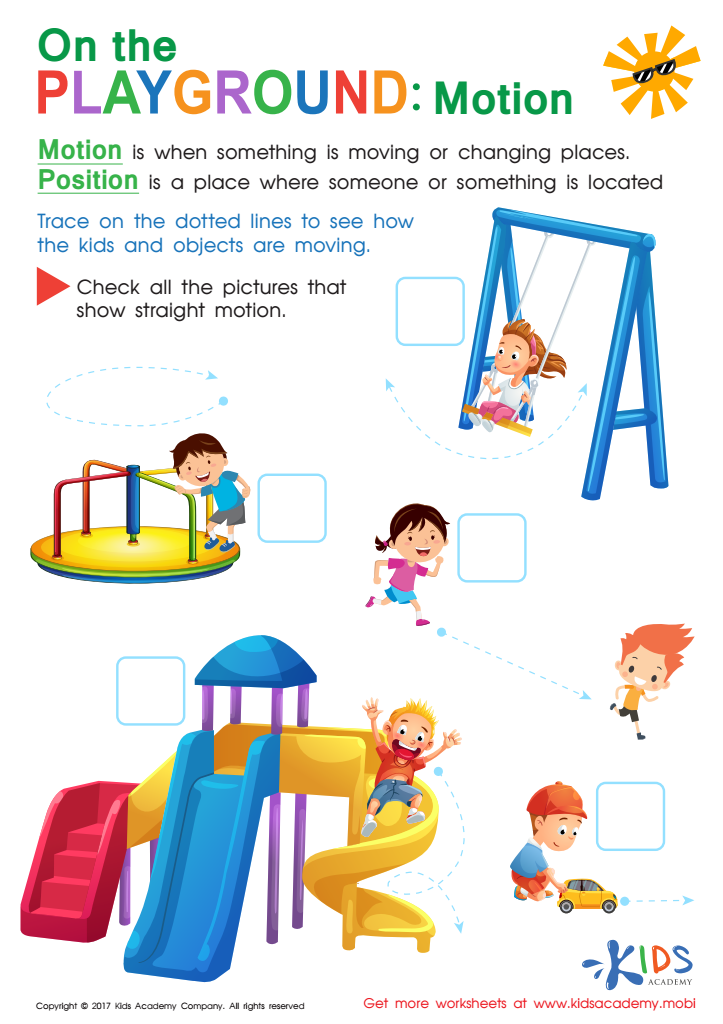
Position and Motion Worksheet
 Assign to My Students
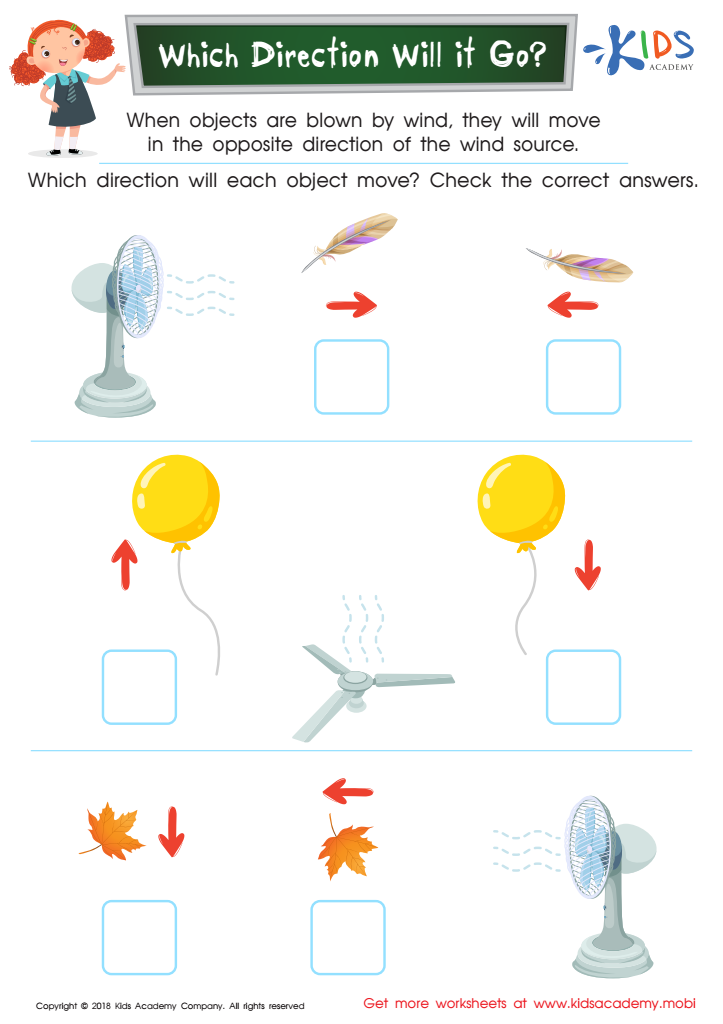
Which Direction Will it Go? Worksheet
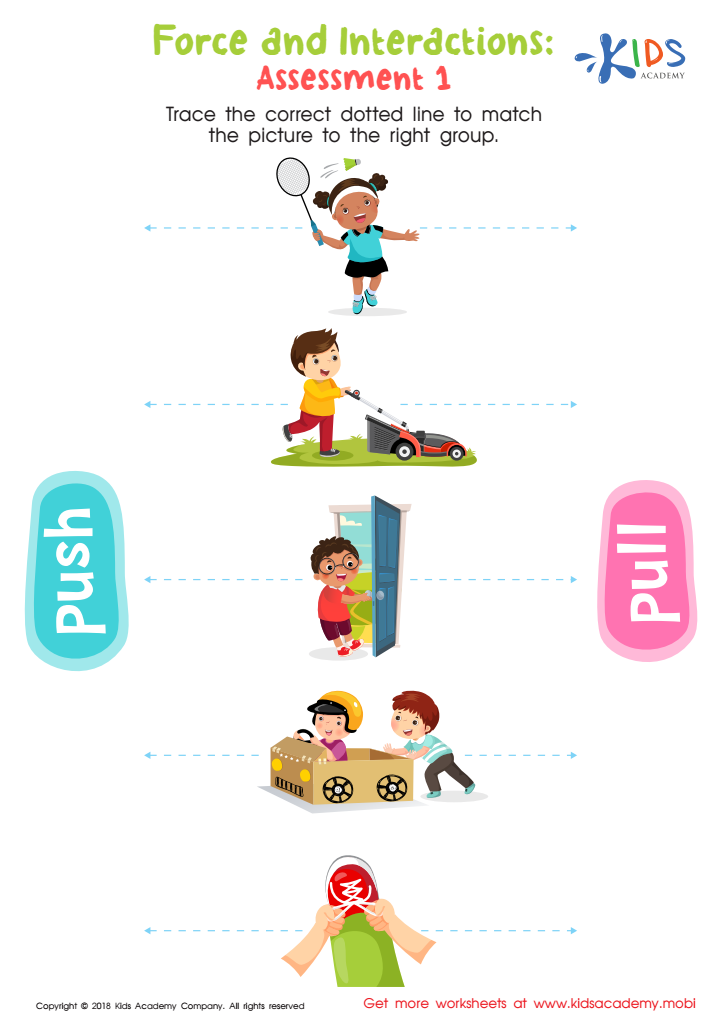
Force and Interactions: Assessment 2 Worksheet
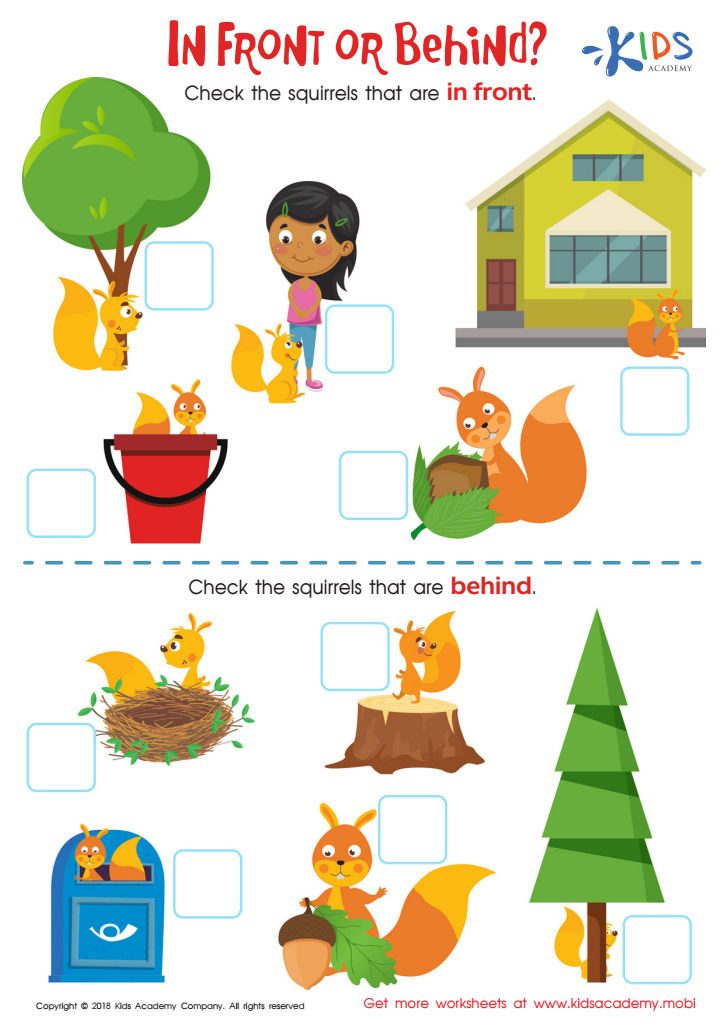
In Front or Behind: Part 2 Worksheet






Spatial awareness is a fundamental building block in early childhood development, especially in the context of physical science for ages 4-8. Parents and teachers should care about this topic because it underpins a child's understanding of their environment and plays a critical role in developing important cognitive skills.
At this age, children are actively exploring their surroundings, and fostering an awareness of space helps them interpret and navigate the world more effectively. Engaging in activities that promote spatial awareness, such as puzzles, block building, or interactive games, encourages problem-solving skills, improves hand-eye coordination, and enhances critical thinking abilities.
Moreover, spatial awareness is closely linked to foundational skills in mathematics and science. Children learn concepts such as shapes, measurements, and spatial relationships, which are essential for future academic success. For example, children who can visualize shapes and understand spatial relationships are better prepared for geometry in later grades.
Supporting spatial awareness not only enhances a child’s cognitive development but also boosts their confidence. By creating opportunities for exploration and discovery, parents and teachers can foster a child's innate curiosity and creativity, setting the stage for a lifelong love of learning in science and beyond.







