
Understanding forces Physical Science Worksheets for Ages 4-8
6 filtered results
Difficulty Level
Grade
Age
-
From - To
Subject
Activity
Standards
Explore our engaging "Understanding Forces" Physical Science worksheets, designed specifically for children ages 4-8! These interactive resources promote early scientific inquiry by introducing key concepts related to forces, such as push and pull, gravity, and friction. Each worksheet features colorful illustrations and captivating activities that stimulate young minds and inspire curiosity. Perfect for classroom or home learning, these worksheets help enhance critical thinking skills and foster a love for science. Download our user-friendly worksheets today to encourage hands-on experimentation and help young learners grasp the foundational principles of forces in a fun and enjoyable way!
Favorites
With answer key
Interactive
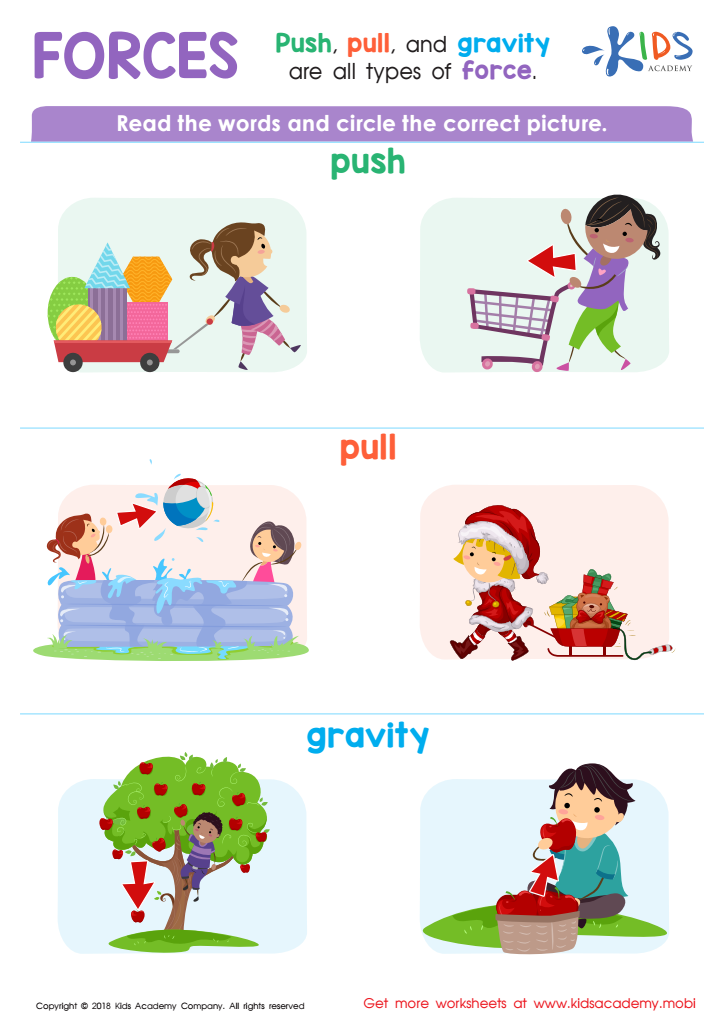
Forces Worksheet
Teach your child about forces! Ask them to identify which of six pictures shows push, pull or gravity. Read the words beside each picture and have them circle the correct one. It's a great way to learn about forces; push, pull and gravity!
 Assign to My Students
Forces Worksheet
Worksheet
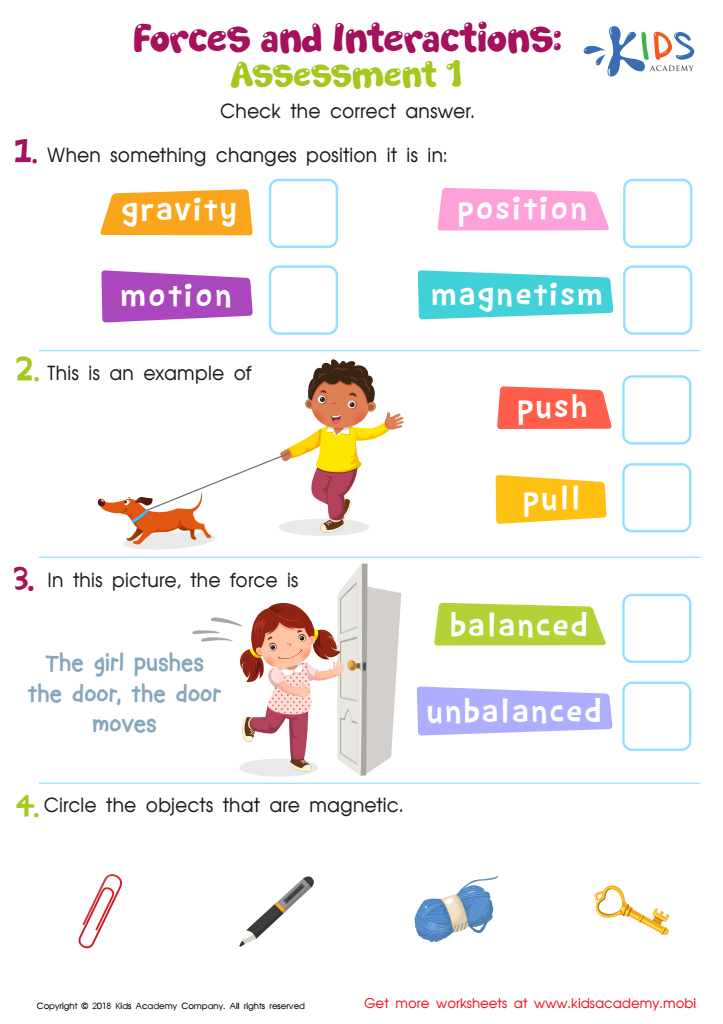
Forces and Interactions Printable
Test your child's physics know-how with this vibrant forces and interactions printable worksheet! Kids can assess their understanding of the different types of forces while they complete it. Read each example and check the boxes to show what they know!
Forces and Interactions Printable
Worksheet
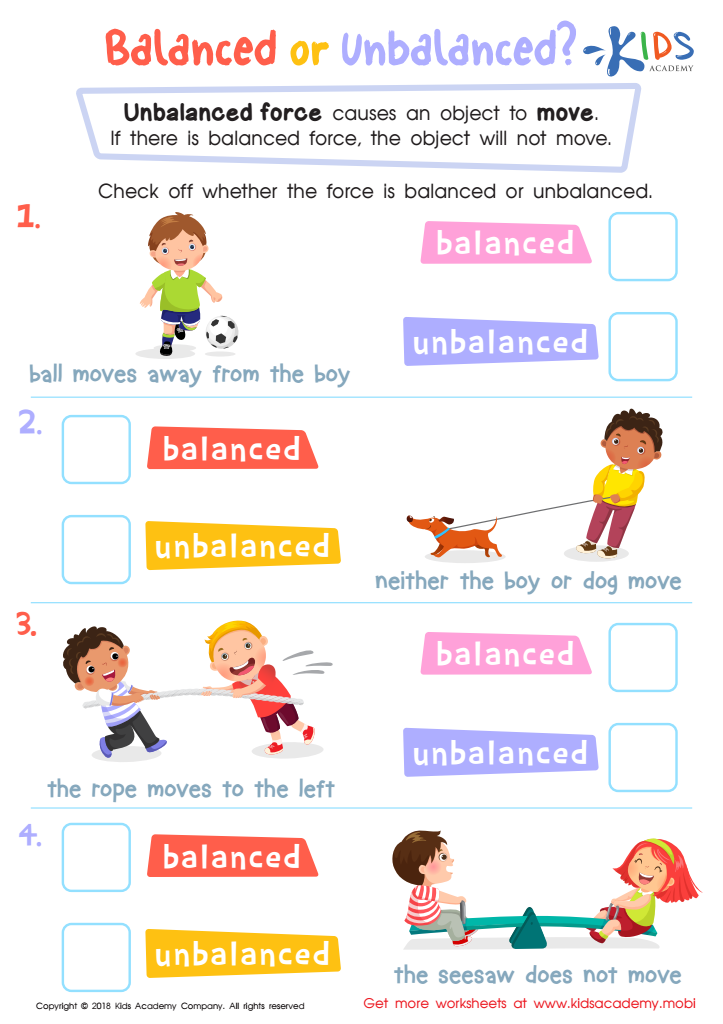
Balanced or Unbalanced Science Worksheet
Check out the kids on the worksheet. Is the force equal or unbalanced? This science worksheet helps little learners evaluate forces and understand physics - in a fun way! Have them explore the forces behind movement and see the results!
Balanced or Unbalanced Science Worksheet
Worksheet
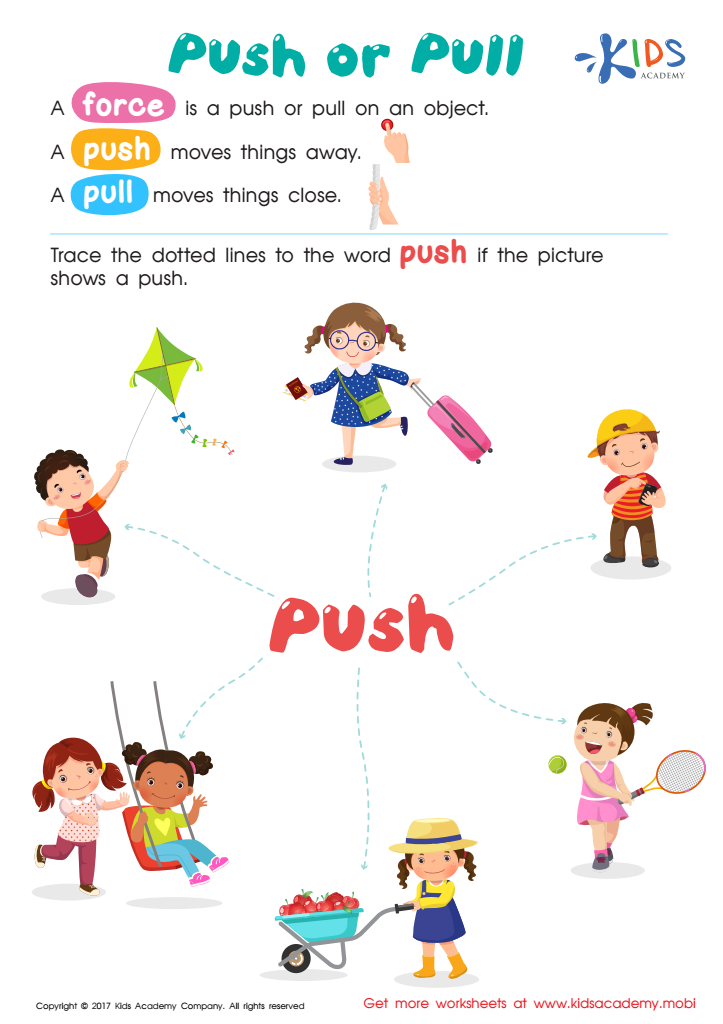
Push or Pull Worksheet
and which involve pulling! With this fun worksheet, your child will learn about force and its simple application in everyday activities. Get them started with Push or Pull! (80 words)
Push or Pull Worksheet
Worksheet
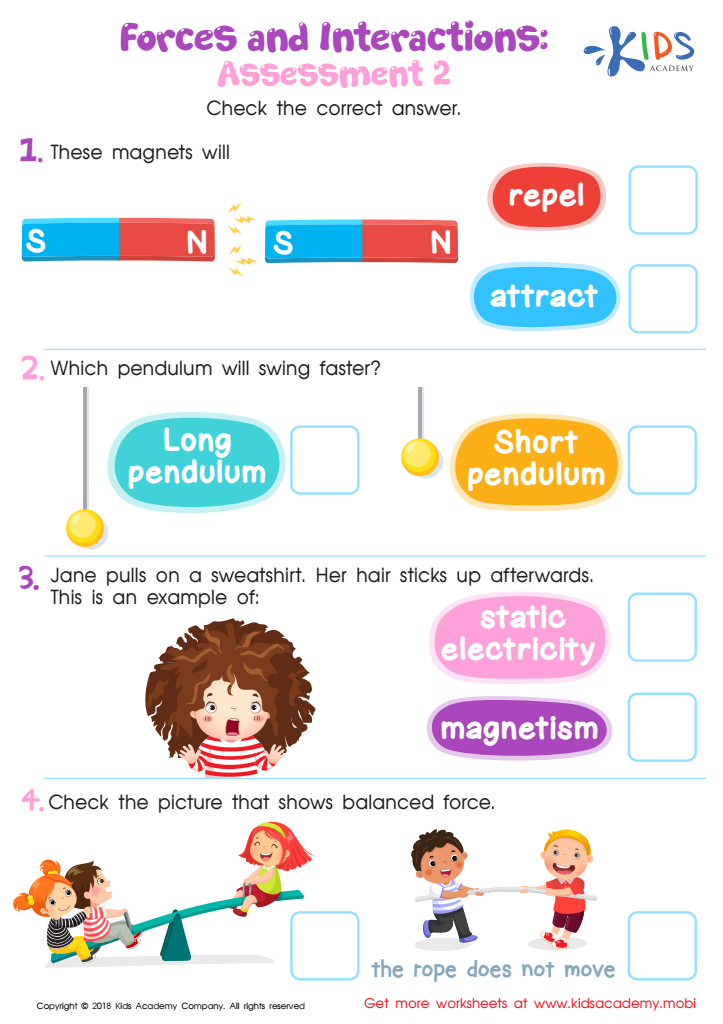
Forces and Interactions Worksheet For 3rd Grade
Review forces and interactions with your 3rd grader! This worksheet helps them recall key concepts like static, magnetic attraction, and pull. Repetition through similar illustrations from previous worksheets aids comprehension of the topic before moving on to other fun physics topics.
Forces and Interactions Worksheet For 3rd Grade
Worksheet
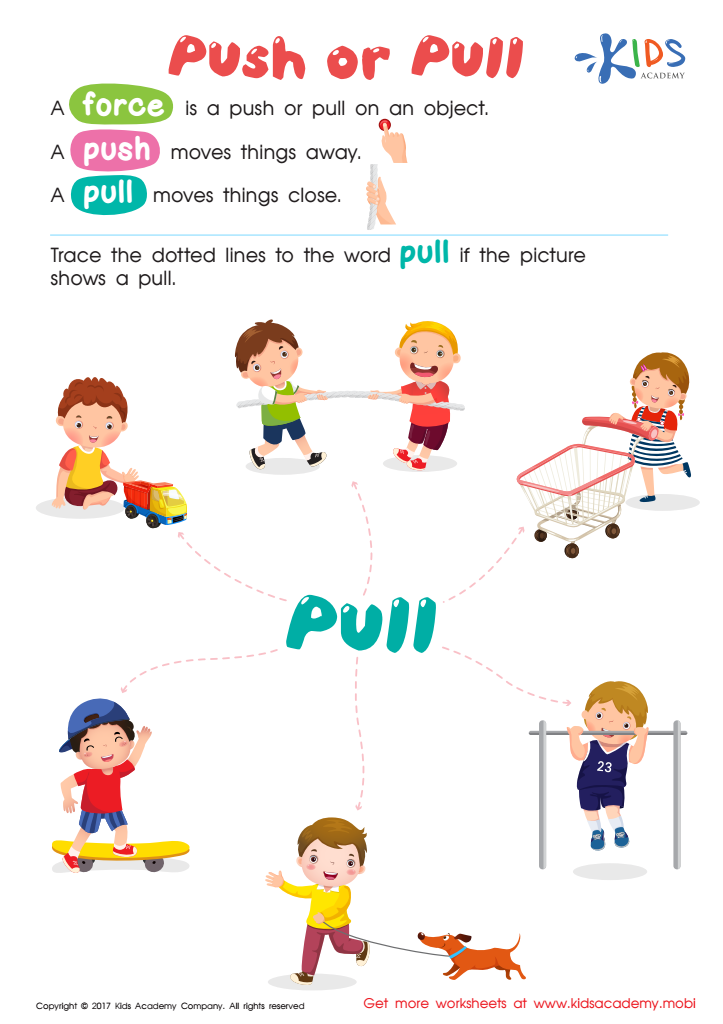
Pull or Push Worksheet
With this fun worksheet, they'll explore physics by sorting objects into categories according to their mode of motion. It's a great way to get them interested in science.
Pull or Push Worksheet
Worksheet
Join Kids Academy for Free
Who is primarily going to use this learning content?








Understanding forces in physical science is crucial for children aged 4-8 because it lays the foundation for their comprehension of the world around them. At this age, children are naturally curious about how things work, making it an ideal time to introduce concepts like push, pull, gravity, and friction.
When parents and teachers engage children in exploring forces, they nurture critical thinking and problem-solving skills. For instance, simple activities such as pushing a toy car or noticing how objects fall help children grasp the principles of motion and interaction. This hands-on exploration fosters a love for science and encourages inquiry.
Moreover, understanding forces can develop a child's ability to hypothesize and draw conclusions, which is vital for academic growth. It also supports cognitive development, ensuring children learn at a pace that reinforces their natural instincts to explore.
Additionally, by integrating concepts of force into play and everyday experiences, educators and parents can create a learning environment that enhances communication, collaboration, and creativity. Ultimately, nurturing this understanding helps cultivate a generation that values science, leading to informed decision-making and a greater appreciation for the physical world.







