Understanding magnetism Physical Science Worksheets for Ages 4-8
4 filtered results
-
From - To
Explore the fascinating world of magnetism with our engaging Physical Science Worksheets designed for ages 4-8! This collection helps young learners discover the principles of magnetism through fun activities and hands-on learning experiences. Each worksheet introduces key concepts, encouraging children to observe, experiment, and interact with magnets safely. With various captivating exercises, including sorting, matching, and drawing, kids will develop critical thinking skills while gaining a foundational understanding of magnetic forces. Ideal for teachers and parents alike, these worksheets make learning about magnetism exciting and accessible. Spark curiosity and ignite a passion for science in your little ones today!
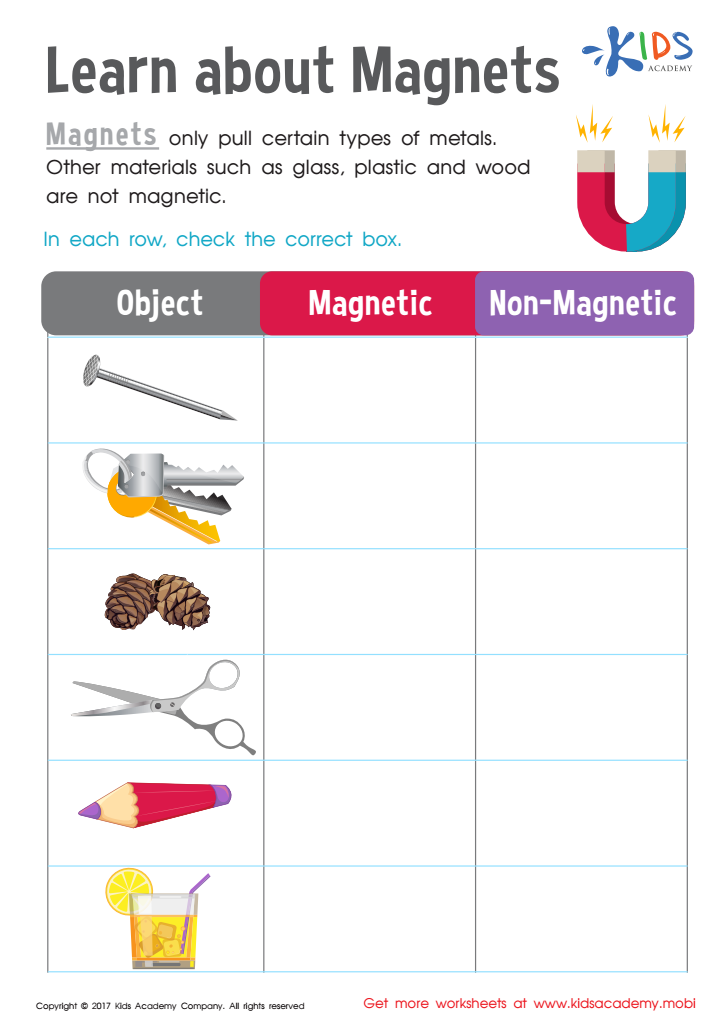
Magnetic Or Not Worksheet
 Assign to My Students
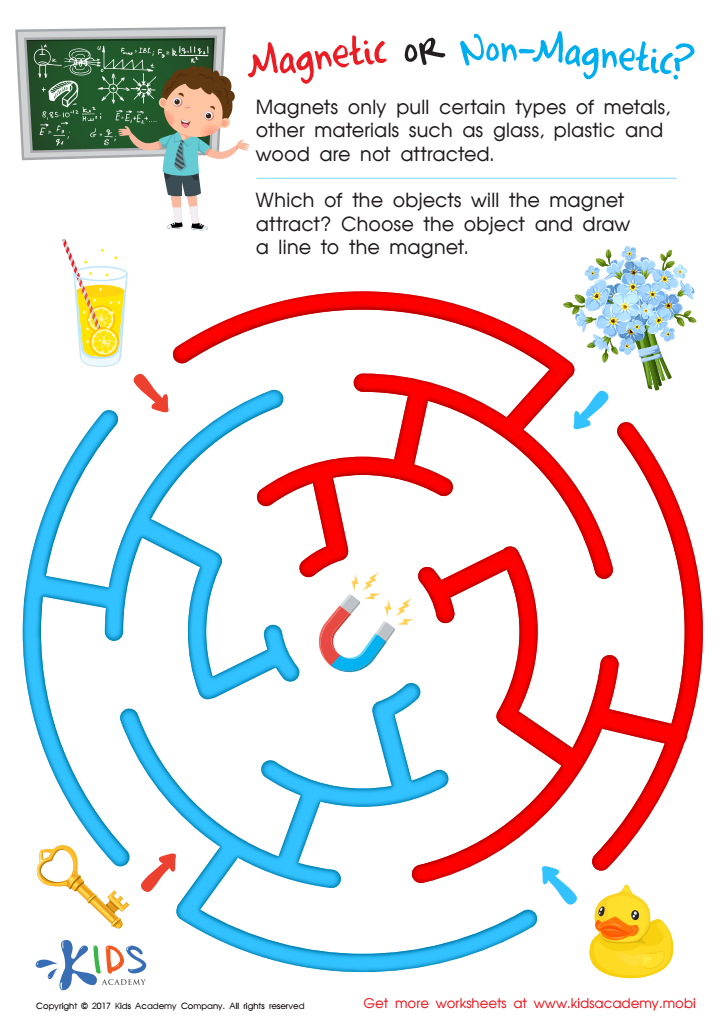
Magnetic or Non–Magnetic Worksheet
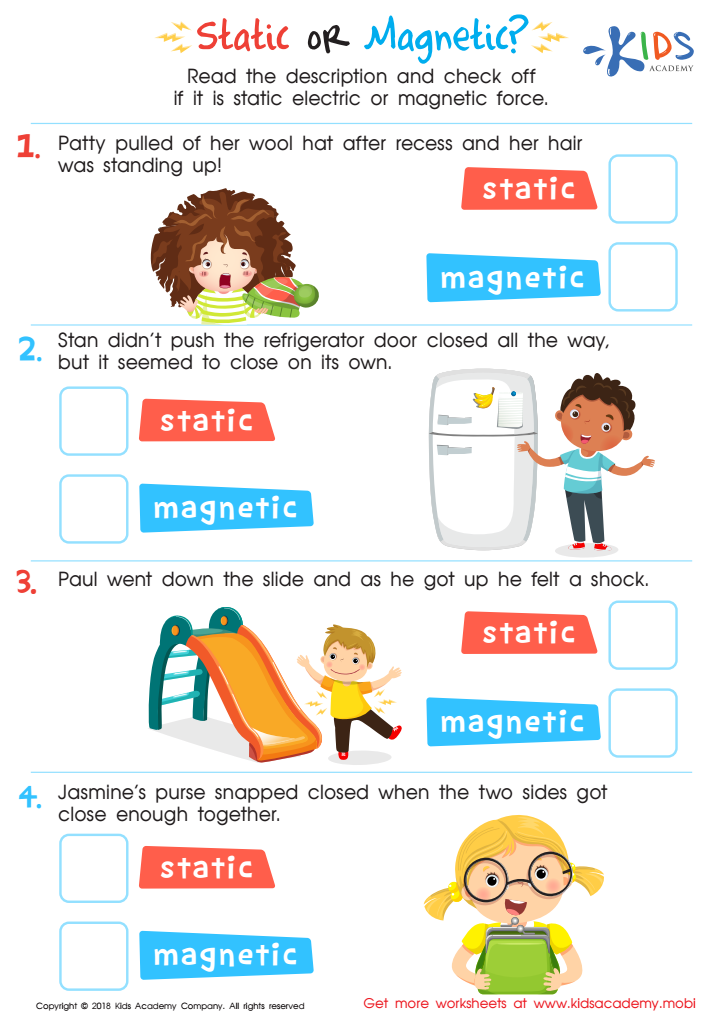
Static or Magnetic Printable Worksheet
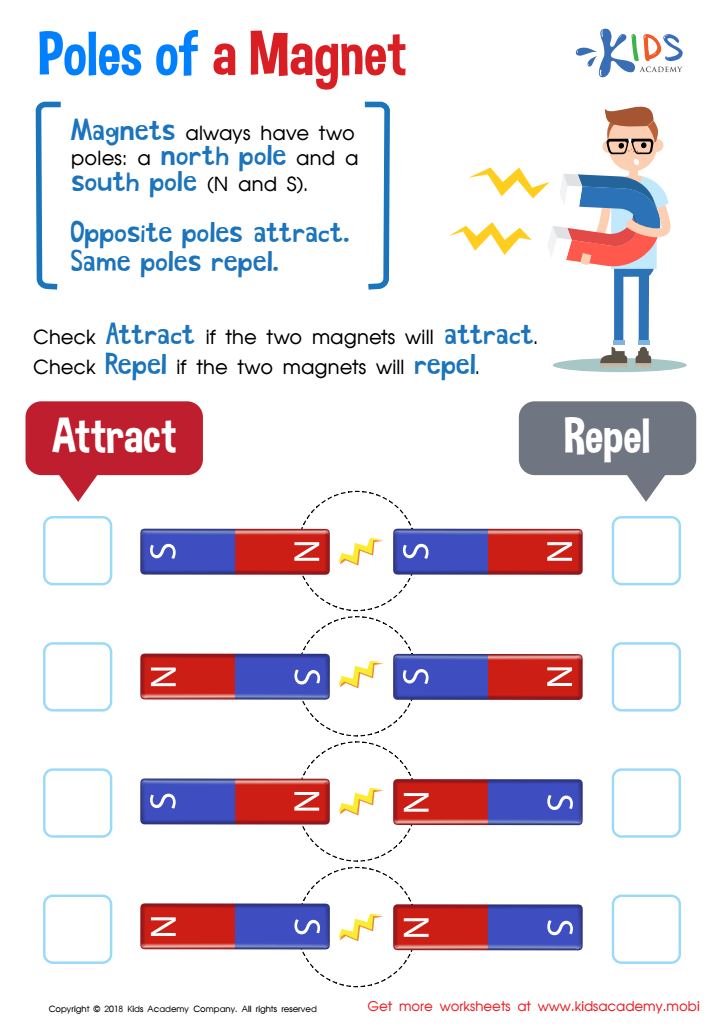
Magnet Poles Attract or Repel Worksheet






.jpg)

Understanding magnetism is essential for young learners, as it lays the groundwork for critical scientific concepts and fosters curiosity about the natural world. For children aged 4-8, encountering magnetism offers a hands-on way to explore scientific principles, encouraging experiential learning through play and experimentation.
Parents and teachers should care about this topic because it enhances cognitive development, promoting inquiry-based learning. By introducing magnetic concepts, children can engage in activities that develop critical thinking, problem-solving, and observation skills. Exploring how magnets work ignites curiosity; children learn about attraction and repulsion while interacting with various objects, allowing them to make predictions and test their hypotheses.
Moreover, early engagement with physical science concepts like magnetism can inspire a lifelong interest in STEM (Science, Technology, Engineering, and Mathematics) fields. Future inventors and scientists often stem from these formative learning experiences.
Additionally, magnetism helps young children understand their environment, reinforcing the connection between science and everyday life. By discussing and exploring magnetism, parents and teachers can nurture children’s innate curiosity, promote collaborative learning, and build essential understanding that serves as a stepping stone for more advanced scientific knowledge in the future.







