
Categorization skills Plants and Animals Worksheets for Ages 4-8
5 filtered results
Difficulty Level
Grade
Age
-
From - To
Subject
Activity
Standards
Explore our engaging "Categorization Skills: Plants and Animals Worksheets" designed for children aged 4-8! These worksheets provide a fun, interactive way for young learners to identify and categorize various plants and animals. Each activity encourages critical thinking and enhances observational skills, allowing kids to distinguish between different species, recognize habitats, and understand the characteristics that define each category. Perfect for classroom settings or home activities, these resources foster curiosity about the natural world while developing essential cognitive skills. Support your child's learning journey and watch them thrive as they discover the wonderful ecosystem around them!
Favorites
With answer key
Interactive
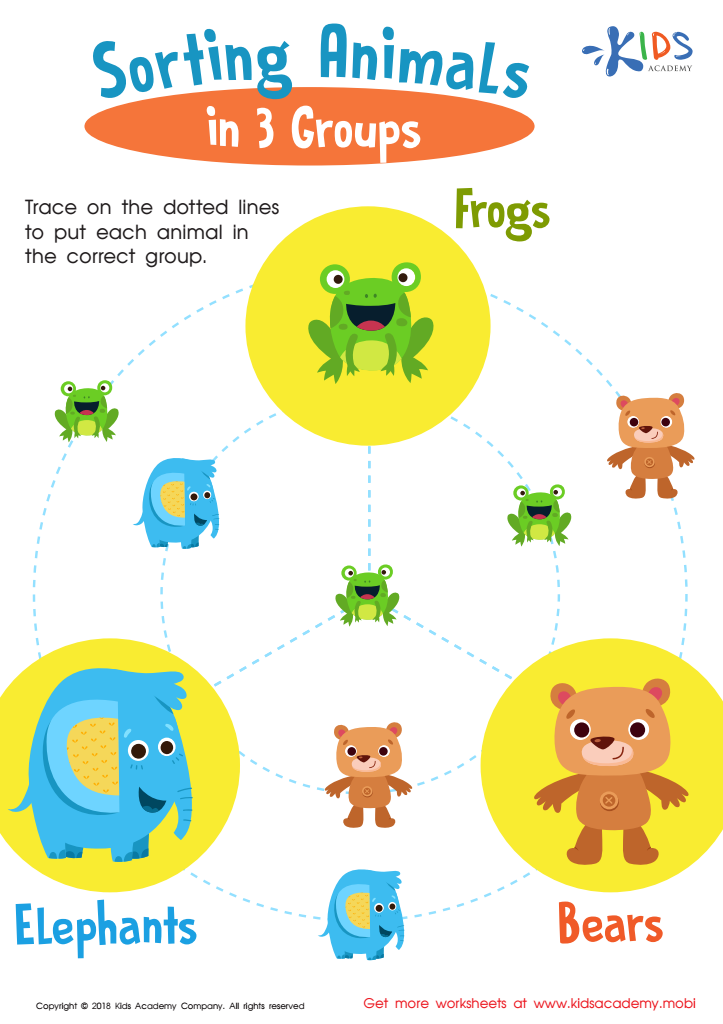
Sorting Animals in 3 Groups Worksheet
Let your kids practice and build skills for future Venn Diagrams with this PDF worksheet. They'll trace lines to match and group animals, and learn the differences and similarities of animals by categorizing with pictures and words. Plus, it's a great way to develop fine motor skills.
 Assign to My Students
Sorting Animals in 3 Groups Worksheet
Worksheet











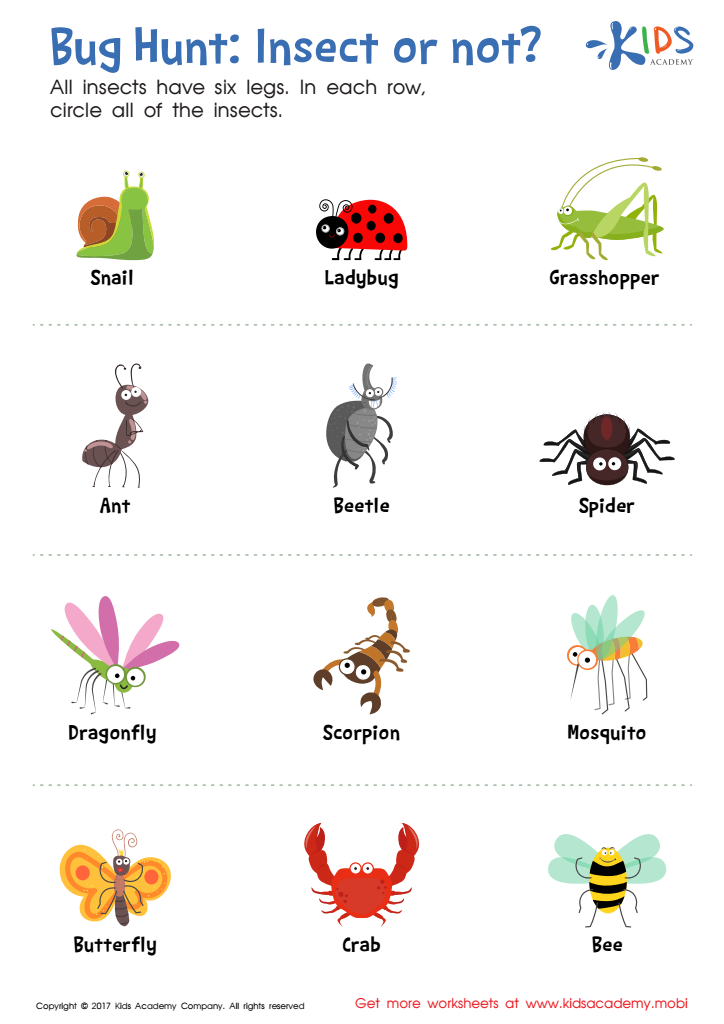
Insect or Not? Worksheet
Worksheet
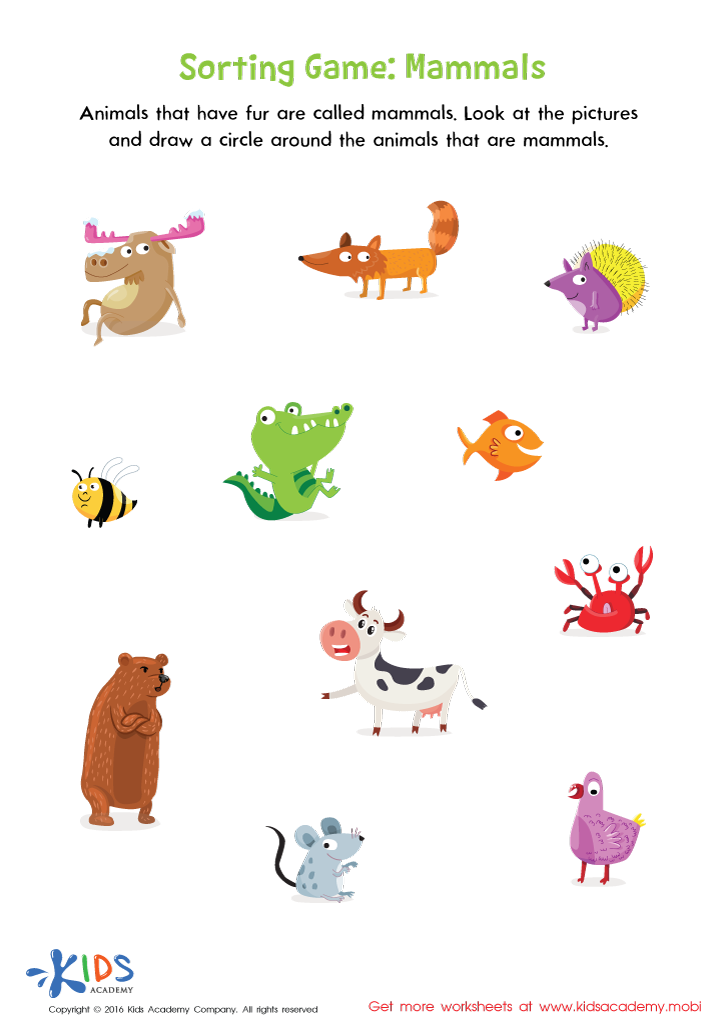
Mammals Sorting Worksheet
They'll practice sorting animals and learn their features with this fun worksheet.
Kids can test their scientific knowledge with this fun worksheet! They'll view pictures of animals, identify mammals based on their fur, and practice sorting them. This colorful worksheet is a great way for kids to learn about the differences between mammals and other animals.
Mammals Sorting Worksheet
Worksheet
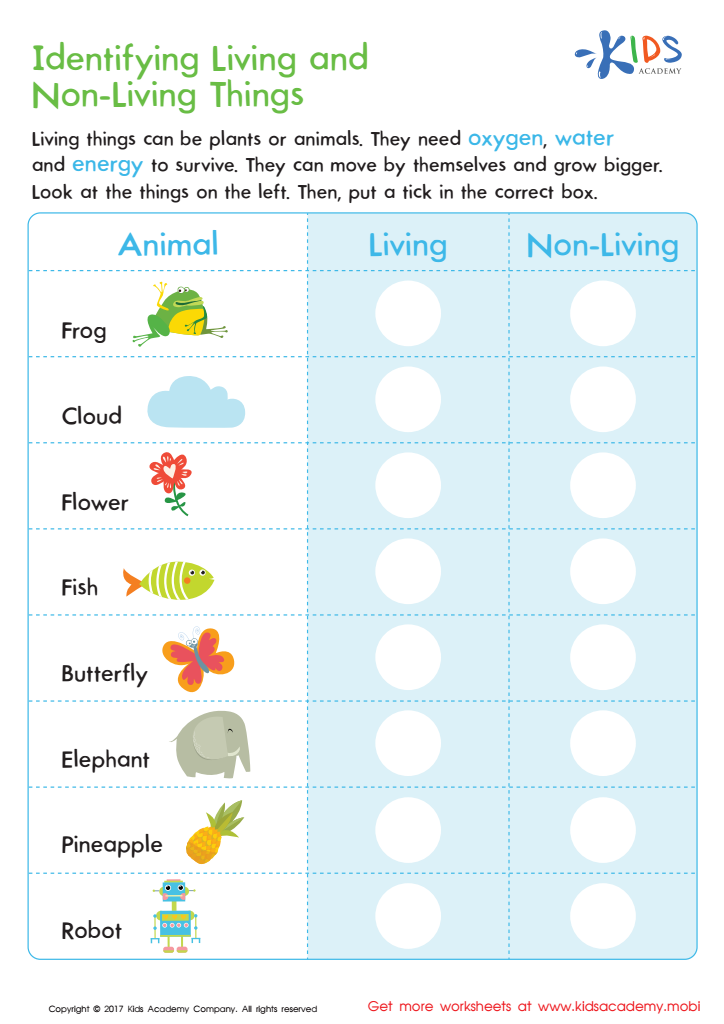
Identifying Living or Non–living Worksheet
Help your child learn to sort and categorize in a new way! Teach them to classify things as living or non-living using this worksheet. It's the perfect way to build their scientific understanding, and to have some learning fun! Print this worksheet and watch them discover the world of science!
Identifying Living or Non–living Worksheet
Worksheet
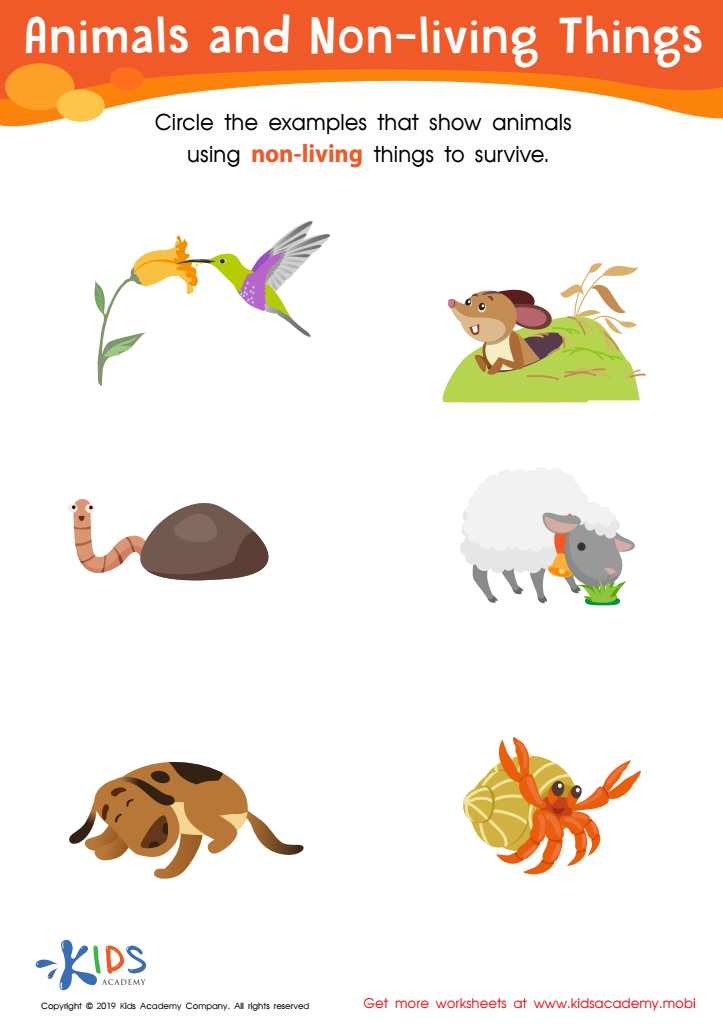
Animals and Non-Living Things Worksheet
People and animals both require more than food to survive. We need shelter, clothing and water, while animals use non-living things like rocks and trees. Ask your kids what else is necessary to survive - then have them identify the objects in the worksheet and circle the examples of animals using non-living things.
Animals and Non-Living Things Worksheet
Worksheet
Join Kids Academy for Free
Who is primarily going to use this learning content?








Categorization skills are essential for children aged 4-8 as they form the foundation for critical thinking and cognitive development. Understanding how to categorize plants and animals helps children make sense of the world around them. By learning to group specific items based on shared characteristics, children enhance their analytical skills and promote problem-solving abilities.
Engaging with plants and animals allows children to explore biodiversity, fostering a sense of curiosity and appreciation for nature. Teaching categorization skills also supports language development, as children learn to describe characteristics, while reinforcing their vocabulary.
Parents and teachers play a vital role in facilitating these skills. When they initiate discussions about the differences and similarities between various plants and animals, it encourages active learning and enhances retention. Learning about ecosystems instills a sense of responsibility toward the environment.
Additionally, engaging in categorization activities, such as sorting games or nature walks, nurtures social skills, as children often work collaboratively. This hands-on experience is essential in supporting their overall development, making it essential for caregivers and educators to prioritize these activities in curricula and daily interactions. In summary, categorization skills for plants and animals amplify children's development intellectually, socially, and environmentally.








