Understanding moon phases Space Worksheets for Ages 4-8
3 filtered results
-
From - To
Discover the magical world of moon phases with our engaging "Understanding Moon Phases Space Worksheets" designed specifically for children aged 4-8. These interactive worksheets encourage young learners to explore the phases of the moon through fun activities, illustrations, and easy-to-understand explanations. Kids will enhance their observation skills while identifying and labeling crescent, gibbous, full, and new moons. Perfect for classroom lessons or at-home learning, these resources make astronomy accessible and enjoyable. Foster your child's curiosity about space and the universe with creative exercises that inspire a lifelong love of science. Download the worksheets today and launch your little astronomer's journey!
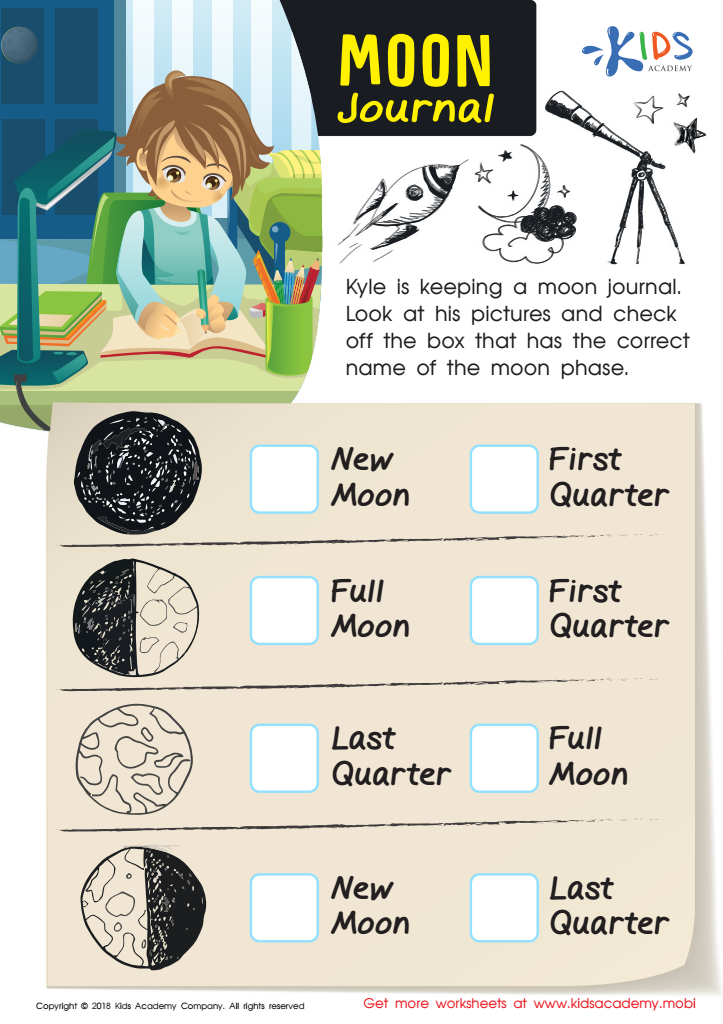
Moon Journal Worksheet
 Assign to My Students
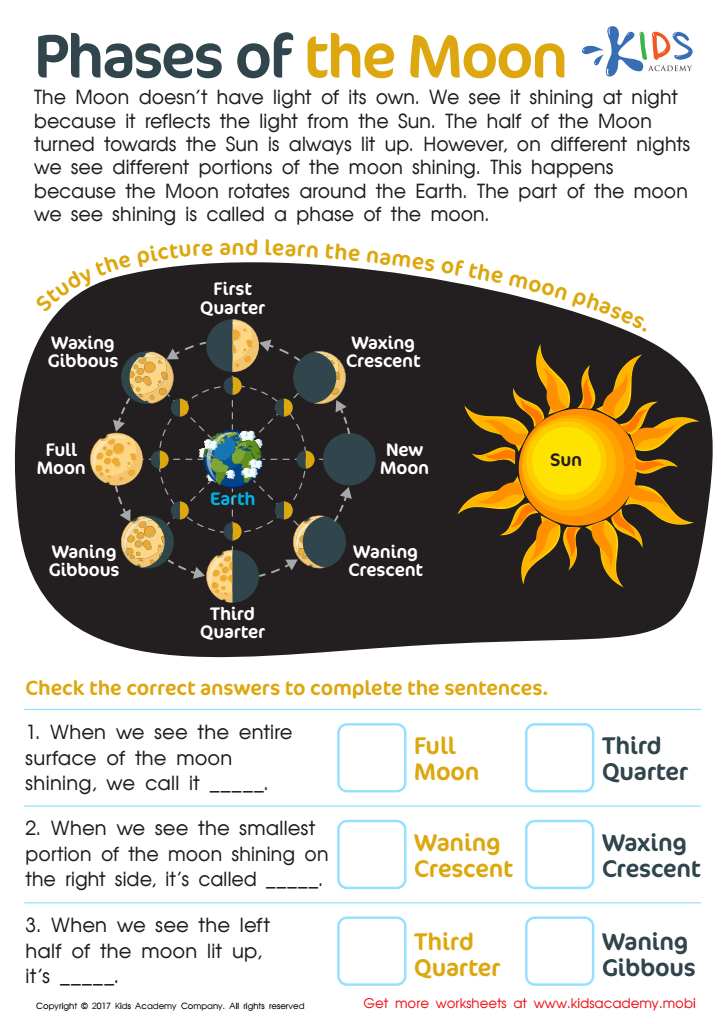
Phases of The Moon Worksheet
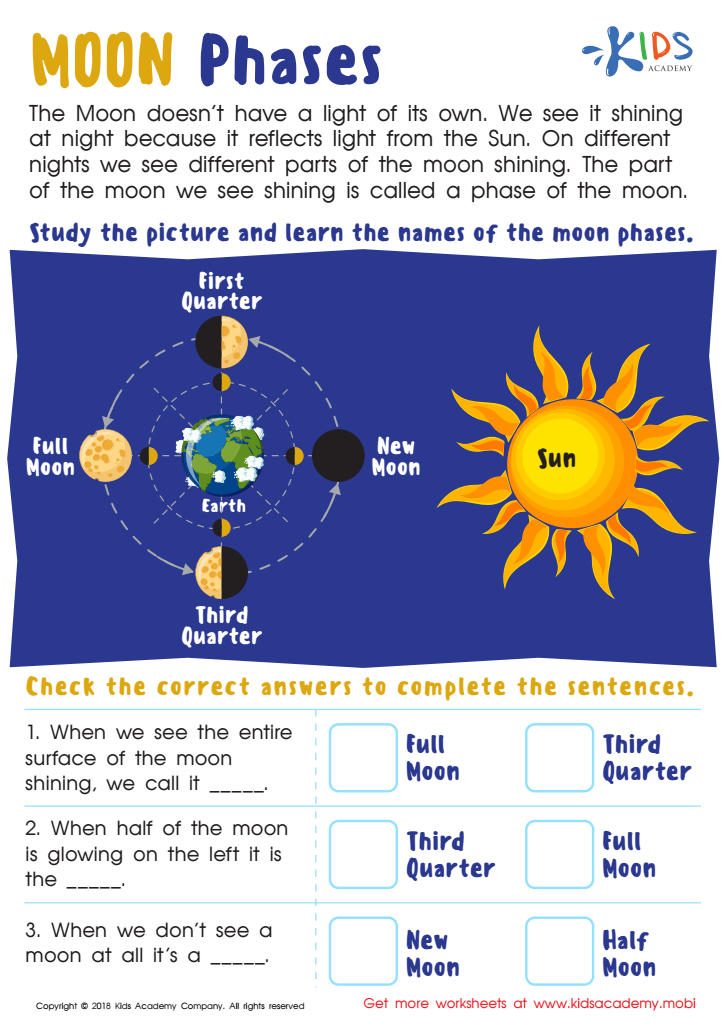
Moon Phases Worksheet





Understanding moon phases is vital for children aged 4-8 because it fosters curiosity and engagement with the natural world. At this age, children are naturally inquisitive, and teaching them about the moon's phases can enhance their observational skills and critical thinking. By exploring how the moon changes from new to full, they can learn about cycles, patterns, and the concept of time, laying a foundation for their understanding of astronomy and science.
Furthermore, lunar phases offer an opportunity to integrate various subjects—across art, storytelling, and math. Children can engage in creative activities such as drawing the moon or creating a moon phase model, which supports fine motor skills and creativity. Additionally, discussing the moon's influence on the tides and animals can help them appreciate the interconnection between nature and human life.
Lastly, early concepts of science promote a lifelong love of learning and curiosity. By encouraging exploration of the moon, educators and parents foster resilience and motivation in young learners, nurturing the scientists and thinkers of tomorrow. Understanding the moon's phases enables children to make connections with their own experiences, transforming abstract concepts into relatable knowledge while enriching their world view.







