Color recognition Geography Worksheets for Ages 4-8
3 filtered results
-
From - To
Unlock the world of geography with our engaging Color Recognition Worksheets, specially designed for children aged 4-8. These worksheets not only promote essential color identification skills but also introduce young learners to geographical concepts in a fun and interactive way. Your child will explore maps, landmarks, and natural features while enhancing their ability to recognize and differentiate colors. Perfect for classrooms or at-home learning, our diverse activities keep children entertained as they develop critical cognitive skills. Empower your child's learning journey and make geography colorful with our beautifully crafted worksheets tailored to young explorers! Enjoy hours of educational fun and discovery today!

Happy Diwali Printable
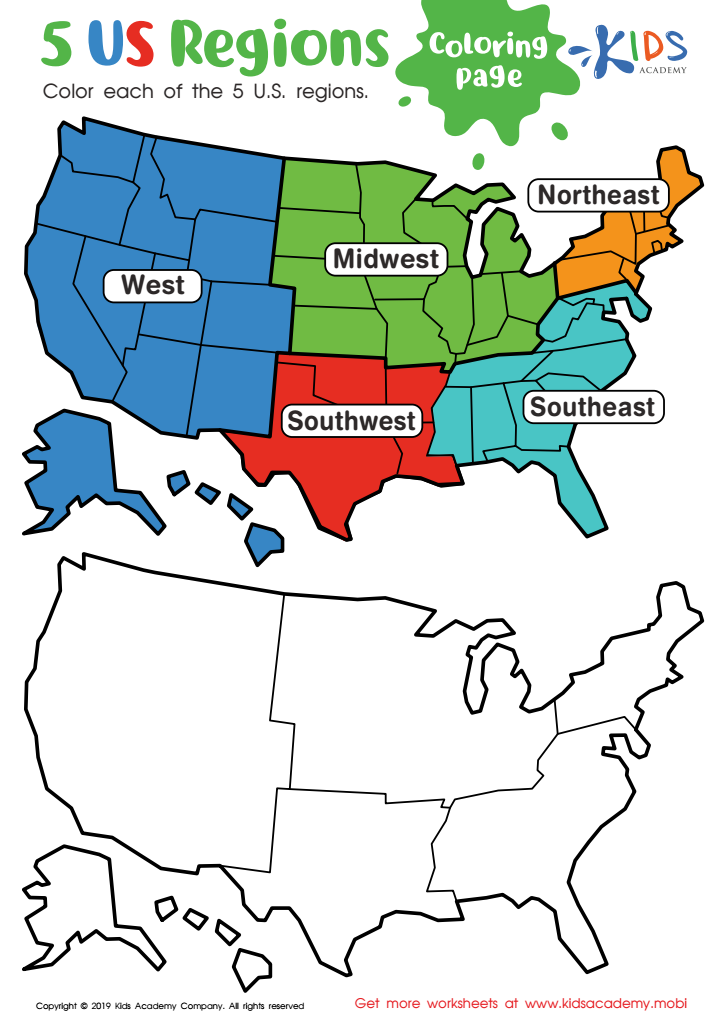
US Regions Coloring Page Worksheet
 Assign to My Students
Globe Coloring Page Worksheet
Assign to My Students







Color recognition is an essential skill for early learners aged 4-8, as it lays the foundation for diverse areas of development, including geography. Understanding colors enhances children's ability to engage with their environment; for instance, they can identify geographical features like rivers, mountains, and cities through color-coded maps. This early exposure sparks curiosity about the world around them, encouraging exploration and learning about diverse cultures and places.
Moreover, color recognition helps children process visual information more effectively. As they learn to associate colors with specific geographical concepts (like green for lush land or blue for water), they develop critical thinking and organizational skills. These abilities extend to other subjects by fostering pattern recognition, categorization, and problem-solving.
Additionally, incorporating color recognition with geography promotes creativity through activities like drawing maps or using colored materials to depict different regions or climates. It makes learning fun and interactive, thus captivating young minds.
It’s important for parents and teachers to actively engage children in these activities, as this promotes their cognitive and social development. Overall, color recognition is not just about learning shades; it's a gateway to appreciating the world's diversity, making it a vital aspect of early education.








