Analytical thinking History Worksheets for Ages 4-8
3 filtered results
-
From - To
Discover our exciting "Analytical Thinking History Worksheets for Ages 4-8" to spark curiosity and enhance critical thinking in young learners! Designed by educators, these engaging activities blend historical facts with fun puzzles, activities, and questions tailored for children. Our worksheets aim to develop essential analytical thinking skills as kids embark on a journey through time, exploring significant events and figures. Perfect for home or classroom use, these printables make history accessible and enjoyable. Empower your children to analyze, question, and understand the past, fostering a love for learning that will last a lifetime! Try our worksheets and pave the way for young historians.
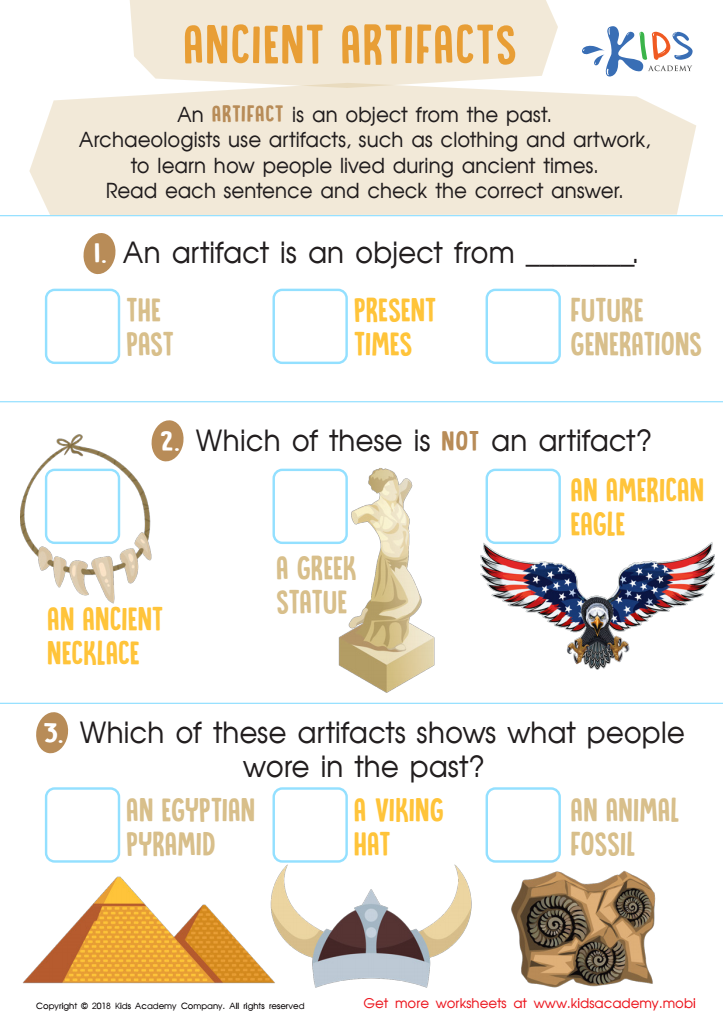
Ancient Artifacts Worksheet
 Assign to My Students
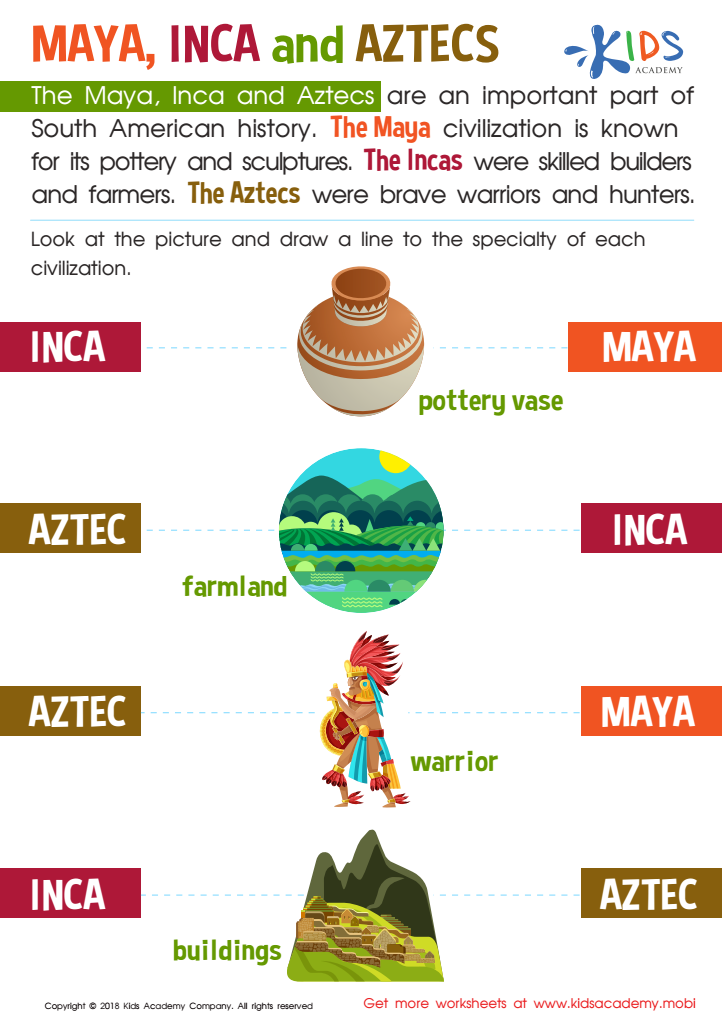
Maya, Inca and Aztecs Worksheet
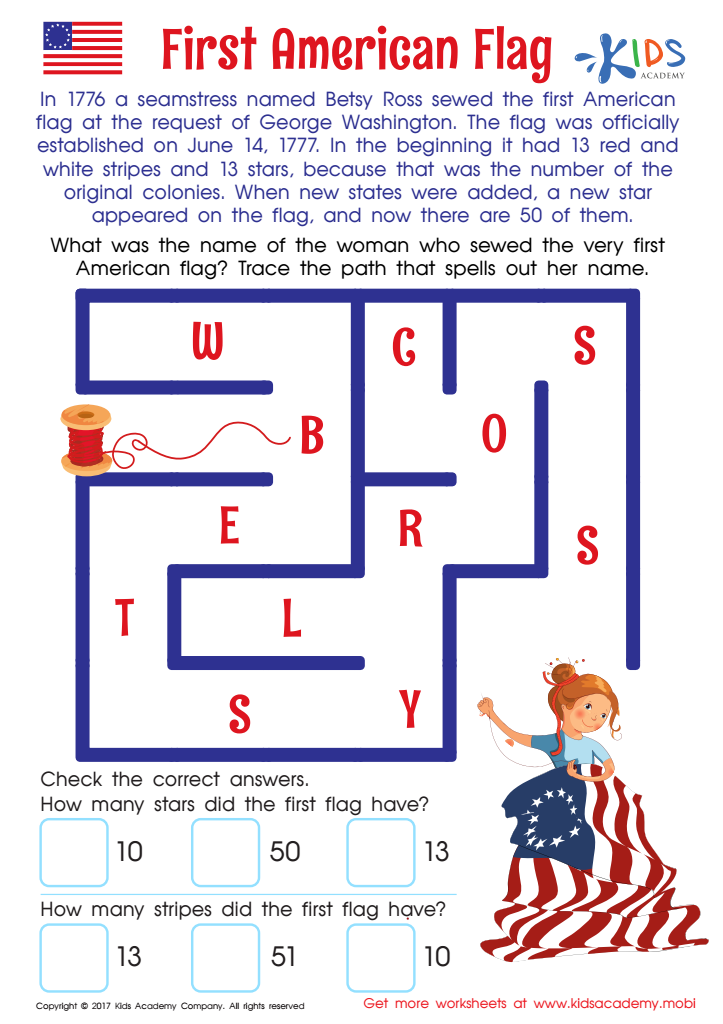
First American Flag Worksheet






.jpg)

Parents and teachers should prioritize fostering analytical thinking in children aged 4-8 because it lays a critical foundation for lifelong learning and problem-solving skills. At this age, children are naturally curious, and their brains are extraordinarily adept at absorbing new information. Encouraging analytical thinking helps them develop the ability to observe their surroundings carefully, make connections between ideas, and engage in thoughtful questioning.
Analytical thinking nurtures a child's cognitive development by promoting critical components such as logical reasoning, pattern recognition, and evidence-based understanding. These skills are not just pivotal in academic subjects like math and science but are essential for effective decision-making and everyday problem-solving. By engaging with age-appropriate activities, such as sorting games, story sequencing, and simple experiments, children learn to process information in a structured manner.
Moreover, a strong early foundation in analytical thinking supports emotional and social development. It encourages children to consider multiple perspectives and solutions, fostering empathy and collaborative abilities. Engaging in structured thinking exercises also builds their confidence and independence, equipping them with the resilience to tackle challenges effectively.
Ultimately, investing in analytical thinking at an early age equips children with the tools they need for academic success and personal growth, preparing them for the complexities of the modern world.








