
Decision making skills Social Studies Worksheets for Ages 4-8
3 filtered results
Difficulty Level
Grade
Age
-
From - To
Subject
Activity
Standards
Enhance your child's decision-making skills with our engaging Social Studies worksheets tailored for ages 4-8! Our collection emphasizes critical thinking through fun and relatable scenarios, helping young learners develop the ability to make informed choices. Each worksheet is designed to spark curiosity about the world around them, making learning both enjoyable and effective. From exploring community roles to understanding personal preferences, these activities promote essential social skills and empower children to think independently. Perfect for classroom or at-home learning, our worksheets provide an invaluable resource for early education, paving the way for confident and responsible decision-makers of tomorrow!
Favorites
With answer key
Interactive
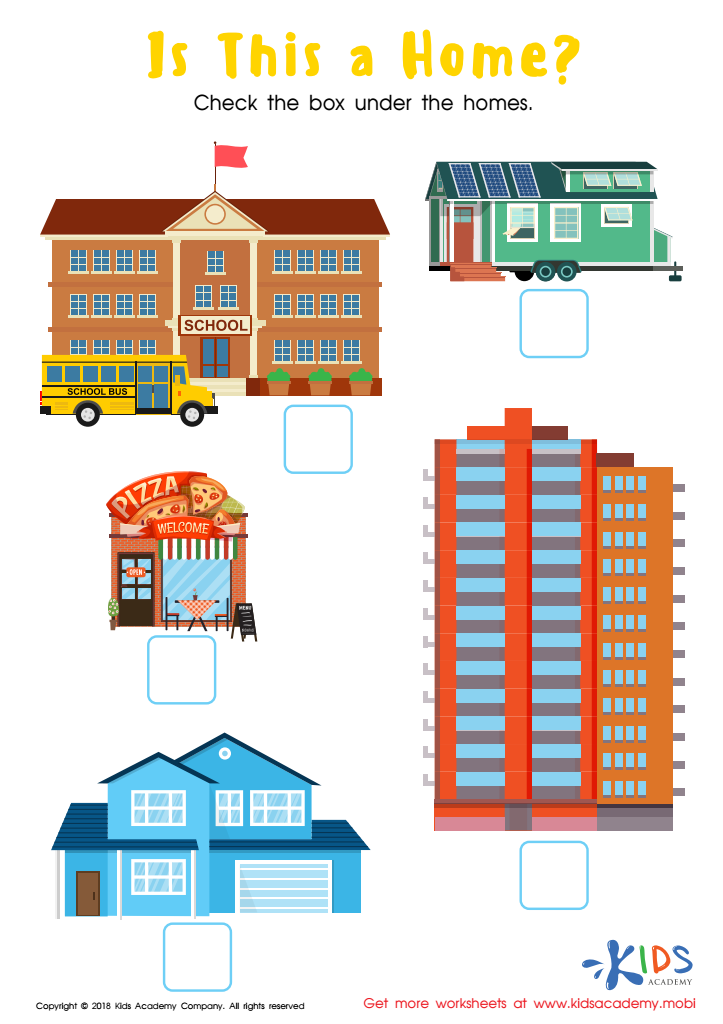
Is this a Home? Worksheet
Ask your child what the building you live in is called. Is it a home, restaurant or hospital? Then look at the pictures in the worksheet and ask them to identify which are homes - even if they don't look like yours. Check the box next to the homes in the pictures.
 Assign to My Students
Is this a Home? Worksheet
Worksheet
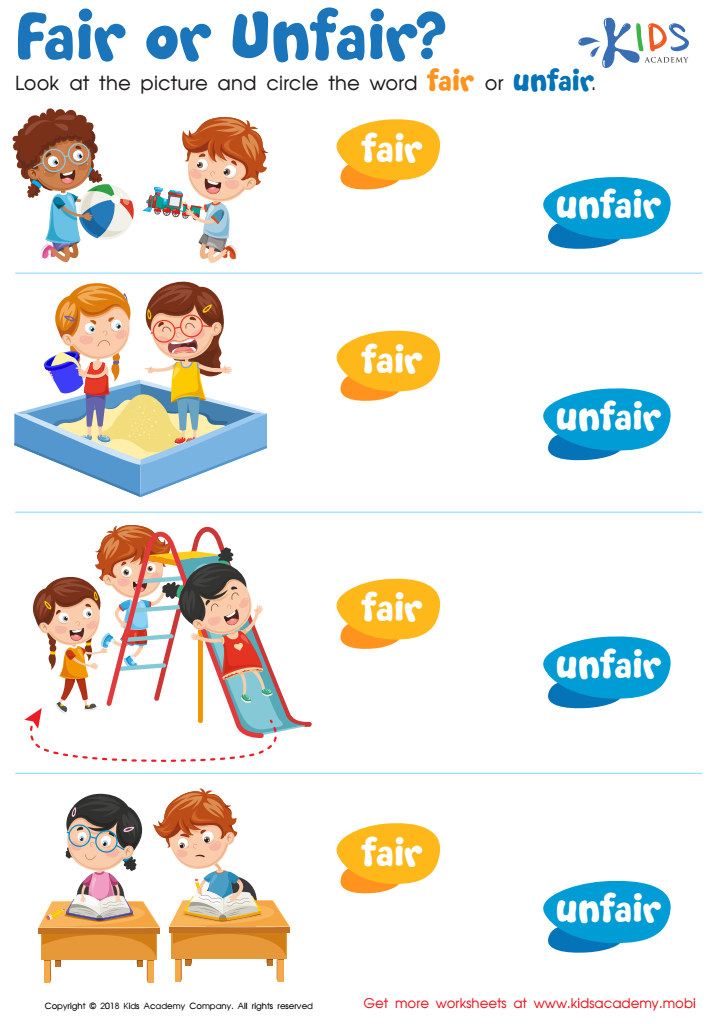
Fair or Unfair Worksheet
Look at the pictures in this worksheet with kids. Can they tell if the actions are fair or unfair? Help them decide and circle the appropriate option. When something causes harm to one person, it is unfair; when all parties benefit, it is fair.
Fair or Unfair Worksheet
Worksheet

Towns Worksheet
Towns are generally quiet and safe, making them attractive for young families. Cities have more people, businesses and tall buildings. Roads are busy, and there is often plenty to do and see. Help your kids check which pictures in this worksheet show towns.
Towns Worksheet
Worksheet
Join Kids Academy for Free
Who is primarily going to use this learning content?


.jpg)





Decision-making skills are essential components of social studies education for children ages 4-8, as they lay the groundwork for responsible citizenship and critical thinking. In this developmental stage, children begin to explore their environment, express opinions, and understand consequences. Teaching decision-making skills helps them navigate social interactions, understand diverse perspectives, and make informed choices.
Parents and teachers should care because strong decision-making skills promote independence and confidence in children. As they learn to assess situations, evaluate options, and consider outcomes, they develop a sense of agency that empowers them to engage with their world meaningfully. This is crucial in social studies, where understanding community, culture, and civic responsibilities come into play.
Additionally, these skills enhance emotional intelligence, encouraging empathy and cooperation among peers. When children learn to weigh pros and cons and think critically about societal issues, they become more active and compassionate members of their communities.
By fostering decision-making skills early in life through social studies, parents and teachers equip children with the tools they need to navigate complex environments, advocate for themselves and others, and contribute positively to society—creating a foundation for lifelong learning and informed citizenship.








