Event sequencing Social Studies Worksheets for Ages 4-8
3 filtered results
-
From - To
Introduce your young learners to the concept of Event Sequencing with our engaging Social Studies Worksheets designed specifically for children aged 4-8. These printables from Kids Academy help children understand the order of events in a fun and interactive way. Our worksheets cover a variety of topics, encouraging kids to identify sequences in daily routines, historical events, and storytelling. Each activity is crafted to develop critical thinking and enhance problem-solving skills, all while making learning enjoyable. Cultivate a solid foundation in social studies with our Event Sequencing worksheets, perfect for early learners to navigate the world around them.
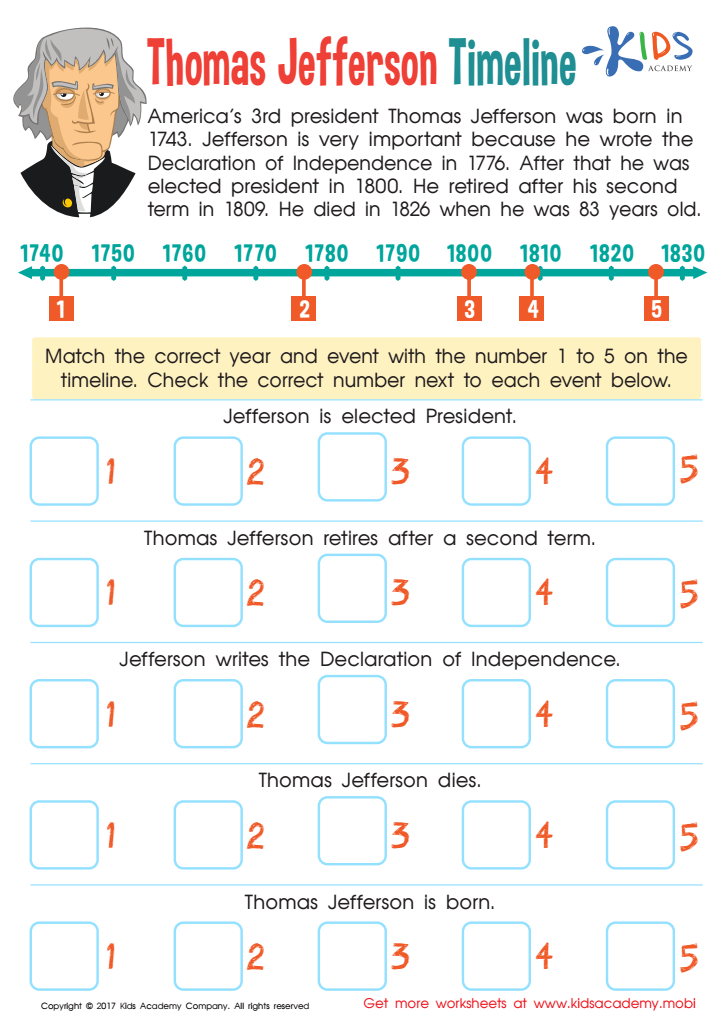
Thomas Jefferson Timeline Worksheet
 Assign to My Students
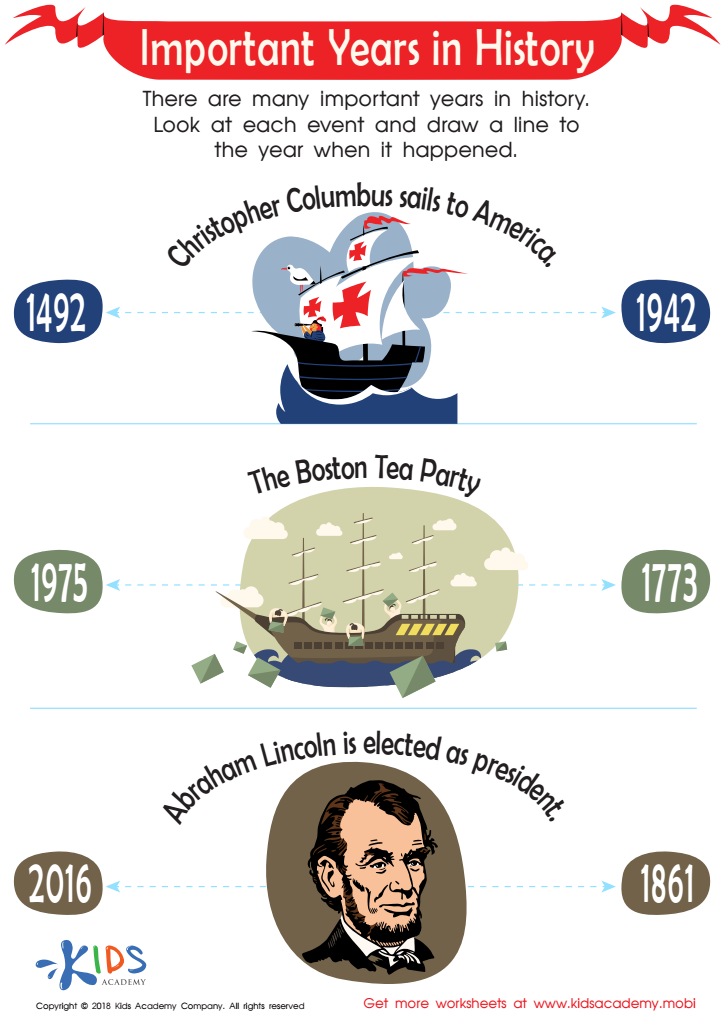
Important Years in History Worksheet
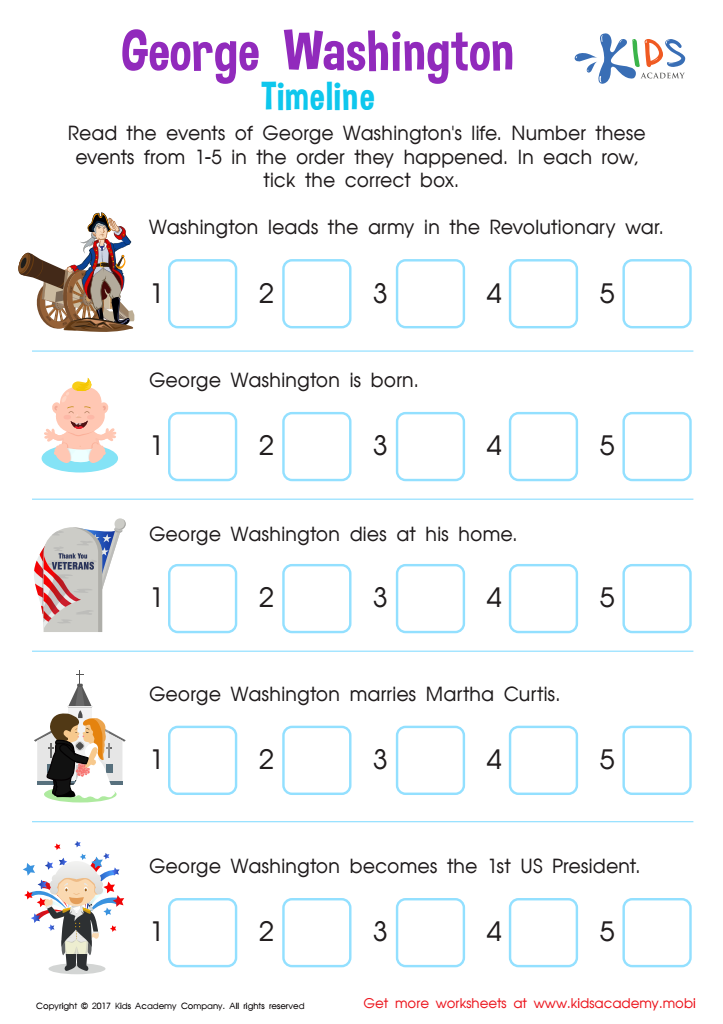
George Washington Timeline Worksheet


.jpg)




Event sequencing is a vital teaching strategy in early Social Studies education for children ages 4-8, as it helps establish a foundational understanding of time, history, and causality. By organizing events in a chronological order, children learn to comprehend the concept of past, present, and future, which is essential for historical awareness. This ability to sequence events enhances cognitive skills like memory and logical thinking, supporting overall academic growth.
Furthermore, event sequencing fosters narrative skills by encouraging children to tell stories coherently, a skill transferable to both reading comprehension and writing. Understanding sequences helps children grasp how one event leads to another, forming the basis for more complex subjects such as history or cause-and-effect in science.
Socially, learning about events and their sequences helps children relate to their personal experiences and culture, promoting a sense of identity and community. It enables them to see their own lives as part of a broader temporal and social framework, cultivating empathy and social awareness.
In the classroom, teachers can use event sequencing through engaging activities such as timelines, story mapping, and role-playing historical events. These methods make learning interactive and memorable, helping young children form meaningful connections with the material. For these reasons, integrating event sequencing in early Social Studies is crucial for comprehensive, developmentally appropriate education.