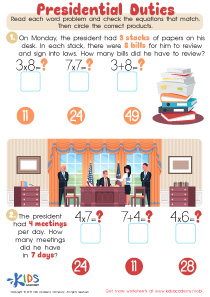
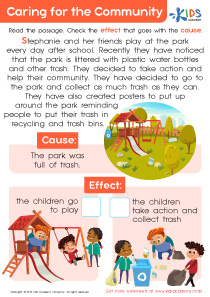
Understanding community roles Social Studies Worksheets for Ages 4-8
3 filtered results
-
From - To
Explore our "Understanding Community Roles" Social Studies worksheets designed for children ages 4-8! These engaging, age-appropriate resources introduce young learners to the various roles within their communities, fostering essential social awareness. Each worksheet encourages creativity and critical thinking through interactive activities that explore different community helpers, such as firefighters, doctors, and teachers. These materials not only enhance students’ understanding of societal roles but also promote valuable collaboration and communication skills. Perfect for classrooms or at-home learning, our worksheets provide a fun, educational experience that empowers children to appreciate the diversity and importance of community contributions. Start building their understanding today!
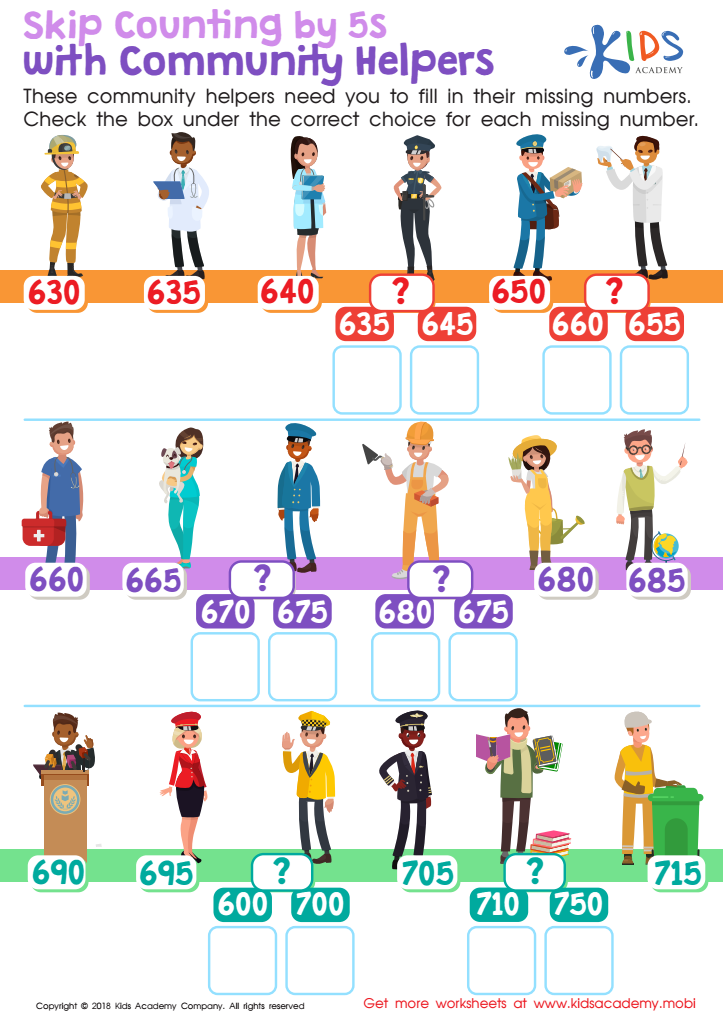
Skip Counting by 5s With Community Helpers Worksheet
 Assign to My Students
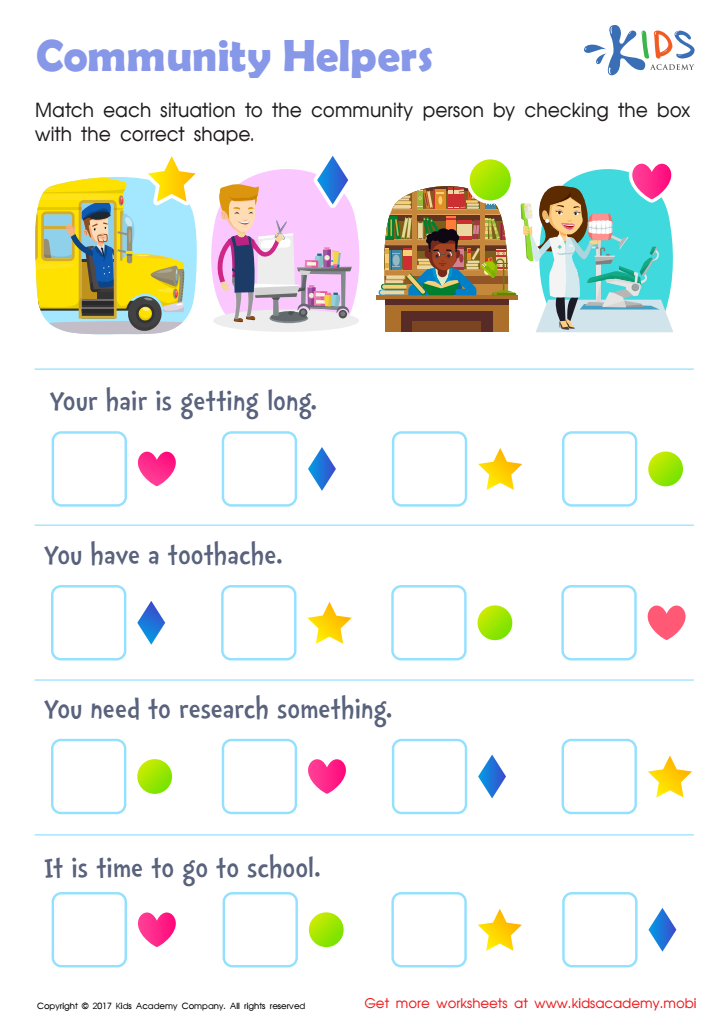
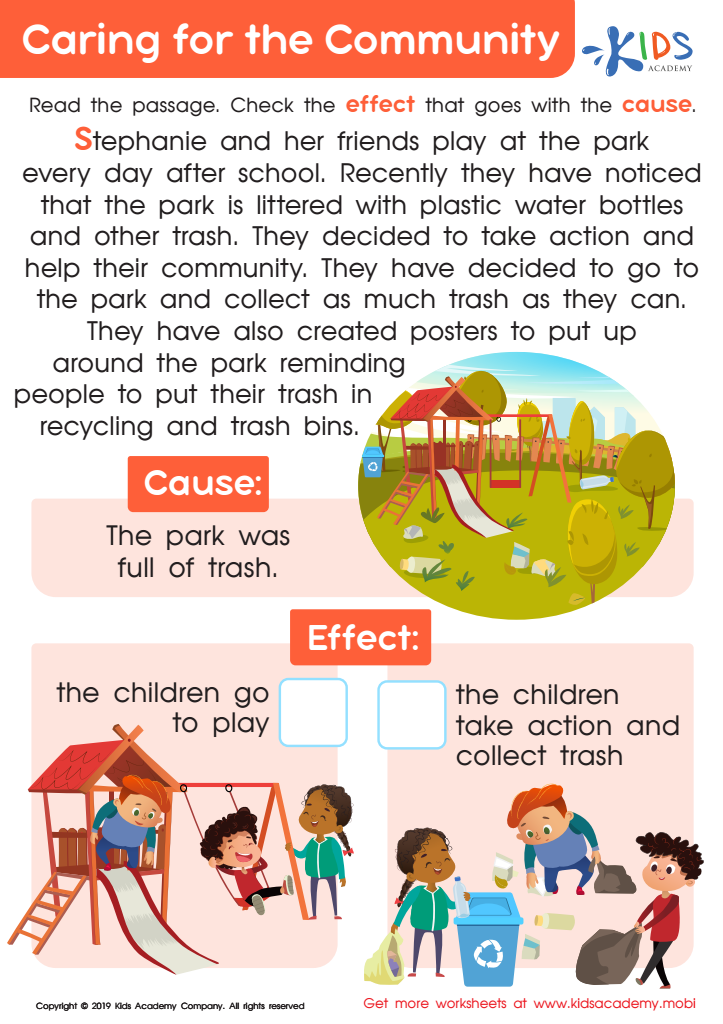
Caring for the Community Worksheet







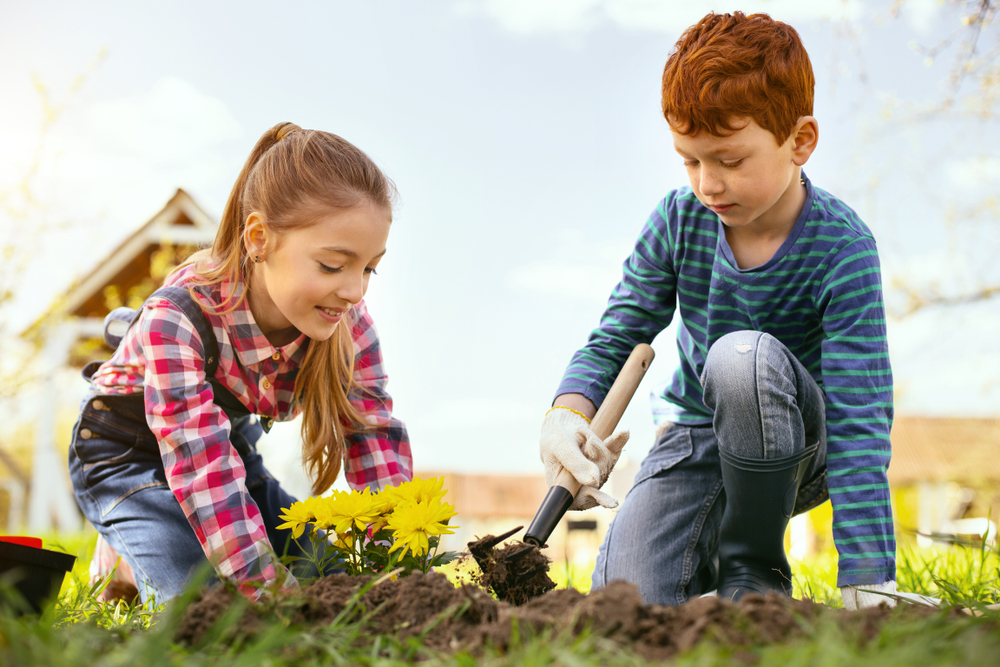
Understanding community roles is essential for children aged 4-8 because it lays the foundation for their social development and critical thinking skills. At this age, children are beginning to explore their surroundings, make connections, and form an identity within their community. By learning about various community roles—such as police officers, firefighters, teachers, and healthcare workers—they can better appreciate the diversity of professions and the contributions each individual makes to society.
For parents and teachers, fostering this understanding enhances children’s empathy and encourages respectful interactions with others. Discussion of community roles also helps in developing problem-solving skills; children learn how to identify and address community issues collaboratively. Furthermore, integrating community roles into social studies promotes active citizenship; children begin to understand their own roles and responsibilities within their environments.
When children are aware of different community roles, they feel empowered to explore their interests and aspirations. Parents and teachers play a critical part by guiding these discussions, providing resources, and creating opportunities for children to interact with community members. Ultimately, this knowledge equips children to be informed, engaged, and respectful members of society as they grow. Understanding their community is a critical step in shaping thoughtful, engaged future citizens.