Enhance your child's grammar skills with our engaging Grammar Worksheets for ages 4-8! These expertly designed worksheets make learning fun and interactive, providing a strong foundation in language concepts like parts of speech, sentence structure, punctuation, and more. Perfect for early learners, our vibrant and thoughtfully crafted resources help children practice and improve their grammar while fostering a love for writing and reading. Ideal for both classroom and at-home use, these worksheets ensure young students develop essential skills that will benefit them throughout their educational journey. Start your child's grammar adventure today with Kids Academy!

Check out this FREE Trial Lesson on Grammar for age 4-8!

Reflexive pronouns

Favorites
With answer key
Interactive
  • 4-8
  • Grammar skills improvement
  • Grammar
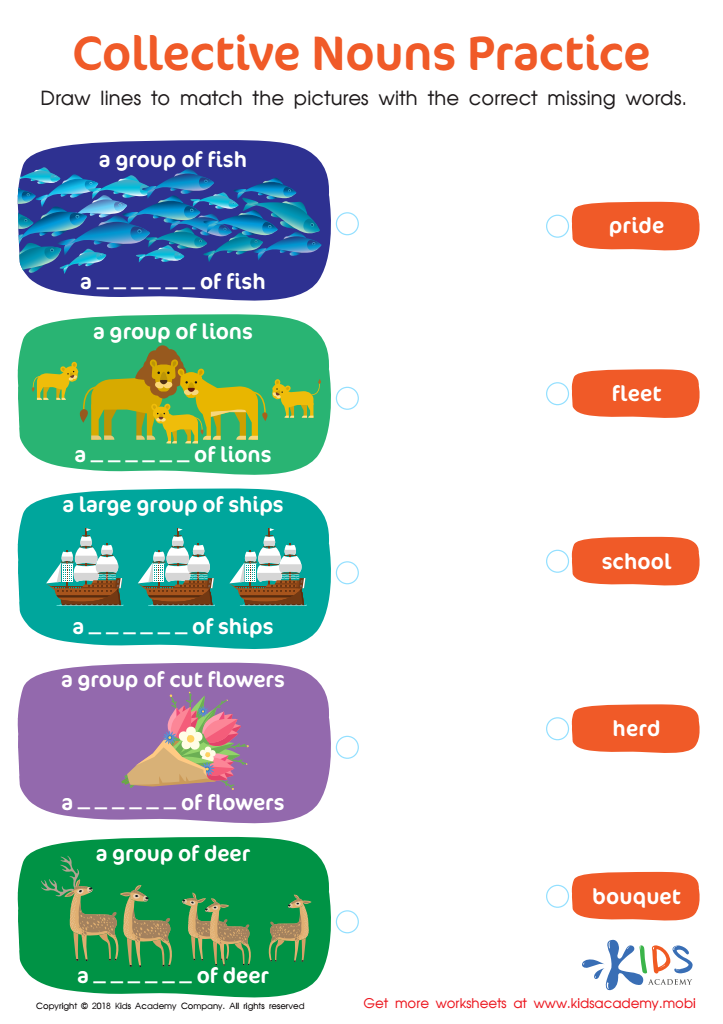
Collective Nouns Practice Worksheet

Collective Nouns Practice Worksheet

This worksheet helps your child master collective nouns. Five pictures show different groups of nouns, and your child must draw lines to the right collective noun words. It's a great way to help them sort out the words and understand collective nouns.
Collective Nouns Practice Worksheet
Worksheet
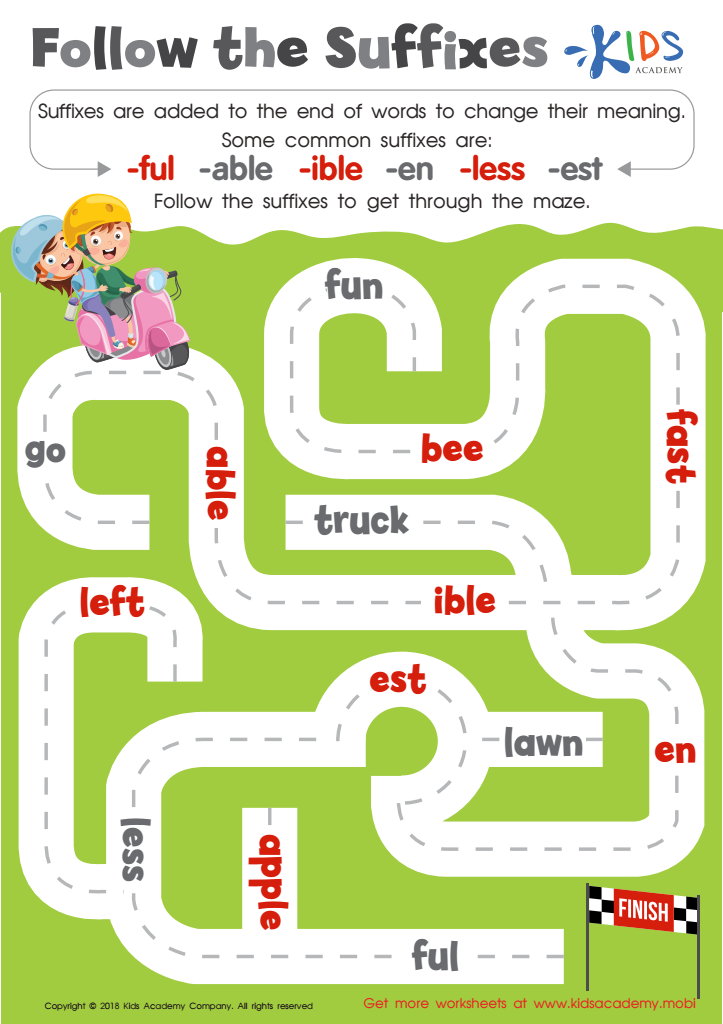
Reading: Follow the Suffixes Worksheet

Reading: Follow the Suffixes Worksheet

Students use suffixes to find the right way through a maze in this enjoyable activity! Understanding suffixes helps kids decode and comprehend more words, leading to better reading fluency. A great addition to your reading classes, keep this printable close!
Reading: Follow the Suffixes Worksheet
Worksheet
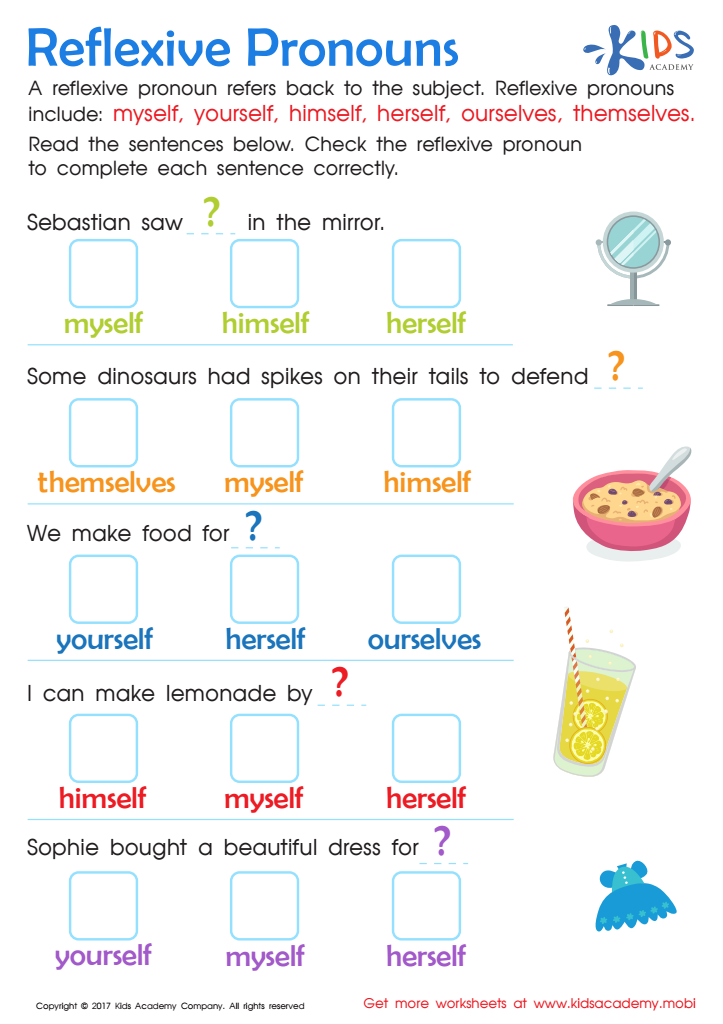
Reflexive pronouns worksheet for 2nd grade

Reflexive Pronouns Worksheet

The 2nd grade reflexive pronouns worksheet by Kids Academy offers clear explanations and fun activities to help master reflexive pronouns. Kids Academy's 2nd grade reflexive pronouns worksheet has everything you need to brush up on reflexive pronouns. It includes a brief explanation and fun activities with sentences and pictures to check your understanding. Master reflexive pronoun usage in no time!
Reflexive Pronouns Worksheet
Worksheet
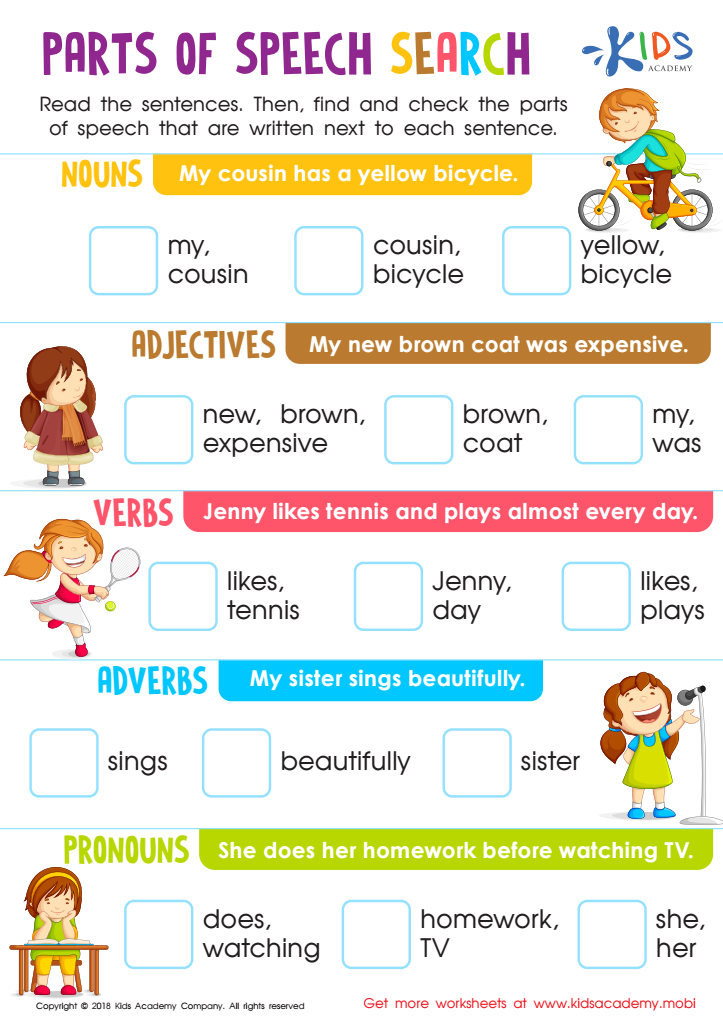
Parts of speech PDF worksheet for grade 3

Parts of Speech Worksheet for Grade 3
This worksheet is ideal for 3rd graders to review tricky parts of speech! It is vibrantly illustrated and contains sentences to read through. Each sentence has a category to select the correct word or words that match the part of speech indicated. Try it today!
Parts of Speech Worksheet for Grade 3
Worksheet
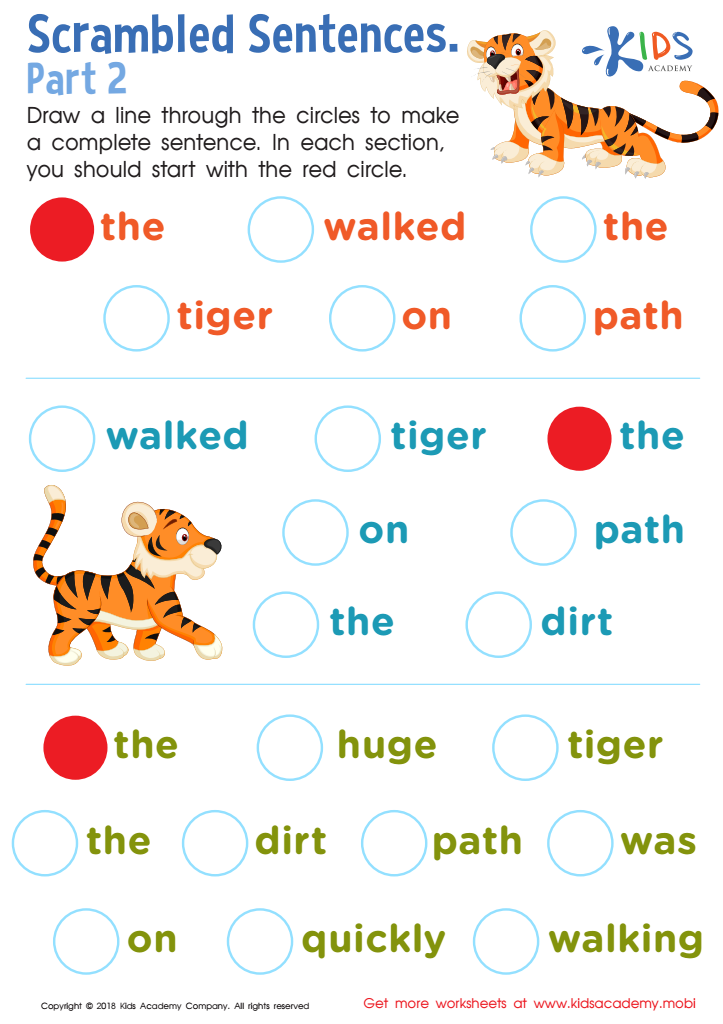
Scrambled Sentences Part 2 Worksheet

Scrambled Sentences Part 2 Worksheet

This printable worksheet helps kids construct simple, correct sentences. Introduce them to making sentences if they're new to it. Have them draw a line through the circles to form a sentence, starting with the red circle. After completing this exercise, they'll be able to craft short sentences with confidence.
Scrambled Sentences Part 2 Worksheet
Worksheet
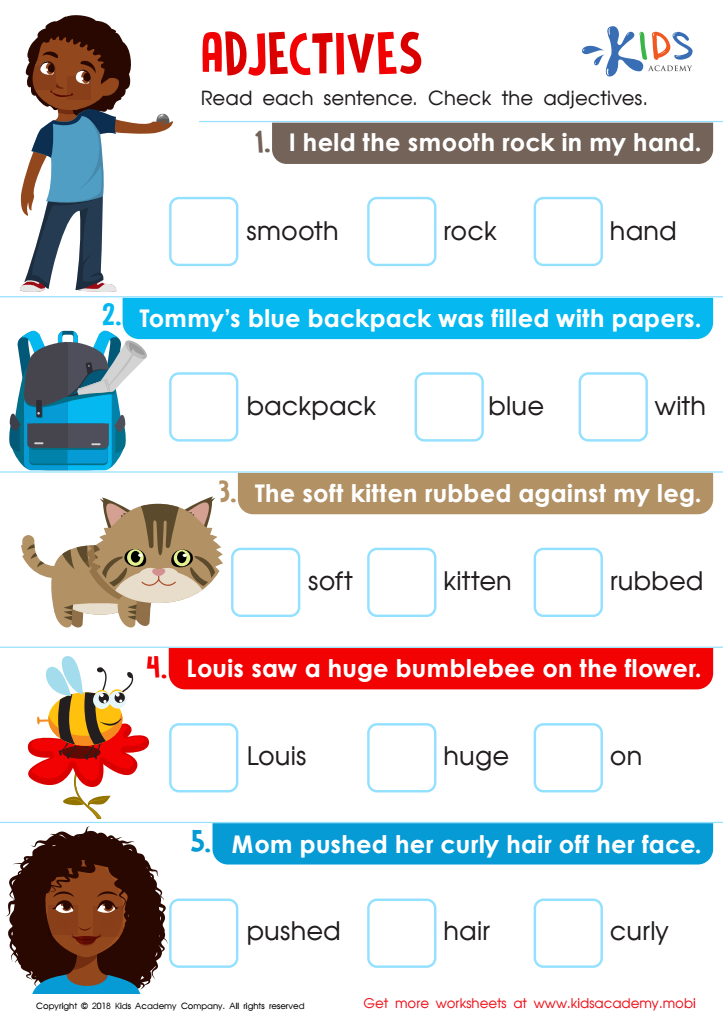
Adjectives Worksheet

Adjectives Worksheet

Adjectives are words that describe a noun. Examples include "beautiful" and "good". Ask your students to use these adjectives in a sentence and have them identify the adjectives in five sentences on a worksheet. Point out that adjectives are essential to understand, and have them check their answers.
Adjectives Worksheet
Worksheet
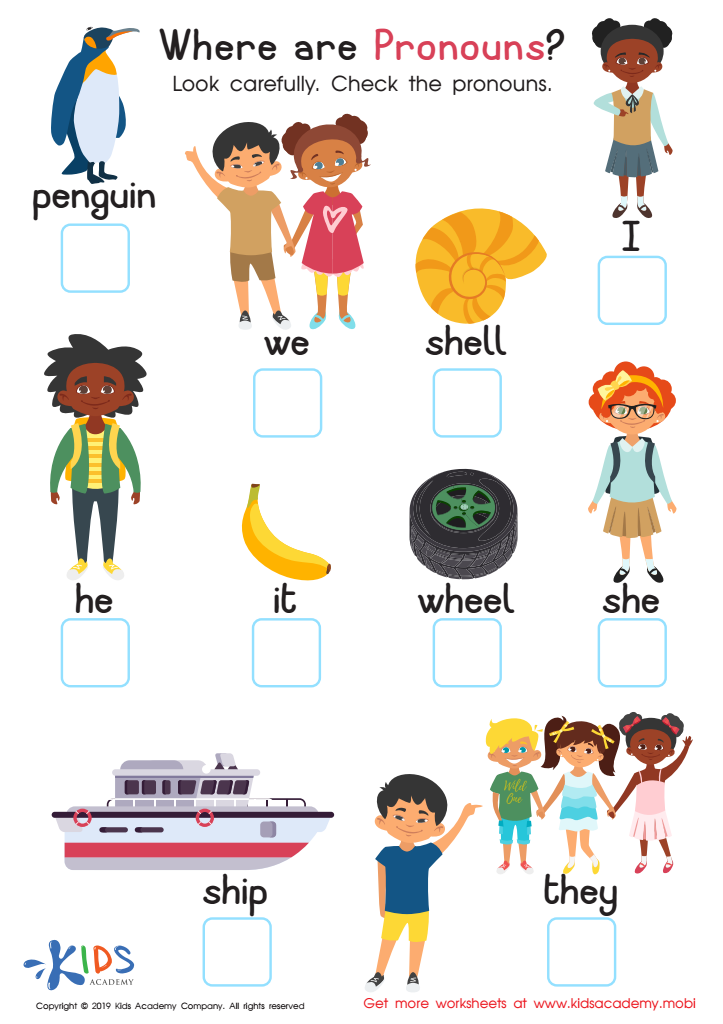
Where Are Pronouns? Worksheet

Where Are Pronouns? Worksheet

Pronouns make language flow, substituting "he" or "she" for names. Kids know and use them in their speech, but identifying pronouns in grammar helps build writing skills. This worksheet challenges kids to pick out pronouns from other nouns. Go through the worksheet, view the pictures and read the words. Ask kids to check boxes in front of pronouns to mark answers.
Where Are Pronouns? Worksheet
Worksheet
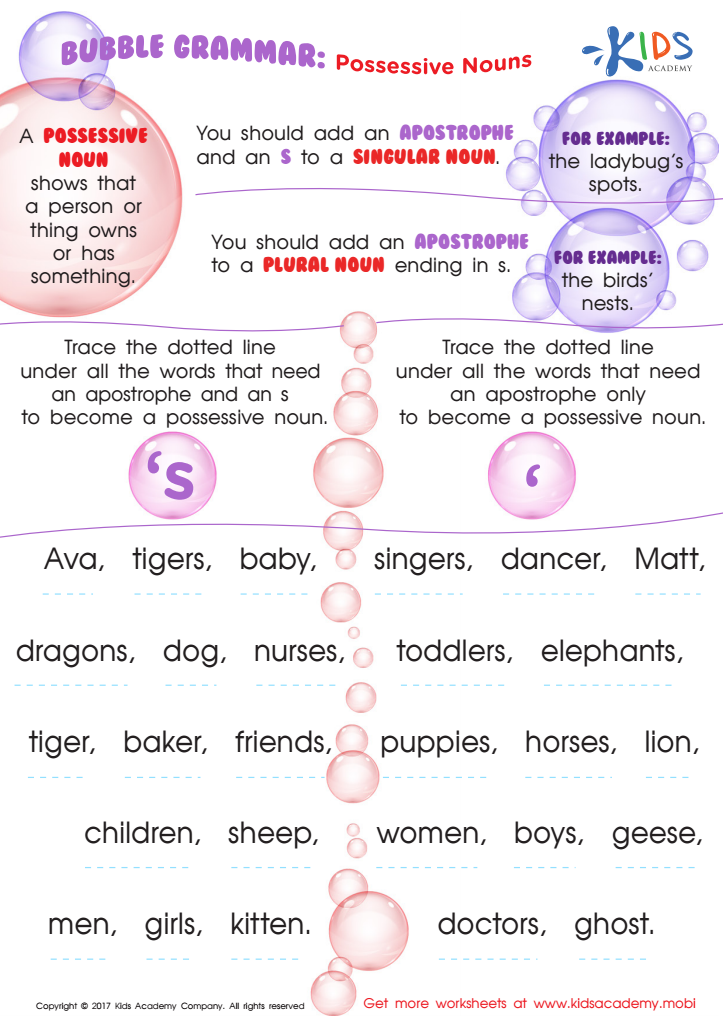
Possessive Nouns Worksheet for Grade 3 PDF

Possessive Nouns Worksheet for Grade 3 PDF

Help your child understand how to use nouns effectively in writing with this fun, bubble-themed possessive nouns PDF worksheet for grade 3. It'll teach them to recognize and punctuate possessive nouns!
Possessive Nouns Worksheet for Grade 3 PDF
Worksheet
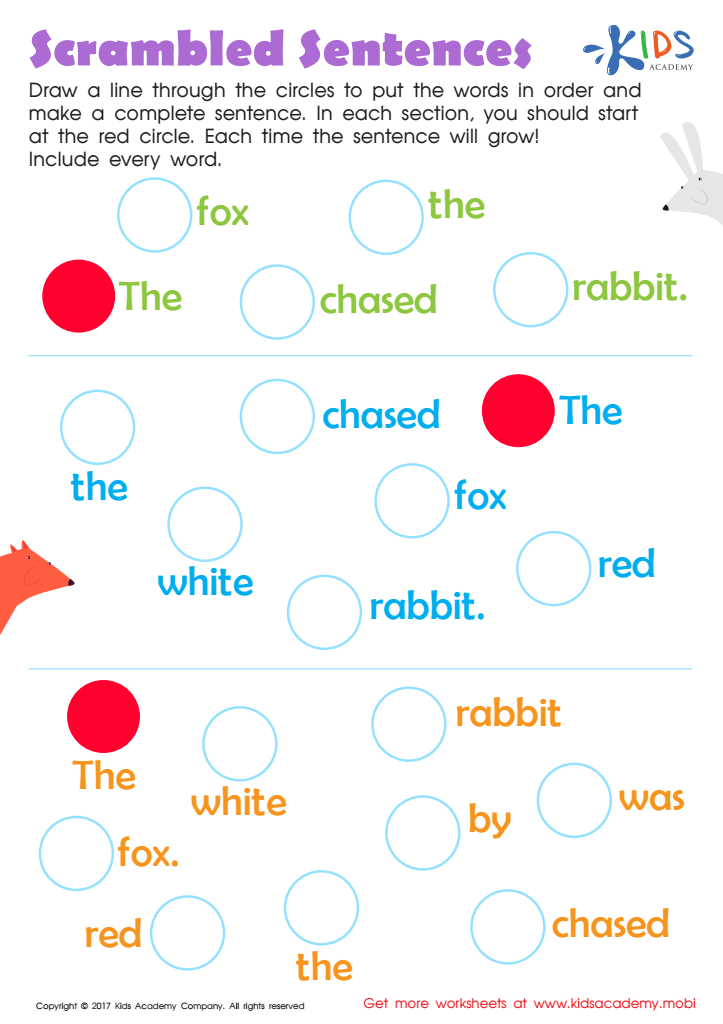
Scrambled sentences worksheet pdf

Scrambled Sentences Worksheet

Kids will have fun with the scrambled sentences worksheet: draw lines to make complete sentences. As the sentence grows, they'll learn sentence structure and word order. Easy instructions included!
Scrambled Sentences Worksheet
Worksheet


Parents and teachers should care about improving grammar skills for children ages 4-8 because it lays the foundation for effective communication and academic success. At this developmental stage, children rapidly acquire language skills that are crucial for reading, writing, speaking, and understanding. Proficiency in grammar enables children to construct clear, coherent sentences, enhancing their ability to express thoughts, needs, and emotions accurately.

Strong grammar skills support early literacy, which is critical for future learning. As children progress through school, subjects become more complex, requiring them to read and comprehend more intricate texts. A solid grammatical foundation helps in decoding these texts, fostering better understanding and critical thinking. Additionally, good grammar is essential for writing. When children learn the rules of language, they can create structured, error-free sentences, making their writing more persuasive and engaging.

Moreover, mastering grammar boosts confidence. Children who communicate effectively are more likely to participate in classroom activities, engage with peers, and ask questions, enriching their learning experience. In the long run, effective communication skills open doors to diverse opportunities and relationships in both personal and professional spheres.

Investing time and effort in improving grammar skills during these formative years ensures that children are well-equipped for the demands of educational and social interactions, setting them up for lifelong success.