
Comprehension skills Writing Worksheets for Ages 4-8
4 filtered results
Difficulty Level
Grade
Age
-
From - To
Subject
Activity
Standards
Explore our comprehensive range of Comprehension Skills Writing Worksheets designed specifically for children aged 4-8. These engaging materials will help young learners enhance their understanding of texts, improve critical thinking, and develop effective writing techniques. Each worksheet is crafted to capture your child's interest, making learning enjoyable and interactive. From identifying main ideas to summarizing stories, our worksheets aim to boost literacy skills and nurture a love for reading and writing. Ideal for homeschooling or classroom use, they're a valuable resource to support early education. Equip your child on their journey to becoming a confident communicator today!
Favorites
With answer key
Interactive
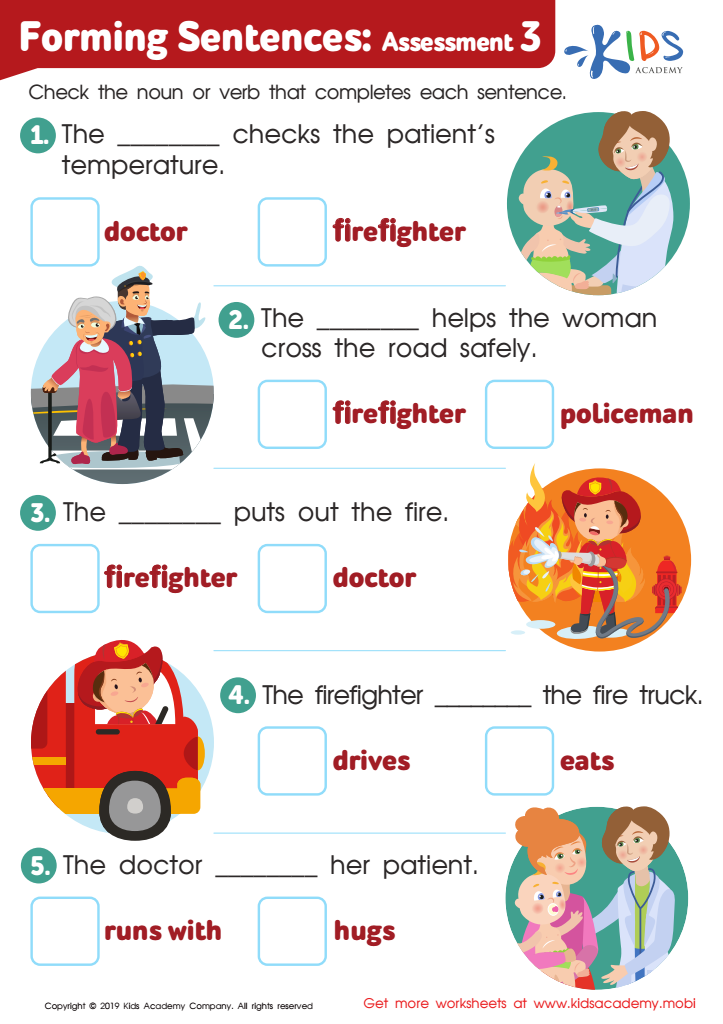
Forming Sentences: Assessment 3 Worksheet
Students must master sentence formation to be successful English learners. After grasping the ABCs and basic words, the next step is to construct sentences using those words. Worksheets like this one can help teach kids how to make sentences; they need to look at the pictures and select the correct noun or verb to complete each sentence.
 Assign to My Students
Forming Sentences: Assessment 3 Worksheet
Worksheet
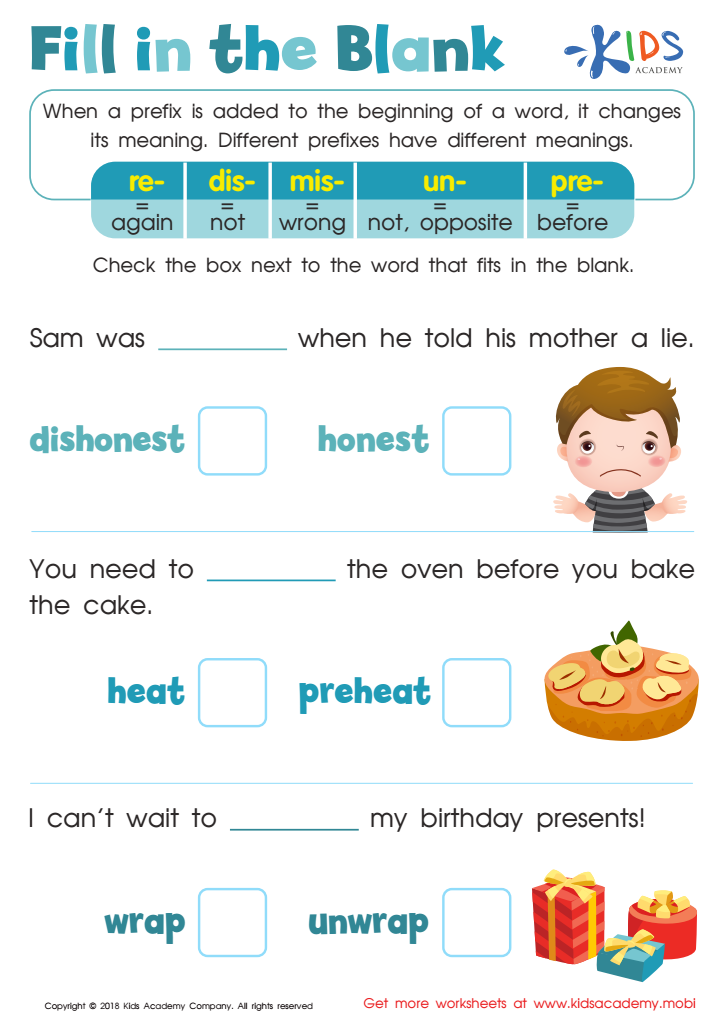
Reading: Fill in the Blank Worksheet
Students can practice understanding the meaning of common prefixes with this worksheet. They read sentences and pick the correct word with the appropriate prefix to complete it. Downloadable and a great addition to reading and vocabulary resources, this helps improve comprehension with mastery of the skill!
Reading: Fill in the Blank Worksheet
Worksheet
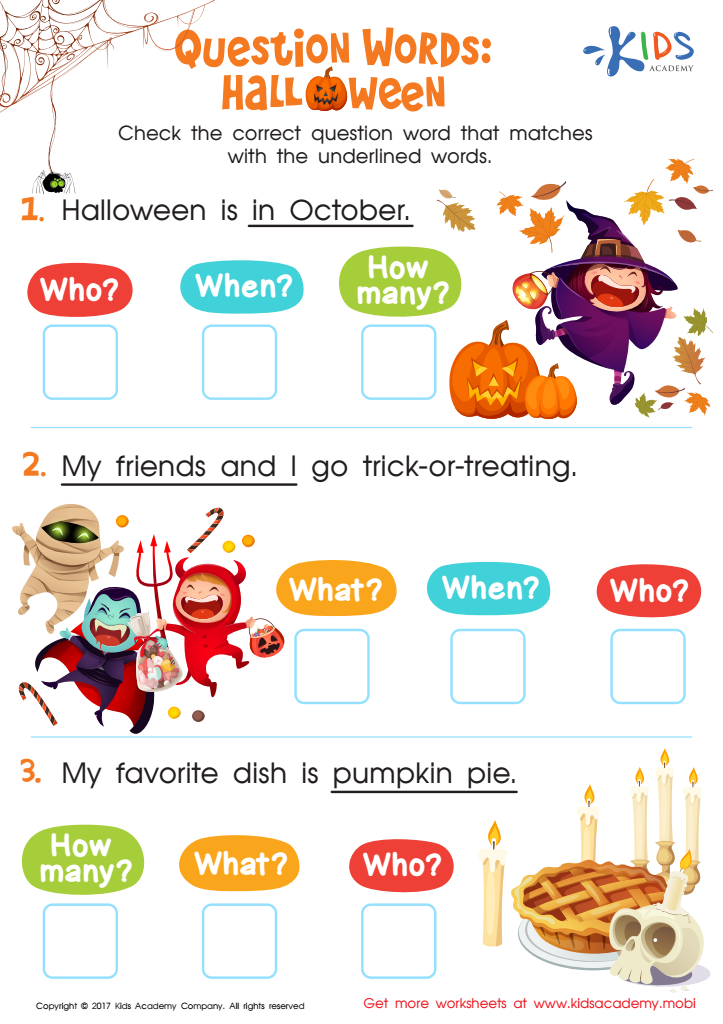
Question Words: Halloween Worksheet
Questions lead to answers, so it's important to use the right words. This Halloween-themed worksheet helps kids learn to use precise language when writing or asking a question. Just read each sentence, noting the underlined phrases, and pick the question word that fits. Have spooky fun!
Question Words: Halloween Worksheet
Worksheet
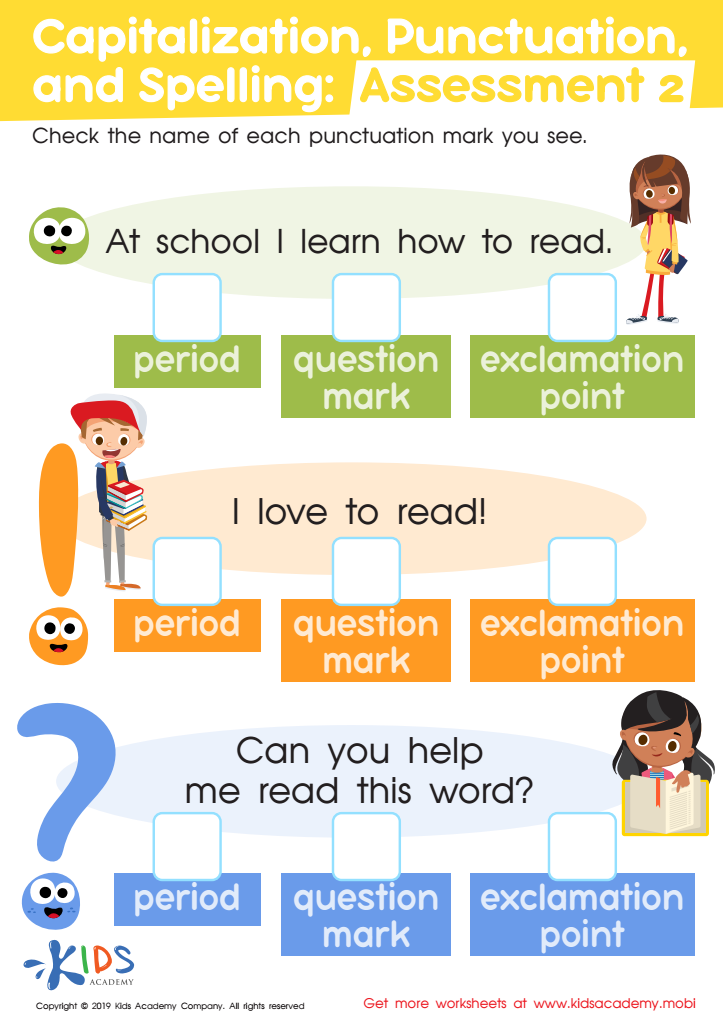
Capitalization. Punctuation. Spelling: Assessment 2 Worksheet
Teach your kids the basics of punctuation. Ask them to name the punctuation marks they know and review a worksheet together. Start with the full stop, question mark and exclamation mark. Show them examples and explain the differences between a comma and semi colon. Teaching proper use of punctuation marks is key to their development.
Capitalization. Punctuation. Spelling: Assessment 2 Worksheet
Worksheet
Join Kids Academy for Free
Who is primarily going to use this learning content?








Comprehension skills are crucial for children aged 4-8 as they form the foundation for their academic success and overall literacy development. During these formative years, children are learning to understand and process information, making it essential for parents and teachers to engage with effective comprehension strategies.
Strong comprehension skills aid in building critical thinking and analytical abilities, allowing children to not only grasp the content they read but also infer, predict, and connect ideas. This lays the groundwork for a love of reading and learning, promoting creativity and curiosity. For children at this age, comprehension is not solely about decoding words; it’s about making sense of stories, asking questions, and discussing narratives, which enhances verbal communication skills.
Additionally, fostering comprehension skills contributes to improved writing capabilities. Children learn to organize their thoughts and express ideas clearly when they can comprehend complex concepts effectively. This skill serves them well across subjects, as understanding context and content is vital in assessments and collaborative work.
By prioritizing comprehension skills, parents and teachers invest in a child’s future, equipping them with tools for lifelong learning. Emphasizing comprehension encourages children to explore, engage, and enjoy the vast world of literature and knowledge, making it a key focus for early education.








