Phonics recognition Writing Worksheets for Ages 4-8
5 filtered results
-
From - To
Our Phonics Recognition Writing Worksheets for Ages 4-8 make early literacy learning enjoyable and effective! Specifically tailored for young learners, these engaging worksheets help children recognize and practice phonics through fun activities. With colorful illustrations and well-structured exercises, kids master letter sounds, blending, and word formation while boosting their confidence. Ideal for both home and classroom use, each worksheet is designed to foster independent learning, improve handwriting skills, and solidify foundational reading principles. Start your child's phonics journey today with our expertly crafted resources and watch them thrive in their literacy development!
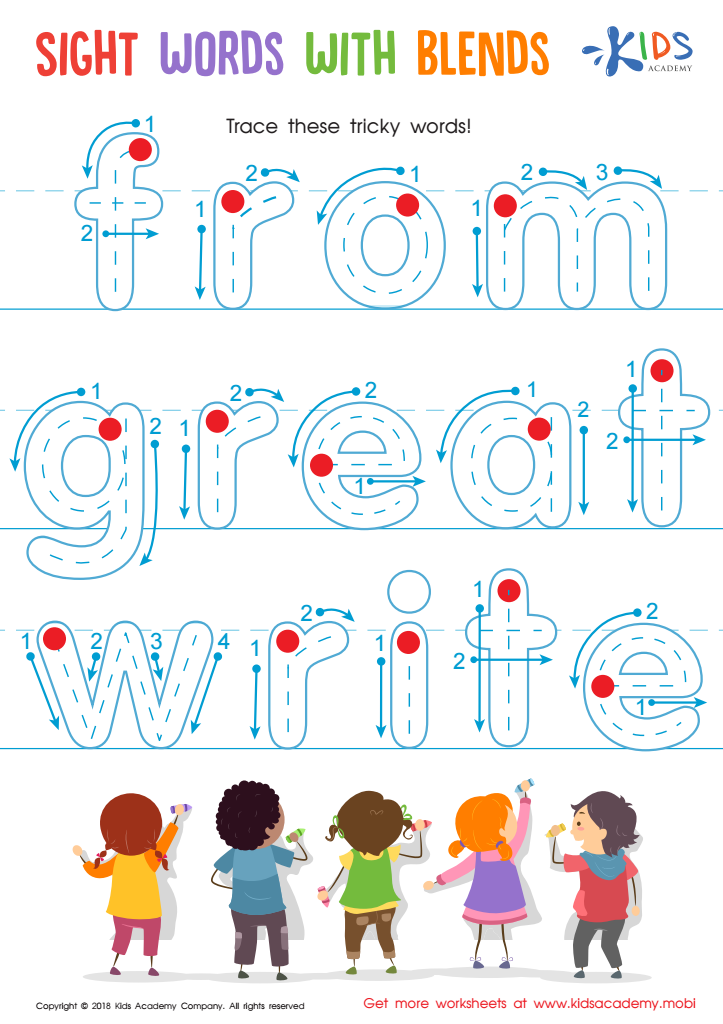
Sight Words with Blends Worksheet
 Assign to My Students
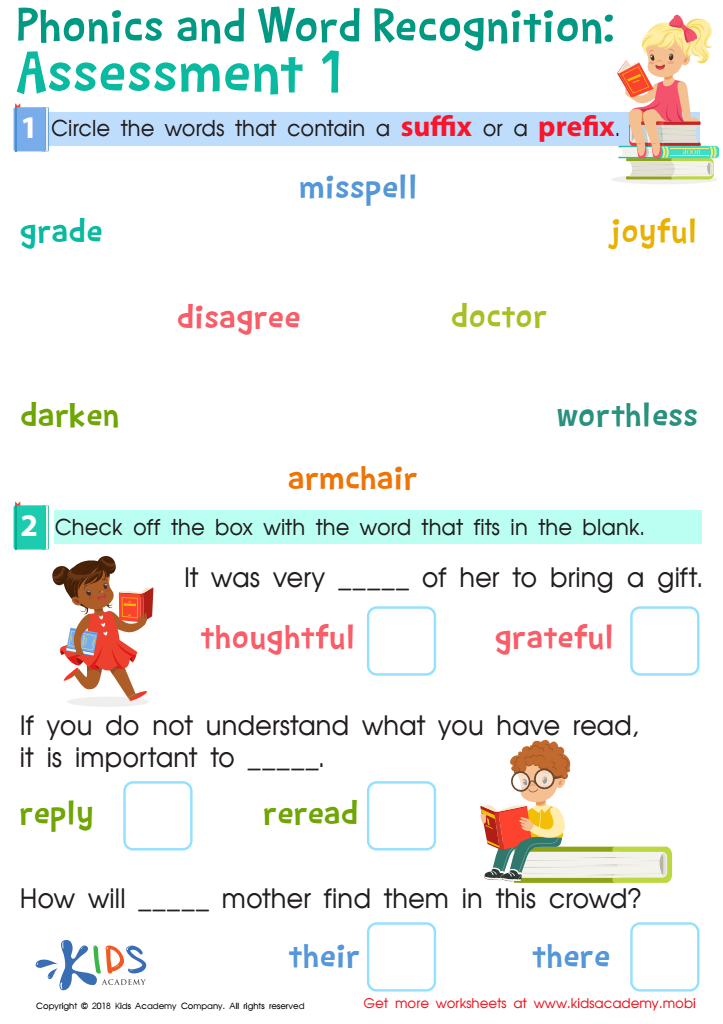
Phonics and Word Recognition: Assessment 1 Worksheet
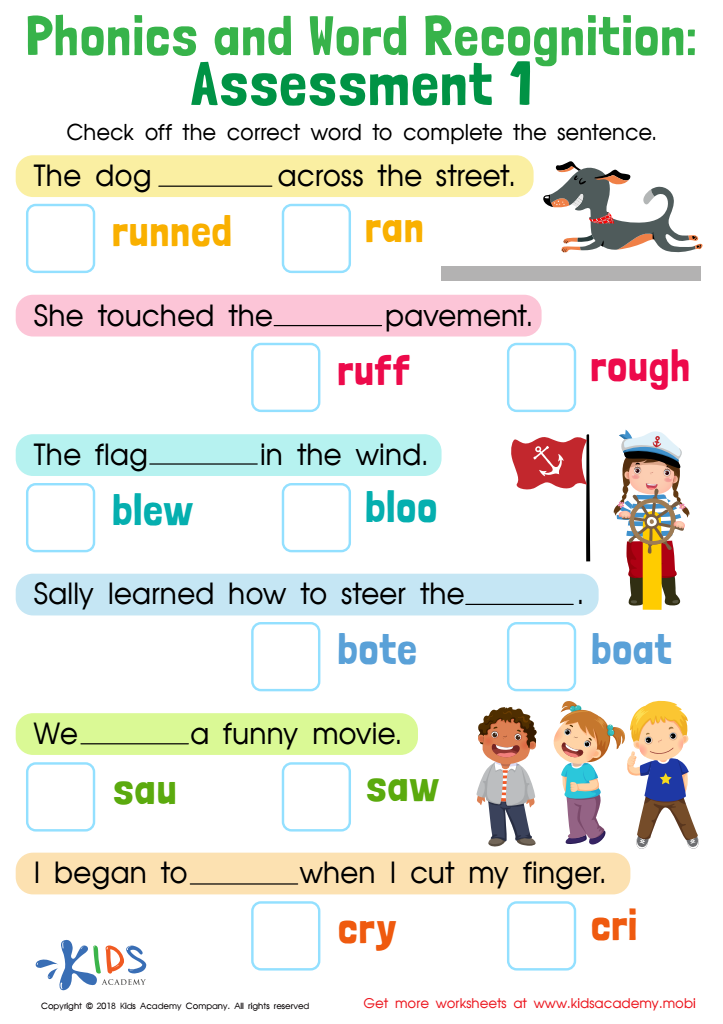
Phonics and Word Recognition: Assessment 1 Worksheet
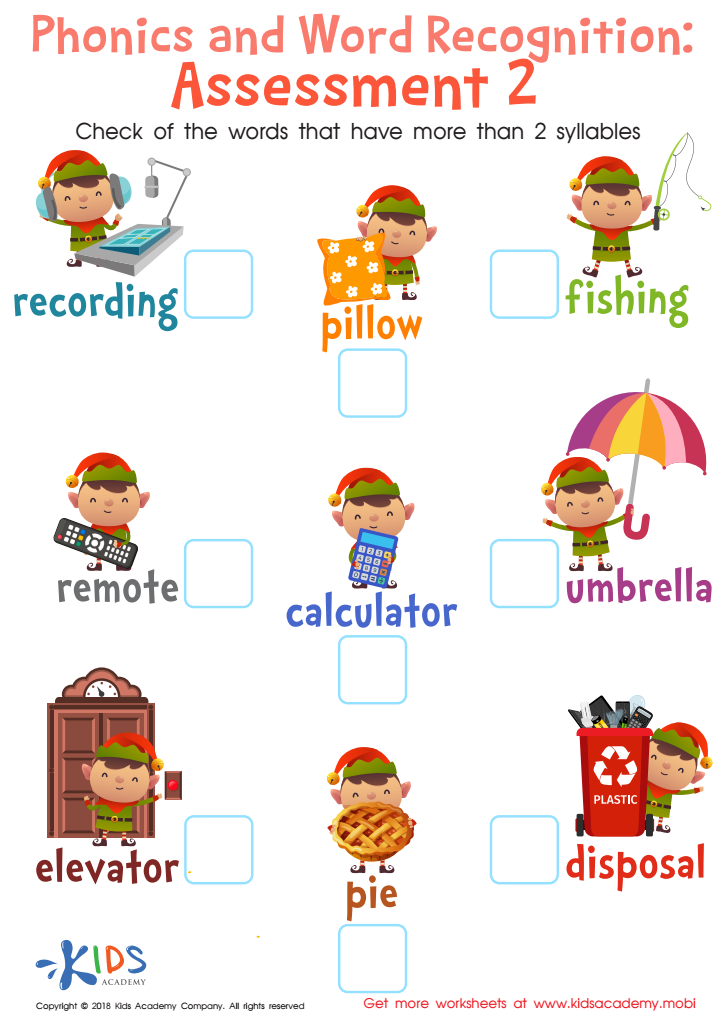
Phonics and Word Recognition: Assessment 2 Worksheet
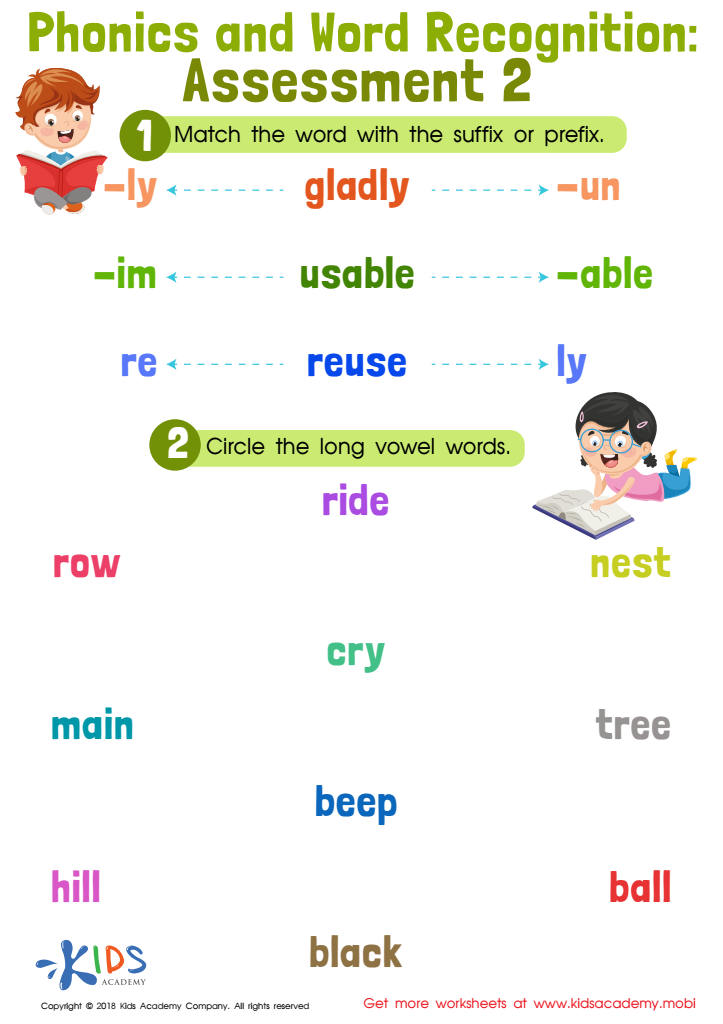
Phonics and Word Recognition: Assessment 2








Phonics recognition is fundamental in the early stages of child development, especially between ages 4-8, as it provides a solid foundation for reading and writing skills. When children grasp phonics, they understand how letters correlate with sounds, enabling them to decode words accurately. This decoding skill is essential for reading, as it allows children to sound out new words, enhancing their ability to comprehend text. Consequently, this boosts their confidence and motivation to read more frequently, which in turn improves vocabulary and language skills.
Moreover, phonics instruction supports spelling and writing. By recognizing patterns in how words are structured, children can transfer these patterns when composing their own writing. This aids in the development of crucial writing skills like spelling accuracy, sentence structure, and grammar usage. Additionally, early proficiency in phonics aids cognitive development, improves memory, and enhances listening and articulation skills.
Parents and teachers play a critical role by consistently engaging in phonics-based activities and offering tailored guidance. This involvement drives the child's academic achievement and fosters a lifelong love of literacy. A strong emphasis on phonics at this crucial developmental stage ensures children are well-equipped for future academic challenges, nurturing proficient and enthusiastic readers and writers.








