Understanding punctuation Punctuation Worksheets for Ages 4-8
3 filtered results
-
From - To
Welcome to our "Understanding Punctuation Worksheets for Ages 4-8"! These engaging worksheets are designed to introduce young learners to the fundamentals of punctuation. Children will explore vital punctuation marks such as periods, commas, exclamation points, and question marks. Through fun activities and colorful illustrations, students will improve their writing skills while learning how punctuation enhances their sentences. Ideal for both home and classroom use, these worksheets promote creativity and comprehension in a playful, interactive way. Start your child’s journey into the world of writing today and help them become confident communicators with our structured punctuation resources!
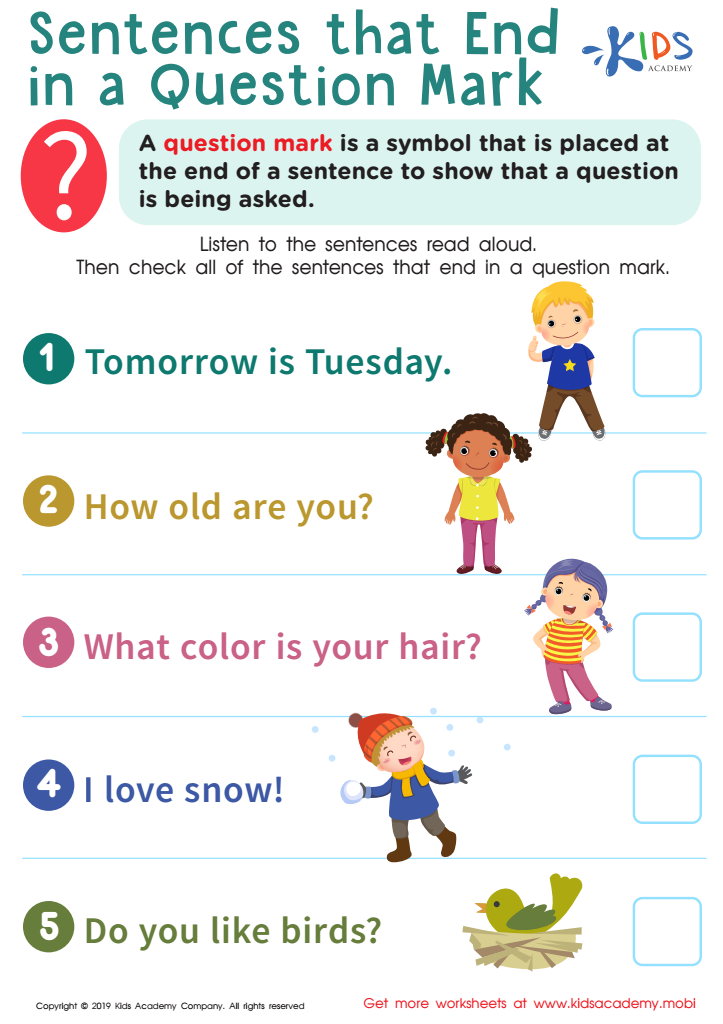
Sentences That End in an Question Mark Worksheet
 Assign to My Students
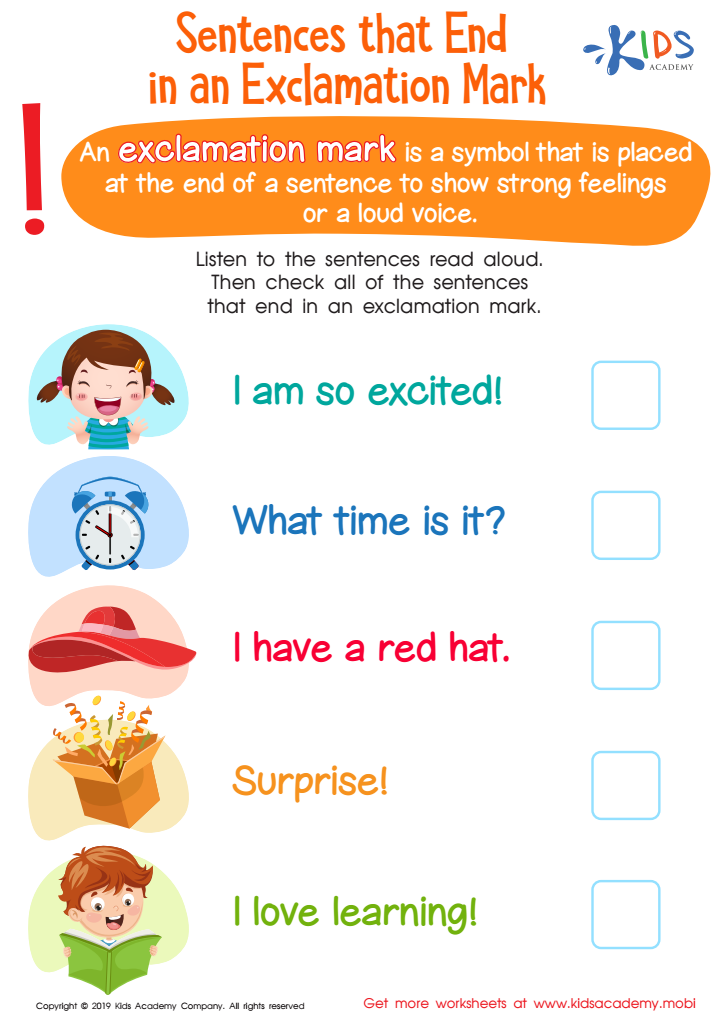
Sentences That End in an Exclamation Mark Worksheet
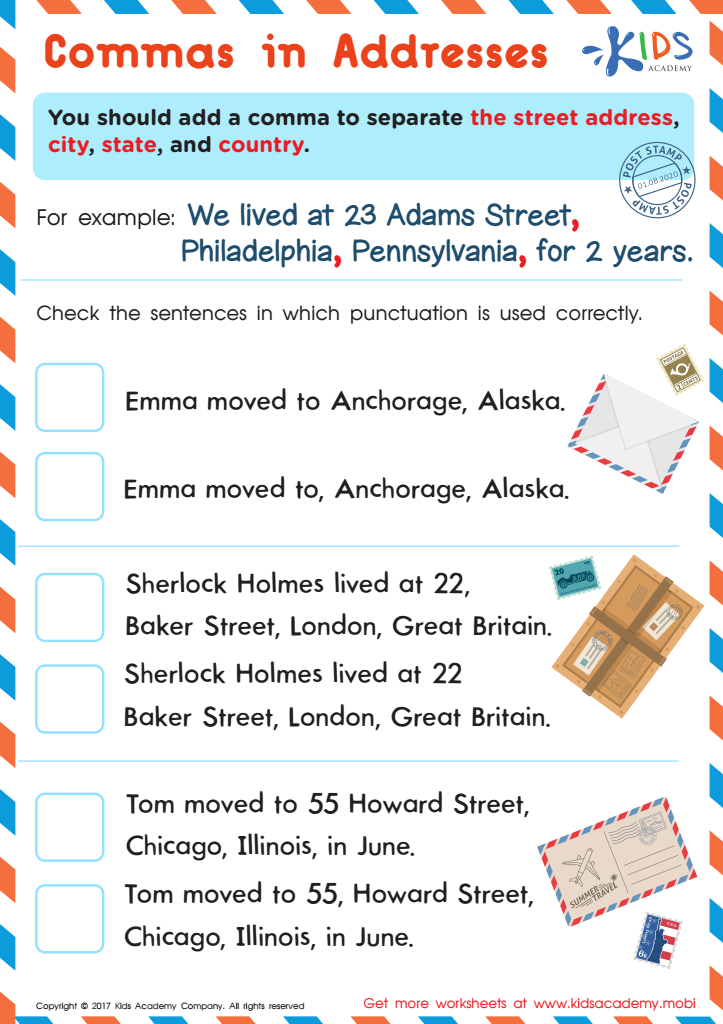
Commas in Addresses Worksheet





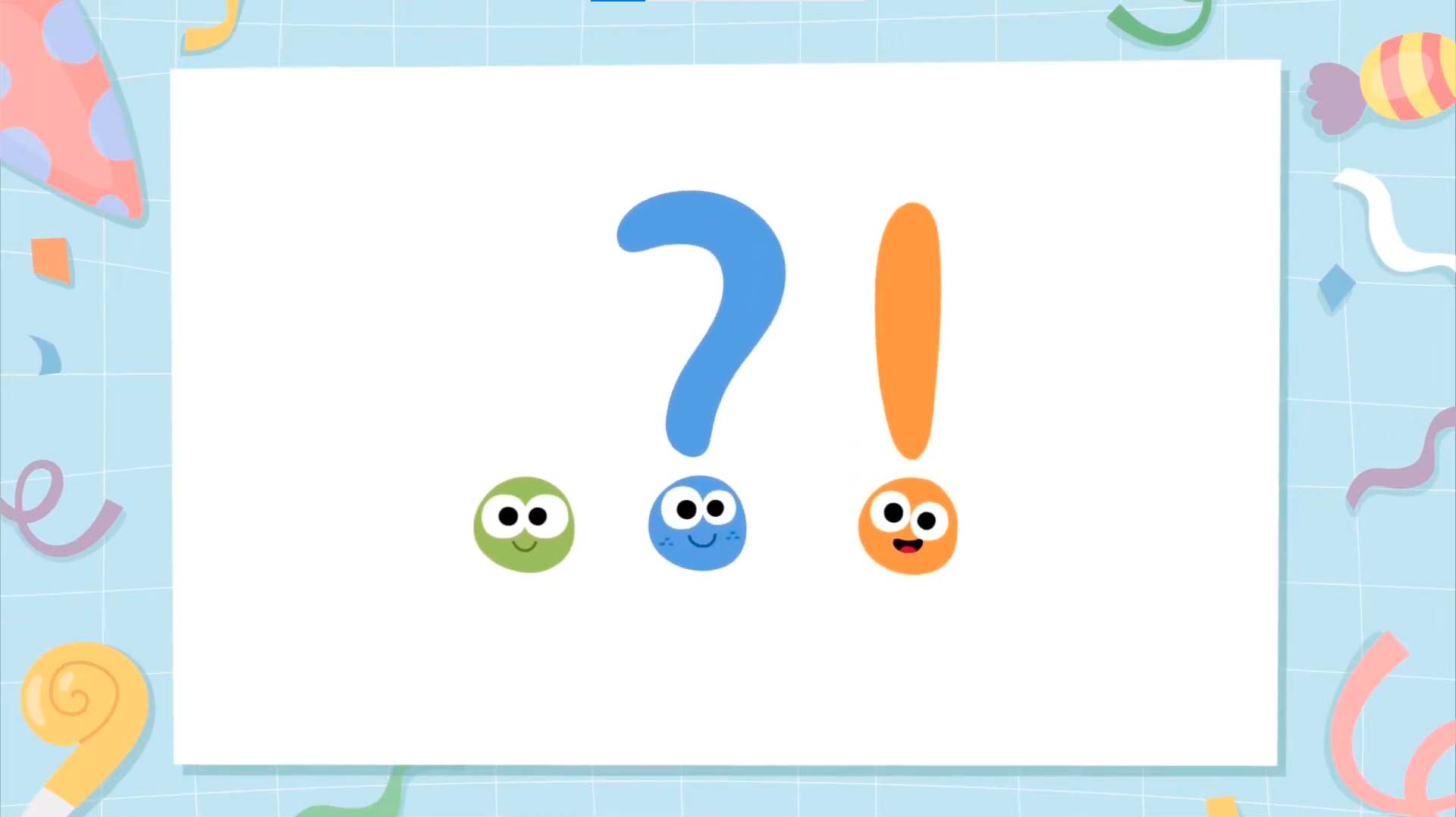


Understanding punctuation is vital for children aged 4-8 as it forms the foundation for effective communication. At this age, children are beginning to read and write, making it essential for parents and teachers to emphasize punctuation's role in conveying meaning. Proper punctuation helps clarify the intended message, enabling young learners to understand when to pause, see the differentiation between statements and questions, and interpret emotions in written words.
For instance, a simple sentence like "Let's eat, Grandma!" versus "Let's eat Grandma!" dramatically changes the intended meaning based on punctuation. By learning the basics of punctuation, children not only improve their reading comprehension but also enhance their writing skills.
Moreover, mastering punctuation fosters confidence in expressing ideas clearly and accurately. Parents and teachers play a crucial role in guiding this learning process, integrating fun activities that highlight punctuation’s importance—storytelling, games, and interactive writing exercises can make punctuation engaging.
In conclusion, by emphasizing punctuation, we help children develop crucial literacy skills that underpin their academic success and effective communication. Understanding punctuation is not just about grammar; it’s about teaching children to navigate and express themselves in the rich tapestry of language.








