Alphabetical order Alphabet Worksheets for Ages 4-9
3 filtered results
-
From - To
Welcome to our Alphabetical Order Worksheets for Ages 4-9! Designed to make learning fun, these engaging worksheets help young learners master the essential skill of arranging words in alphabetical order. With colorful illustrations and age-appropriate activities, children will build their vocabulary while developing critical thinking and sorting skills. Our user-friendly resources cater to different learning styles, ensuring every child can grasp this foundational concept with ease. Perfect for classroom use or at-home practice, these worksheets are a valuable tool for early literacy development. Explore our collection today and watch your young learners thrive as they discover the excitement of the alphabet!
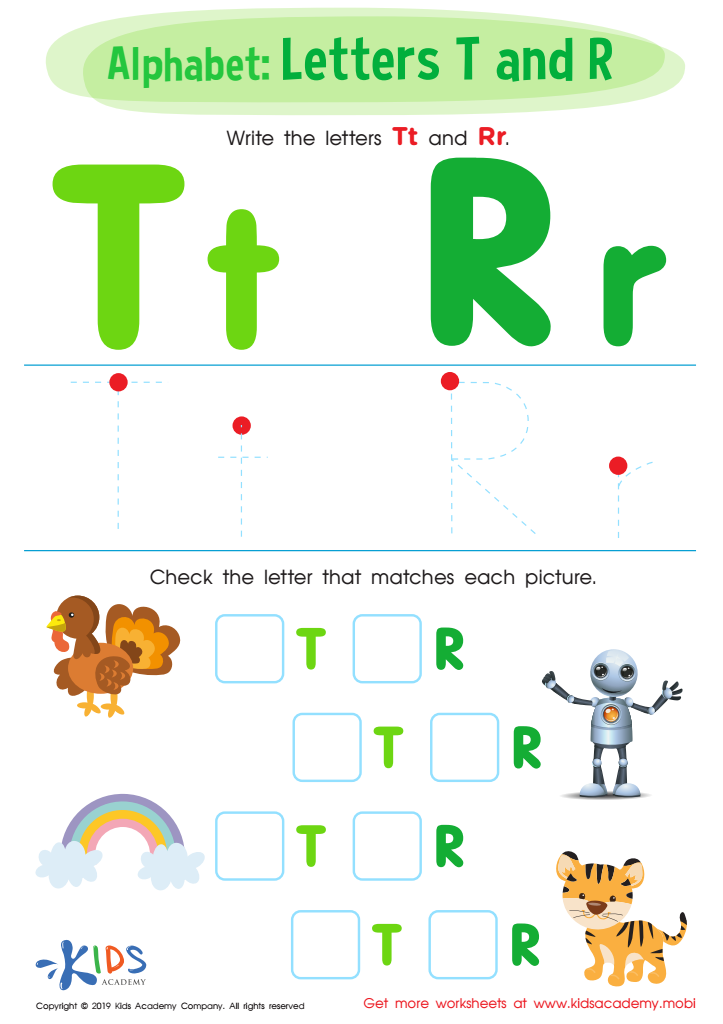
Letters T and R Worksheet
 Assign to My Students
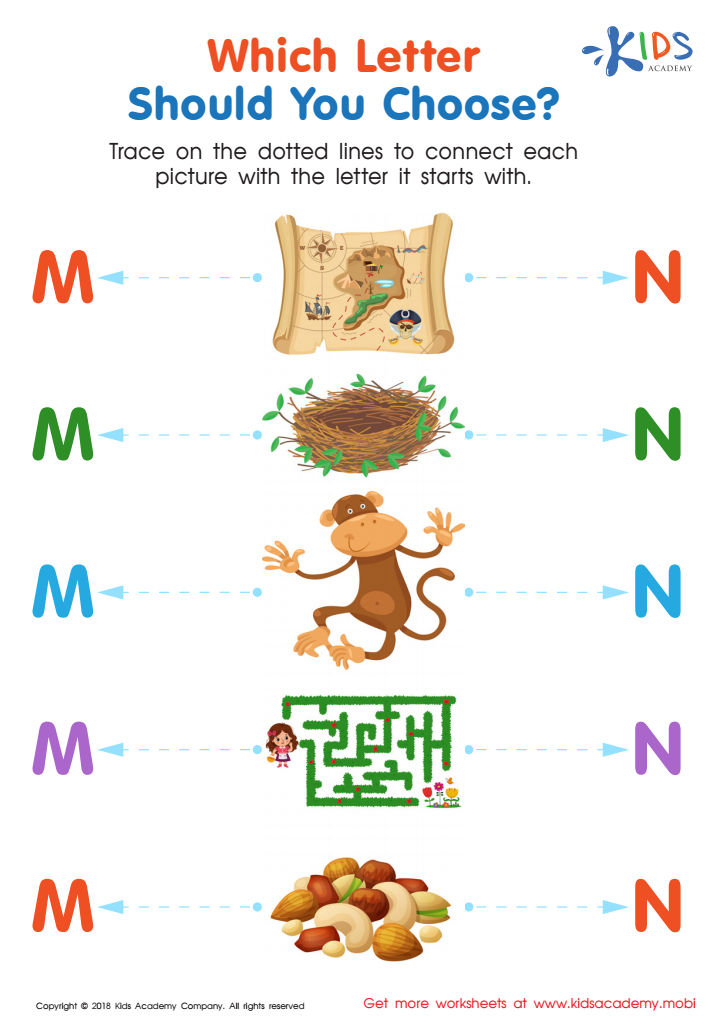
Which Letter Should you Choose? Worksheet
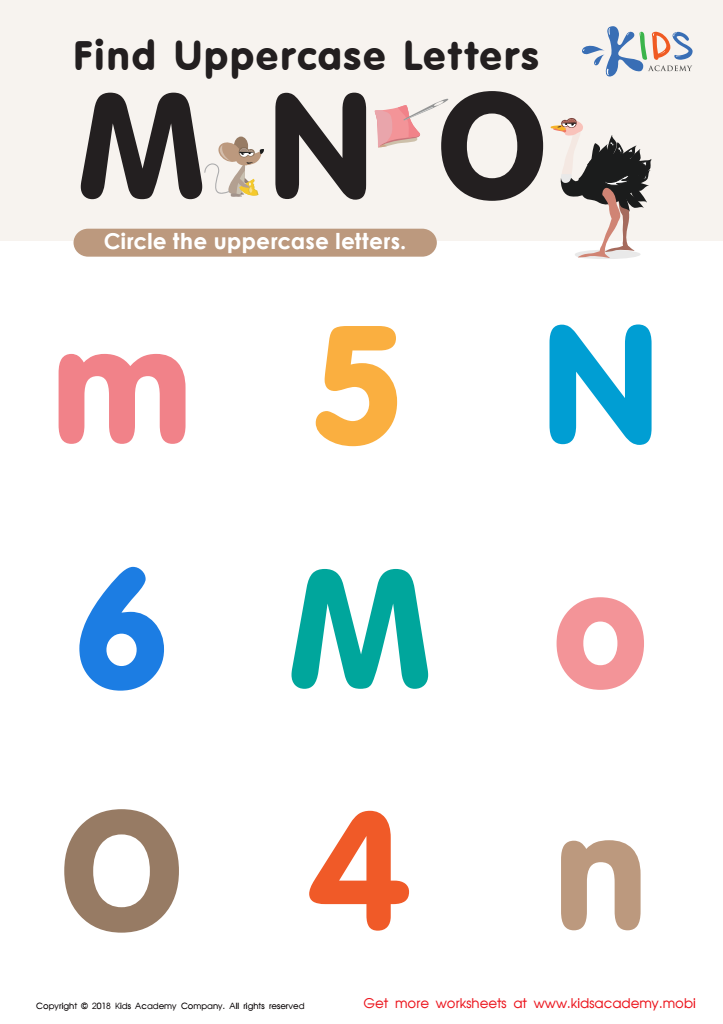
Find Uppercase Letters M, N, and O Worksheet







Understanding alphabetical order is a foundational skill for children aged 4-9, and its importance cannot be overstated for both parents and teachers. Learning the alphabet sequence enriches children's literacy development, promoting their ability to recognize words, enhance reading comprehension, and effectively navigate written materials. Familiarity with the alphabet aids in phonics instruction, which is essential for developing overall language skills.
From a practical standpoint, the ability to arrange words or objects alphabetically helps cultivate organizational skills. Whether sorting books in a library, labeling folders, or categorizing classroom materials, the alphabetical system provides a structured approach that is useful in various contexts.
Moreover, mastering alphabetical order fosters independence in children. They become capable of looking up words in dictionaries or finding information efficiently, boosting their confidence and encouraging a love for learning. Engaging in activities that reinforce this skill—such as alphabet games, songs, and interactive sorting tasks—makes learning enjoyable and memorable.
In summary, fostering an understanding of alphabetical order lays the groundwork for effective communication, problem-solving, and organization, which are essential skills for academic success and lifelong learning. Both parents and teachers play a crucial role in nurturing these abilities in young learners.







