Vocabulary enhancement Tracing Letters Worksheets for Ages 4-9
3 filtered results
-
From - To
Boost your child's vocabulary and letter mastery with our Vocabulary Enhancement Tracing Letters Worksheets designed for ages 4-9. These engaging worksheets combine tracing activities with vocabulary-building exercises, helping young learners recognize and write the letters of the alphabet while expanding their word knowledge. Each worksheet features fun illustrations and related words, making learning both enjoyable and effective. Perfect for home or classroom use, these resources cater to various learning styles, ensuring every child can thrive. Watch as your young learners develop their language skills and gain confidence in their writing abilities. Download our worksheets today for an enriching educational experience!
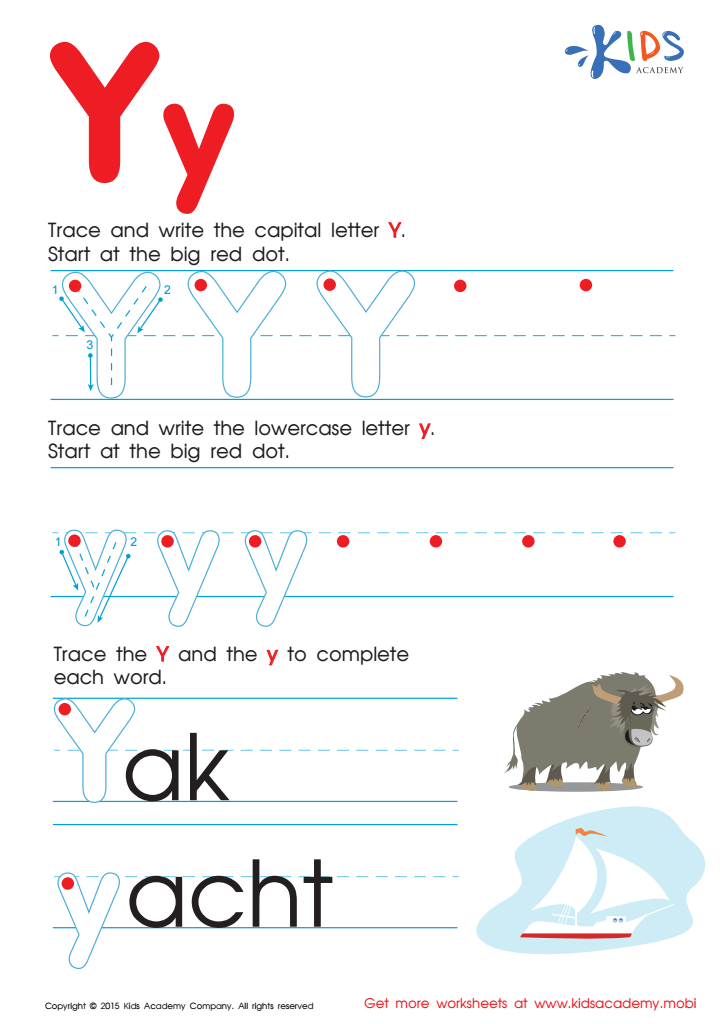
Letter Y Tracing Page
 Assign to My Students
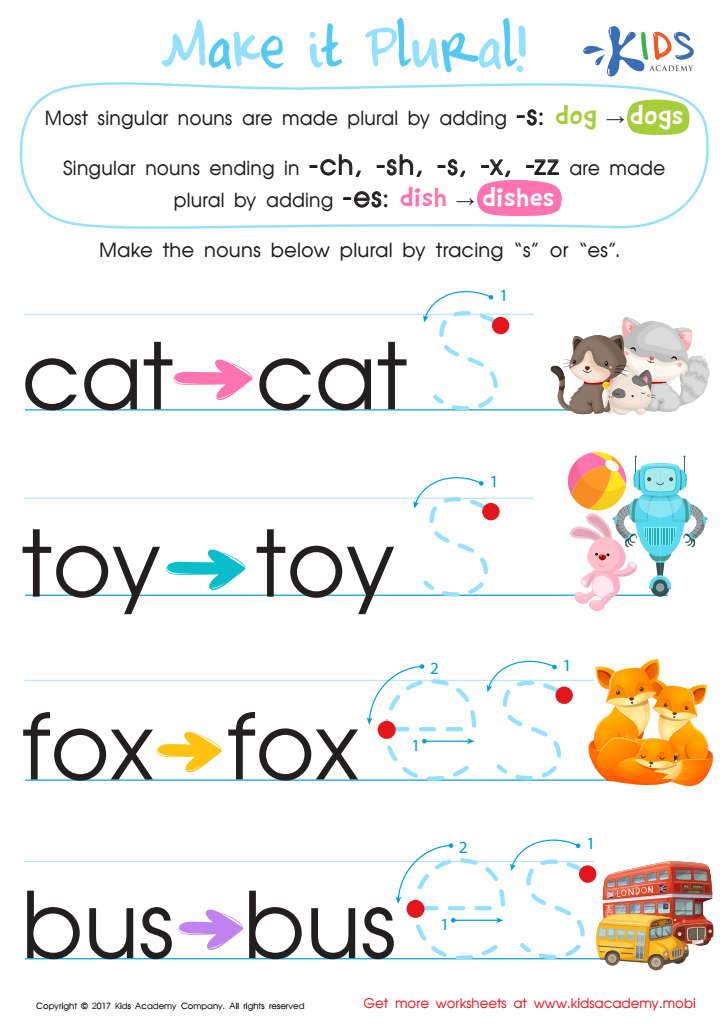
Make it Plural Worksheet
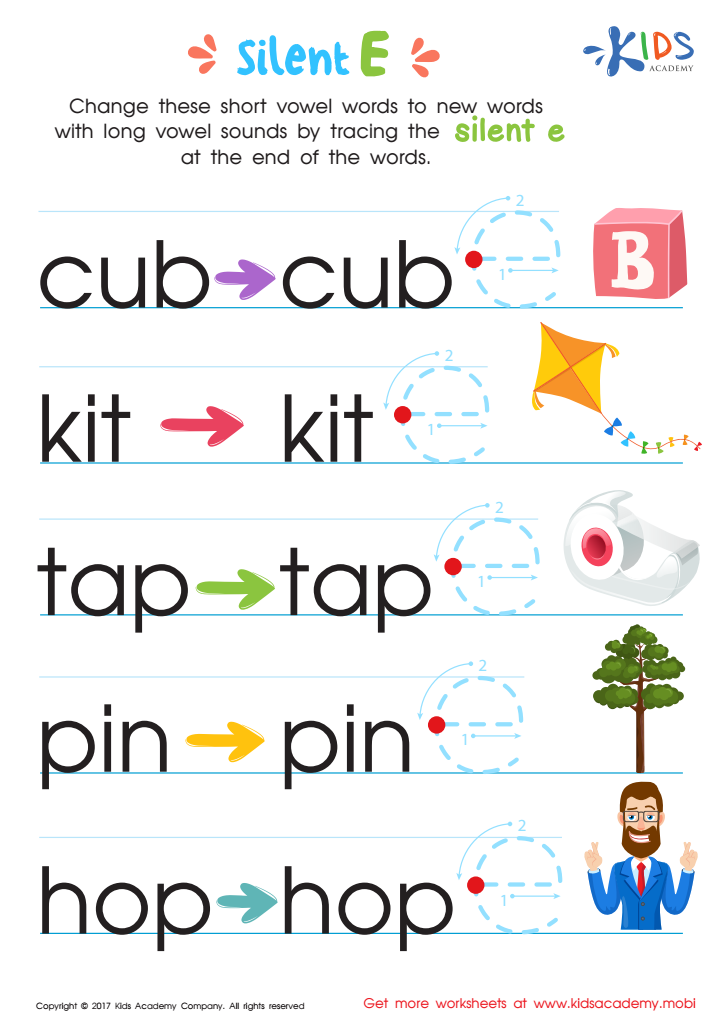
Silent E Words Worksheet








Vocabulary enhancement through tracing letters is a crucial activity for children aged 4 to 9, as it lays the foundation for strong literacy skills. During this developmental stage, children are beginning to understand the connection between letters and their corresponding sounds, which is essential for reading and writing. Tracing letters helps to improve fine motor skills and hand-eye coordination, allowing children to develop the physical ability to form letters independently.
Moreover, as children trace letters, they also engage with the vocabulary associated with those letters and words. This dual process of learning reinforces their understanding of language, introducing them to new words and concepts while enhancing their phonetic awareness. Additionally, developing a strong vocabulary early on positively influences reading comprehension and writing ability later in life, contributing to academic success.
Parents and teachers should prioritize these activities because early exposure to diverse vocabulary empowers children to express themselves effectively, improving their confidence in communication. Encouraging practices like tracing adds an enjoyable, hands-on experience that keeps children engaged in the learning process. Overall, vocabulary enhancement through tracing letters supports cognitive development, boosts literacy skills, and fosters a lifelong love for learning among young children.








