Phonics Skills Vowel Blends Worksheets for Ages 4-9
5 filtered results
-
From - To
Explore our engaging Phonics Skills Vowel Blends Worksheets designed specifically for children ages 4-9! Our printable resources help young learners master vowel blends through interactive exercises that build reading skills, phonemic awareness, and vocabulary. Each worksheet features fun activities, colorful illustrations, and a variety of exercises that support differentiated learning. Our easy-to-use format makes it simple for educators and parents to reinforce key phonics concepts, helping children recognize and use vowel blends in context. Encourage your child's literacy journey today with these effective and enjoyable resources, ensuring they develop strong foundational skills for lifelong reading success!
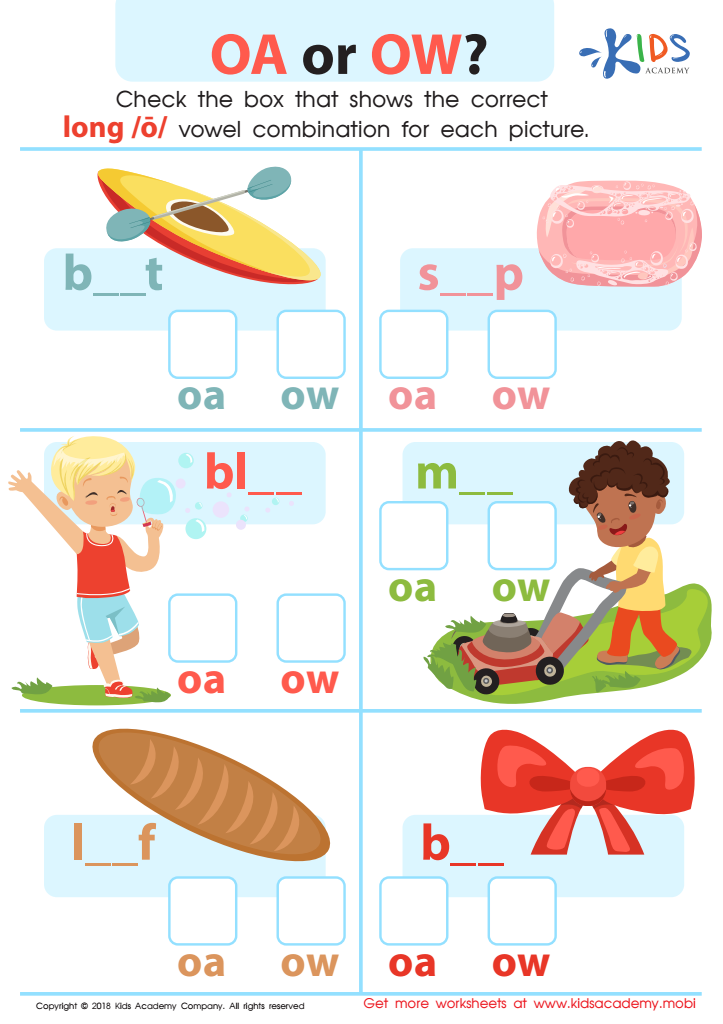
Reading: OA or OW Worksheet
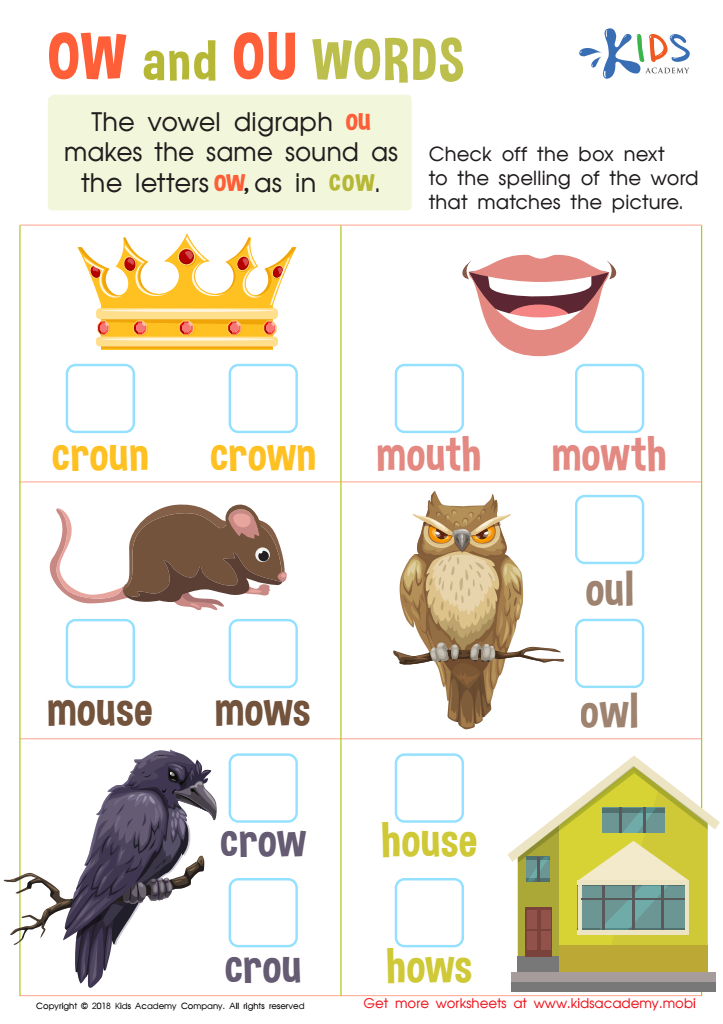
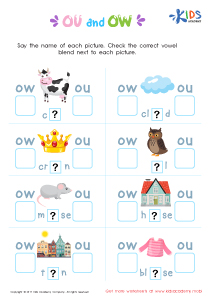
Reading: OW and OU Words Worksheet
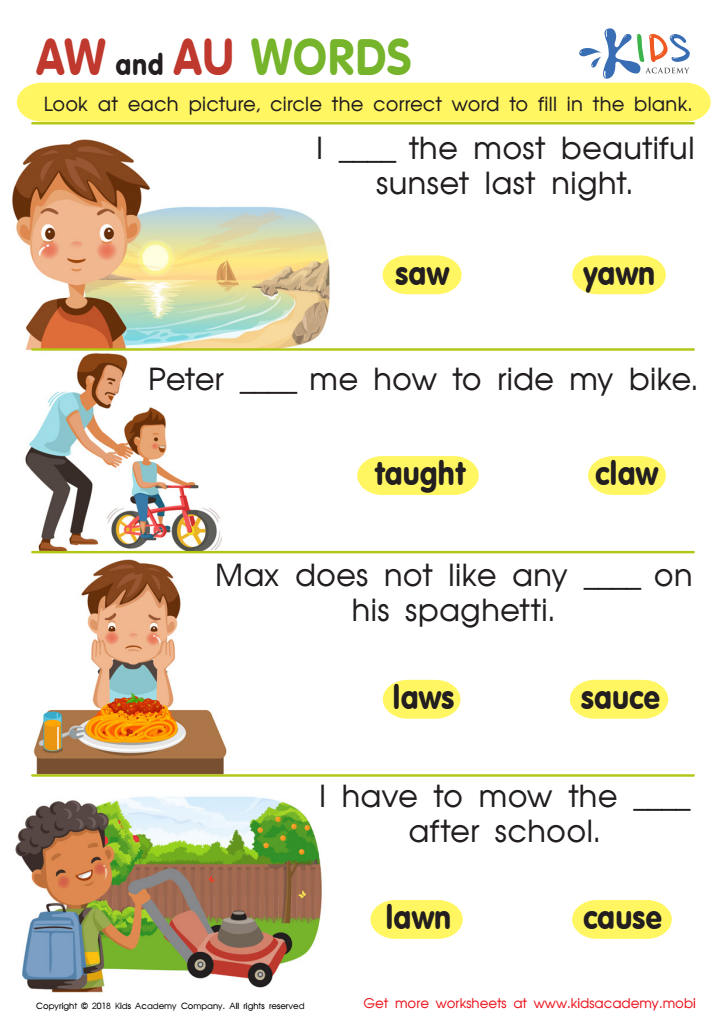
Reading: AW and AU Words Worksheet
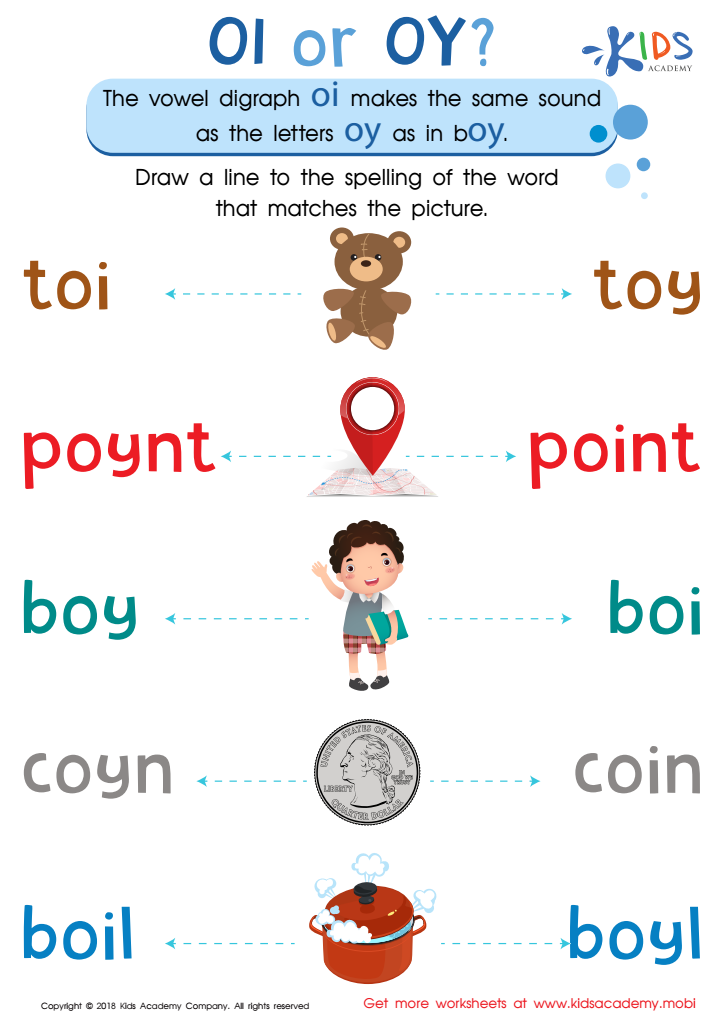
Reading: OI and OY Worksheet
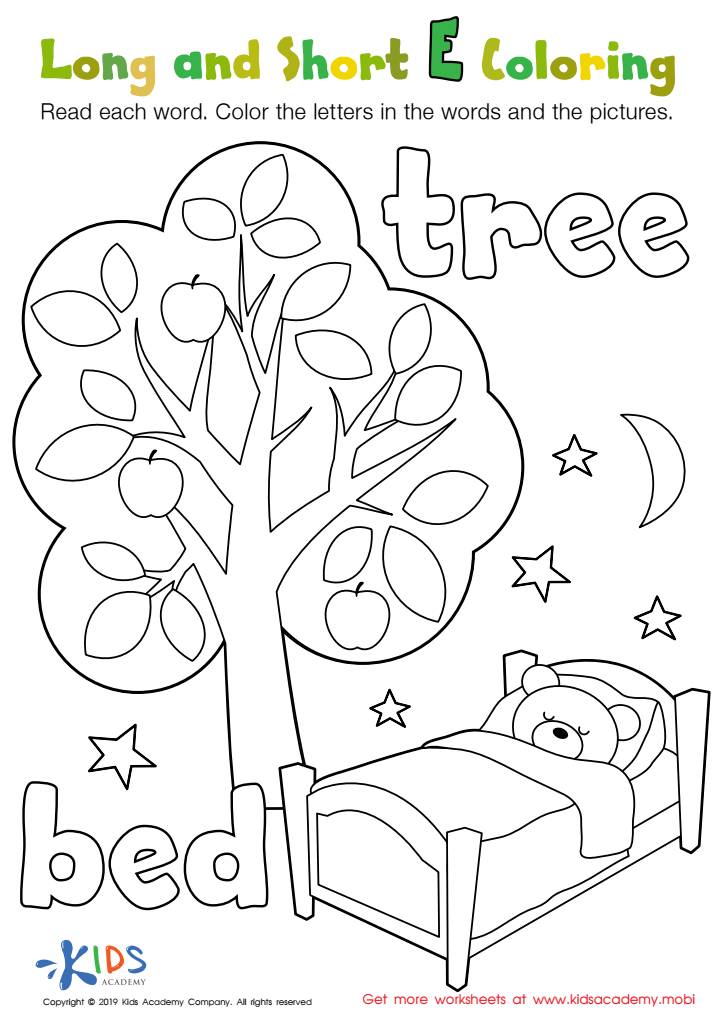
Long and Short E Worksheet
 Assign to My Students





Phonics skills, particularly vowel blends, are essential for children aged 4-9 as they form the foundation for reading and language development. Vowel blends refer to pairs or groups of vowels that come together to produce specific sounds, such as “ai” in “rain” or “ea” in “bread.” Mastering these blends can significantly enhance a child's decoding skills, allowing them to sound out and read new words independently.
Parents and teachers should prioritize phonics instruction because it supports the overall literacy development of young learners. Strong phonics skills help children build their vocabulary and improve their comprehension. As they learn to identify and manipulate vowel blends, they become more confident readers, which fosters a lifelong love for reading and learning.
Furthermore, early mastery of phonics can prevent future reading difficulties, as children equipped with these skills are better prepared for more advanced literacy concepts. By actively engaging in phonics activities—like games, songs, and interactive exercises—parents and teachers create a supportive learning environment that motivates children to explore language. This engagement not only helps improve academic performance but also equips young learners with critical thinking and communication skills essential for their future success.