Reading comprehension Phonics Coloring Pages Worksheets for Ages 4-9
3 filtered results
-
From - To
Welcome to our Reading Comprehension Phonics Coloring Pages Worksheets, designed specifically for children aged 4-9! Our engaging resources combine the fun of coloring with essential reading skills, helping young learners develop phonics knowledge while enhancing their comprehension abilities. Each worksheet features captivating illustrations alongside targeted phonics activities, encouraging creativity and reinforcing literacy skills. Perfect for parents and educators, these worksheets can be used at home or in the classroom, making learning enjoyable and effective. Dive into a world of colors and letters, empowering your child’s reading journey while sparking their imagination. Start exploring our enriching collection today!
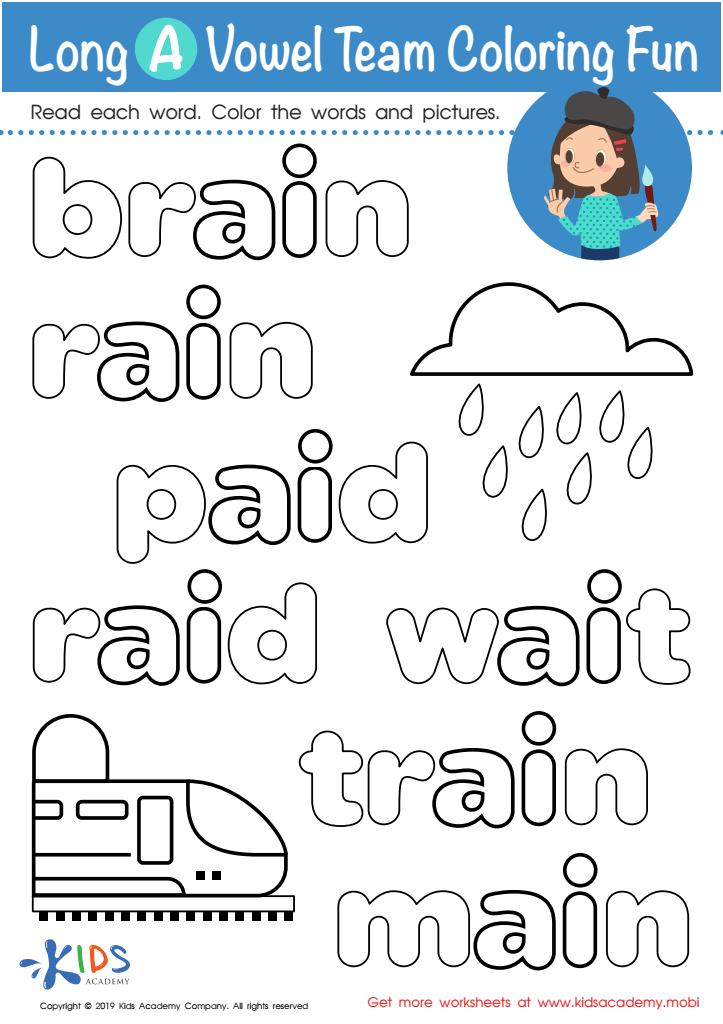
Long A Vowel Team Coloring Fun Worksheet
 Assign to My Students
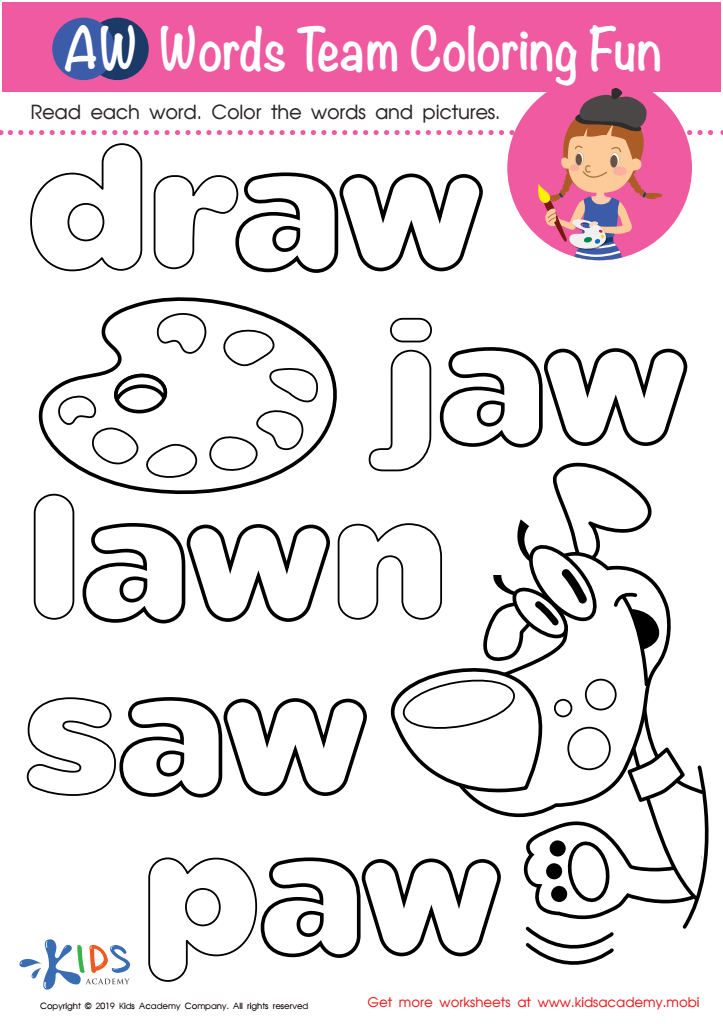
AW Words Team Coloring Fun Worksheet
Assign to My Students
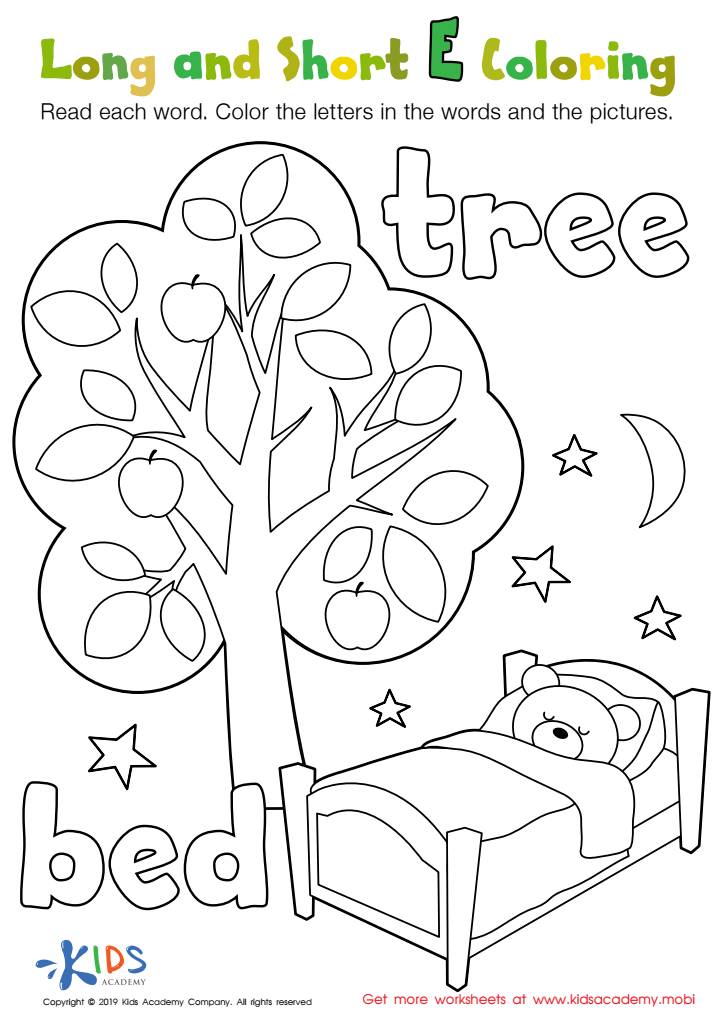
Long and Short E Worksheet
Assign to My Students






Reading comprehension is a crucial skill for children aged 4-9, laying the groundwork for their future academic success. Phonics coloring pages serve as an engaging method to reinforce phonetic skills while making learning enjoyable. These pages help children connect letters with sounds, enhancing their decoding abilities, which are vital for reading fluency.
Incorporating coloring into phonics lessons makes the process interactive and creative. As children color in images related to words, they engage in multisensory learning, which has been shown to improve retention and understanding. This playful approach not only captures their interest but also encourages critical thinking and vocabulary development.
Parents and teachers should care about these resources because they foster early literacy skills in a format that resonates with young learners. Improved reading comprehension enables children to understand and engage with texts, enhancing both critical thinking and confidence. By supporting their reading journey through phonic exercises, children are more likely to develop a love for reading, paving the way for lifelong learning. Overall, phonics coloring pages are a valuable tool that combines fun with fundamental reading skills, promoting both educational and emotional growth in young learners.