Categorizing objects Worksheets for Ages 4-9
5 filtered results
-
From - To
Nurture your child's critical thinking and organizational skills with our engaging categorizing objects worksheets, designed for ages 4-9. These printable activities help young learners identify similarities and differences, improving their ability to classify and sort various items. By interacting with fun images and relatable objects, children can enhance their cognitive development and gain confidence in problem-solving. Perfect for both classroom and home use, our worksheets provide a playful way to build foundational skills. Encourage your child’s curiosity and watch them thrive in understanding the world around them through engaging categorization exercises.
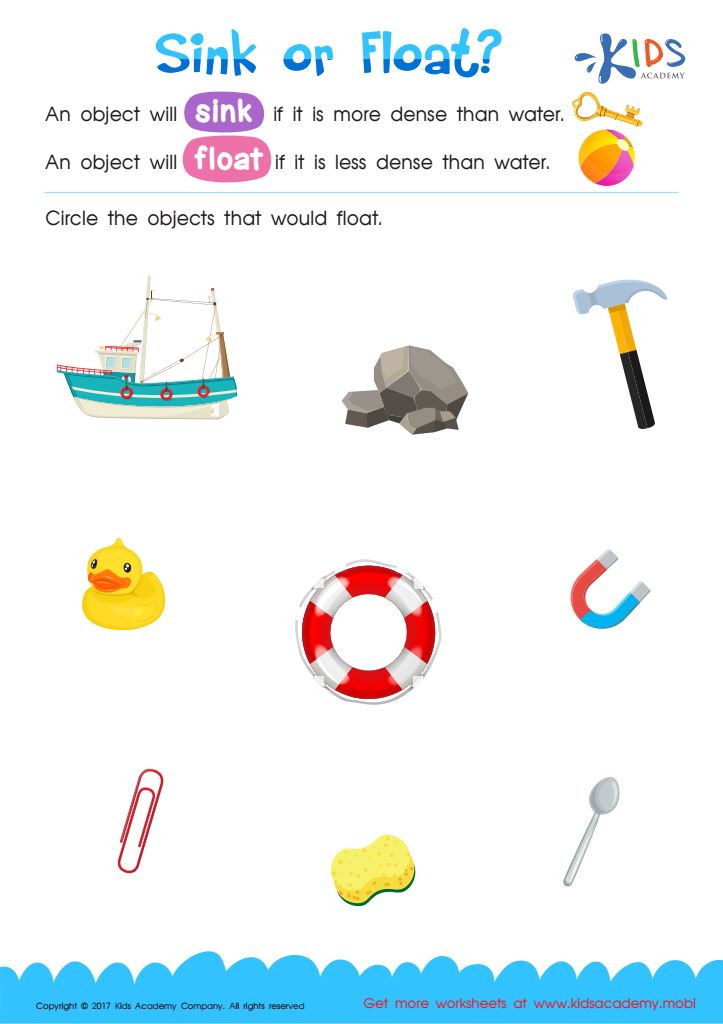
Sink or Float Printable
 Assign to My Students
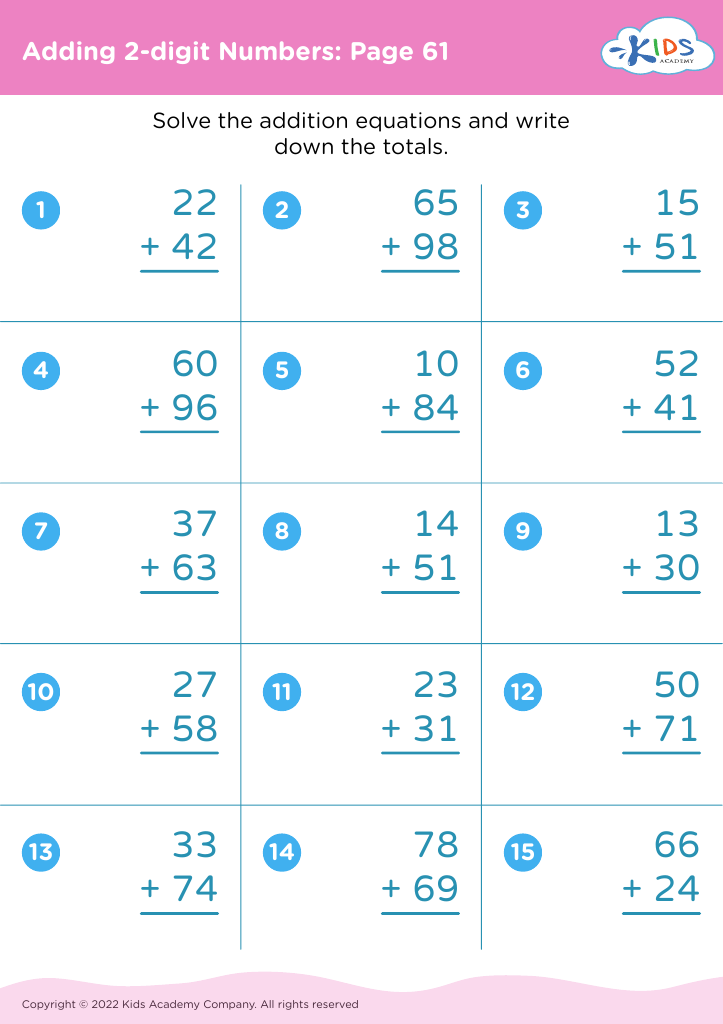
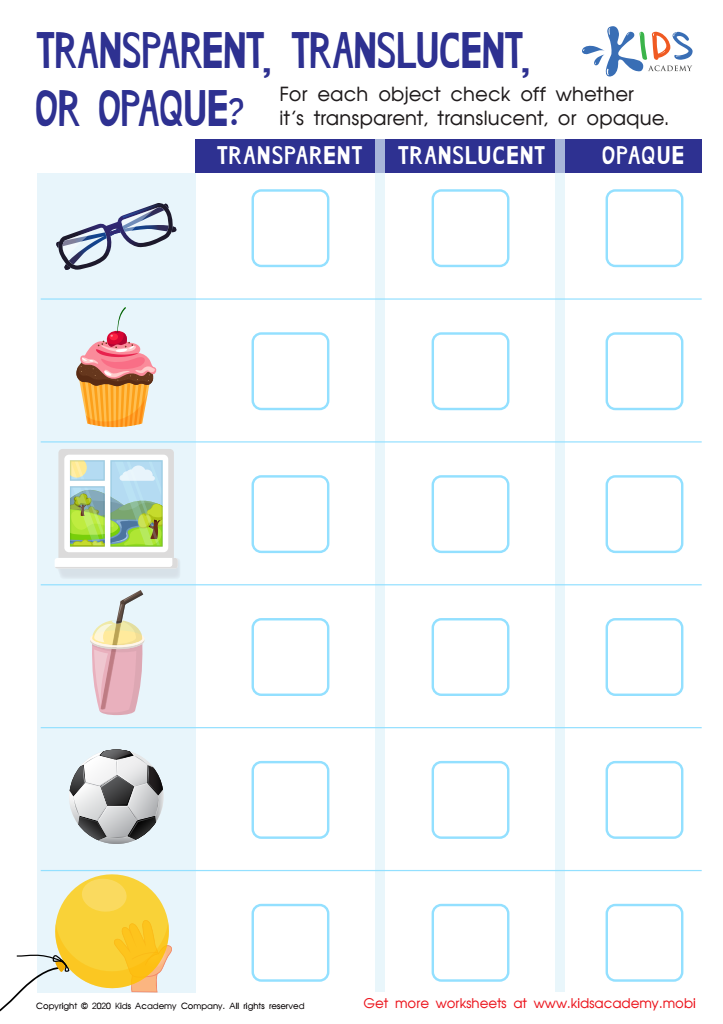
Transparent, Translucent, or Opaque Worksheet
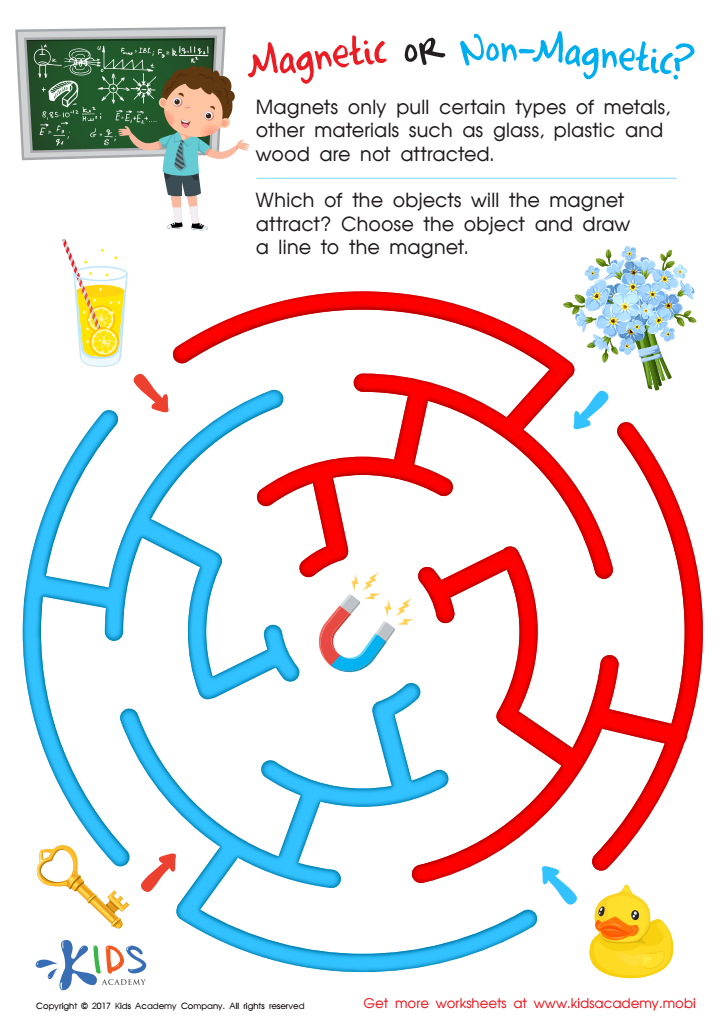
Magnetic or Non–Magnetic Worksheet
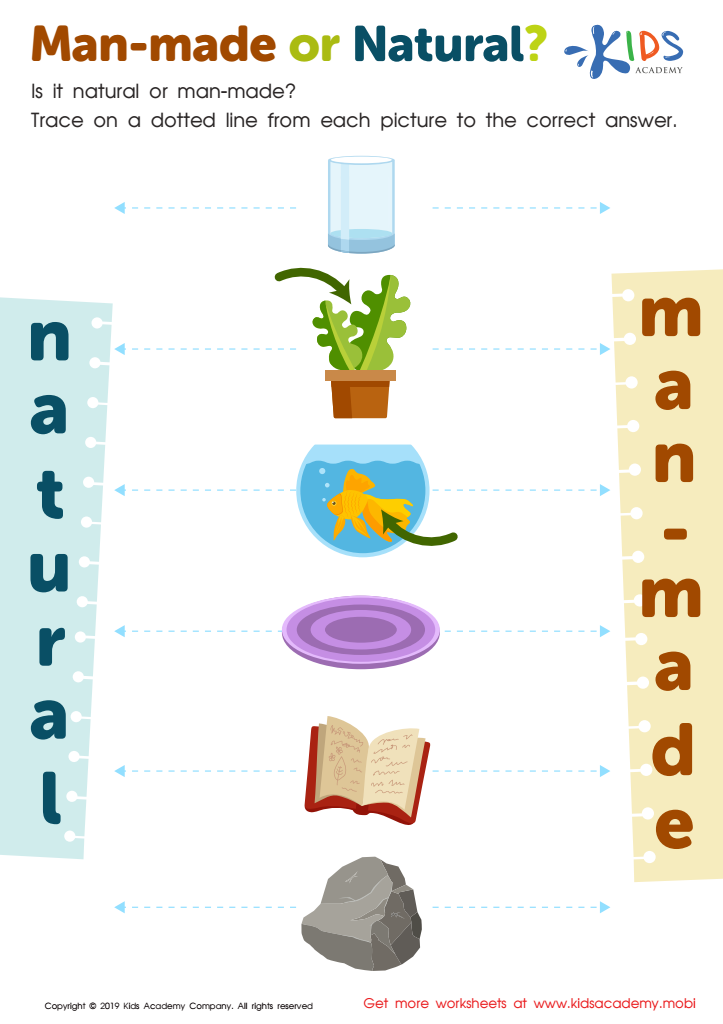
Man-Made or Natural? Worksheet


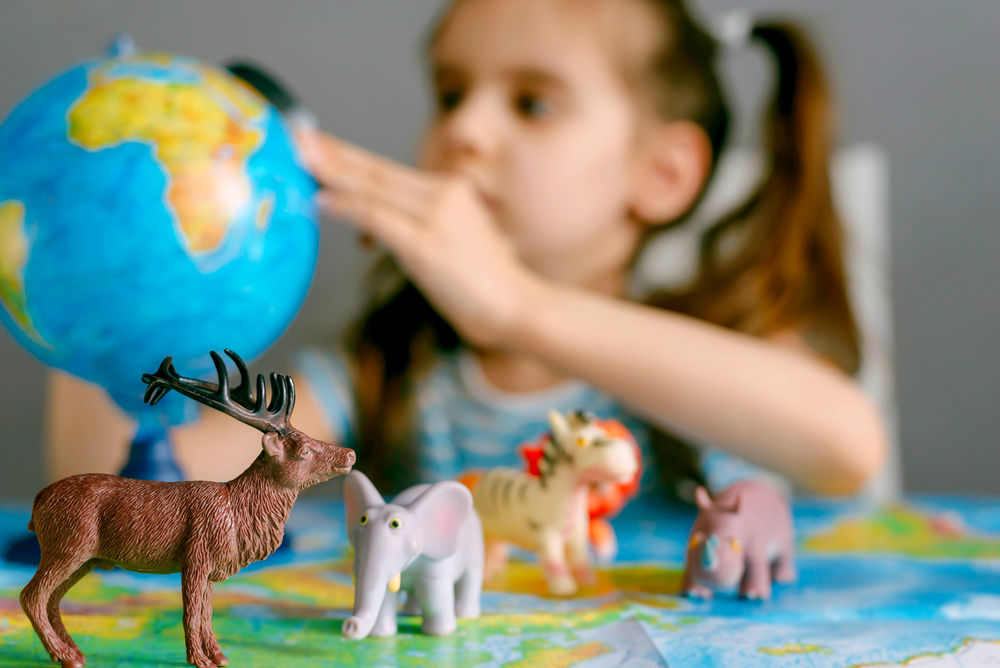




Categorizing objects is an essential developmental skill for children ages 4-9, and parents and teachers should prioritize it because it underpins several critical cognitive and academic abilities. At its core, categorizing involves sorting objects based on shared characteristics, such as color, shape, size, or function. This seemingly simple activity enhances a child's ability to see relationships between objects and understand how things are interconnected.
By practicing categorization, children sharpen their observational skills, attention to detail, and ability to recognize patterns. These abilities are foundational for subjects like math, where recognizing patterns and grouping numbers can simplify concepts ranging from basic arithmetic to complex problem-solving. Science education also relies on categorization skills for classification systems in biology and understanding broader systems in physics and chemistry.
Moreover, categorizing aids language development. When children group items and name the categories, they enhance their vocabulary and comprehension, which are critical for reading and communication skills. This process also helps them develop critical thinking and reasoning, as they make decisions about which categories fit best and why.
From a psychological perspective, categorizing can foster a sense of organization and control, bolstering a child's confidence and independence. Engaging in categorization exercises with a caregiver or teacher can also promote social interactions and collaborative learning. Thus, ensuring children master these skills sets a strong foundation for their future education and personal development.








