Data analysis Worksheets for Ages 4-9
4 filtered results
-
From - To
Discover our engaging Data Analysis Worksheets designed specifically for children ages 4-9. These worksheets provide young learners with the opportunity to develop essential skills in gathering, organizing, and interpreting data in a fun and interactive way. Through colorful visuals and age-appropriate activities, children will learn to recognize patterns, categorize objects, and make simple graphs. Our worksheets support early math and critical thinking abilities, setting a strong foundation for future learning. Perfect for classroom use or at-home practice, these resources empower kids to explore data analysis in a creative environment while boosting their confidence and enthusiasm for learning.
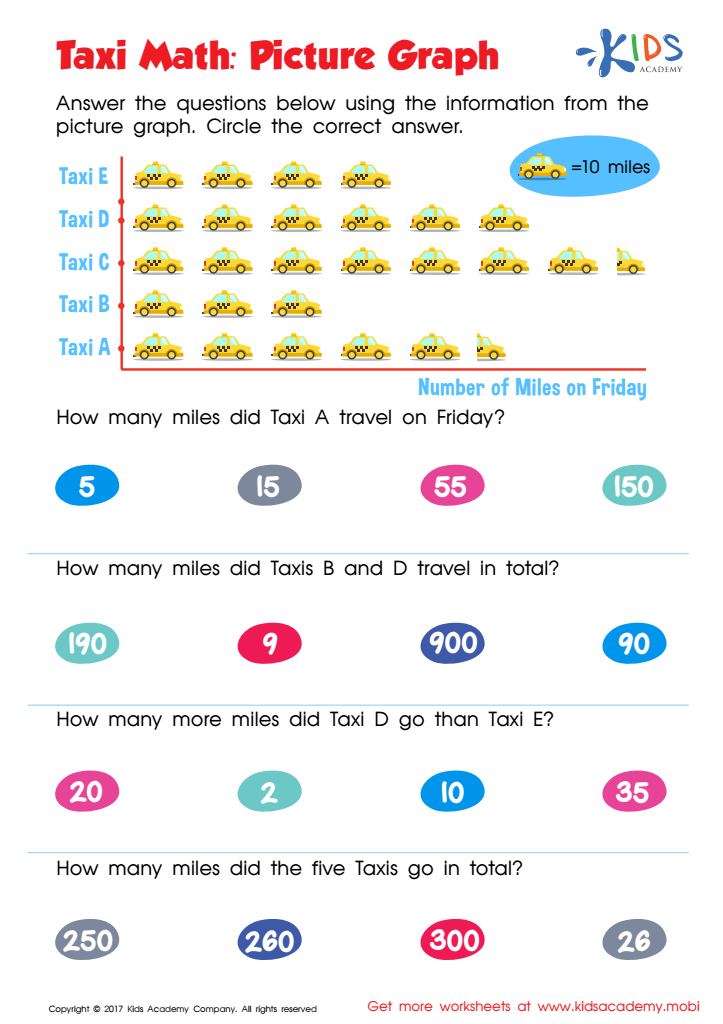
Taxi Math Worksheet
 Assign to My Students
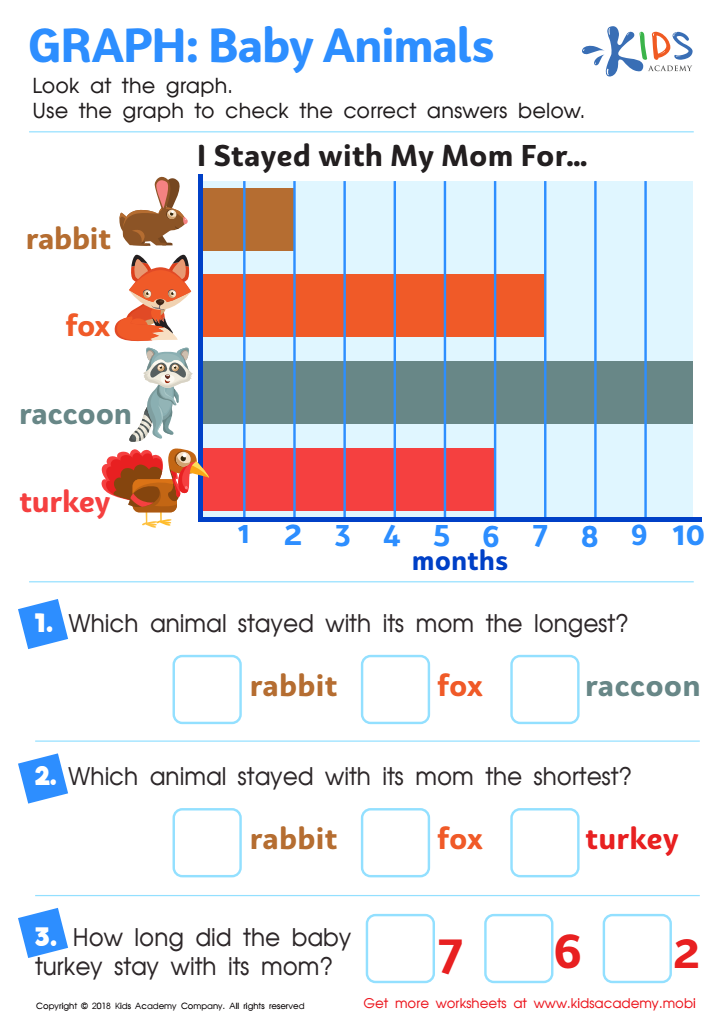
Graph: Baby Animals Worksheet
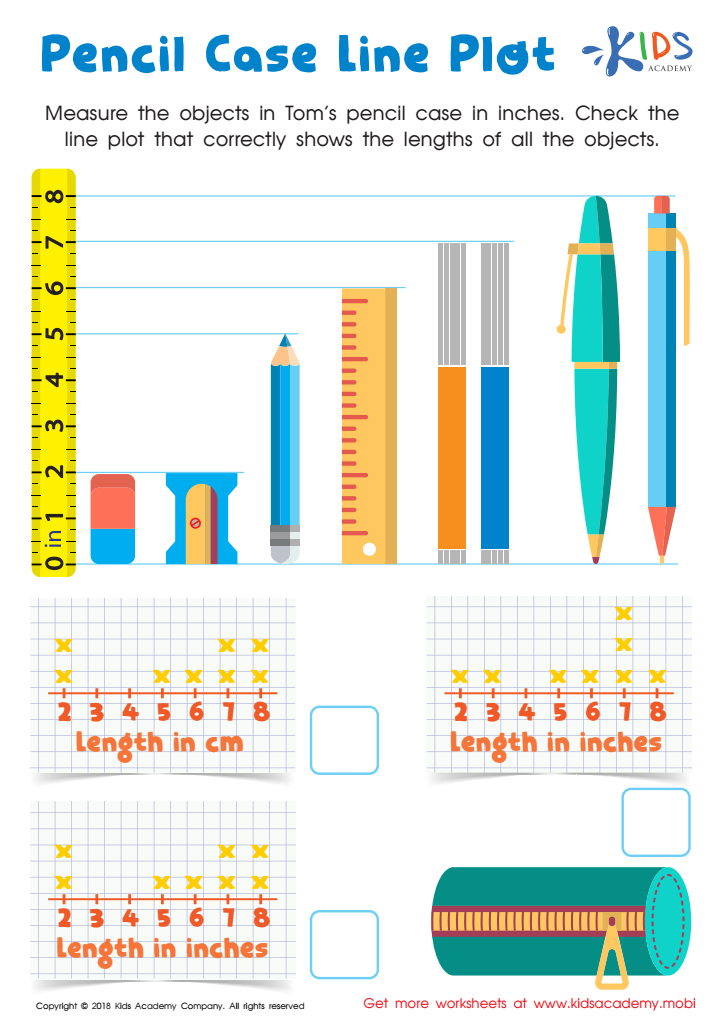
Pencil Case Line Plot Worksheet
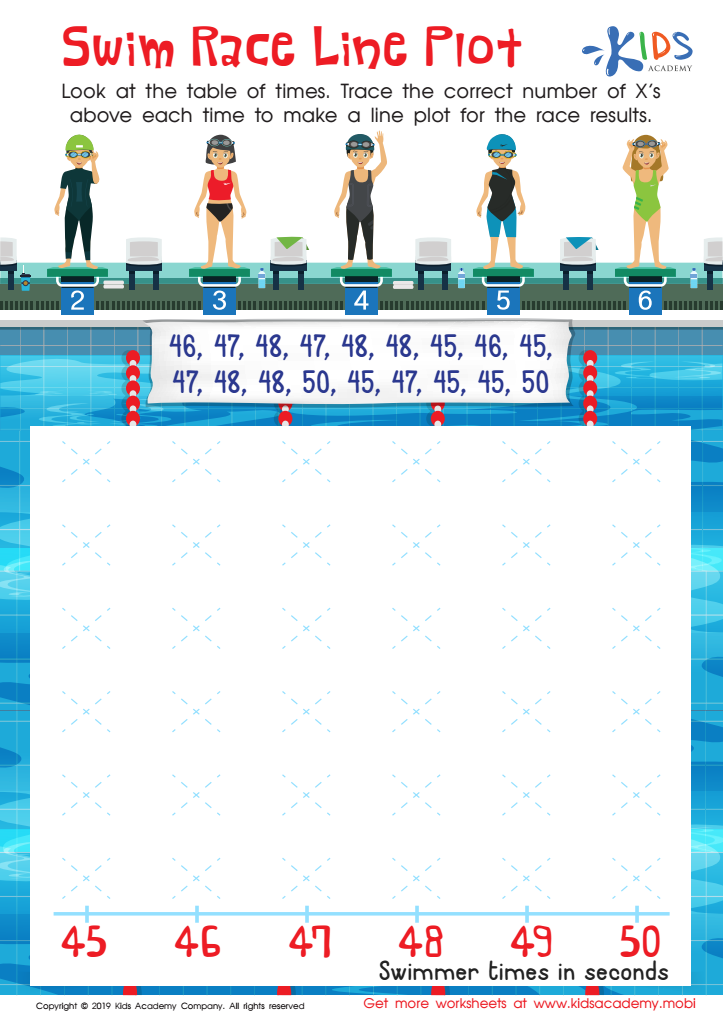
Swim Race Line Plot Worksheet







Data analysis for children aged 4-9 is crucial for parents and teachers as it provides insights into developmental progress and learning outcomes. At this age, children are rapidly developing foundational skills in literacy, numeracy, and social interactions. Collecting and analyzing data on their performance helps educators identify individual strengths and areas needing improvement, allowing for personalized learning experiences.
Furthermore, data analysis can inform instructional strategies, ensuring that teaching methods are effective and tailored to the diverse needs of students. By tracking progress over time, teachers can adjust their approaches and interventions, promoting a more engaging and supportive learning environment.
For parents, understanding data trends regarding their child's performance can foster better communication with teachers, helping them to be active participants in their child's education. This partnership can lead to enhanced student motivation and success.
Additionally, integrating data literacy into early education instills critical thinking and analytical skills in children, preparing them for future academic challenges. In an increasingly data-driven world, equipping children with these skills early on is essential. Therefore, both parents and teachers should prioritize data analysis as a powerful tool in fostering holistic development and academic achievement in young learners.








