
Develop analytical thinking Worksheets for Ages 4-9
5 filtered results
Difficulty Level
Grade
Age
-
From - To
Subject
Activity
Standards
Unlock your child's potential with our "Develop Analytical Thinking Worksheets" designed specifically for ages 4-9. These engaging worksheets foster critical thinking skills through fun and interactive activities. Ideal for both home and classroom use, they encourage children to solve problems, make connections, and enhance their reasoning abilities. Each worksheet features age-appropriate materials that motivate young learners to think independently while honing vital cognitive skills. Whether it's through puzzles, patterns, or visual exercises, these resources help build a strong foundation for academic success. Join us in nurturing a love for learning and the ability to analyze situations creatively!
Favorites
With answer key
Interactive
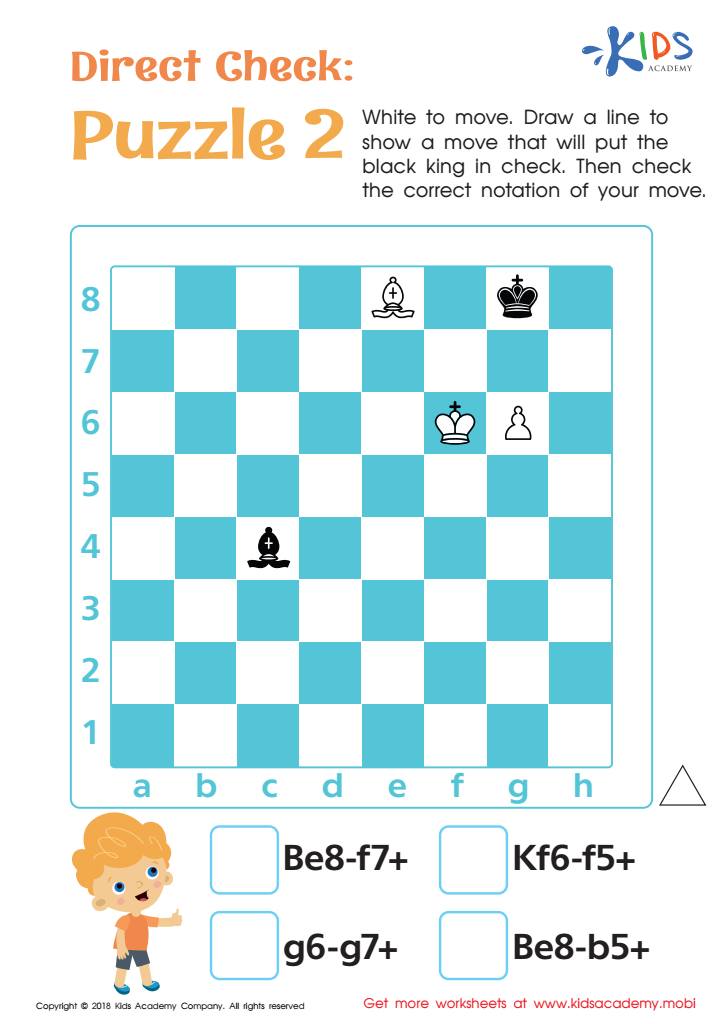
Direct Check: Puzzle 2 Worksheet
Test your kid's chess skills with this worksheet. Help them draw a line to put the black king in checkmate, then check the correct notation from the provided options. This will help them understand the correct notation of each move they make.
 Assign to My Students
Direct Check: Puzzle 2 Worksheet
Worksheet
Join Kids Academy for Free
Who is primarily going to use this learning content?







Developing analytical thinking in children aged 4-9 is crucial for their overall cognitive development and lifelong learning skills. During these formative years, children's brains are highly adaptable and responsive to new information, making it the ideal time to encourage problem-solving and critical analysis.
Teachers and parents play a significant role in nurturing these abilities. By introducing activities that promote inquiry, such as puzzles, games, and open-ended questions, children learn to break down complex ideas into simpler parts and explore various solutions. This kind of thinking fosters creativity, enhances decision-making skills, and prepares children for future academic challenges.
Moreover, analytical thinking helps children improve their emotional intelligence by teaching them to consider different perspectives and the consequences of their actions. It promotes resilience as they learn to navigate obstacles and setbacks with a critical and reflective mindset.
In an increasingly complex world, fostering these skills will empower children to think independently, make informed choices, and adapt to new situations with confidence. The collaborative efforts of parents and teachers in supporting analytical thinking will not only benefit children's educational journeys but also equip them with essential skills for navigating life beyond the classroom.








