Drawing conclusions Worksheets for Ages 4-9
3 filtered results
-
From - To
Our "Drawing Conclusions Worksheets for Ages 4-9" are expertly crafted to enhance critical thinking and comprehension skills in young learners. These engaging and age-appropriate activities guide children through the process of interpreting clues and making informed inferences. By using colorful illustrations and relatable scenarios, our worksheets make learning fun and effective. Ideal for both classroom and at-home learning, these resources foster deep understanding and develop essential problem-solving abilities. Empower your child to excel in reading and beyond with our thoughtfully designed worksheets from Kids Academy.
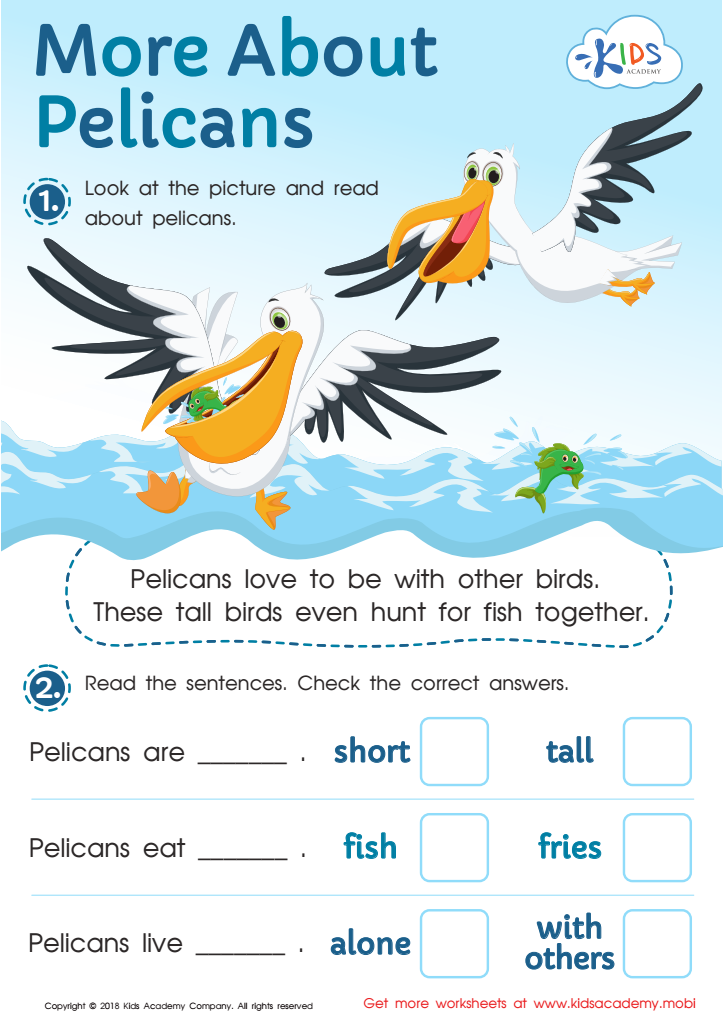
More About Pelicans Worksheet
 Assign to My Students
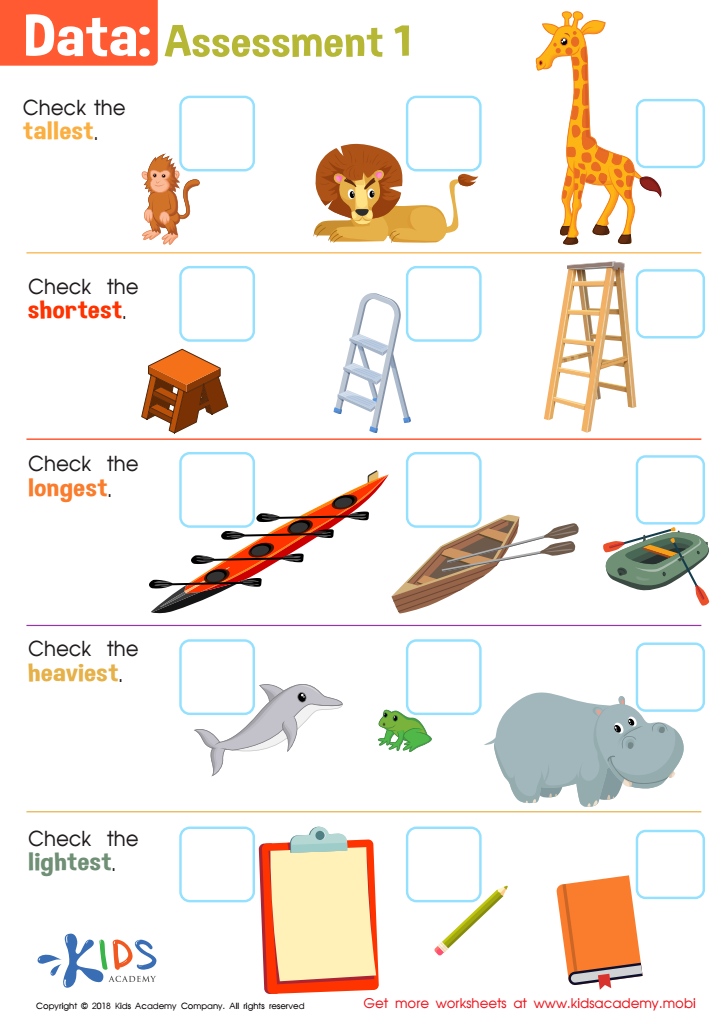
Data: Assessment 1 Worksheet






Drawing conclusions is a fundamental skill that enriches a child's cognitive development between the ages of 4 and 9. At this stage, children are constantly interacting with the world around them through various forms of learning, and drawing conclusions enhances their interpretative and critical thinking abilities. When a child learns to draw conclusions, they are essentially learning how to process information, evaluate evidence, and make informed judgments. This skill helps to improve their reading comprehension as they begin to infer meaning and understand context beyond the explicit information provided.
For teachers, fostering this ability in the classroom can transform students into independent thinkers who not only grasp facts but can apply them in diverse scenarios. Engaging students in activities that encourage conclusion-drawing, such as storytelling or problem-solving exercises, nurtures analytical thinking and boosts confidence.
Parents should also value this skill because it forms part of everyday decision-making and problem-solving. At home, children who practice drawing conclusions can better understand social cues, improve communication, and develop empathy by assessing situations and predicting outcomes.
Overall, helping children between ages 4 and 9 develop the ability to draw conclusions sets a strong foundation for lifelong learning, critical thinking, and effective communication—all fundamental skills for personal and academic success.








