
Fraction representation Worksheets for Ages 4-9
7 filtered results
Difficulty Level
Grade
Age
-
From - To
Subject
Activity
Standards
Introduce your young learners to the exciting world of fractions with our Fraction Representation Worksheets designed for ages 4-9. Through engaging activities and colorful visuals, children will grasp the fundamentals of fractions effortlessly. Each worksheet helps kids understand halves, thirds, quarters, and more by visually representing fractions with shapes and everyday objects. Perfect for reinforcing classroom learning and enhancing math skills at home, these worksheets are tailored to make learning fractions enjoyable and effective. Empower your child to master fractions with confidence and have fun along the way with Kids Academy's carefully crafted resources.
Favorites
With answer key
Interactive
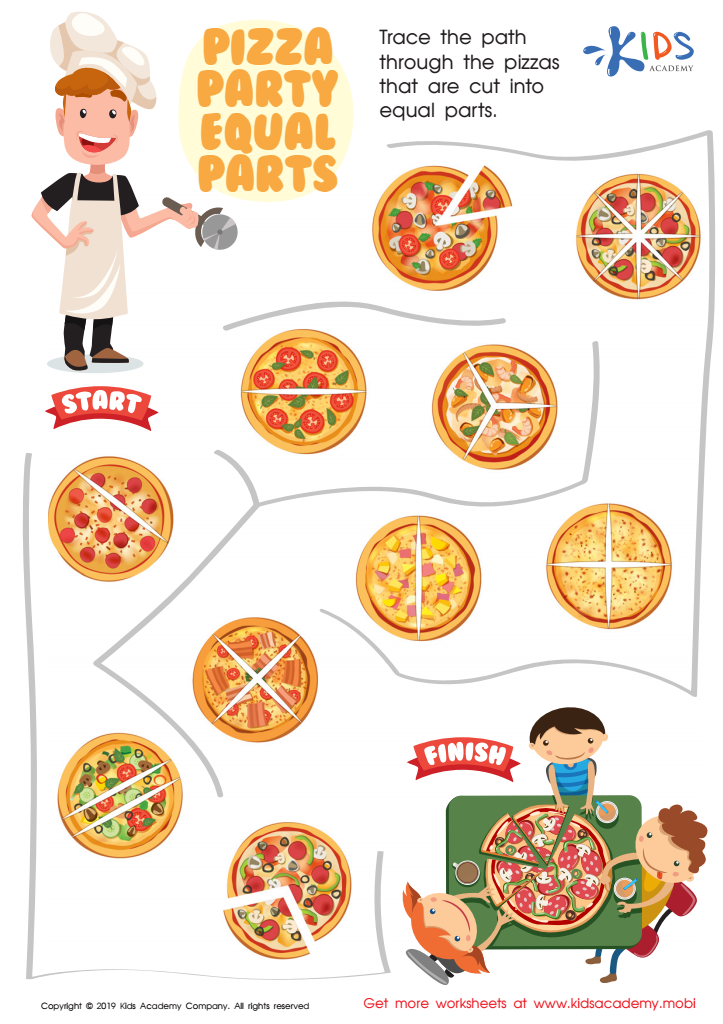
Pizza Party Equal Parts Worksheet
Love pizza? This printout is a great way to help kids learn about equal parts! Kids must identify pizzas cut into equal parts, then trace the path through the pizzas. It's an exciting maze - and a great way to help kids learn! Get the traceable pdf today and let the fun begin!
 Assign to My Students
Pizza Party Equal Parts Worksheet
Worksheet
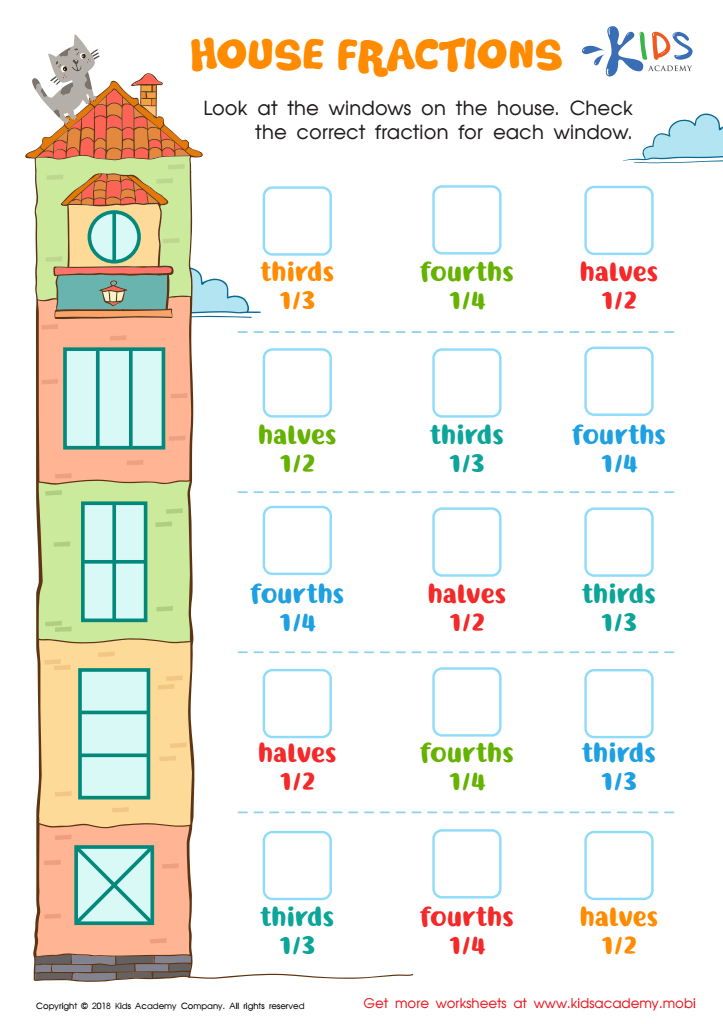
House Fractions Worksheet
Test your child's knowledge of fractions with this worksheet! Have them examine the windows of a house and select the correct fraction from the options given. This is a great way to see how much they understand about wholes, fractions, halves, one thirds, and one fourths.
House Fractions Worksheet
Worksheet
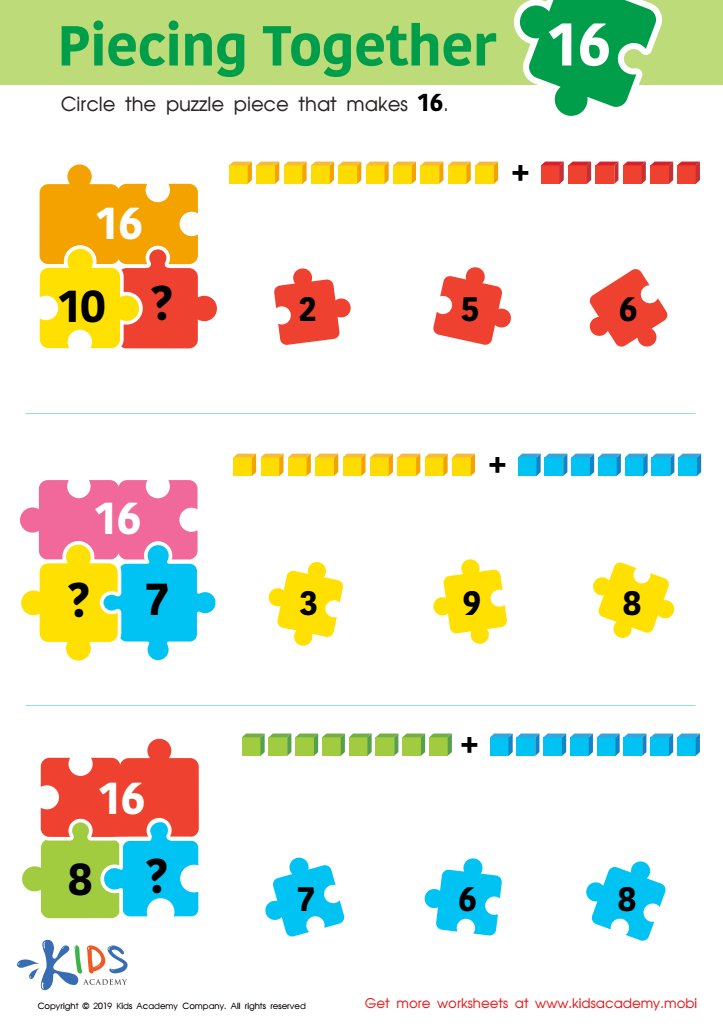
Piecing Together 16 Worksheet
Combine learning with fun using this colorful worksheet! Ask your preschoolers what they see in the picture, then help them solve the mathematical equations on the puzzle pieces. One equation is missing on each; have them circle the piece that will make the bottom puzzle piece numbers equal 16. Use puzzles and bright colors to teach - it's one of the best ways your kids can learn!
Piecing Together 16 Worksheet
Worksheet
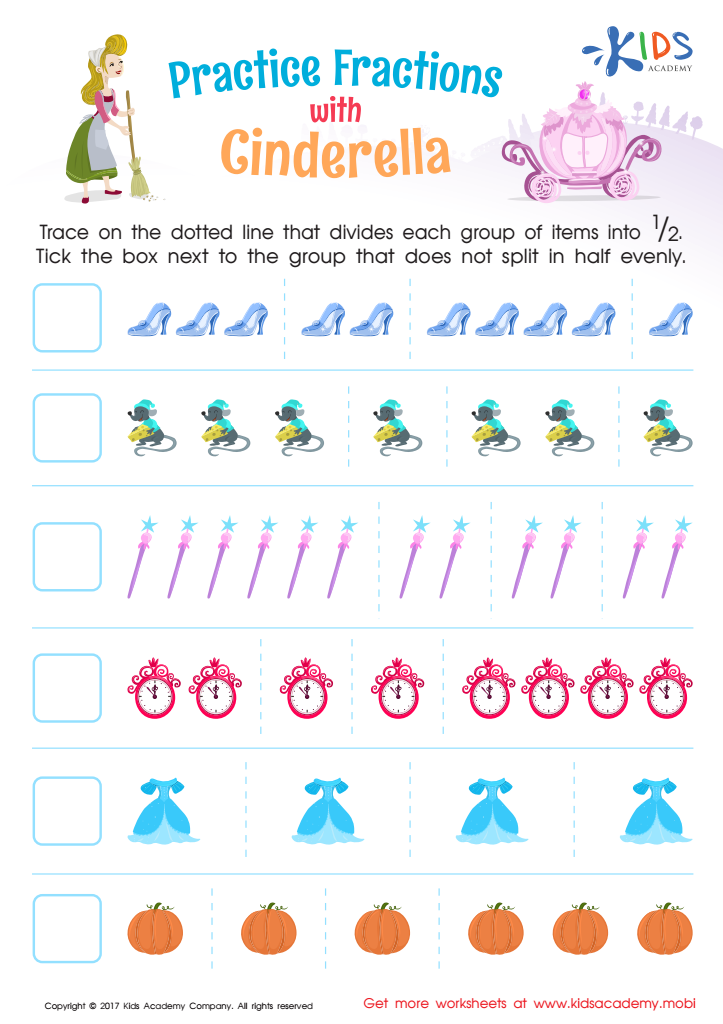
Fractions: Cinderella Printable
Cinderella and ½ are the perfect pair to excite your child about learning fractions.
Fractions: Cinderella Printable
Worksheet
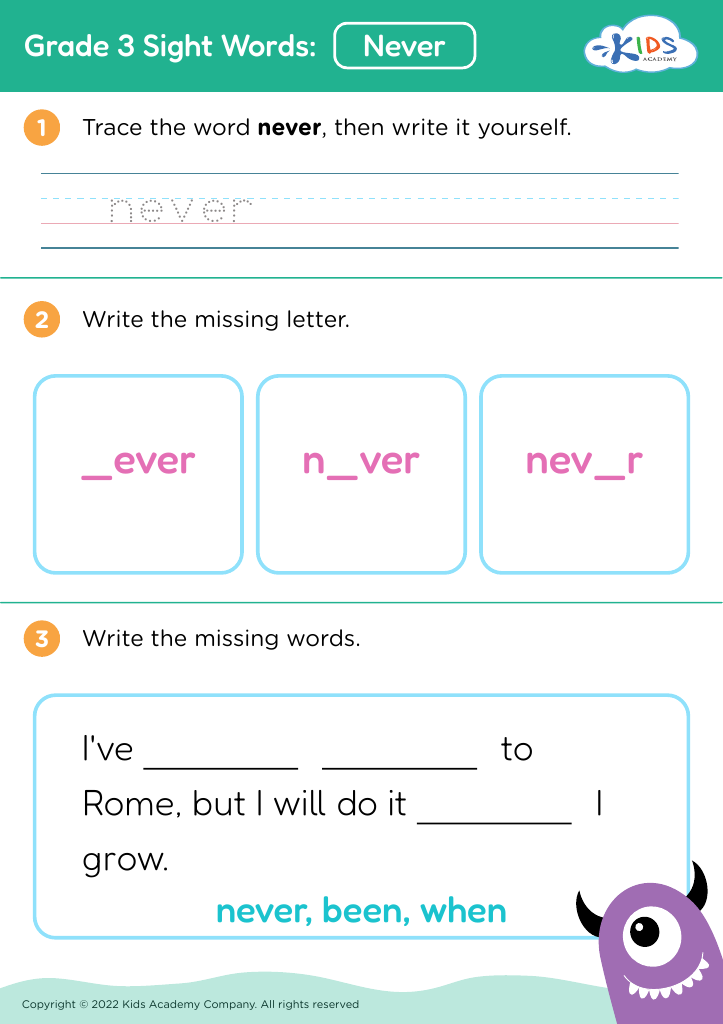
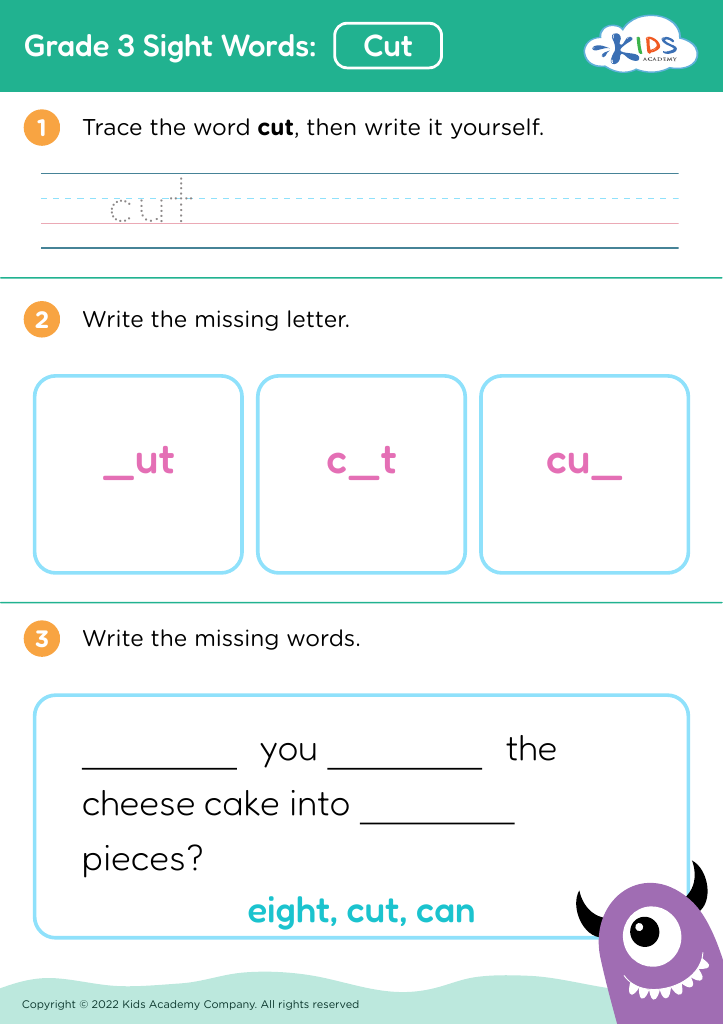
Join Kids Academy for Free
Who is primarily going to use this learning content?







Introducing fractions during the early years (ages 4-9) is crucial for several reasons, benefiting both parents and teachers. First, early exposure to fraction representation sets a solid mathematical foundation. This age is when children are particularly receptive to new concepts, and understanding fractions early can pave the way for more complex math skills like division, ratios, and percentages later on.
Moreover, learning fractions helps develop critical thinking and problem-solving abilities. It encourages children to see numbers in different ways and understand that numbers can be split into smaller parts, fostering flexibility in their mathematical thinking. These cognitive skills are transferable and beneficial across various subjects and real-life scenarios.
Finally, understanding fractions is essential for everyday life. From slicing a pizza into equal parts to measuring ingredients for a recipe, fractions are everywhere. When children grasp these concepts early, they gain confidence in their ability to tackle practical problems, making them more independent and resourceful.
For parents and teachers, instilling a strong grasp of fractions is a stepping stone to deeper mathematical learning and everyday competence. Early intervention can also identify and address any learning challenges promptly, ensuring that children do not fall behind in their mathematical journey. Therefore, prioritizing fraction representation in early education is a vital investment in a child's future learning and life skills.








