
Geographic Understanding Worksheets for Ages 4-9
3 filtered results
Difficulty Level
Grade
Age
-
From - To
Subject
Activity
Standards
Explore our comprehensive collection of Geographic Understanding Worksheets tailored for children ages 4-9. These engaging, age-appropriate materials are designed to introduce young learners to the fundamentals of geography through interactive activities. From identifying continents and oceans to understanding maps and cardinal directions, our worksheets make learning geography fun and accessible. Ideal for fostering curiosity and building foundational geographic skills, each worksheet is printable and perfect for use at home or in the classroom. Help your child embark on an exciting journey around the world with our expertly crafted resources that support both learning and creativity.
Favorites
With answer key
Interactive
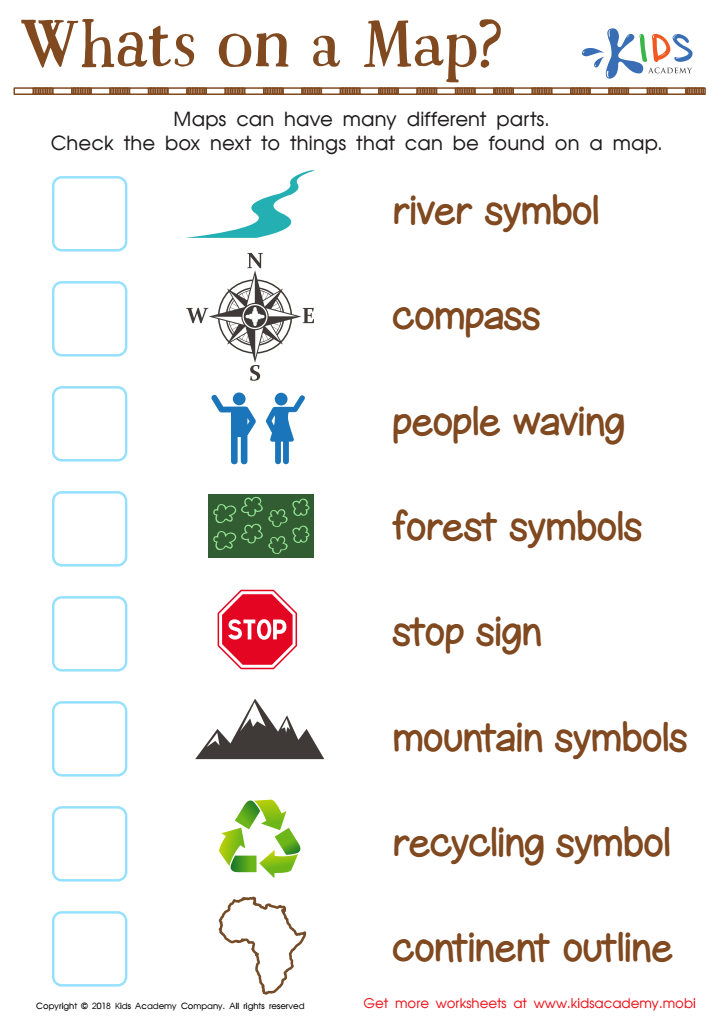
Whats on a Map? Worksheet
Kids often lack map-reading experience due to our digital age, but these skills are essential. This free worksheet reinforces what they'll find on a map and the symbols used to represent them, helping them build reasoning, thinking and problem-solving skills.
 Assign to My Students
Whats on a Map? Worksheet
Worksheet
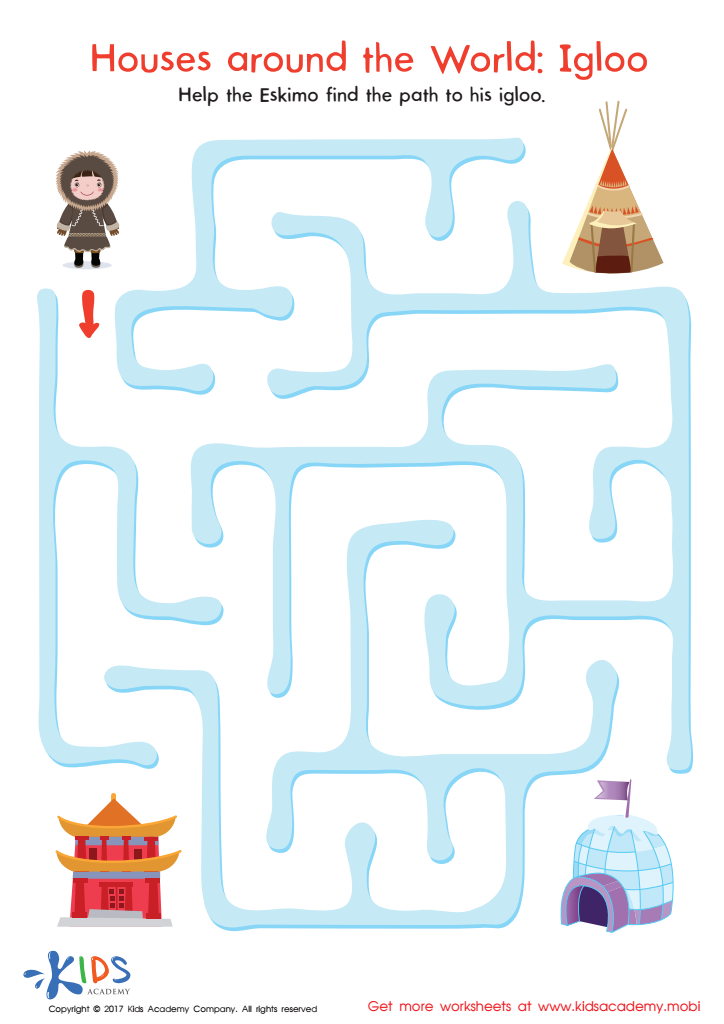
Houses Around the World: Igloo Printable
Print out the igloo maze worksheet and help the Eskimo find his way home. Along the way, you’ll discuss different types of houses. A perfect way to practice thinking skills!
Houses Around the World: Igloo Printable
Worksheet
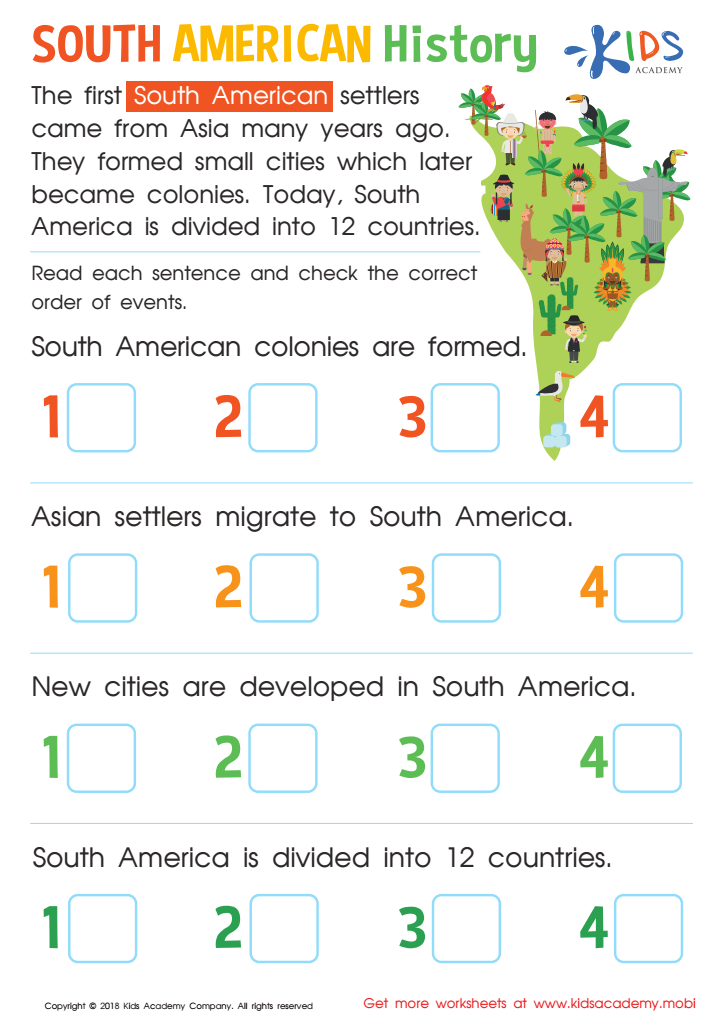
South American History Worksheet
Kids can brush up on South American history with this free worksheet! They'll discover how the first inhabitants arrived from Asia and how this led to the growth of cities and colonies. Comprehension questions will help them sequence and understand the events of South American history.
South American History Worksheet
Worksheet
Join Kids Academy for Free
Who is primarily going to use this learning content?





Geographic understanding is foundational for children ages 4-9, as it cultivates a sense of place, spatial awareness, and global curiosity at an early stage. Parents and teachers should prioritize this because it helps children comprehend their immediate surroundings and the larger world, promoting cognitive development and critical thinking skills.
Incorporating geography into early education aids in developing basic map-reading skills, understanding directions, and recognizing natural and human-made features. These skills foster problem-solving and hone children's ability to navigate and interpret the world around them. Furthermore, geography education can spark interest in different cultures and places, encouraging empathy and multicultural awareness.
Children also benefit from geography's integrative approach, which ties into subjects like history, science, and environmental studies. This multidisciplinary aspect enriches their general knowledge and helps them understand complex systems, like weather patterns and ecosystems, promoting environmental stewardship.
Consistent exposure to geographic concepts, through interactive activities such as puzzles, outdoor explorations, and storytelling, can make learning enjoyable and impactful. Hence, fostering geographic understanding is crucial—it equips young learners with the tools to become well-informed, responsible, and curious citizens of the world.








