Graph interpretation Worksheets for Ages 4-9
5 filtered results
-
From - To
Discover our engaging graph interpretation worksheets designed for ages 4-9! These interactive resources help young learners develop essential skills in reading and understanding various types of graphs. Through colorful visuals and age-appropriate activities, children will enhance their analytical thinking and problem-solving abilities while having fun. Our worksheets introduce concepts like pictograms, bar graphs, and line graphs, sparking curiosity and fostering a love for numbers. Perfect for home or classroom learning, our graph interpretation activities align with early education standards, making them an excellent choice for teachers and parents alike. Start nurturing your child's critical thinking skills today!
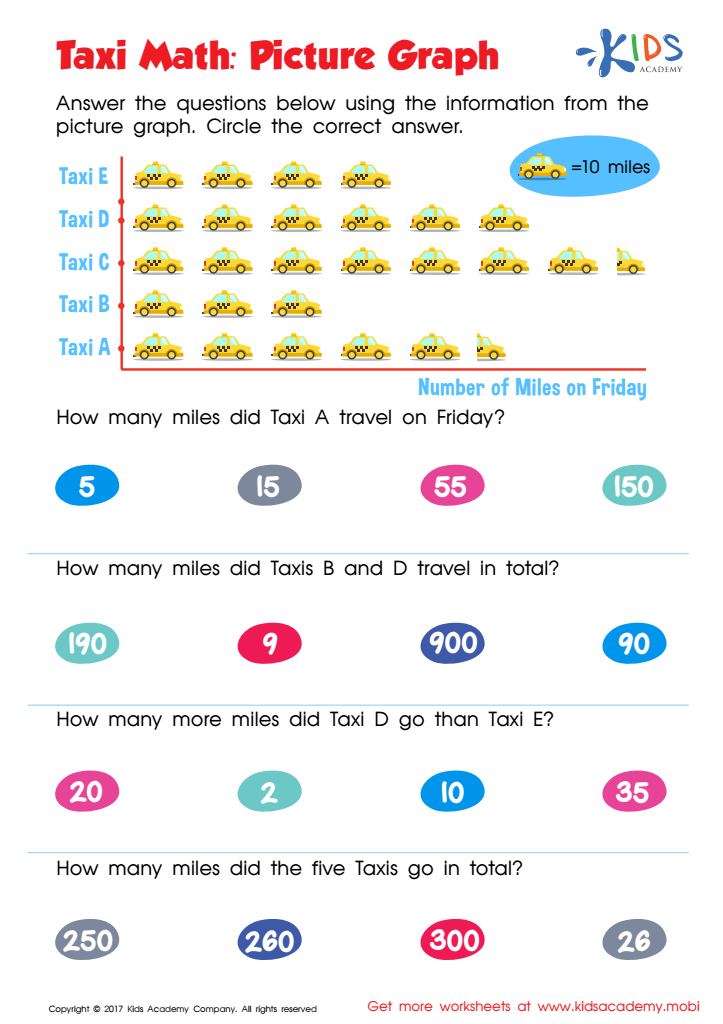
Taxi Math Worksheet
 Assign to My Students
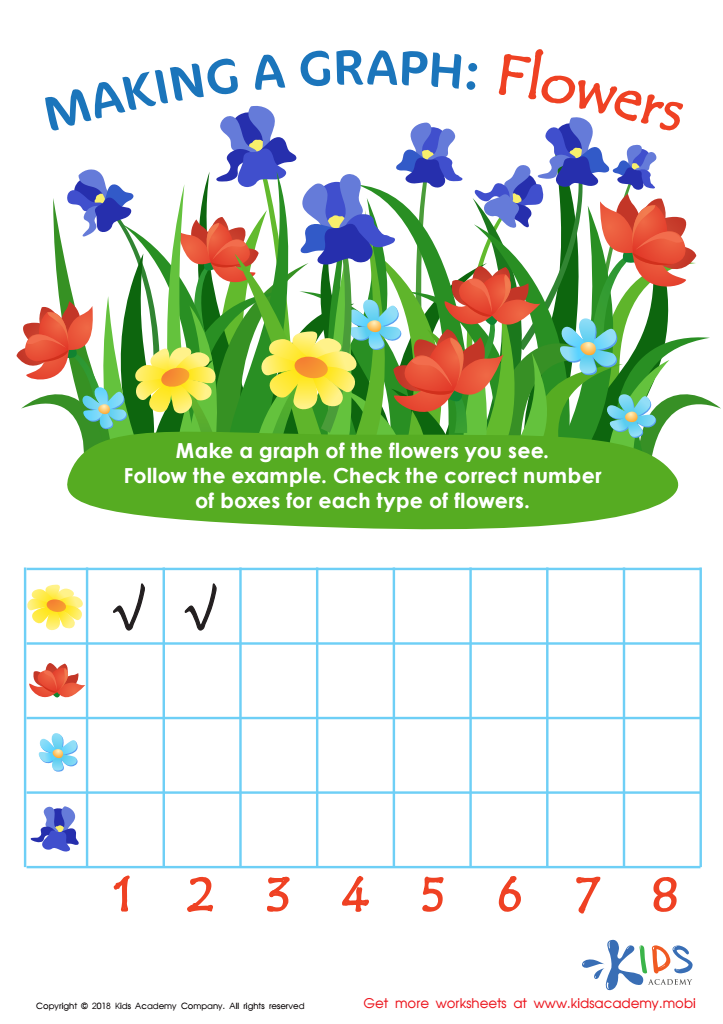
Making a Graph: Flowers Worksheet
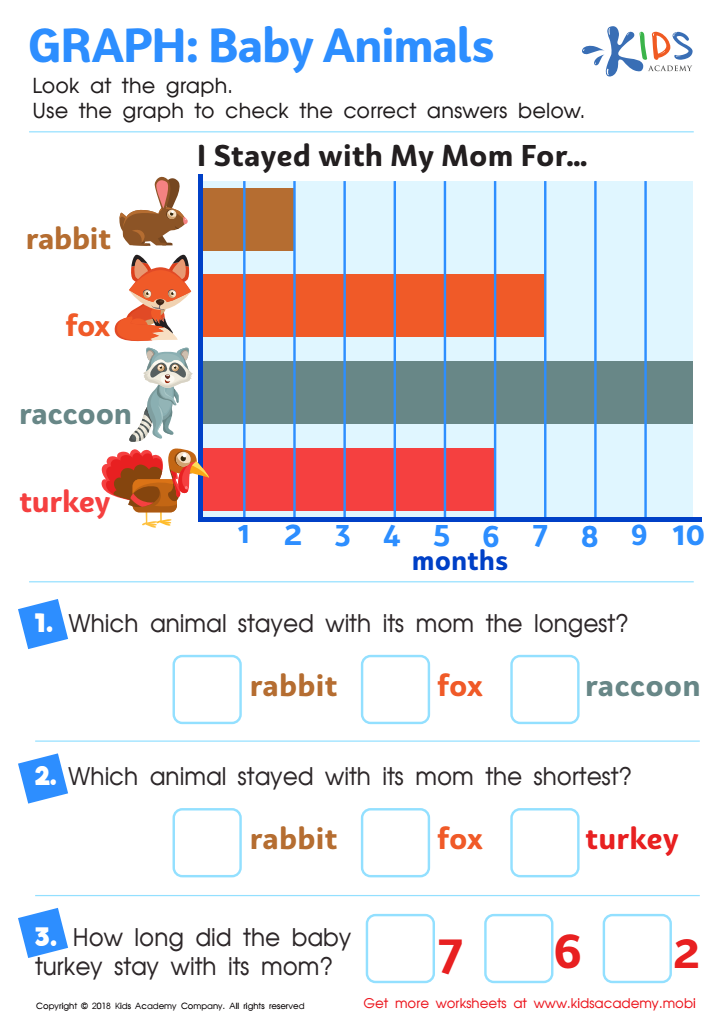
Graph: Baby Animals Worksheet
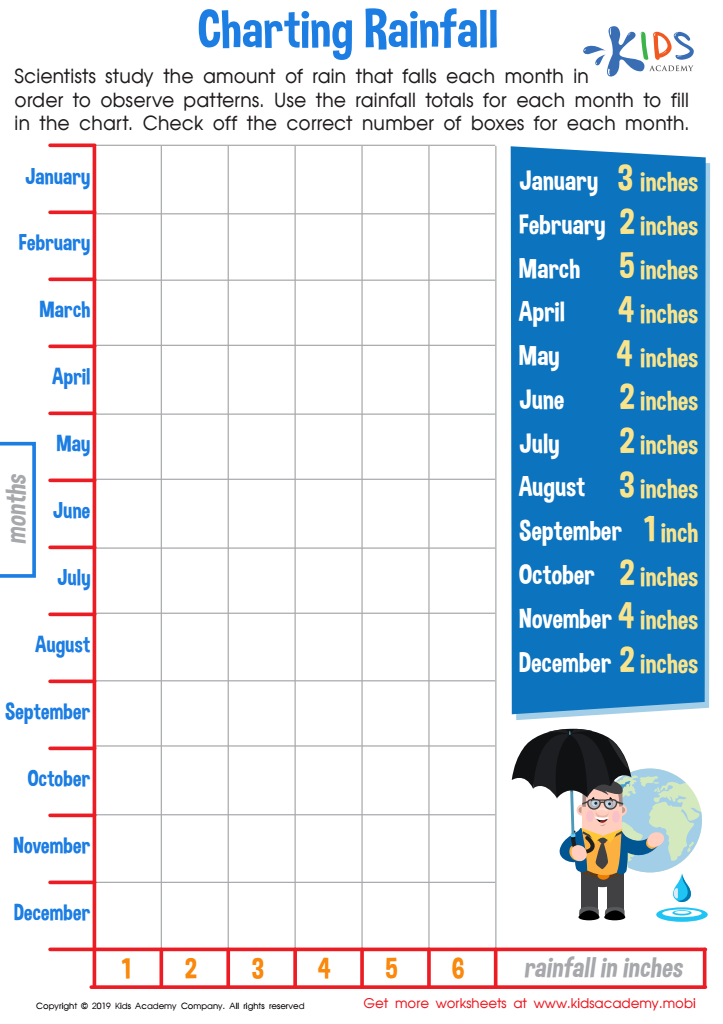
Charting Rainfall Worksheet
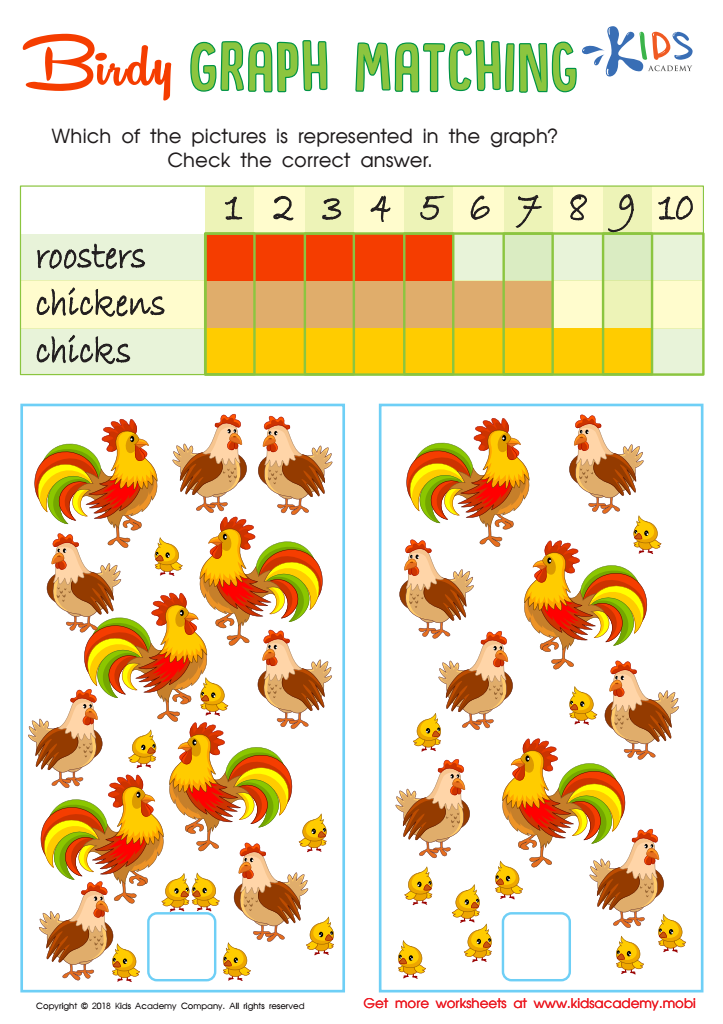
Birdy Graph Matching Worksheet





.jpg)

Graph interpretation is a vital skill for children aged 4-9, as it lays the foundation for critical thinking and data literacy. At this age, children are naturally curious about their environment, and introducing them to graphs can enhance their understanding of basic mathematical concepts while making learning enjoyable.
Understanding and interpreting graphs helps children organize information visually, fostering their ability to compare sizes, quantities, and trends. This skill encourages analytical thinking, as they learn to draw conclusions based on visual data. For example, by using simple bar graphs or pictographs, children can explore themes like favorite fruits or weather patterns in their locality.
Additionally, graph interpretation supports real-world applications. As children uncover information from graphs, they become more informed citizens, capable of engaging with data in news articles and presentations as they grow older. Moreover, these skills aid in fostering collaboration and communication, as children learn to share and discuss findings with peers, developing social skills in the process.
For parents and teachers, nurturing graph interpretation skills means equipping children for future educational experiences and everyday decision-making, ensuring they have the tools to navigate a data-rich world confidently.








