
Letter pronunciation Worksheets for Ages 4-9
3 filtered results
Difficulty Level
Grade
Age
-
From - To
Subject
Activity
Standards
Welcome to our Letter Pronunciation Worksheets for Ages 4-9! These engaging and interactive worksheets are designed to enhance your child's phonetic skills and boost their confidence in speaking. Perfect for early learners, each activity focuses on recognizing and pronouncing letters, all while making learning fun. Children can practice letter sounds through simple exercises, games, and captivating illustrations, ensuring they grasp the fundamentals of pronunciation. Whether in the classroom or at home, our worksheets cater to diverse learning styles and promote early literacy development. Explore our collection today, and help your child master the building blocks of language with ease!
Favorites
With answer key
Interactive
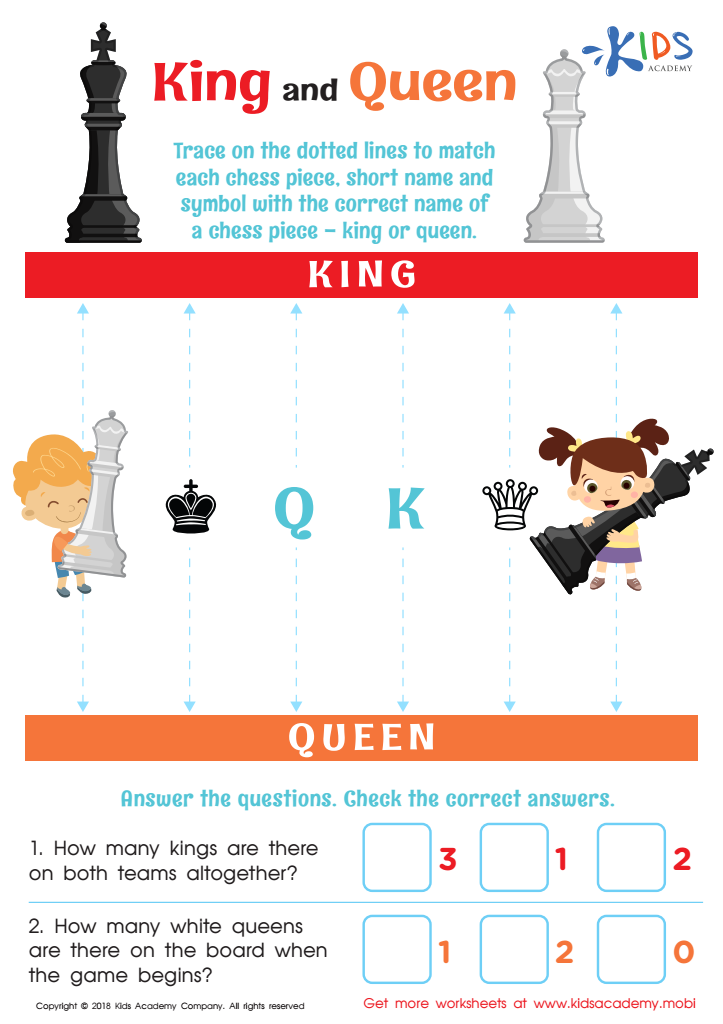
King and Queen Worksheet
Instruct your kids to trace the dotted lines to match each chess piece, short name, and symbol with either king or queen.Answer the questions at the bottom and check the answers. This exercise will help your children to differentiate between a king and queen chess piece and know their symbols.
King and Queen Worksheet
Worksheet
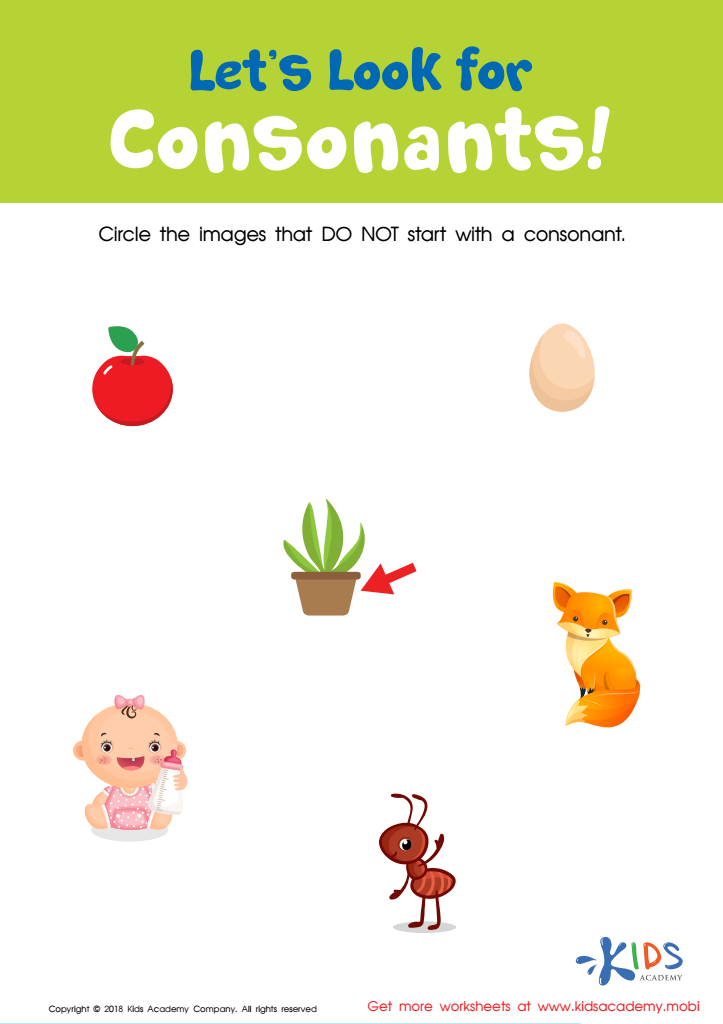
Let's Look for Consonants Worksheet
Help kids learn consonants and words that start with them. Ask them to recite the alphabet, then explain consonants are all letters but the 5 vowels. Use the worksheet to ask them to circle items without a consonant. Emphasize that's 21 consonants.
Let's Look for Consonants Worksheet
Worksheet
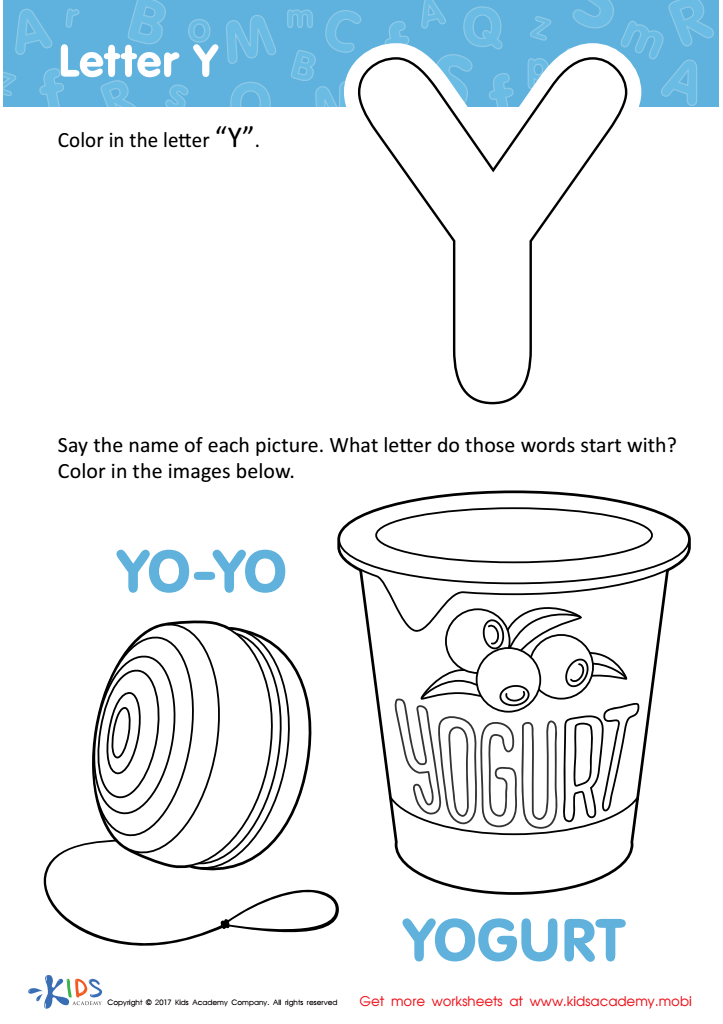
Letter Y Coloring Sheet
Let's celebrate letter "Y"! Here's a fun coloring page that'll help your child learn this end-of-the alphabet letter. It's packed with familiar objects that'll help build their art and literacy skills. So let's say "Yay"!
Download (PDF)
 Assign to My Students
Assign to My Students
Letter Y Coloring Sheet
Worksheet
Join Kids Academy for Free
Who is primarily going to use this learning content?








Letter pronunciation is crucial for children aged 4-9 as it forms the foundation for their literacy skills. At this stage, children are developing their phonemic awareness, which is the ability to hear and manipulate sounds in words. When children correctly pronounce letters, they can better decode, spell, and read text—skills that are essential for academic success.
Parents and teachers play a significant role in this developmental stage. By modeling accurate pronunciation, they help children associate sounds with their corresponding letters, enabling them to recognize and articulate words. Poor pronunciation can lead to reading difficulties, misunderstanding written language, and reduced confidence in communication skills.
Moreover, proper letter pronunciation aids in vocabulary acquisition. Children learn to identify and understand new words when they can pronounce them accurately, resulting in improved comprehension and expression.
Additionally, emphasizing pronunciation fosters a love for reading and exploration of language. Engaging storytelling sessions, singing songs, and interactive phonics games encourage participation and make learning enjoyable. When parents and teachers actively focus on letter pronunciation, they create a supportive learning environment that enhances literacy development, instills confidence, and prepares children for lifelong learning.








