
Logical reasoning development Worksheets for Ages 4-9
4 filtered results
Difficulty Level
Grade
Age
-
From - To
Subject
Activity
Standards
Boost your child's cognitive abilities with our Logical Reasoning Development Worksheets tailored for ages 4-9. Designed to stimulate critical thinking and problem-solving skills, these engaging worksheets cover a range of fun activities and puzzles. Each worksheet aims to develop essential skills including pattern recognition, sequencing, sorting, and logical deduction. Our diverse collection ensures that learning becomes an enjoyable journey, catering to the different developmental stages within this age group. Perfect for both classroom and home use, these resources support young learners in building a strong foundation for future academic success. Dive into interactive learning and watch your child's logical reasoning bloom!
Favorites
With answer key
Interactive
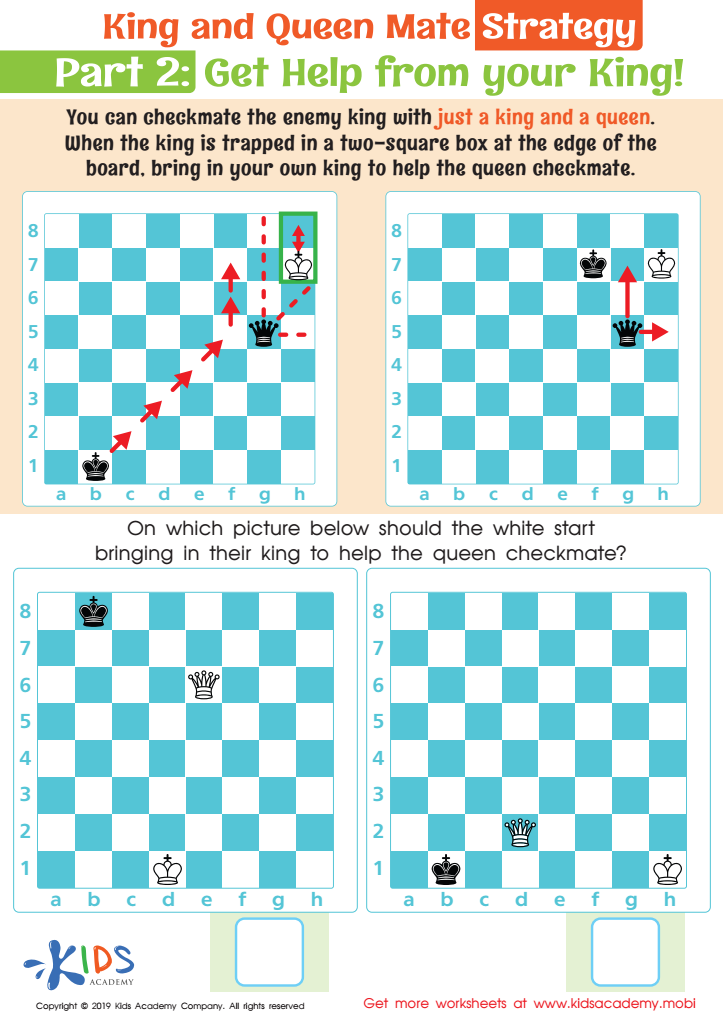
King and Queen Mate Strategy: Part 2 Worksheet
This worksheet helps your child learn to checkmate the opposing king with their king and queen. Descriptive sample boards show the strategy, and more boards help determine which one demonstrates how the king assists the queen.
 Assign to My Students
King and Queen Mate Strategy: Part 2 Worksheet
Worksheet
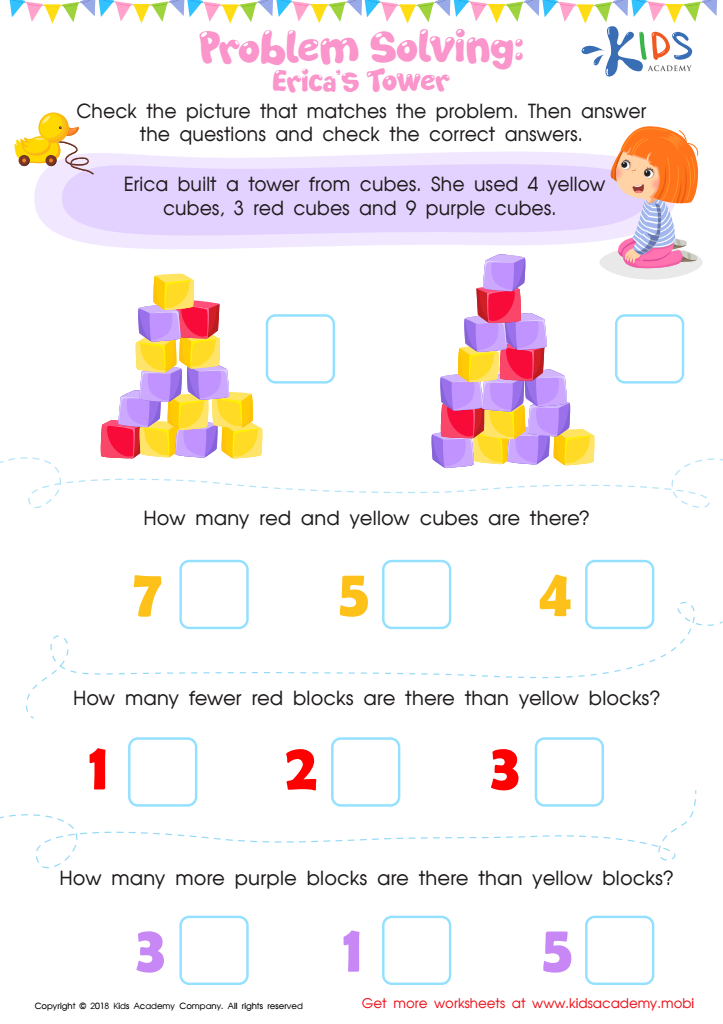
Problem Solving: Erica's Tower Worksheet
Sweet Erica needs your math student's help! Download the PDF worksheet and have your little math whiz read the word problems, match the pictures and solve basic addition/subtraction problems with two/three addends, minuends and subtrahends. They'll be having fun while strengthening their math fact skills!
Problem Solving: Erica's Tower Worksheet
Worksheet
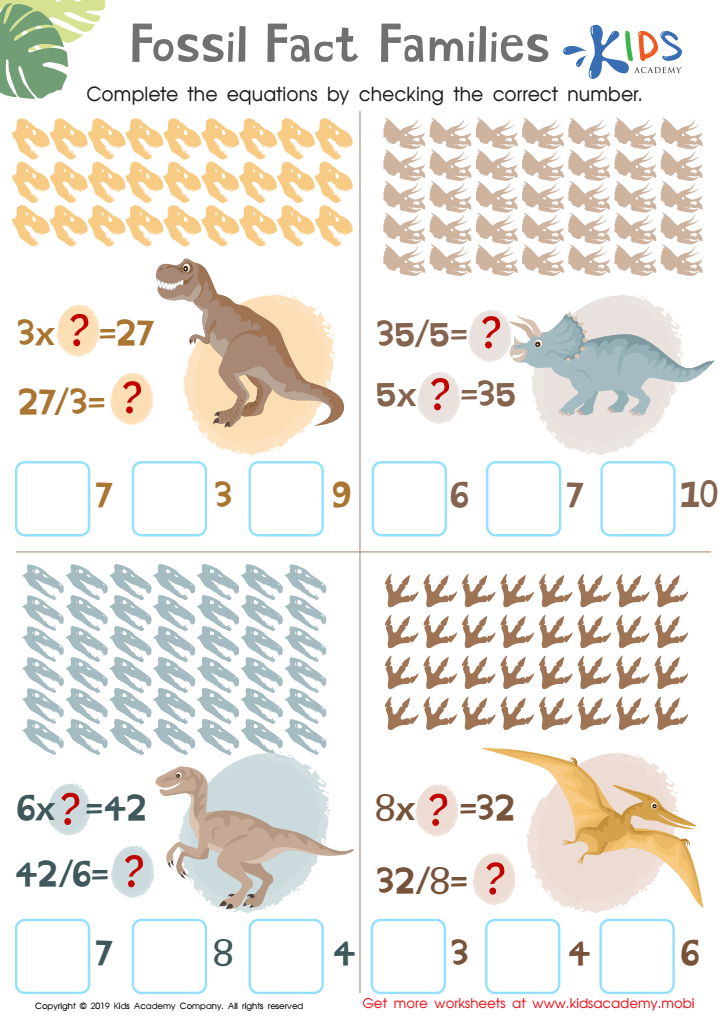
Fossil Fact Families Worksheet
Kids love dinosaurs, so why not learn about fact families with some fun prehistoric friends? This PDF worksheet uses picture arrays to help kids understand the relationships between multipliers and dividends. It helps them build automaticity with multiplication facts so they can quickly solve division problems and see the relationships between the two fact families.
Fossil Fact Families Worksheet
Worksheet
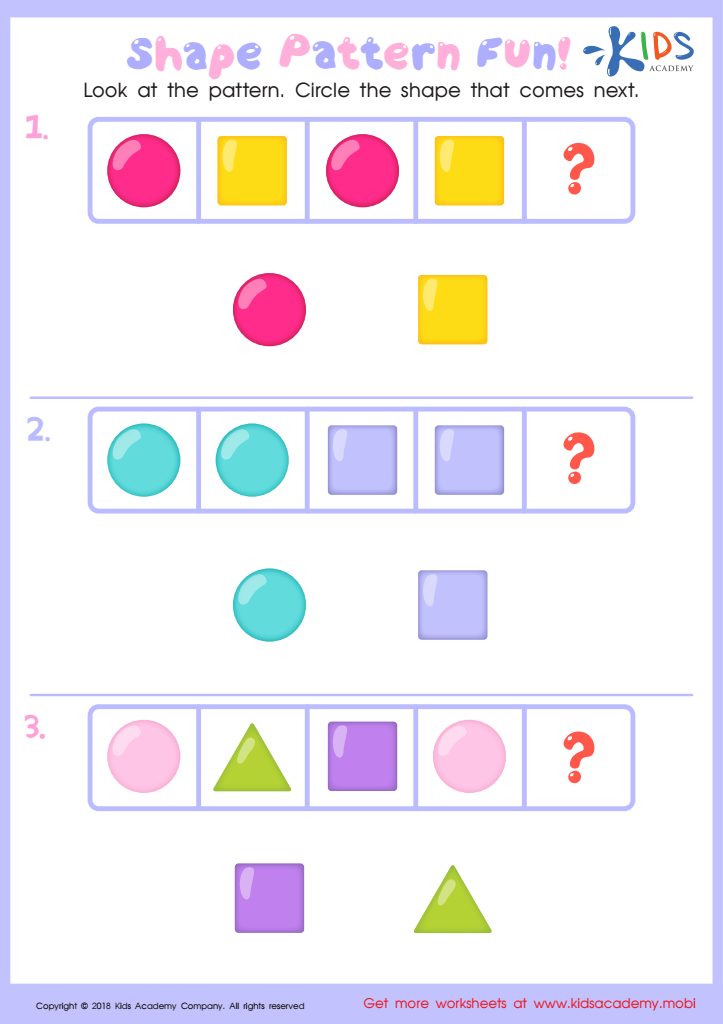
Shape Pattern Fun Worksheet
Challenge your kids to look at the pictures and identify colors, shapes and patterns. Ask them to circle the shapes that follow the sequence. See if they can spot the pattern and stick to it!
Shape Pattern Fun Worksheet
Worksheet
Join Kids Academy for Free
Who is primarily going to use this learning content?








Logical reasoning is a foundational skill that parents and teachers should prioritize in children aged 4-9 because it greatly influences critical thinking, problem-solving, and decision-making abilities throughout life. During these early years, children’s brains are highly adaptable and primed for learning, making it a crucial period for developing cognitive skills.
Logical reasoning helps children understand cause and effect, recognize patterns, and make connections between ideas. This goes beyond academic success; it equips children with the tools to analyze situations, make informed decisions, and solve everyday problems. For instance, a child who learns to sequence events can better grasp the structure of a story, leading to improved reading comprehension.
Moreover, developing logical reasoning early promotes mathematical skills. Children learn to sort, classify, and grasp basic mathematical concepts such as addition and subtraction through pattern recognition and logical sequencing.
Socially, logical reasoning enables children to navigate interactions more effectively. They can understand others' viewpoints and reason through conflicts calmly and rationally.
Investing time in fostering logical reasoning can lead to a lifetime of advantages. Activities such as puzzles, games, and asking open-ended questions encourage this development, thereby ensuring children grow into capable, analytical, and independent thinkers.








