Phonological awareness Worksheets for Ages 4-9
11 filtered results
-
From - To
Unlock your child's reading potential with our engaging Phonological Awareness Worksheets for Ages 4-9. Designed to build critical early reading skills, each worksheet helps young learners explore sounds, enhance their ability to break down words, and develop a strong phonemic foundation. Whether focusing on rhyming, syllable segmentation, or initial sounds, these activities make learning interactive and fun. Ideal for parents and teachers, our expertly crafted worksheets ensure kids stay excited about learning while progressing at their own pace. Build confidence in young readers and set the stage for future reading success with Kids Academy’s effective phonological awareness activities.
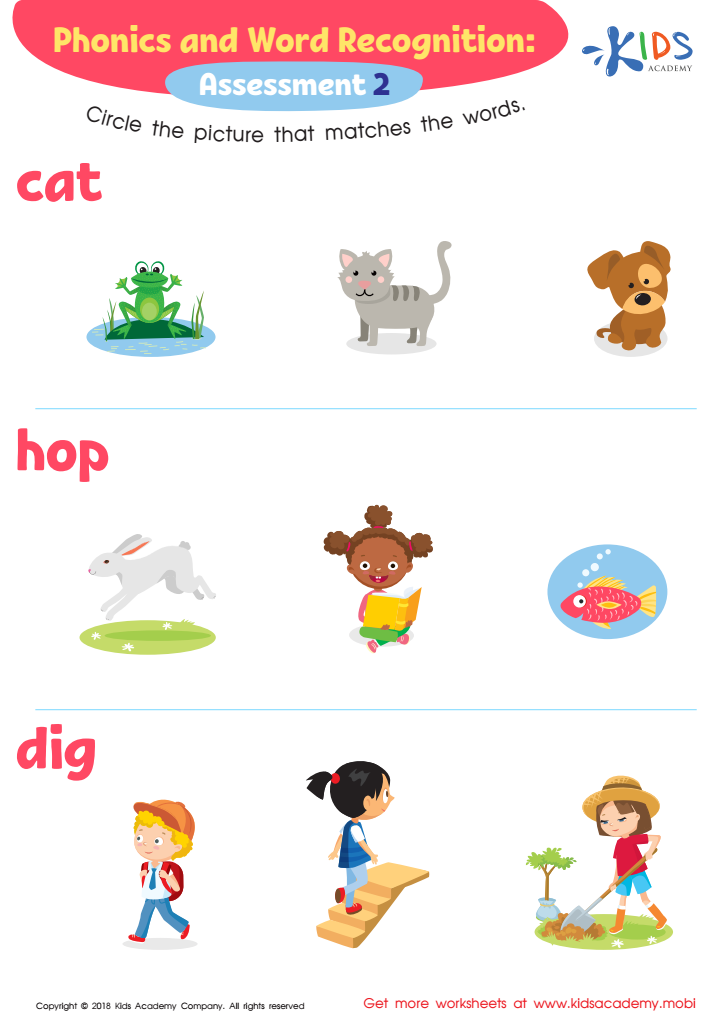
Phonological Awareness: Assessment 2 ELA Worksheet
 Assign to My Students
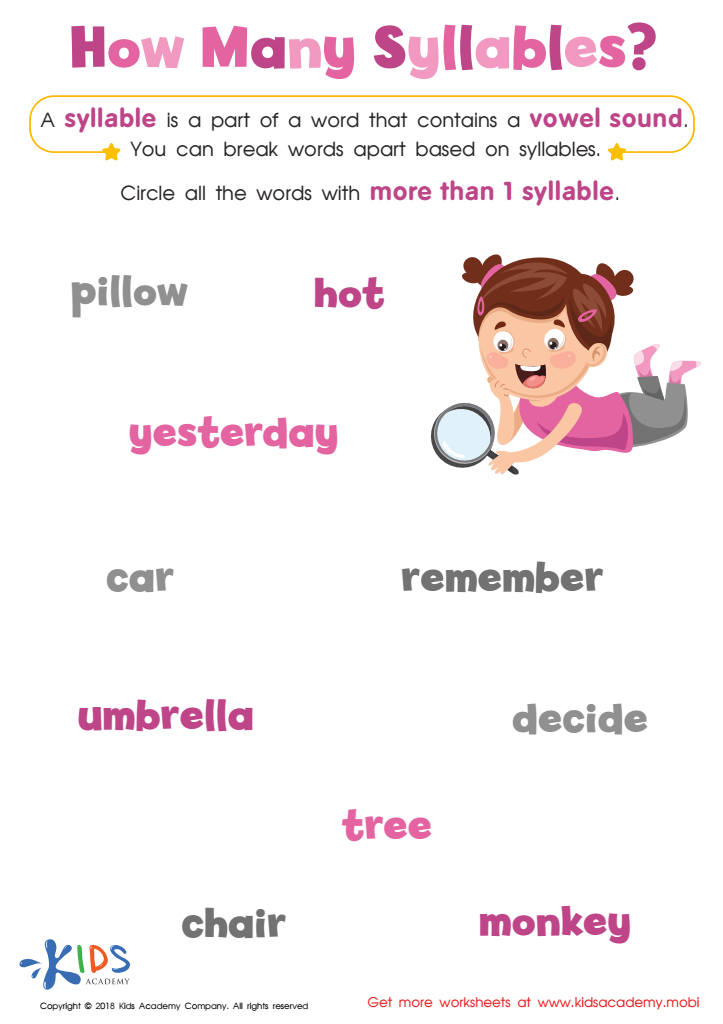
Reading: How Many Syllables Worksheet
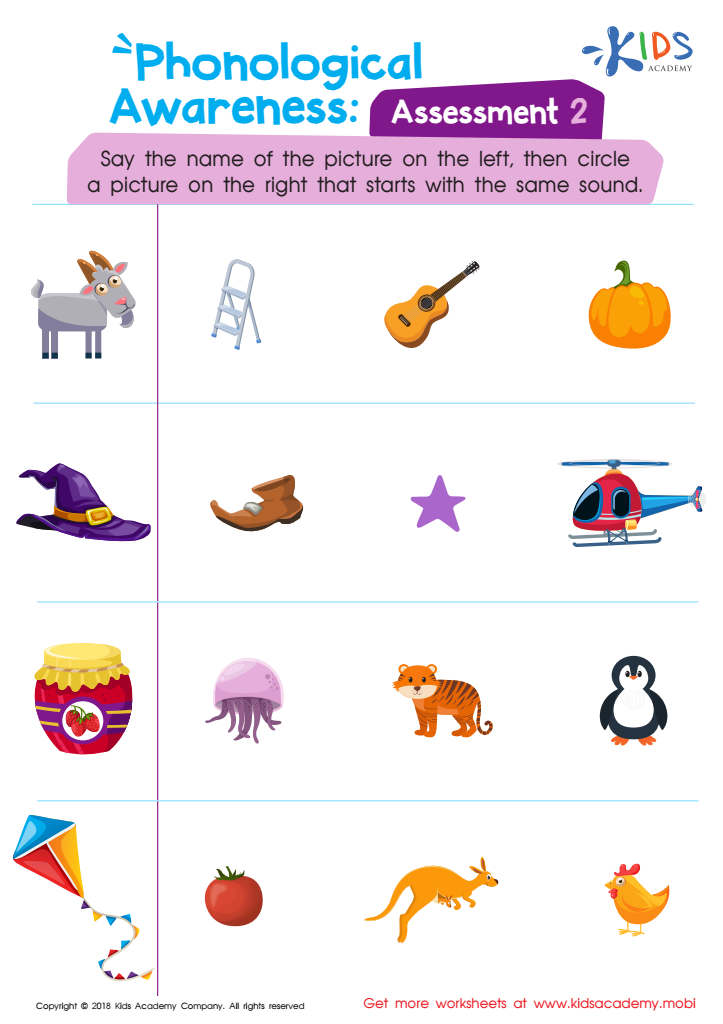
Phonological Awareness: Assessment 2 Worksheet
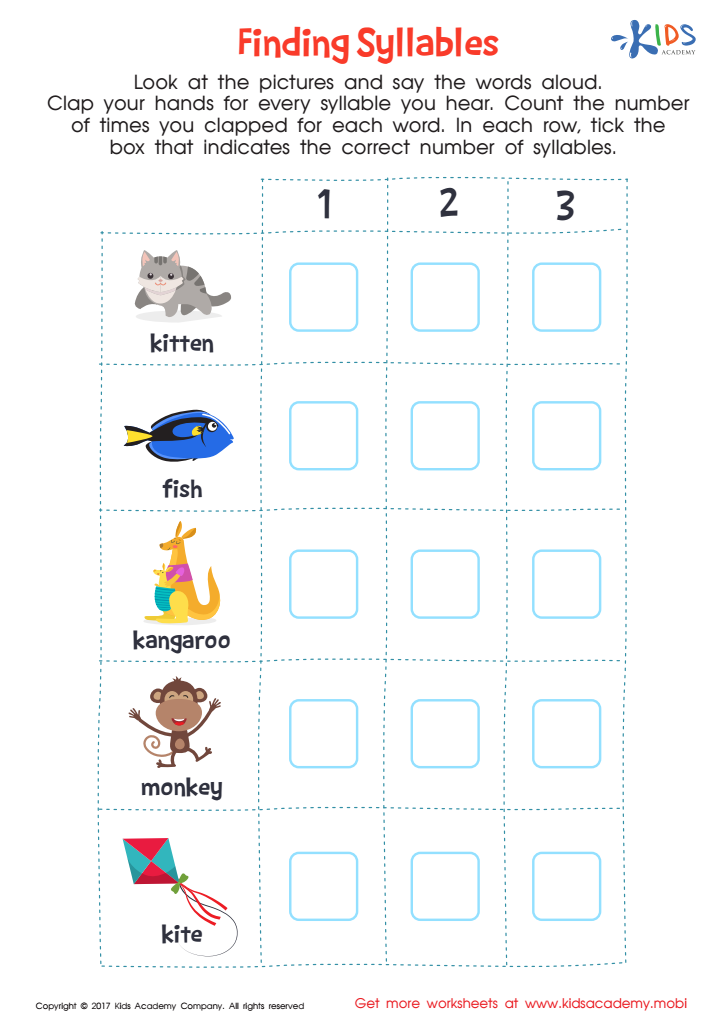
Finding Syllables Word Structure Worksheet
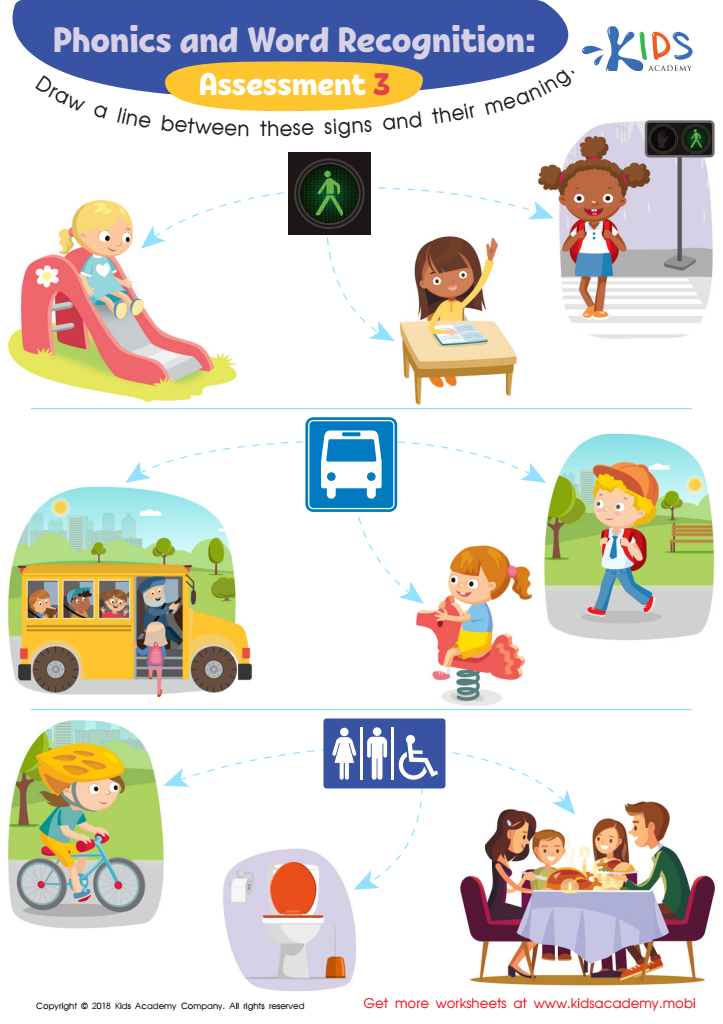
Phonological Awareness: Assessment 3 ELA Worksheet
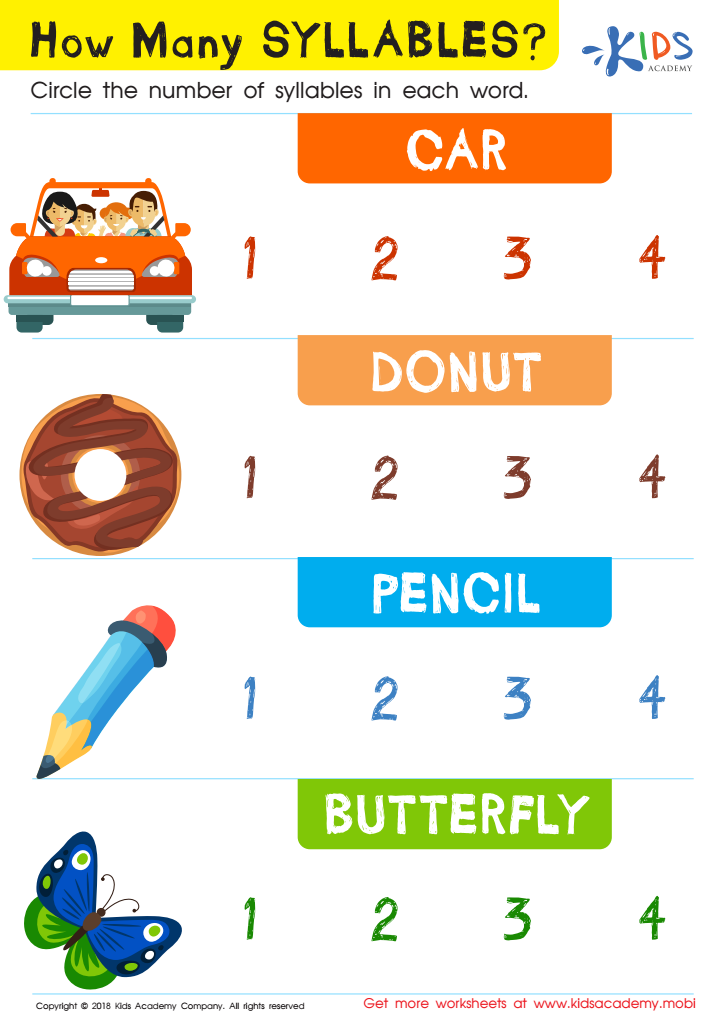
How Many Syllables? Worksheet
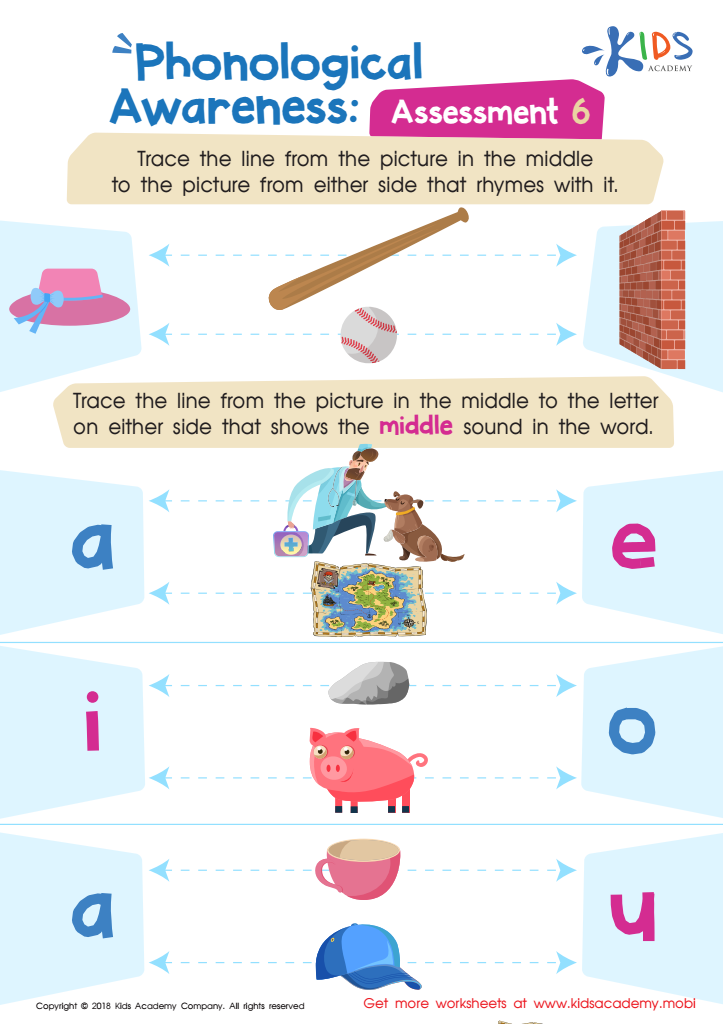
Phonological Awareness: Assessment 6 Worksheet
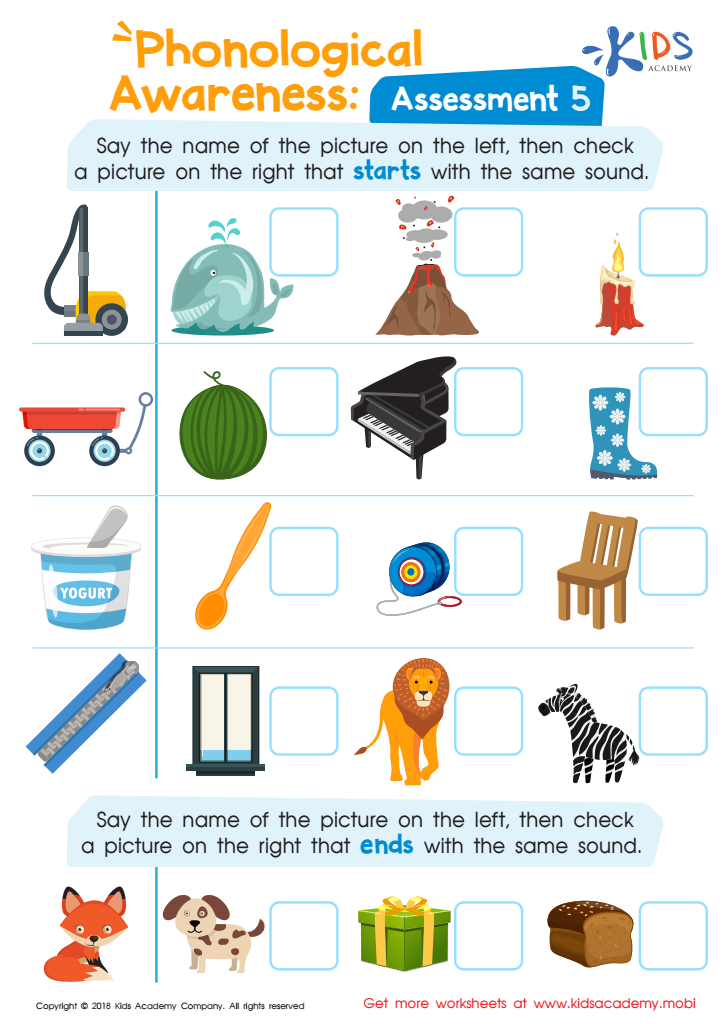
Phonological Awareness: Assessment 5 Worksheet
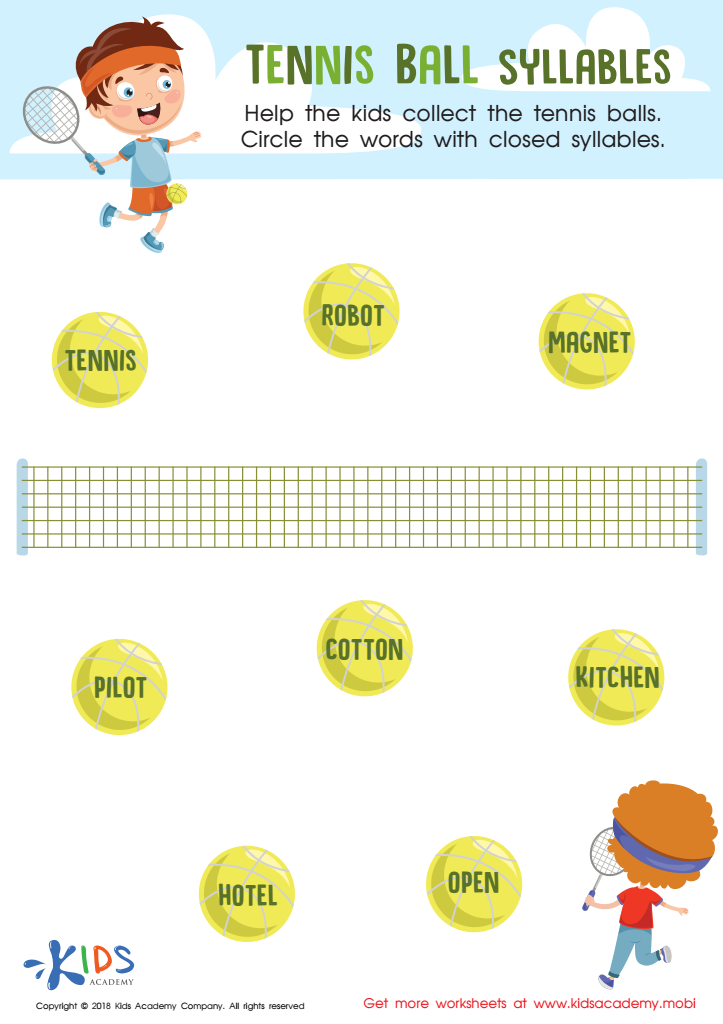
Tennis Ball Syllables Worksheet
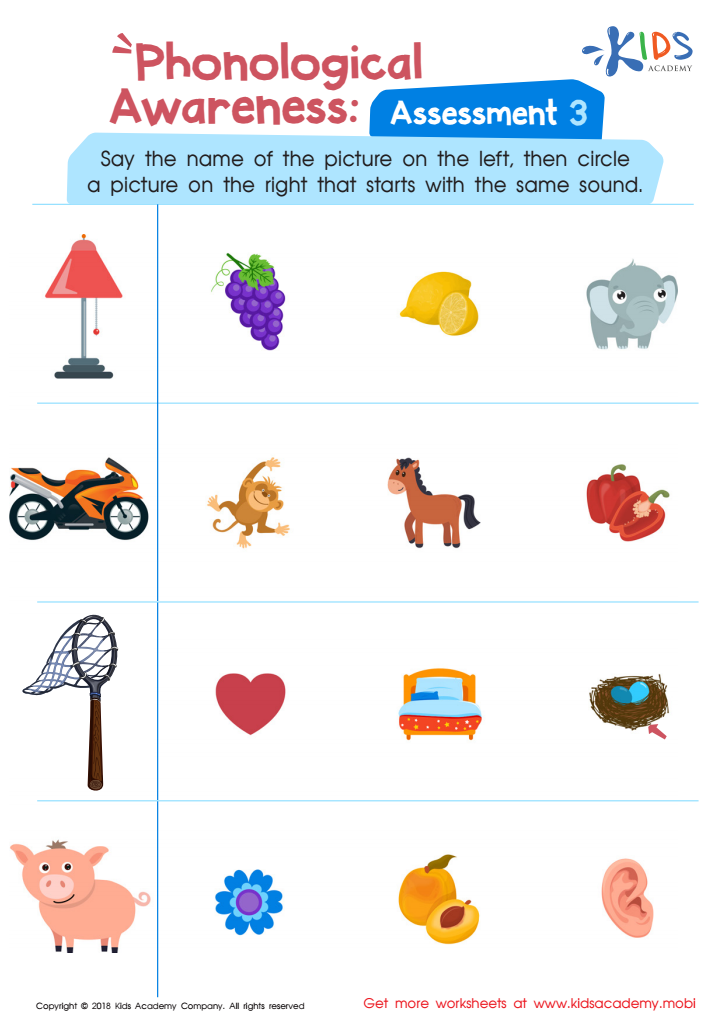
Phonological Awareness: Assessment 3 Worksheet
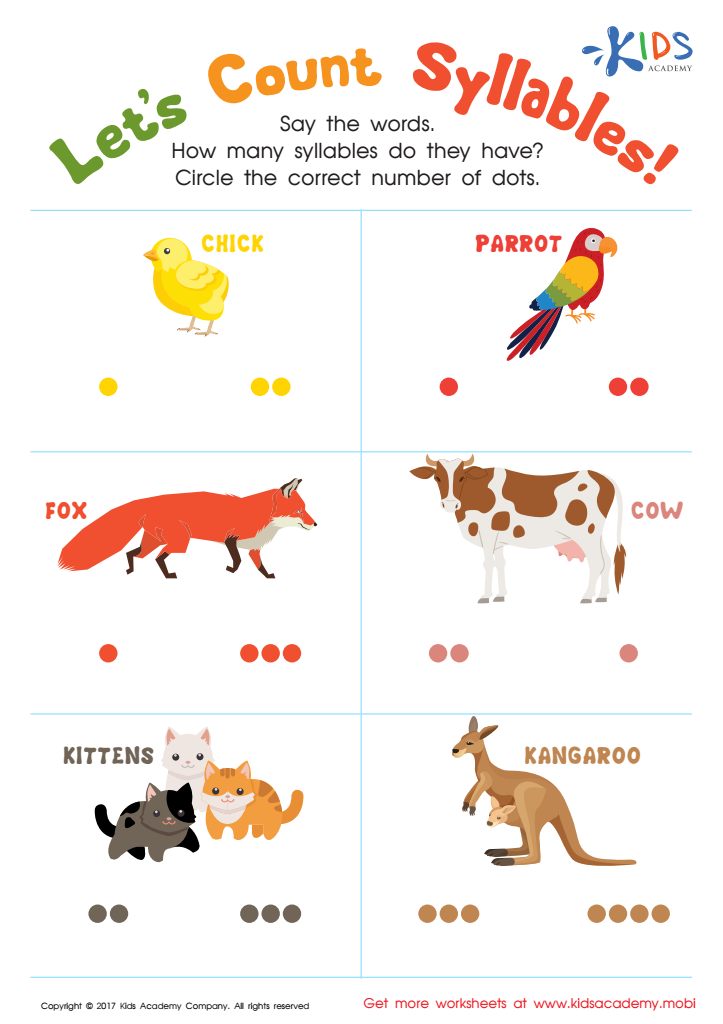
Lets Count Syllables Worksheet







Phonological awareness is a crucial foundational skill for children aged 4-9, serving as the building block for learning to read and write. For parents and teachers, fostering this ability can have profound long-term academic benefits. Phonological awareness is the recognition and manipulation of sounds in spoken language, including skills like identifying rhymes, syllables, and initial sounds.
When children develop strong phonological awareness, they become better equipped to understand the relationship between sounds and letters, a critical step in learning to decode words while reading. This awareness helps children to segment words into individual sounds (phonemes), blend them, and manipulate them—skills essential for fluent reading and precise spelling.
Without this foundation, children are likely to struggle with reading, leading to difficulties across all subjects since reading is integral to most learning processes. Struggling readers often face frustration, diminished self-esteem, and may fall behind peers academically. Therefore, proactively developing phonological awareness through activities like rhyming games, clapping out syllables, and playful sound matching tasks ensures that children gain confidence in their reading abilities.
Ultimately, prioritizing phonological awareness allows both parents and teachers to support children's academic journey effectively, setting them up for success in all educational endeavors and beyond.








