Practice addition Worksheets for Ages 4-9
10 filtered results
-
From - To
Welcome to our Practice Addition Worksheets for Ages 4-9! This comprehensive collection offers engaging, printable worksheets designed to strengthen young learners' addition skills. Tailored for children between 4 to 9 years old, our resources make math practice fun and interactive. Each worksheet fosters number recognition, problem-solving, and critical thinking while catering to various learning paces. Available in different formats, these worksheets are perfect for classroom use or at-home learning. Help your child build a strong mathematical foundation with our vibrant and motivating addition exercises. Explore our collection today and watch your child thrive in their math journey!
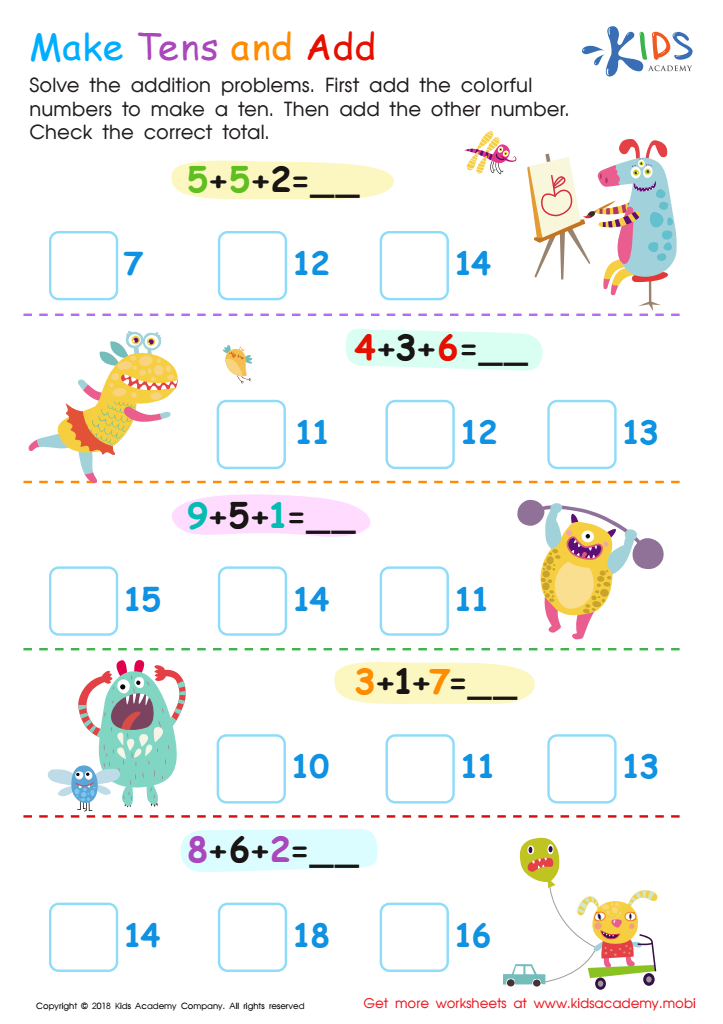
Make Tens and Add Worksheet
 Assign to My Students
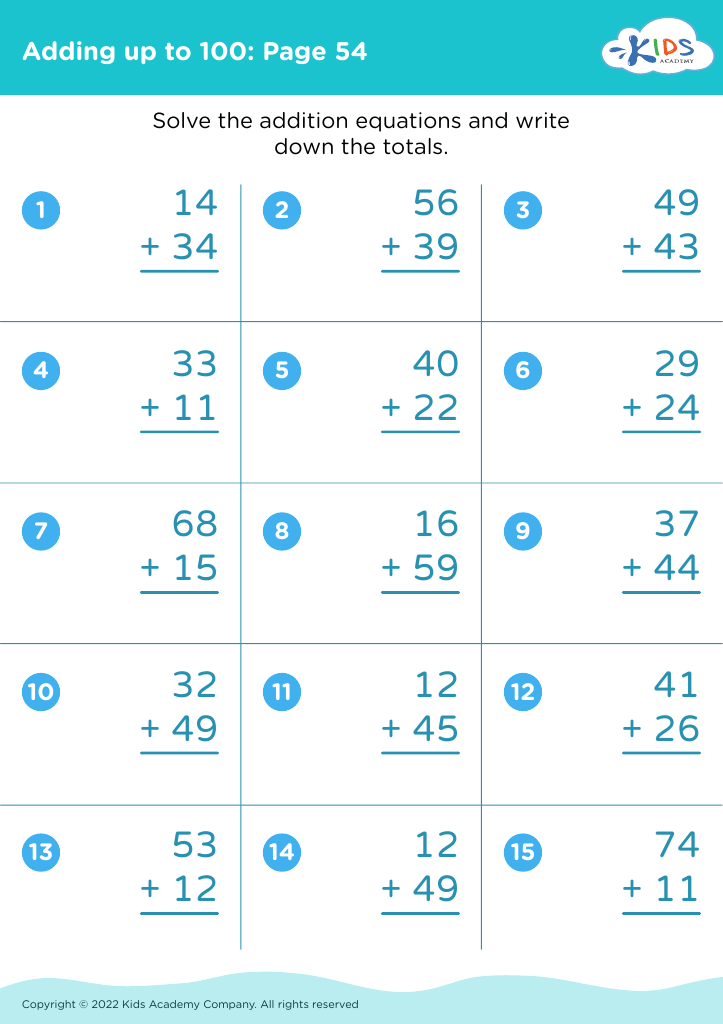
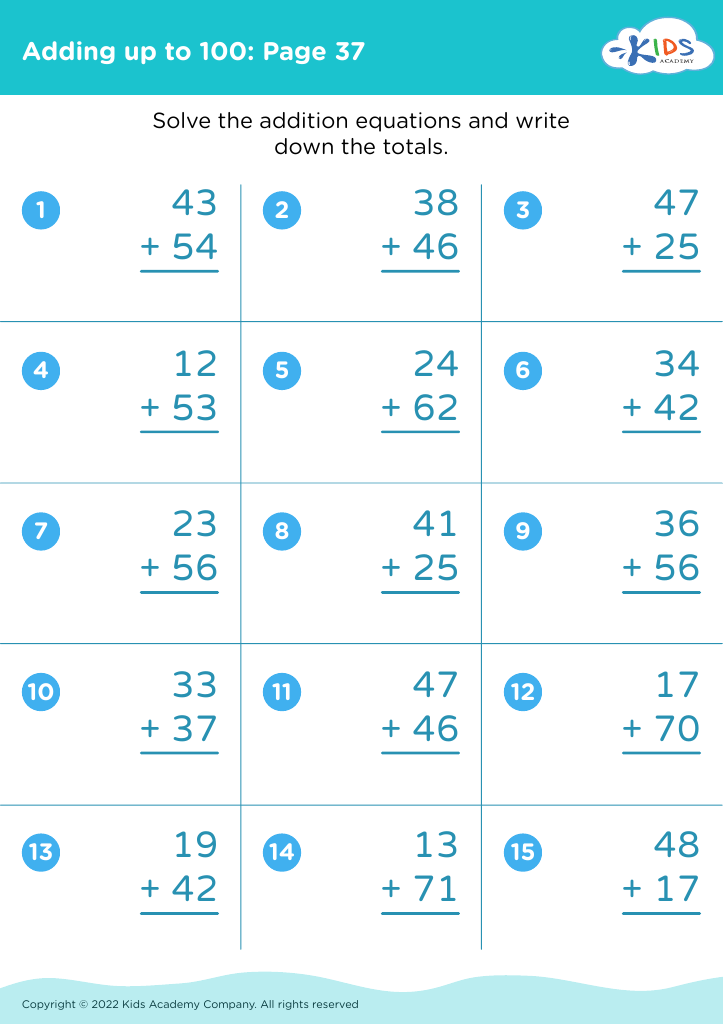
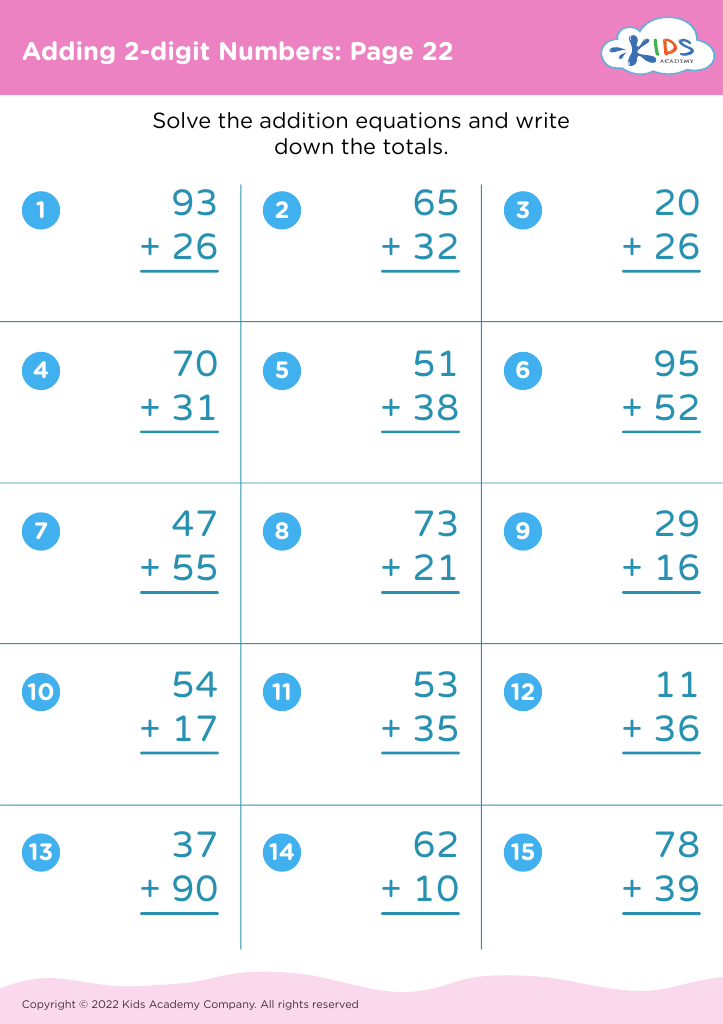
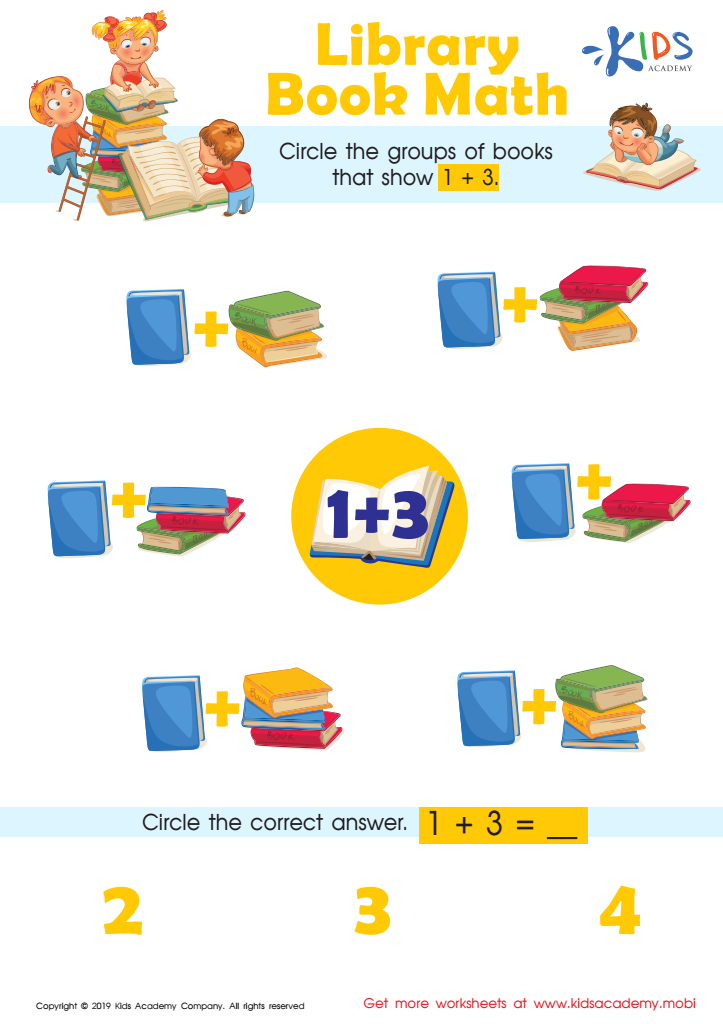
Library Book Math Worksheet
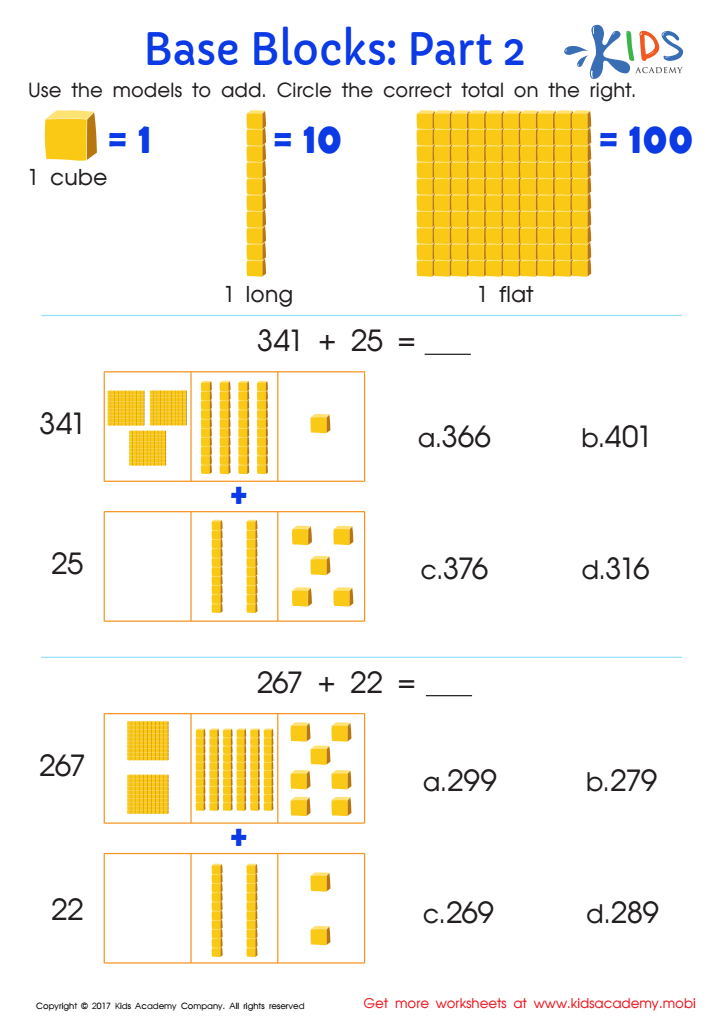
Base Ten Blocks Worksheet: Part 2
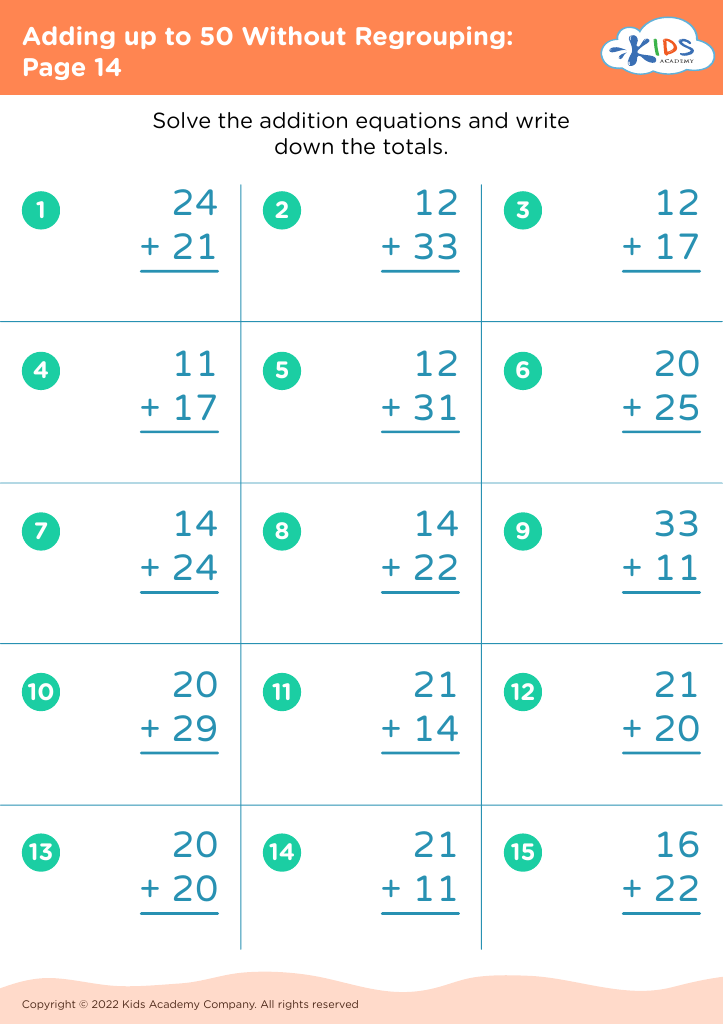








Practicing addition for children aged 4-9 is crucial as it lays the foundation for their overall mathematical understanding and academic development. During these formative years, children are like sponges, capable of absorbing information and skills that will serve them throughout their lives. Mastering addition boosts their confidence in handling numbers and fosters a positive attitude towards math, which can deter math anxiety later on.
Early proficiency in addition also enhances critical thinking and problem-solving abilities. Children learn how to approach challenges methodically and recognize patterns, skills that apply beyond mathematics. Furthermore, practice ensures that these crucial skills are internalized, making more complex math concepts easier to tackle as they progress through their education.
Additionally, engaging in addition practice provides opportunities for parents and teachers to bond with children. Using fun activities or games can make learning enjoyable, turning a potentially daunting subject into an engaging experience. Moreover, consistent practice at this age can help educators identify any learning difficulties early on, setting the stage for additional support and targeted interventions. By emphasizing the importance of basic addition, adults can foster a love of learning that inspires children to achieve high levels of academic success and critical thinking in the future.








