Pronoun identification Worksheets for Ages 4-9
4 filtered results
-
From - To
Discover our engaging Pronoun Identification Worksheets designed for children ages 4-9! These interactive worksheets help young learners recognize and use pronouns effectively. With colorful visuals and age-appropriate exercises, kids will enhance their understanding of words like "he," "she," "it," and "they." Each worksheet provides fun and educational activities that promote language skills and boost confidence in reading and writing. Perfect for teachers and parents looking to support their child’s early language development. Download our printable worksheets today and watch your child become a pronoun pro while having fun! Start building a strong language foundation early!
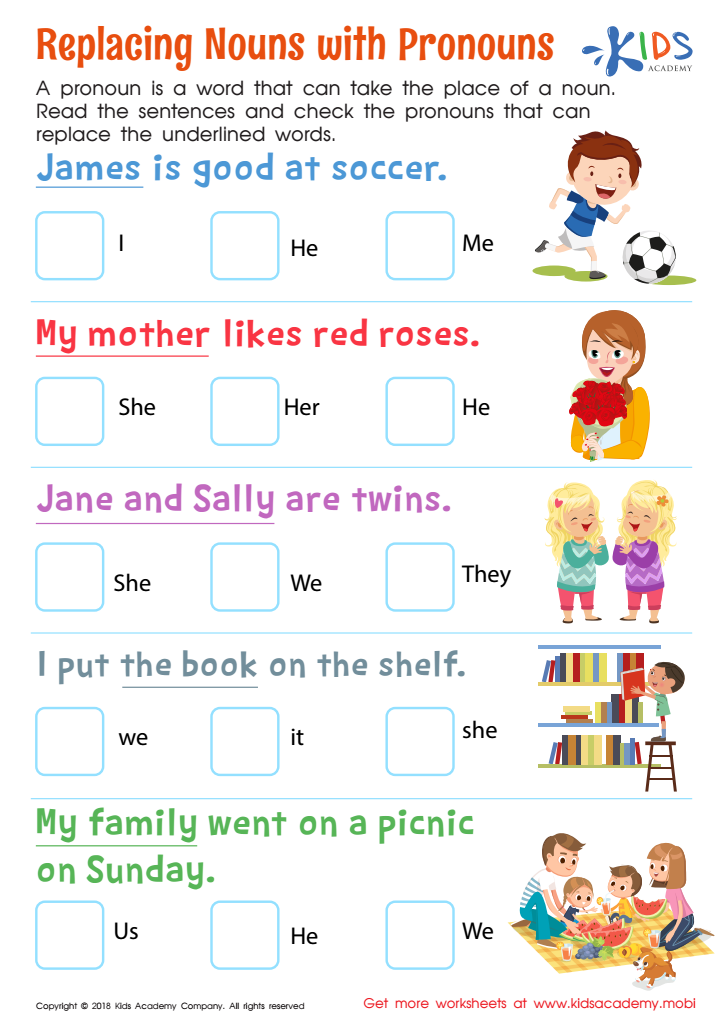
Replacing Nouns with Pronouns Worksheet
 Assign to My Students
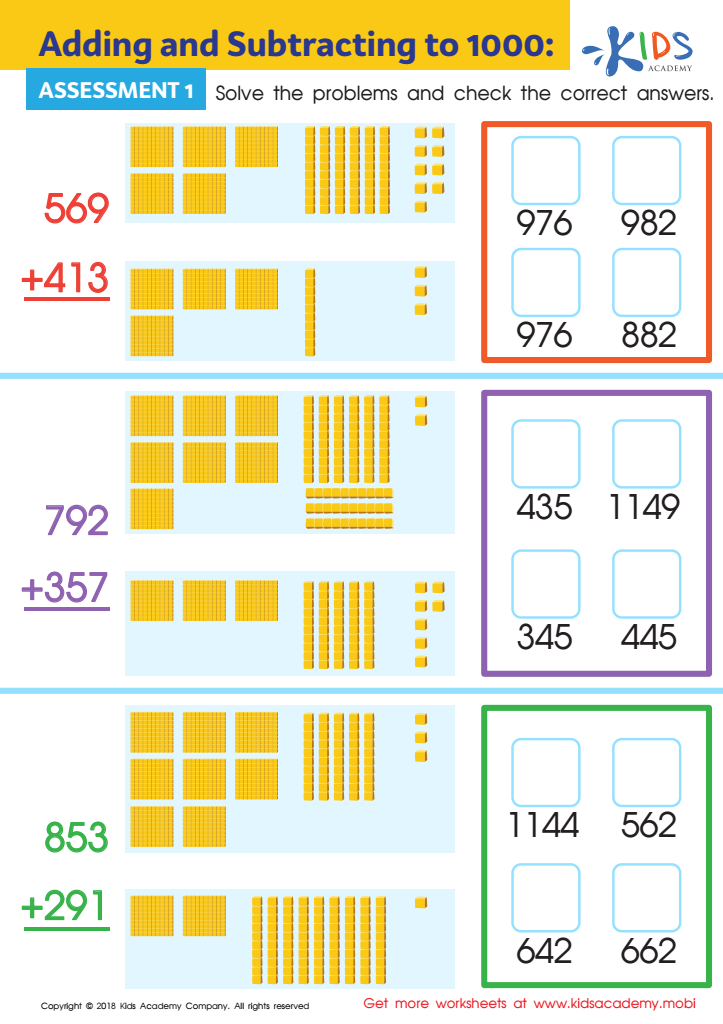
Adding and Subtracting to 1 Worksheet: Assessment 1
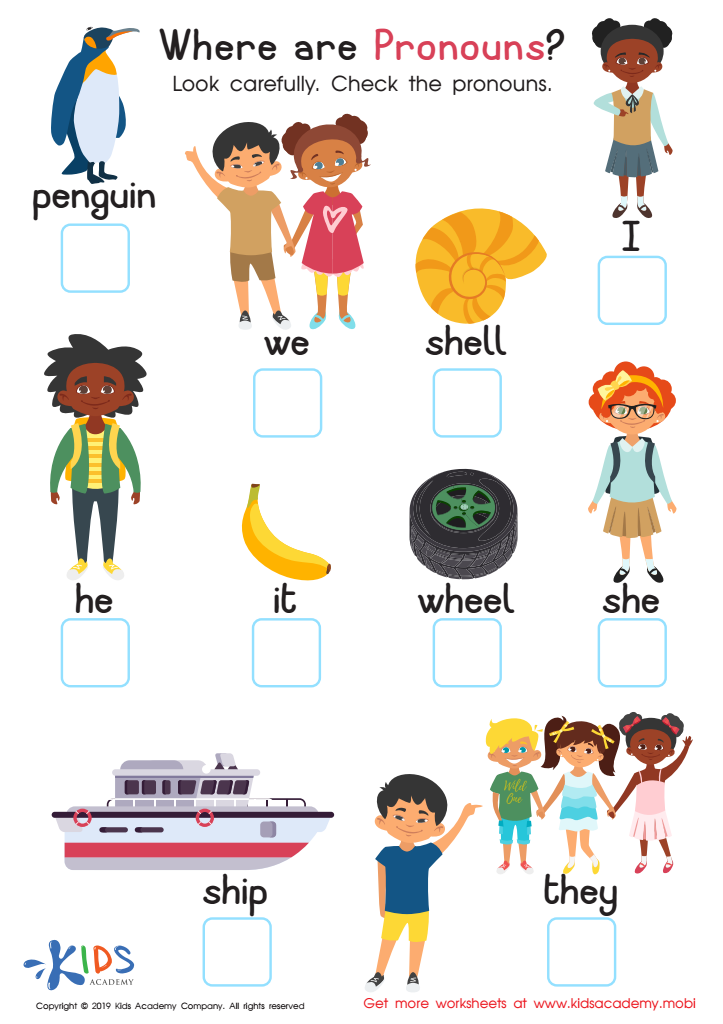
Where Are Pronouns? Worksheet
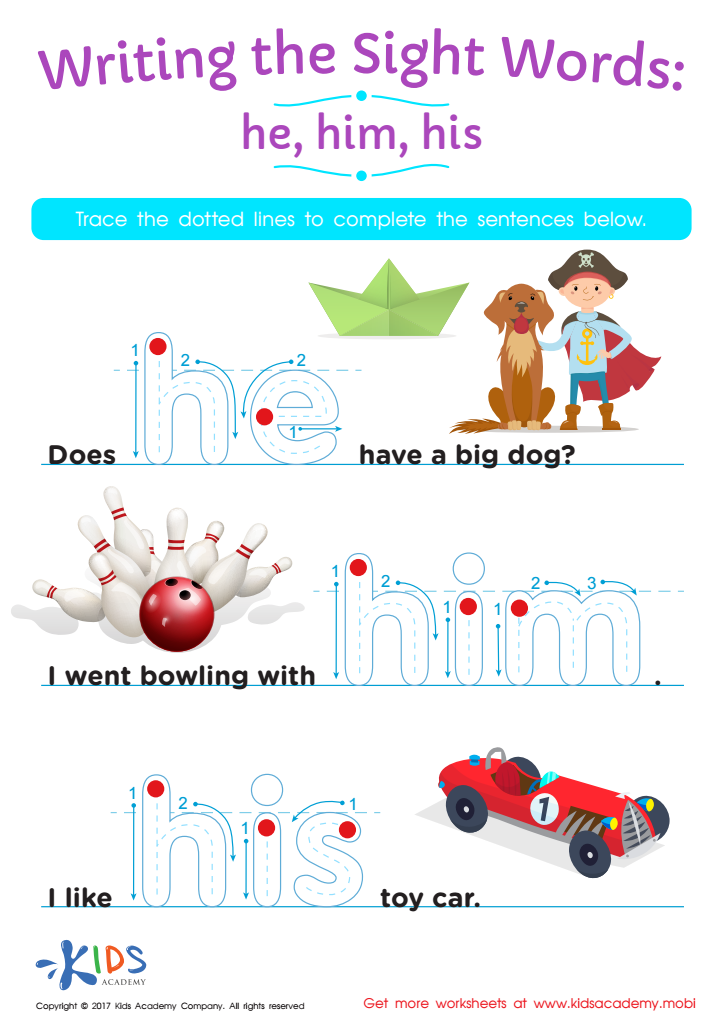
He, Him, His Printable Sight Words Worksheet







Pronoun identification is crucial for children aged 4-9, as it plays a significant role in their language development and social understanding. At this formative stage, children are learning to express themselves and understand the perspectives of others. Recognizing and using pronouns correctly enhances their communication skills, enabling them to construct clearer sentences and convey their thoughts effectively.
Furthermore, understanding pronouns aids in building empathy and respect for others' identities. As children interact with peers, recognizing gender-neutral or various identity pronouns fosters an inclusive environment, teaching them to honor individual differences. This awareness can mitigate bullying and promote kindness among classmates.
In the classroom, teachers can model pronoun use and incorporate it into lessons, helping children grasp the concept naturally. Agile pronoun identification supports literacy, paving the way for better reading comprehension and writing skills.
For parents, encouraging the correct use of pronouns at home reinforces these lessons and adds to a child's sense of belonging. Overall, the importance of pronoun identification stretches beyond language skills; it embodies respect and inclusion, essential qualities for cultivating understanding in an increasingly diverse world. Thus, both parents and teachers should prioritize pronoun education in children's early development.








