Reading analog clocks Worksheets for Ages 4-9
9 filtered results
-
From - To
Enhance your child's understanding of time with our Reading Analog Clocks Worksheets, specifically designed for ages 4-9. Our engaging and colorful worksheets feature fun activities that help young learners grasp the concepts of analog clocks. With clear instructions, children will enjoy matching times, drawing clock hands, and identifying hours and minutes. These worksheets not only build essential math and observational skills but also foster a love for learning. Ideal for both classroom and home use, our resources ensure your child gains confidence in telling time while having fun! Download today and watch your little ones master the art of reading analog clocks.
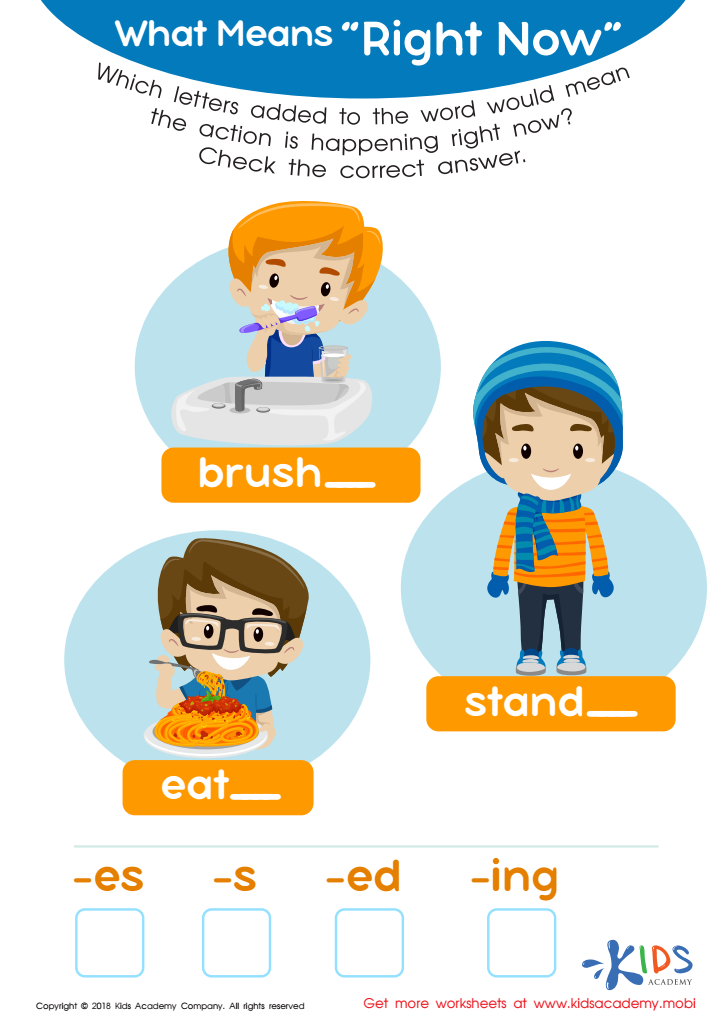
What Means "Right Now" Worksheet
 Assign to My Students
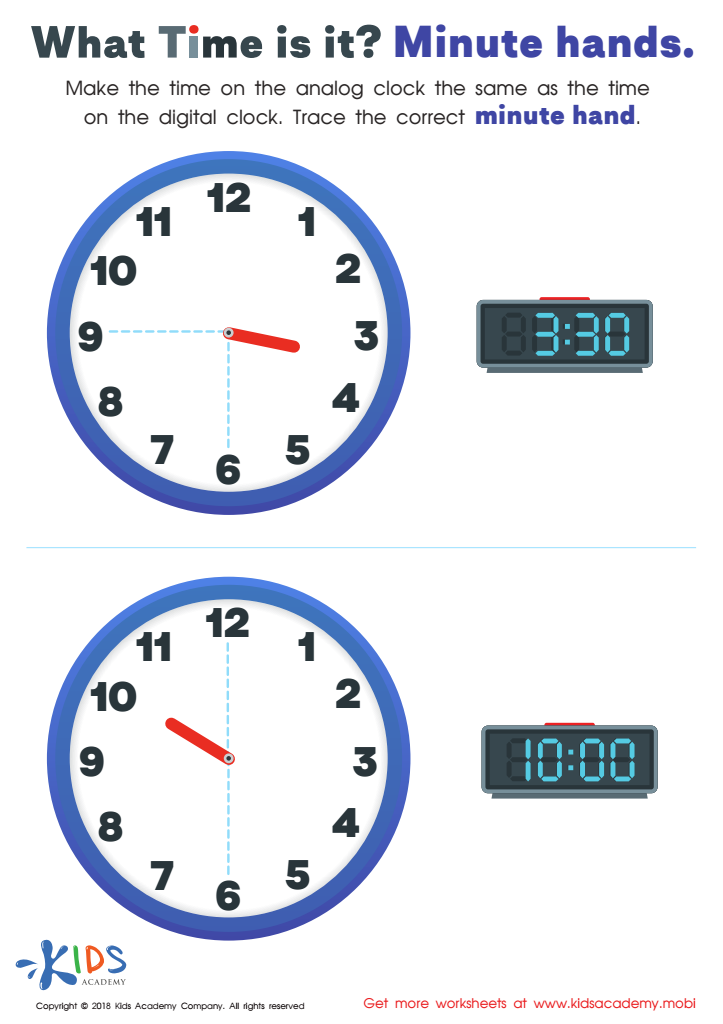
What Time Is it? Minute Hands Worksheet
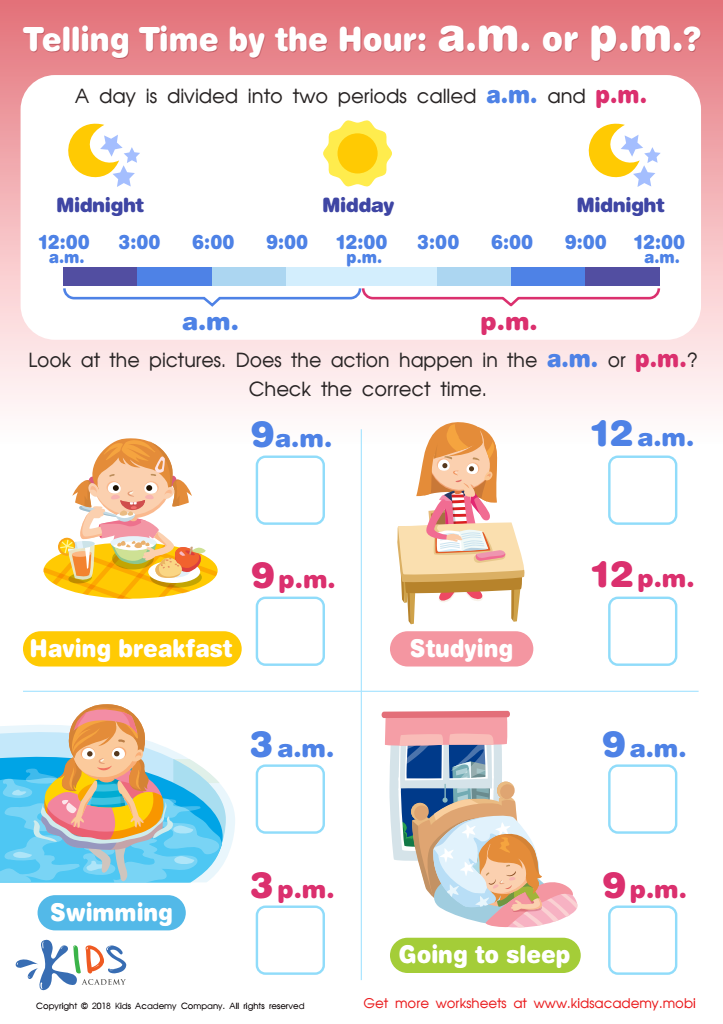
Tilling Time by the Hour: a.m. or p.m.? Worksheet
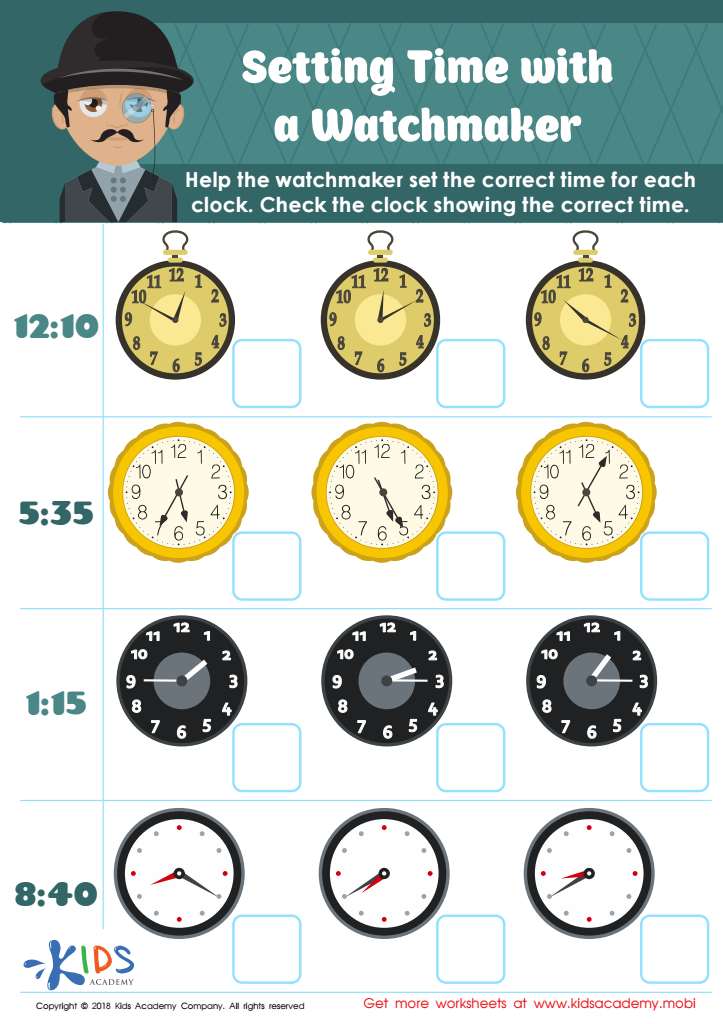
Setting Time with Watchmaker Worksheet
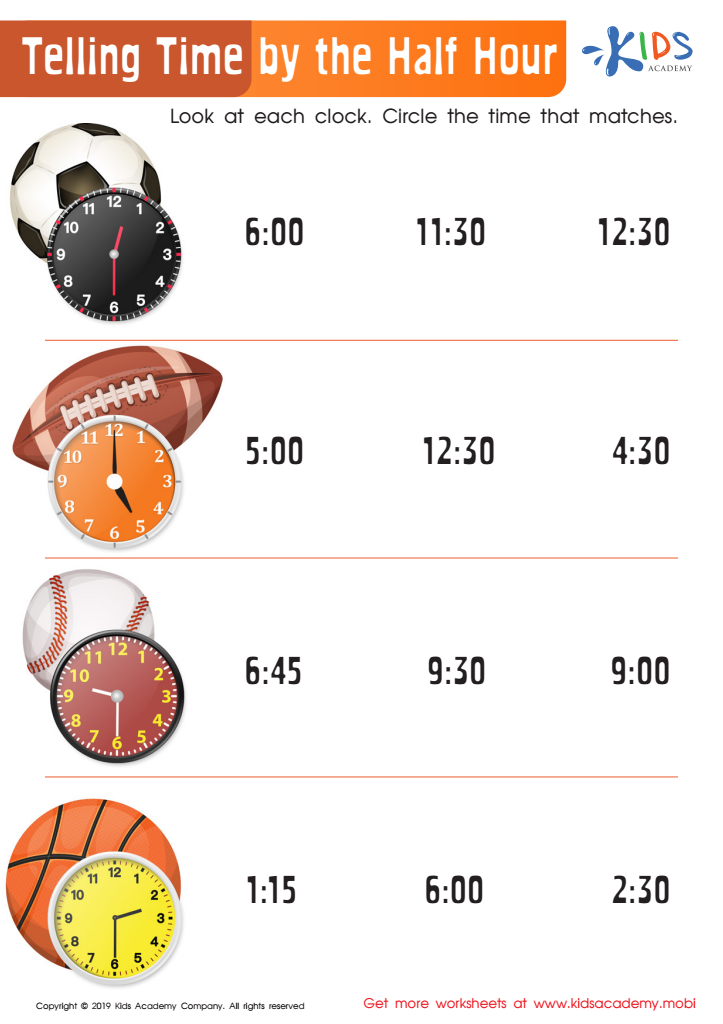
Telling Time by the Half Hour Worksheet




.jpg)
.jpg)
Teaching children to read analog clocks is essential for several reasons. First, it fosters an important life skill that enhances their understanding of time. Unlike digital clocks, which merely show numbers, analog clocks represent time in a visual format that helps children grasp the concepts of hours, minutes, and the cyclical nature of time.
Understanding analog clocks sharpens children's cognitive skills, such as critical thinking and problem-solving. It requires them to interpret the positions of the hour and minute hands and understand the fractions of an hour, building foundational math skills in a practical context.
Moreover, learning to read analog clocks fosters independence. Children gain confidence as they learn to manage their time effectively, which is crucial for adhering to schedules at home and school. This skill also helps promote punctuality, an essential characteristic in academic and professional settings.
Lastly, engaging parents and teachers in this learning process promotes collaboration. When parents reinforce these skills at home, it creates a cohesive learning experience that benefits children's development. In a digital age, ensuring kids can tell time on an analog clock empowers them by blending traditional skills with modern technology, making education more holistic.








