Syllable identification Worksheets for Ages 4-9
7 filtered results
-
From - To
Explore our engaging Syllable Identification Worksheets designed specifically for children ages 4-9. These worksheets are ideal for developing essential literacy skills by teaching kids how to recognize and divide words into syllables. With a variety of fun activities, including puzzles, coloring, and matching, children will enjoy learning while honing their phonemic awareness. Our carefully crafted resources cater to different learning levels, ensuring that every child can progress confidently. Visit our site to access printable worksheets that make learning about syllables a joyful and interactive experience. Start your child’s literacy journey today with our captivating syllable identification activities!
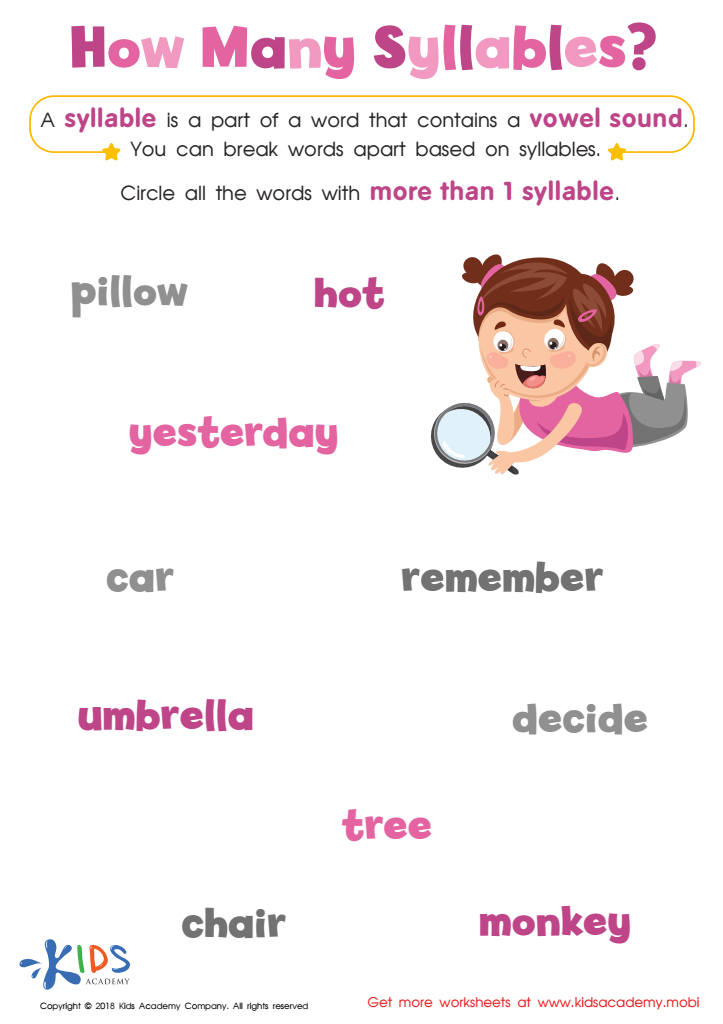
Reading: How Many Syllables Worksheet
 Assign to My Students
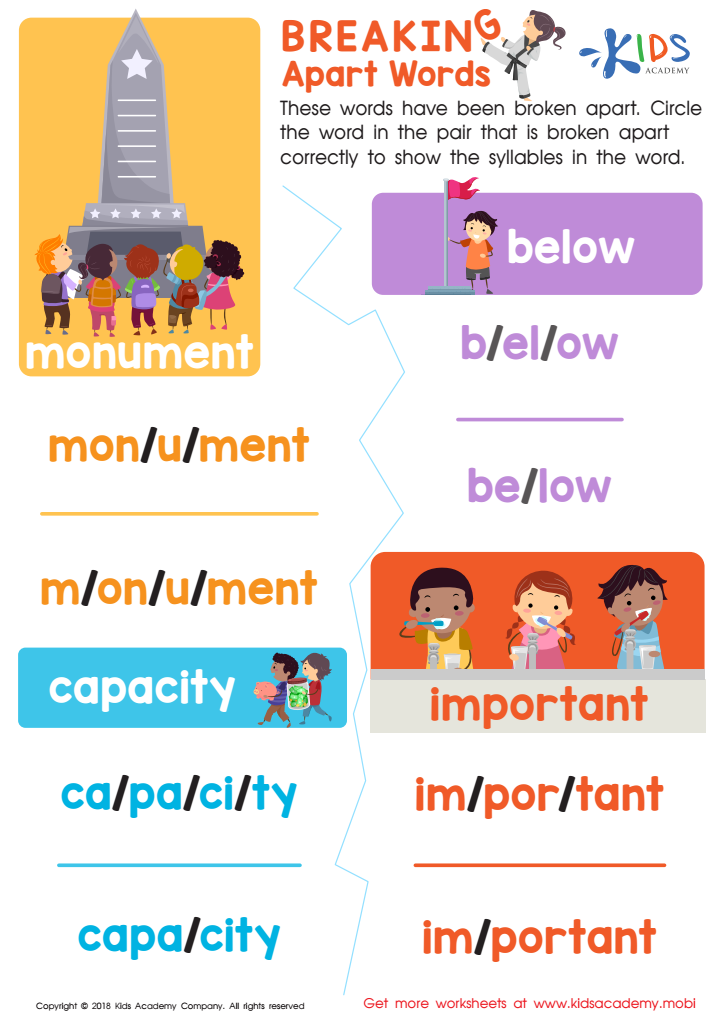
Breaking Apart Words Worksheet
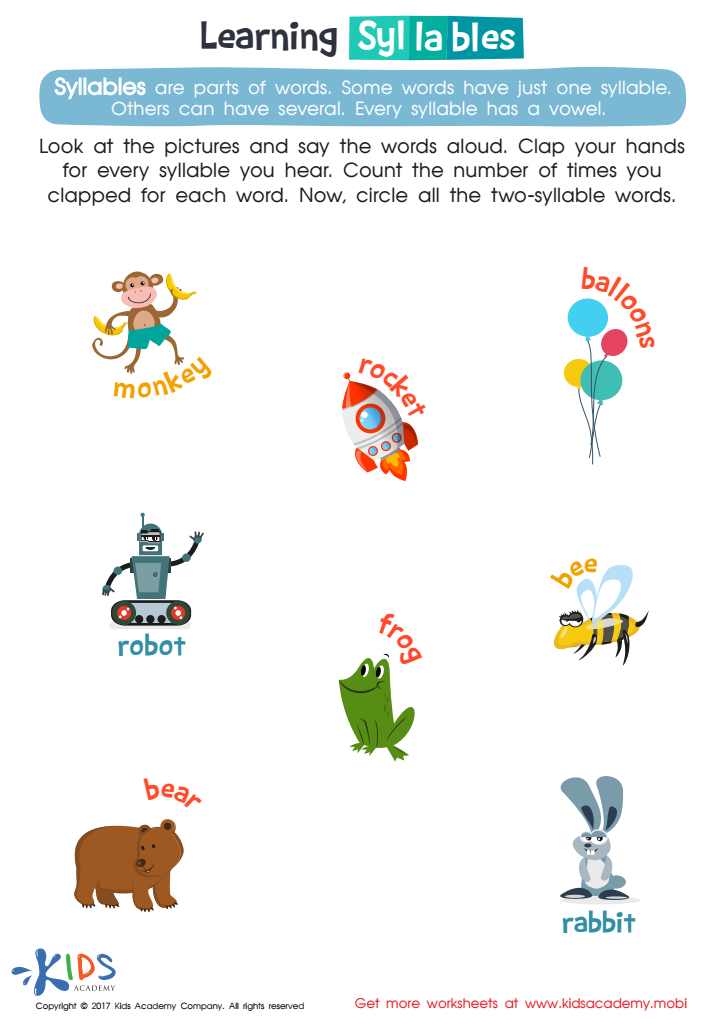
Learning Syllables Word Structure Worksheet
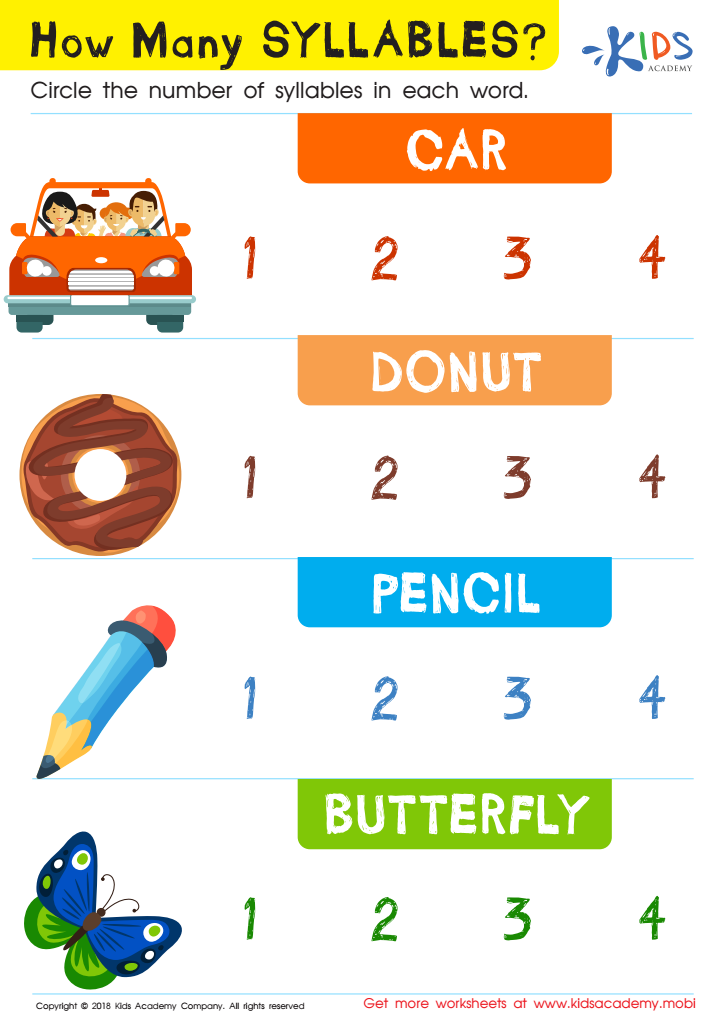
How Many Syllables? Worksheet
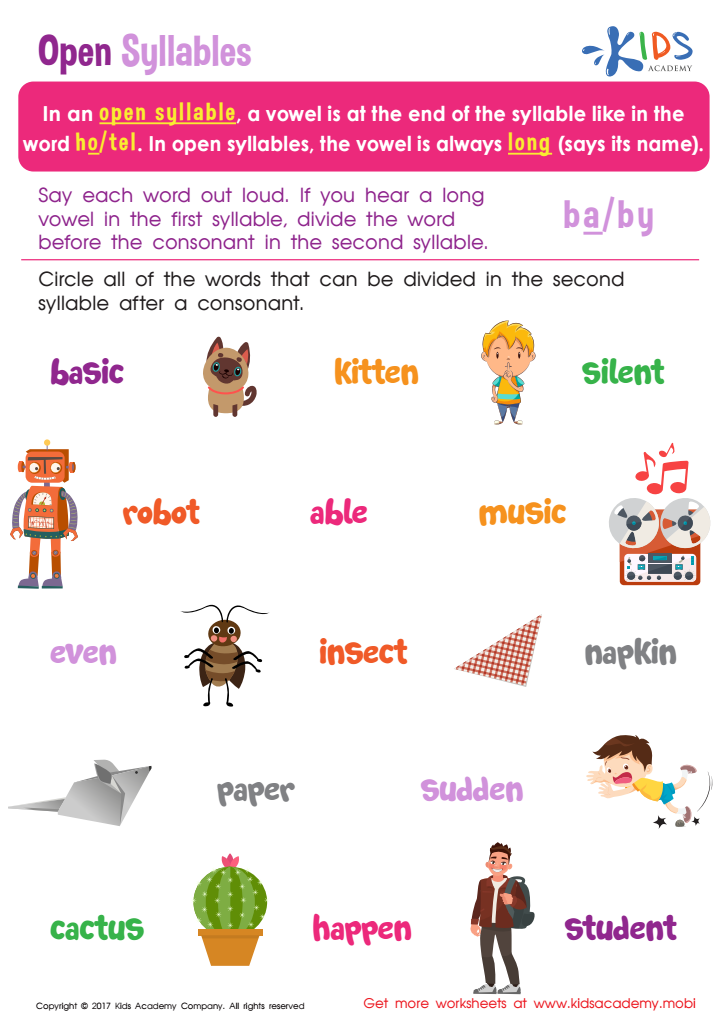
Open Syllable Printable Worksheet
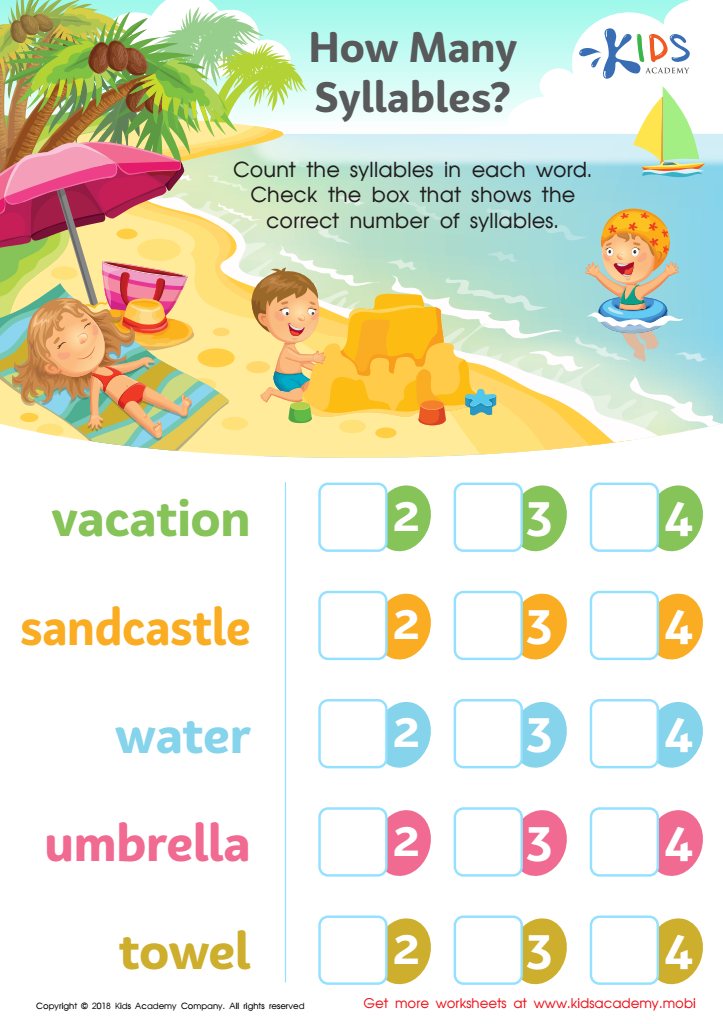
How Many Syllables Worksheet
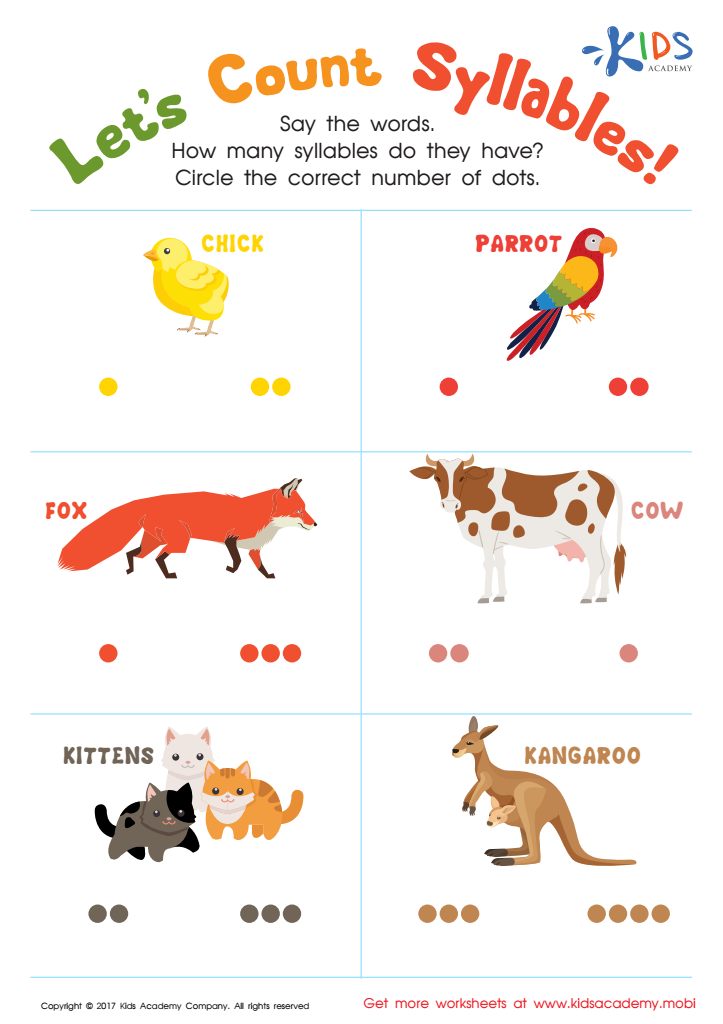
Lets Count Syllables Worksheet


.jpg)



Syllable identification is a crucial skill for children ages 4 to 9, significantly impacting their literacy development. Syllables are the building blocks of words, and recognizing them can enhance a child's reading, writing, and speaking abilities. For parents and teachers, fostering this skill is vital for several reasons.
Firstly, understanding syllables aids in phonemic awareness, which is essential for developing reading skills. When children can break words into syllables, they find it easier to decode and blend sounds, leading to improved fluency and comprehension.
Secondly, syllable identification contributes to spelling proficiency. As children learn to identify syllable patterns, they become more adept at understanding the rules of spelling and syllable division, allowing for more accurate written communication.
Additionally, recognizing syllables promotes language development, expanding vocabulary and enhancing verbal skills. Encouraging practice in a fun and engaging way, such as through songs or clapping games, makes learning enjoyable while building essential skills.
Ultimately, supporting children in mastering syllable identification empowers them with foundational literacy tools, setting the stage for academic success and fostering a lifelong love for reading and language. Parents and teachers should prioritize this skill to ensure a strong literacy foundation for all children.








