
Understanding biodiversity Worksheets for Ages 4-9
4 filtered results
Difficulty Level
Grade
Age
-
From - To
Subject
Activity
Standards
Introduce young learners to the exciting world of biodiversity with our engaging worksheets designed for ages 4-9! These resources will help children explore different ecosystems, plant and animal life, and the importance of preserving our natural world. Interactive activities, images, and questions encourage curiosity and critical thinking, making learning about biodiversity fun and accessible. Perfect for both classroom settings and at-home learning, our worksheets promote foundational skills in science and environmental stewardship. Encourage kids to appreciate the variety of life around them and inspire the next generation of eco-conscious individuals with these vibrant and educational materials!
Favorites
With answer key
Interactive
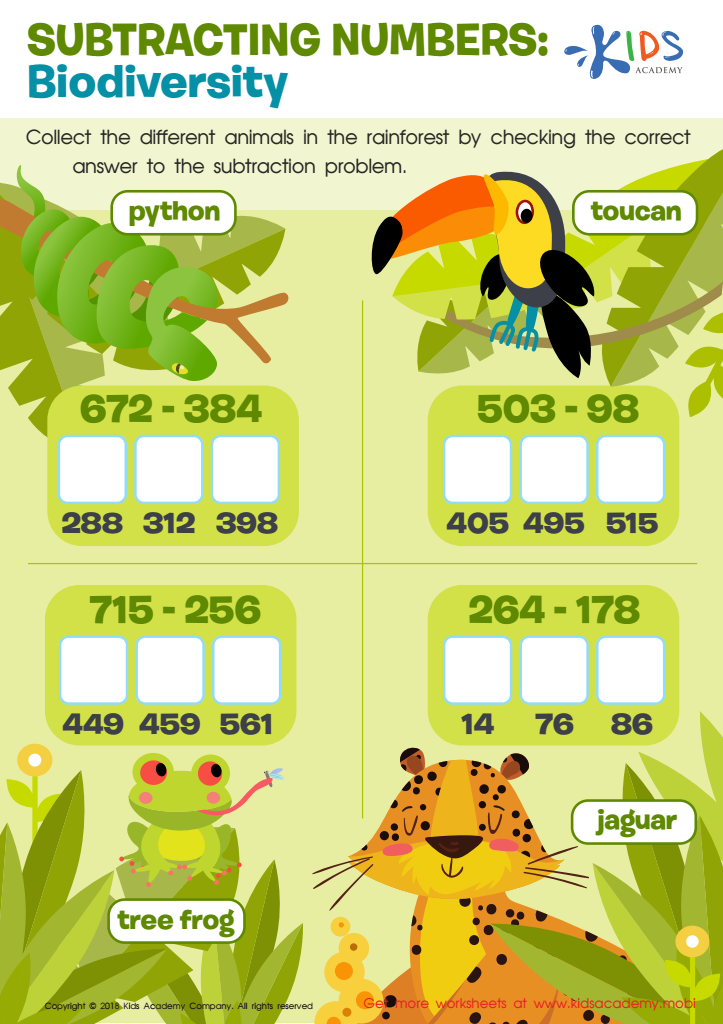
Subtracting Numbers: Biodiversity Worksheet
Engage students in simple tasks to make subtraction enjoyable and easier to understand. Use worksheets with colorful print and enjoyable concepts. Ask students to identify the animals and read their names. Check the correct answer to the subtraction problem to help them collect the animals in the rainforest.
 Assign to My Students
Subtracting Numbers: Biodiversity Worksheet
Worksheet
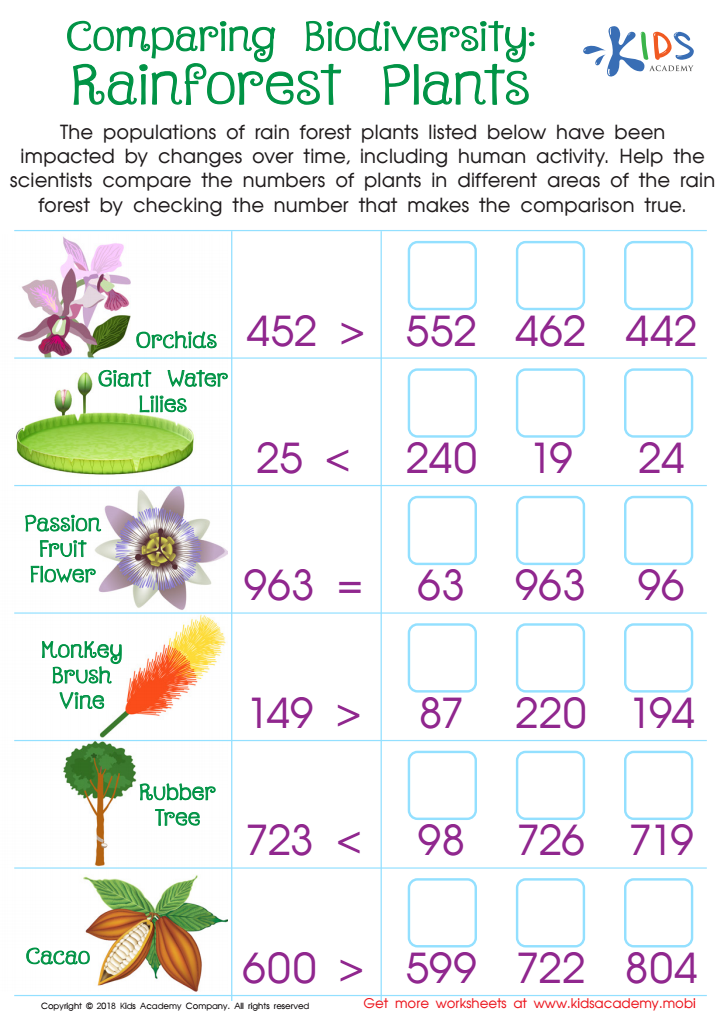
Comparing Biodiversity: Rainforest Plants Worksheet
Have your students learn about biodiversity in the rainforest and practice number sense and reasoning with this colorful PDF worksheet. Comparing the numbers of plants found in different areas of the rainforest, they'll combine eco-friendly science and math to make the number comparisons true.
Comparing Biodiversity: Rainforest Plants Worksheet
Worksheet
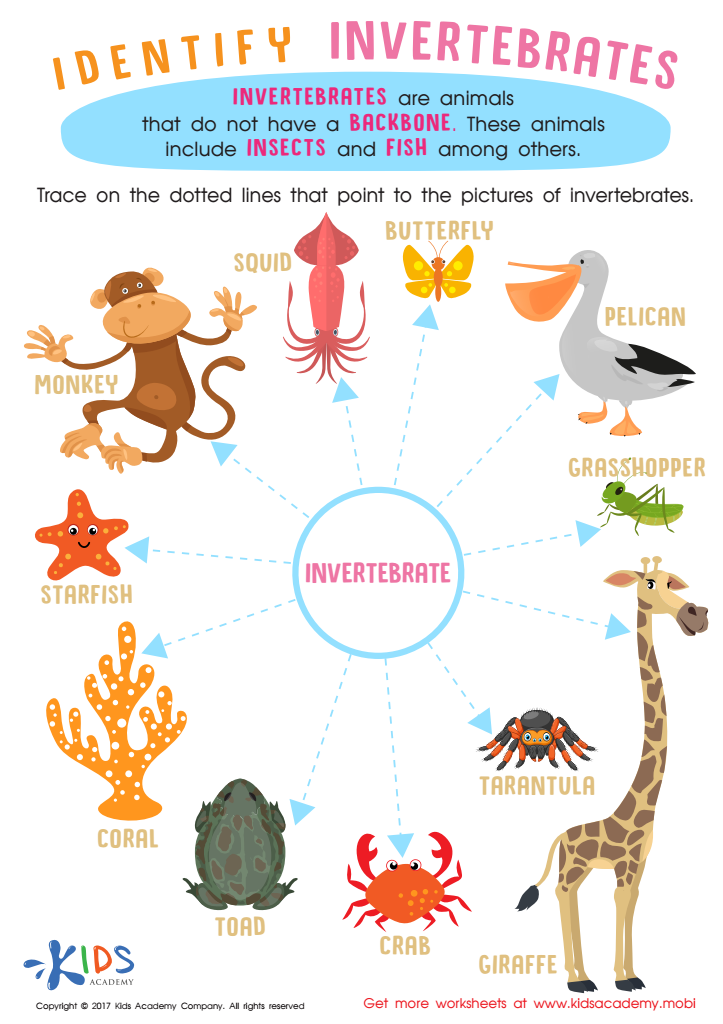
Invertebrates Worksheet for Grade 3
Kids explore the world of invertebrates with this worksheet for grade 3. Invertebrates are animals without a backbone, such as fish and insects. Kids must identify and select them from a group of animals. This activity is sure to stimulate their curiosity and help them discover more about these remarkable creatures.
Invertebrates Worksheet for Grade 3
Worksheet
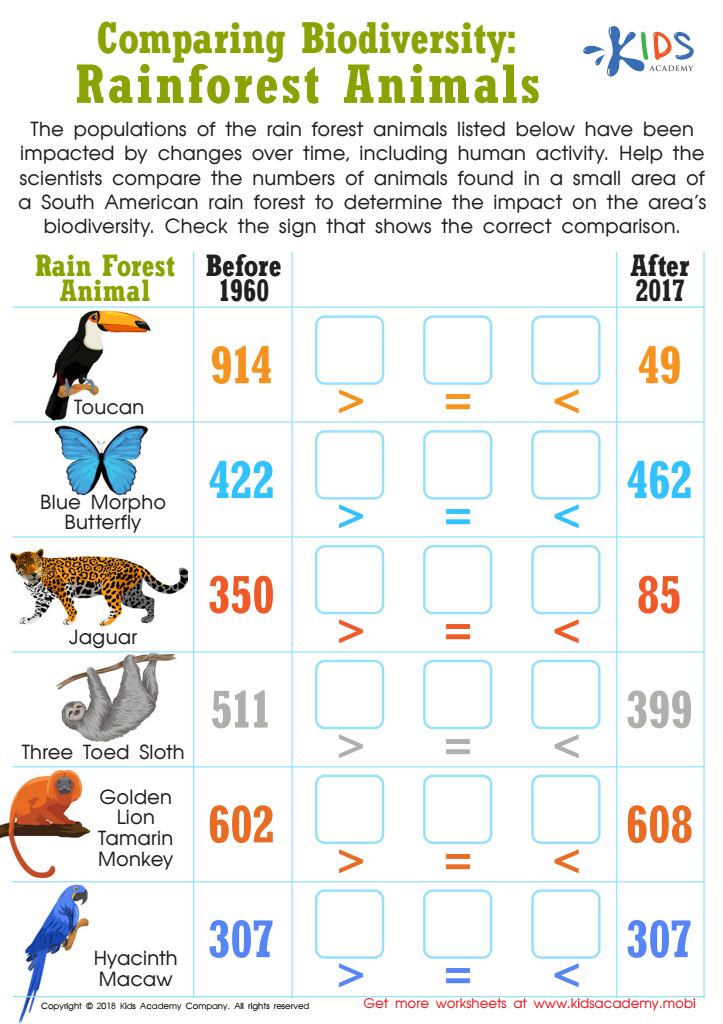
Comparing Biodiversity: Rainforest Animals Worksheet
This dynamic PDF worksheet combines fun and education. Kids will explore rainforest animals and biodiversity, comparing numbers from 1960 to 2017. They'll strengthen number sense and reasoning skills while learning about area biodiversity and its effects. A perfect mix of math and social science!
Comparing Biodiversity: Rainforest Animals Worksheet
Worksheet
Join Kids Academy for Free
Who is primarily going to use this learning content?







Understanding biodiversity is crucial for children aged 4-9, and parents and teachers play a vital role in fostering this awareness. At this age, children are inherently curious about the world around them. Introducing the concept of biodiversity helps them appreciate the variety of life on Earth, from plants and animals to ecosystems. This foundational knowledge encourages empathy towards living things and fosters a sense of responsibility for the environment.
Biodiversity education can spark children's imagination and creativity, as they learn about different species and habitats through stories, activities, and outdoor exploration. Engaging with nature can enhance their observational skills while promoting physical and mental wellbeing. Furthermore, understanding the interconnectedness of living organisms instills an early sense of conservation, teaching children that every creature has an important role in maintaining a balanced ecosystem.
Moreover, early exposure to biodiversity can serve as a springboard for STEM (Science, Technology, Engineering, and Mathematics) learning, inspiring future scientists or environmentalists. By prioritizing biodiversity education, parents and teachers contribute to developing informed, caring, and proactive citizens who value and protect our planet for generations to come. Simply put, nurturing a child's understanding of biodiversity today lays the groundwork for a sustainable and thriving world tomorrow.








