Understanding comparisons Worksheets for Ages 4-9
6 filtered results
-
From - To
Welcome to our "Understanding Comparisons Worksheets" designed specifically for children ages 4-9! These engaging and interactive worksheets help young learners grasp the concept of comparisons through colorful activities and relatable examples. Kids will explore basic comparative terms like less, more, taller, and shorter, enhancing their critical thinking and observation skills. Our carefully crafted exercises promote hands-on learning, making complex ideas simple and fun. Whether at home or in the classroom, these resources provide the perfect foundation for mastering essential math skills. Dive in and watch your child's understanding of comparisons grow while having a great time learning!
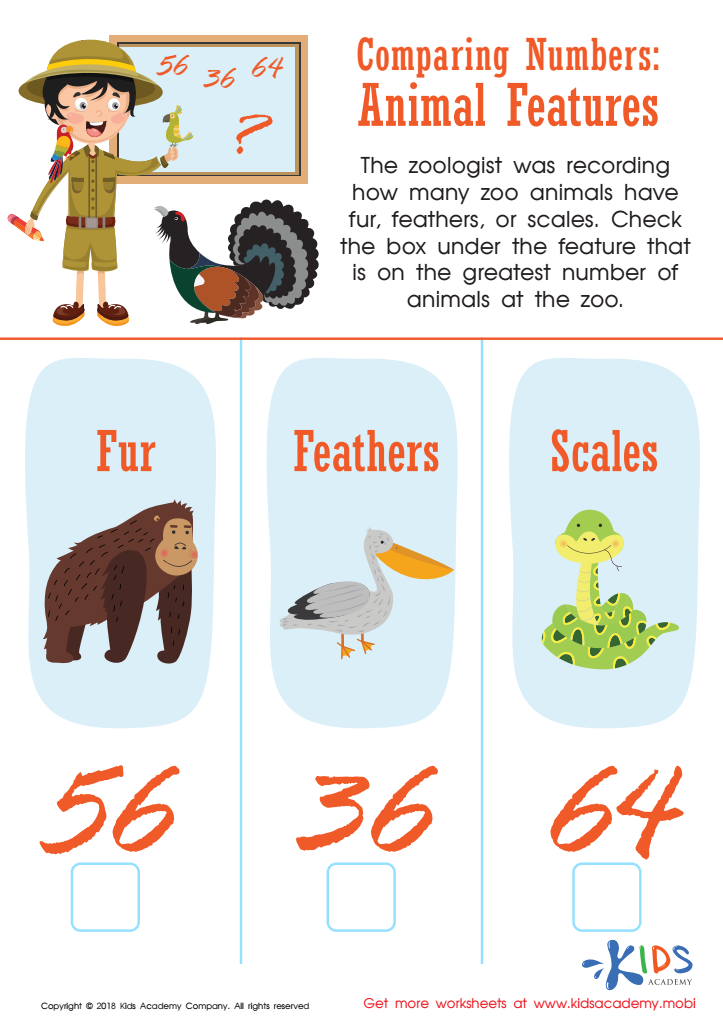
Animal Features Worksheet
 Assign to My Students
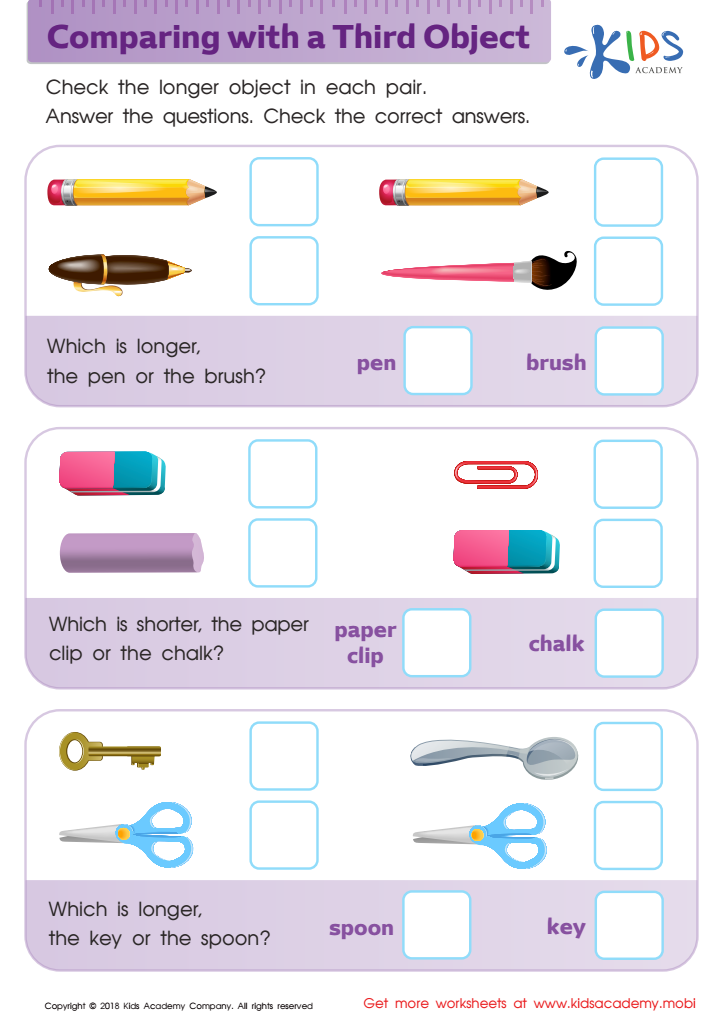
Comparing with a Third Object Worksheet
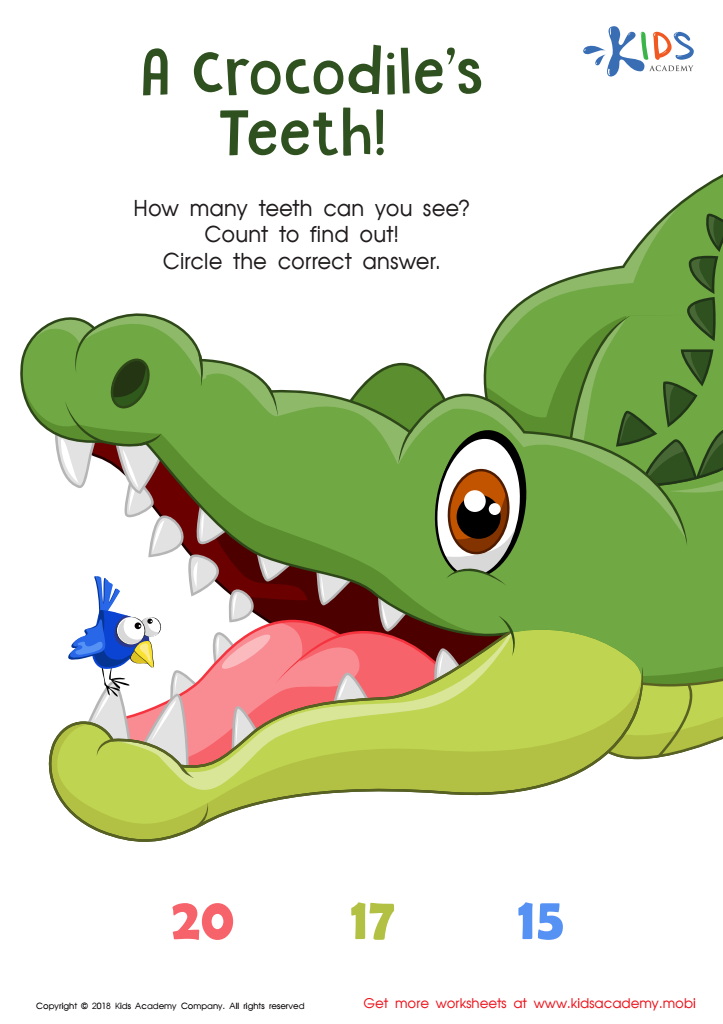
A Crocodile's Teeth Worksheet
Matching: Classifying Toys by Size Worksheet
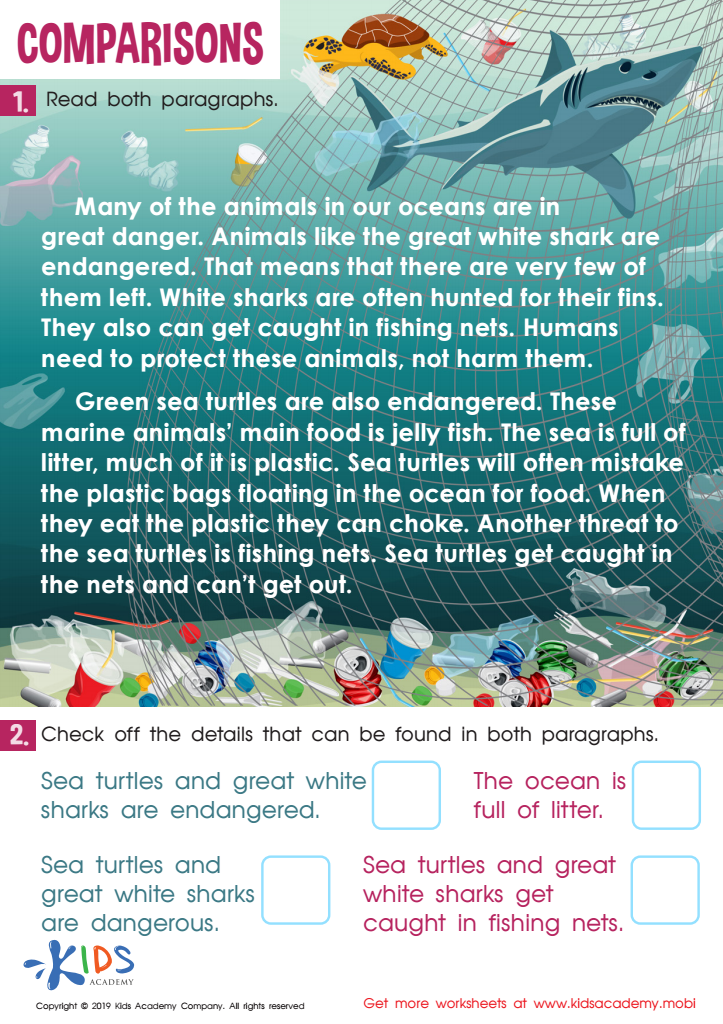
Comparisons Worksheet
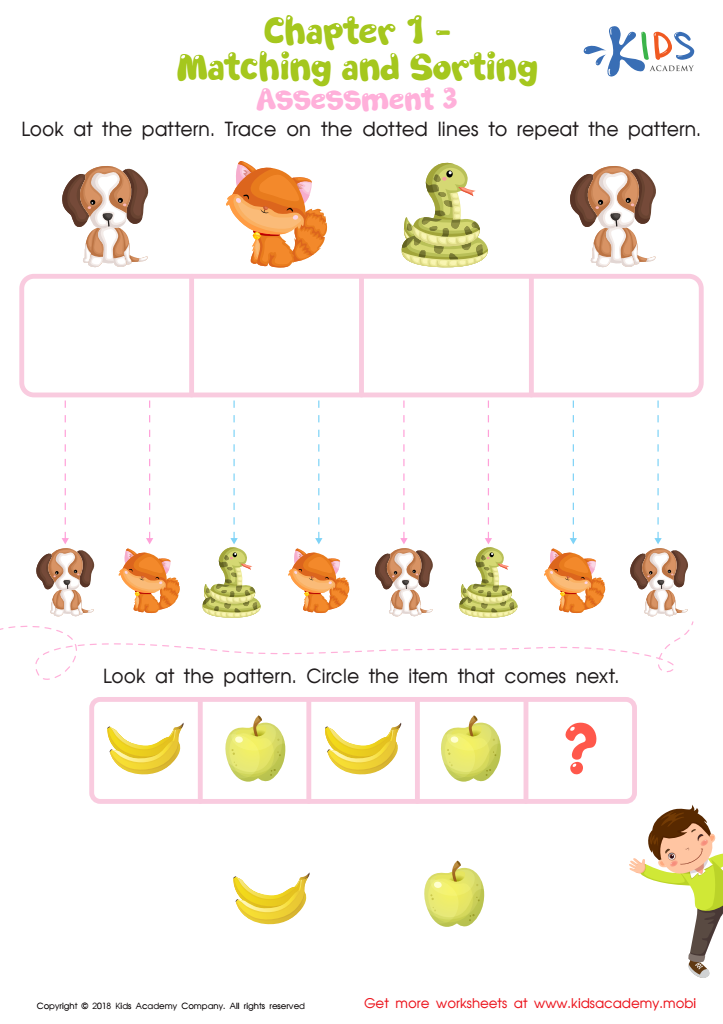
Matching and Sorting for Preschool: Assessment 3 Worksheet





Understanding comparisons is a crucial skill for children aged 4-9 as it lays the foundation for their cognitive and social development. At this age, children begin to categorize and make sense of the world around them, and comparisons are integral in that process. By understanding comparisons, children can differentiate sizes, quantities, and attributes, enabling them to make informed decisions in everyday situations—from sorting toys to sharing snacks.
Moreover, comparison skills enhance children’s mathematical thinking. Concepts like greater than, less than, more, and fewer are fundamental in early math education and help in grasping basic arithmetic. Early engagement with comparisons fuels critical thinking, allowing children to analyze relationships between different objects or ideas, which is essential for problem-solving.
Socially, using comparison enables children to articulate their feelings and opinions effectively. For instance, discussing who has the most toys or who can run faster fosters communication skills and empathy. Teachers and parents play a vital role in promoting these skills through everyday conversations, games, and activities that encourage comparison. Ultimately, nurturing this ability not only supports academic success but also prepares children for more complex cognitive tasks as they grow. Understanding comparisons is not just about quantity; it's about fostering a deeper relationship with the world.








