Understanding measurements Worksheets for Ages 4-9 - Page 2
28 filtered results
-
From - To
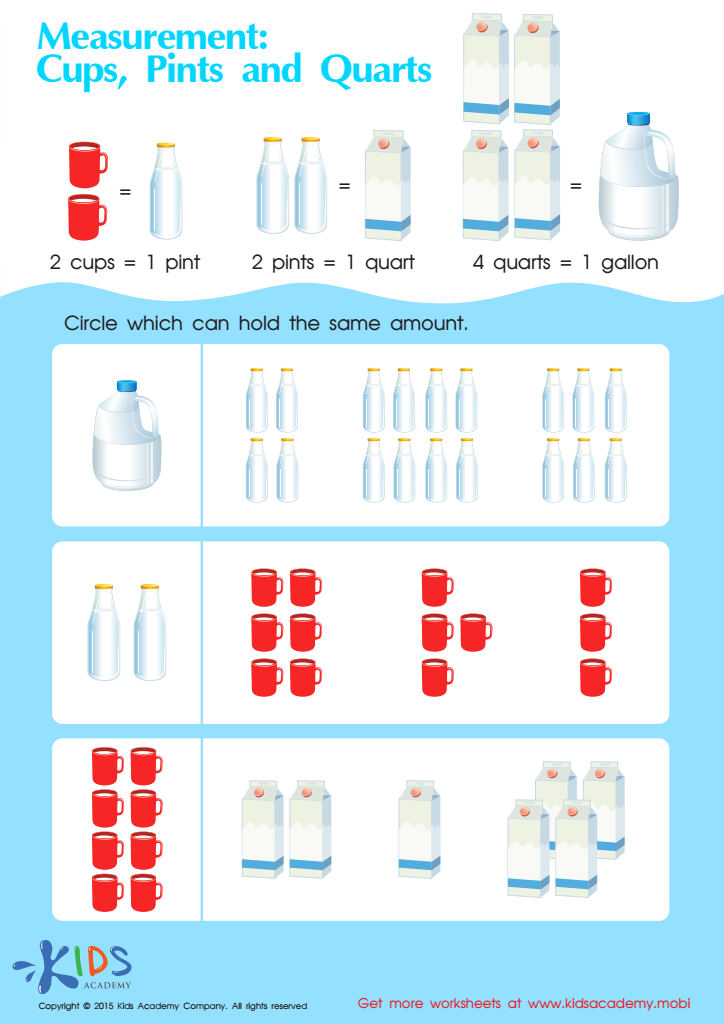
Cups, Pints and Quarts 2 Worksheet
 Assign to My Students
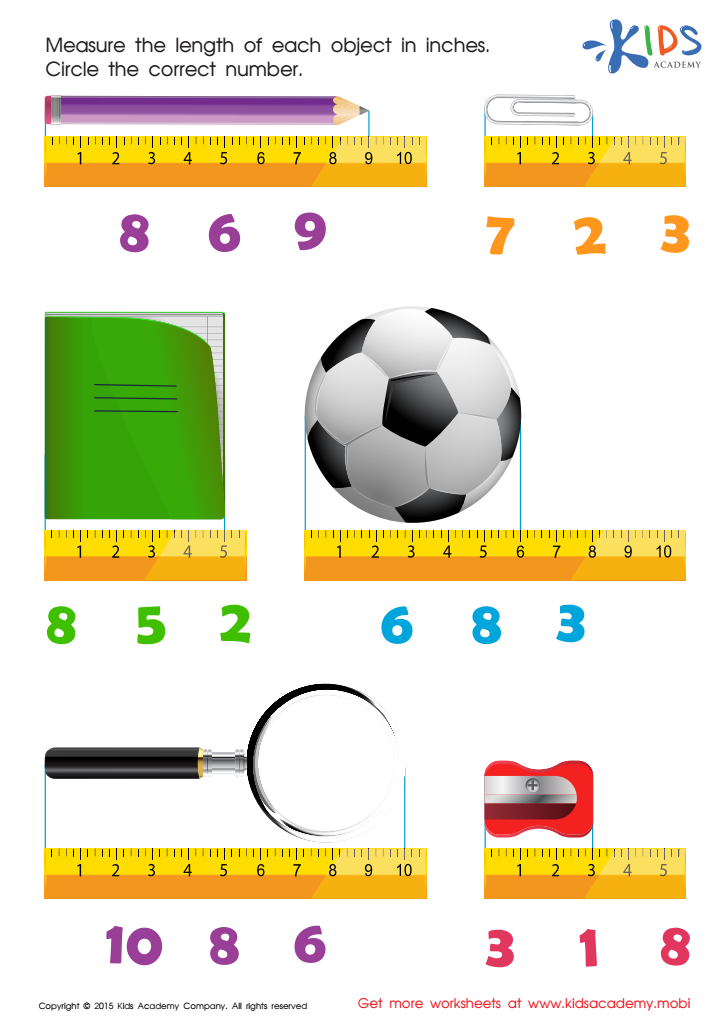
Learning measuring objects in inches Worksheet
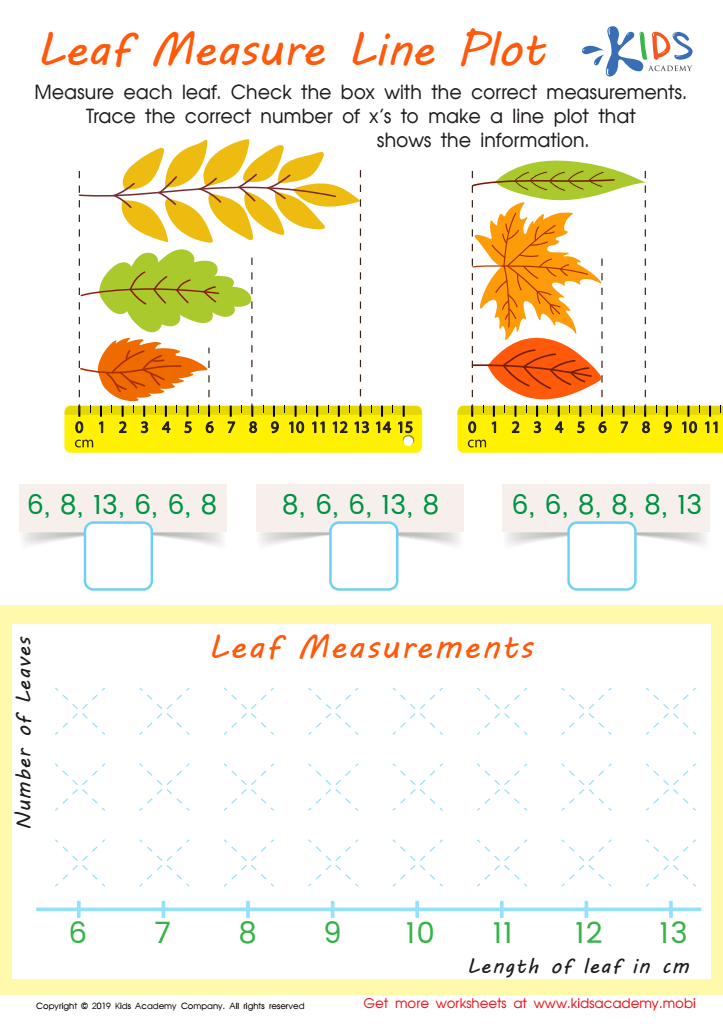
Leaf Measure Line Plot Worksheet






Understanding measurements is crucial for children aged 4-9, as it lays the foundation for their mathematical skills and daily life activities. Mastering measurements helps young learners grasp concepts like size, length, weight, and volume, which they encounter daily. For example, when children compare objects during play or help in the kitchen, they engage in measurement activities that enhance spatial awareness and critical thinking.
Moreover, early knowledge of measurements supports language development by expanding vocabulary with terms like “taller,” “shorter,” “heavier,” and “lighter.” These experiences ignite curiosity about the world around them, encouraging inquiry and problem-solving skills.
Teachers and parents who emphasize measurement through hands-on activities—such as using rulers, measuring cups, or even simple scales—create engaging learning environments. These personalized experiences make abstract concepts relatable and fun, fostering a positive attitude toward math.
Finally, this foundational skill prepares children for more complex mathematical concepts as they progress in their education. Developing measurement literacy empowers young learners to approach challenges confidently, ultimately aiding their academic growth and everyday decision-making. Thus, understanding measurements is essential for parents and teachers aiming to equip children with lifelong skills.








